Portuguese Water Dog
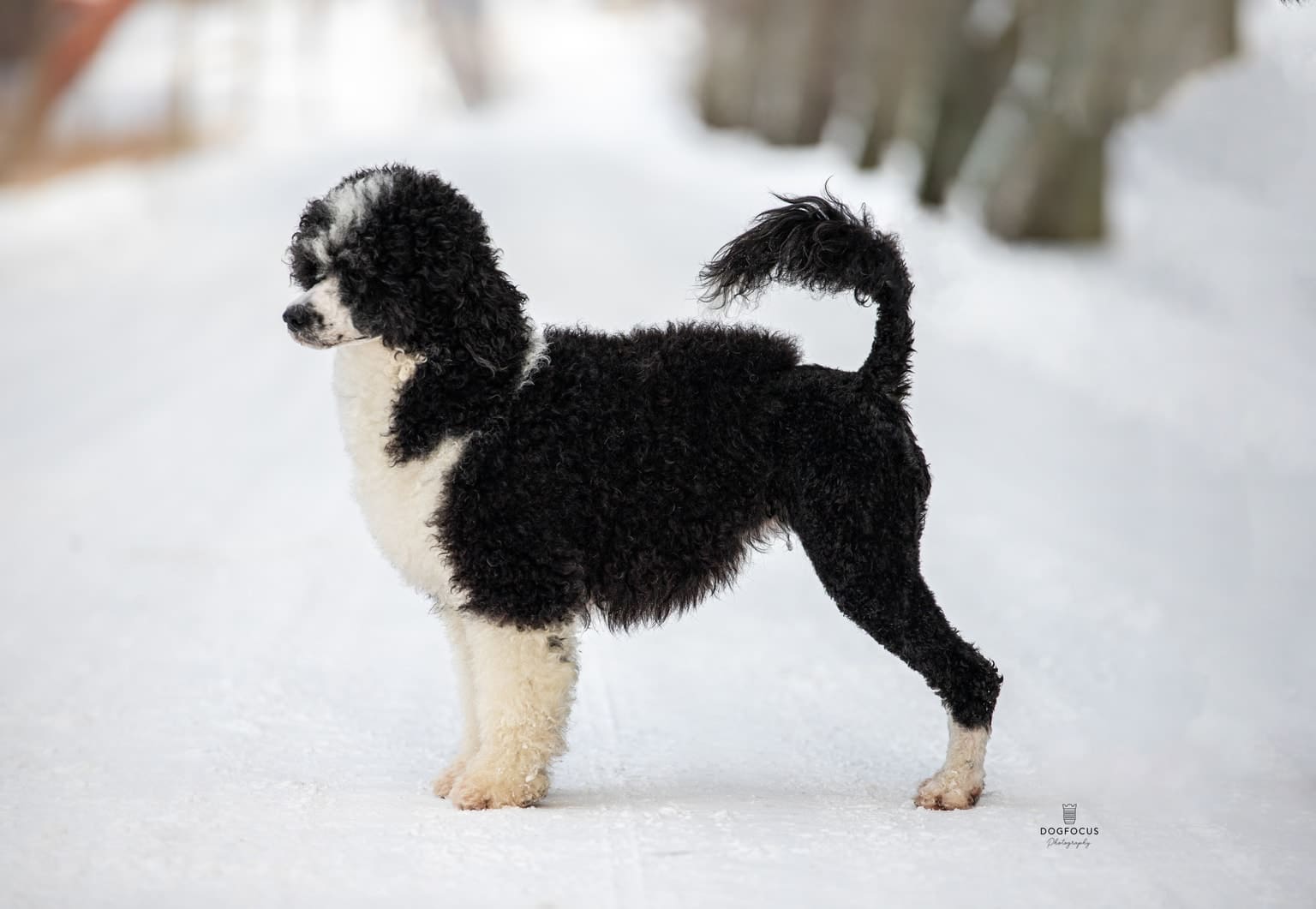
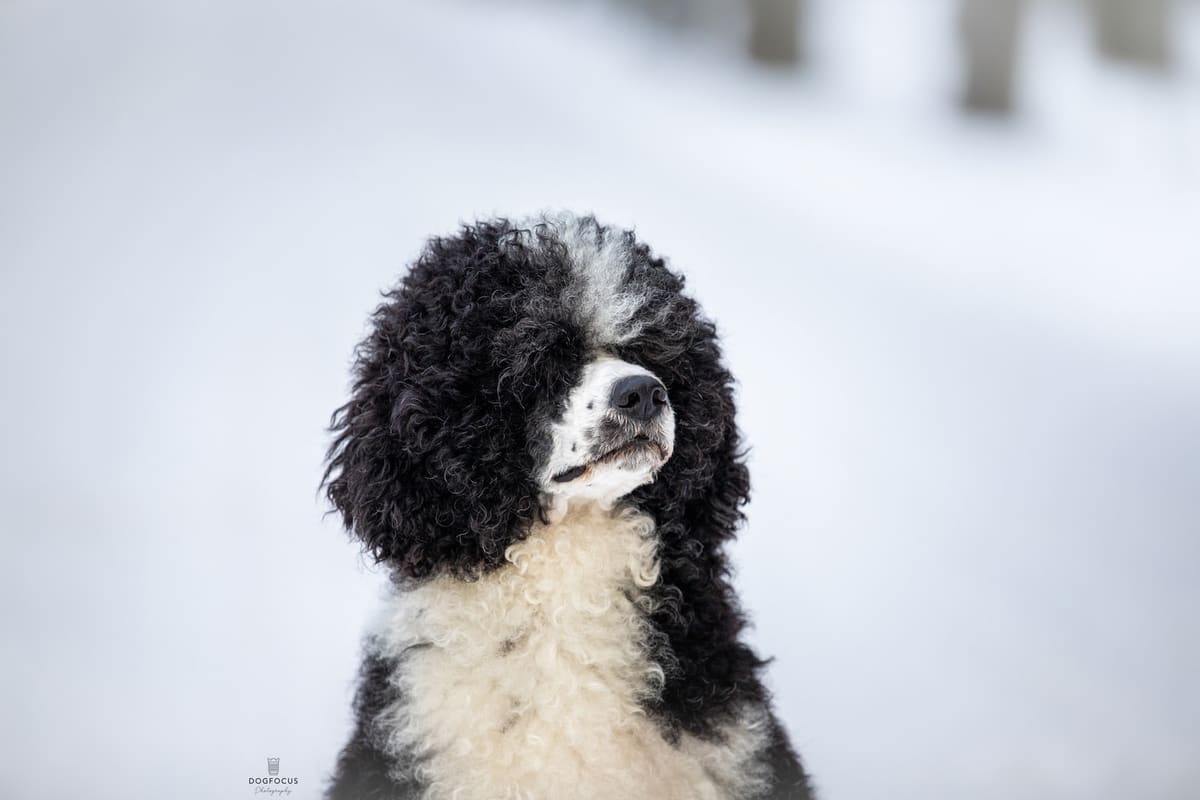
Photo by TempusAdMiraculum · CC BY-SA 4.0
Portuguese Water Dogs are energetic working dogs known for intelligence, athleticism, and a curly or wavy coat that many owners keep clipped. They thrive with active routines, training, and jobs that involve retrieving, swimming, or problem-solving. These dogs are affectionate and people-focused, enjoying close partnership with family. Their coat requires regular grooming, and they need daily exercise and brain games. With consistent training and engagement, Portuguese Water Dogs can be versatile companions for active households.
How to recognize a Portuguese Water Dog
- Distinctively large head with an exceptionally broad top of the skull, which looks domed from the front.
- Profuse coat in one of two types: compact, cylindrical curls or gentle waves with a slight sheen.
- Undocked tail, thick at the base and tapering, held in a ring when the dog is alert, with the hair at the tip left long.
- Thin, heart-shaped ears set well above eye level and held against the head.
- Solid, muscular body slightly longer than tall, with round, rather flat feet webbed to the toe tips.
Quick facts
- Group: Working
- Size: medium (medium dog breeds)
- Height: 17-23 in
- Weight: 35-60 lbs
- Males, per the AKC standard: 20-23 in, 42-60 lbs
- Females, per the AKC standard: 17-21 in, 35-50 lbs
- Lifespan: 11-13 years
- Temperament: Energetic, Intelligent, Affectionate, Work-oriented
- AKC recognized: 1983
The standard's ideal height is 22 inches for males and 19 inches for females.
Coat and colors
A profuse single coat with no undercoat, either curly (compact, cylindrical curls) or wavy (gentle waves with a slight sheen). The standard accepts two trims: the lion clip, with the middle, hindquarters and muzzle clipped, or the retriever clip, no longer than one inch all over.
Black, white and various tones of brown, or black or brown combined with white. The standard requires a black nose, mouth and eyelids on black, white, or black and white dogs, and brown ones on brown dogs.
History and original work
Portuguese Water Dogs originated in Portugal, where they helped fishermen by retrieving gear and carrying messages between boats. Their strong swimming ability and cooperative nature made them valued working partners.
The standard describes a fishermen's dog that retrieved broken nets, herded schools of fish and carried messages between boats and shore. It calls for a robust, medium build for a full day's work in and out of the water, with a thick tail used as a rudder.
Breeds mistaken for the Portuguese Water Dog
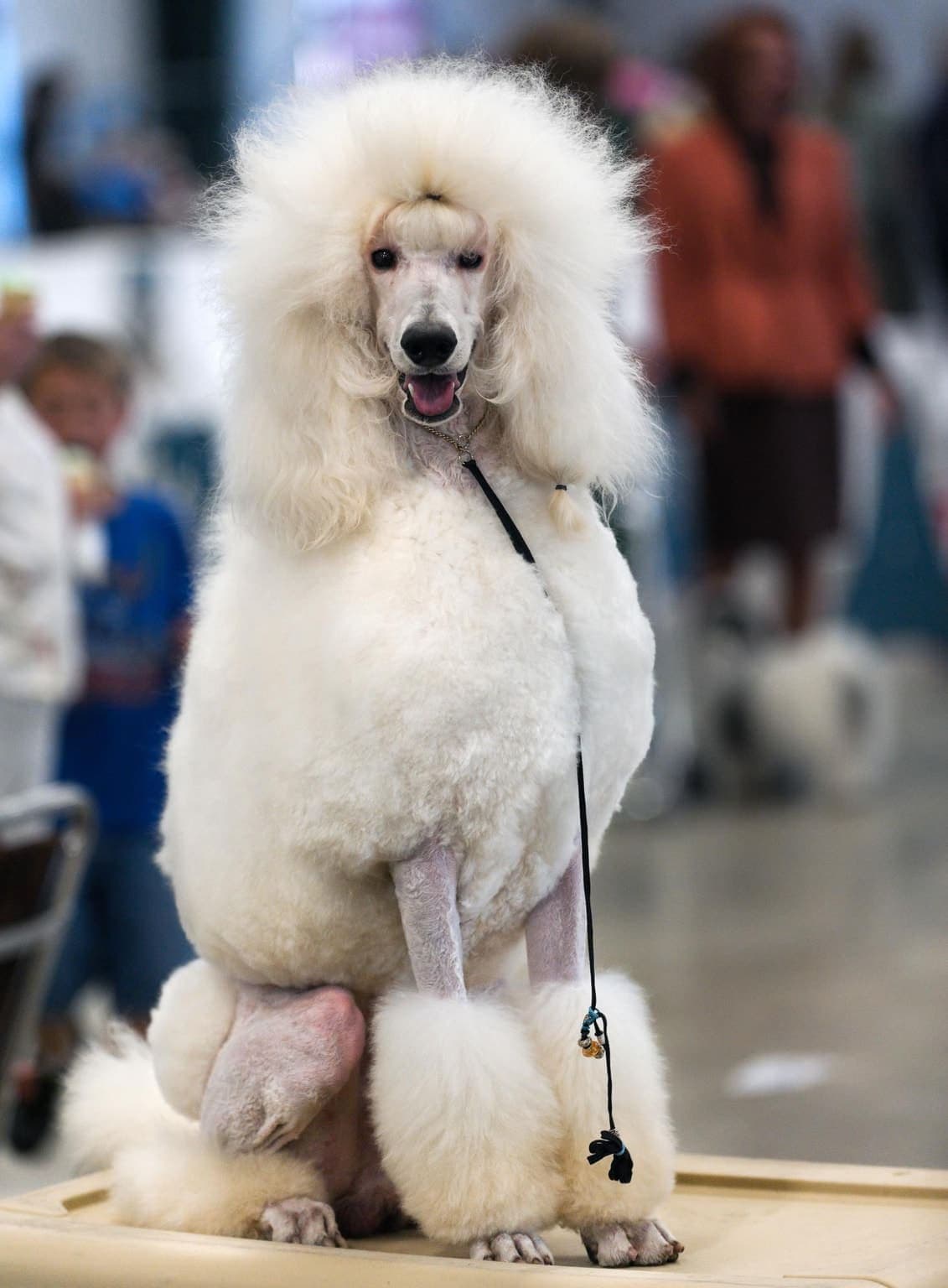
- Poodle: A Poodle has a long, straight, fine muzzle and a straight tail carried up, while the Portuguese Water Dog has a very broad head and an undocked tail that curls into a ring when the dog is alert.
Side by side: Poodle vs Portuguese Water Dog.
What AI models confuse it with: in Dog Breed Bench, 10 model setups gave 15 answers on one reviewed Portuguese Water Dog photo. 3 named the Barbet first and 3 named the Poodle first.
Care tips
- Give them daily exercise and training; this breed thrives on activity.
- Groom routinely; curly coats need clipping and brushing to avoid mats.
- Offer water-based play if possible—many love swimming.
- Use enrichment games and advanced obedience to satisfy intelligence.
- Check ears regularly and dry them after swimming.
Sources
- American Kennel Club: Portuguese Water Dog: Primary registry overview for breed history, group, structure, and typical traits.
- AKC official standard: Portuguese Water Dog: Source for the identifying features, coat, colors, and size by sex on this page.