15 look-alike dog breed groups
Fifteen look-alike breed groups from our reviewed 100-breed photo benchmark, with the visible tells that separate them and an honest account of what has and has not been measured.
Version 2026.1 · Published September 2, 2026 · Updated September 9, 2026 · By Eday Studio LLC
What a confusion pack is
A confusion pack is a small group of breeds in our reviewed photo benchmark that share enough visible structure, a silhouette, a coat type, or a head type, that a wrong answer inside the group is plausible from a single photograph. A Whippet called a Greyhound is a different kind of mistake from a Whippet called a Beagle, and a flat list of 100 breeds cannot tell those apart.
Packs give every error a context. Before any model or prompt change reaches production, the evaluation decision rule inspects each miss by confusion pair and tag, and the production pipeline carries one pack-specific safeguard: a single second look when an uncertain result contains three upright-ear working breeds. There is no generic confidence retry for the other groups, because the benchmark has not shown one is needed.
These 15 groups were curated from visible resemblance, not ranked by measured error frequency. The guide explains the traits that can help distinguish each group. Published per-group results, when available, appear separately below; the groups alone do not establish which breeds AI confuses most often.
How the 15 packs were chosen
Benchmark v2 covers 100 canonical breeds aligned to the AKC directory and FCI nomenclature, with five reviewed Wikimedia Commons photographs per breed (500 in total). Every accepted photo shows one dog with visible breed morphology; near duplicates, wrong breeds, multiple dogs, and weak visibility were rejected and the rejections kept on record. The packs were curated by hand while that dataset was built, following three rules:
- Every member must be one of the 100 benchmark breeds, so each pack can be scored.
- Members must share a silhouette, coat type, or head type closely enough that a photo without scale or context could reasonably be read as another member.
- A breed belongs to at most one pack, so accuracy by group adds up cleanly.
The result is 52 breeds in 15 packs, from two members (the Welsh corgis, the black retrievers) to six (the upright-ear shepherds). The other 48 benchmark breeds, such as the Dalmatian, Basenji, and Chinese Crested, have no close twin in the set and are scored on their own.
41 of the pack members have a breed profile on this site and are linked below; 11 are benchmark-only breeds that appear by name until their profiles are written. Nothing about the packs claims genetic relationship. Some members are close relatives and some only look alike, and for the camera that is the same problem.
What has been measured so far
The production release evaluated on August 19, 2026 passed its clear-breed release gate with 94.4% top-1 accuracy and 100% top-3 accuracy across 90 repeated calls, 100% response-contract compliance, 96.7% repeated-run stability, and a 2.645 second median latency. Those numbers come from the separate 30-breed release suite, and the full protocol is on the methodology page.
Per-group accuracy is not yet published.
The release gate above does not score the 100-breed benchmark by pack, and we do not publish numbers we have not measured. The next benchmark run on the regression split (one reviewed photo per breed) will be aggregated by group with the same open script that builds this page, and this section will show top-1, top-3, and the most common wrong answer for every pack. Until then each group below says so plainly.
The 15 look-alike groups
Each group below opens with why the camera struggles, then the visible tells, then the breeds involved. Linked breeds have a profile on this site. Photos are licensed benchmark-style reference images and are credited beneath each one.
Upright-ear working shepherds
6 benchmark breeds, 30 reviewed photos
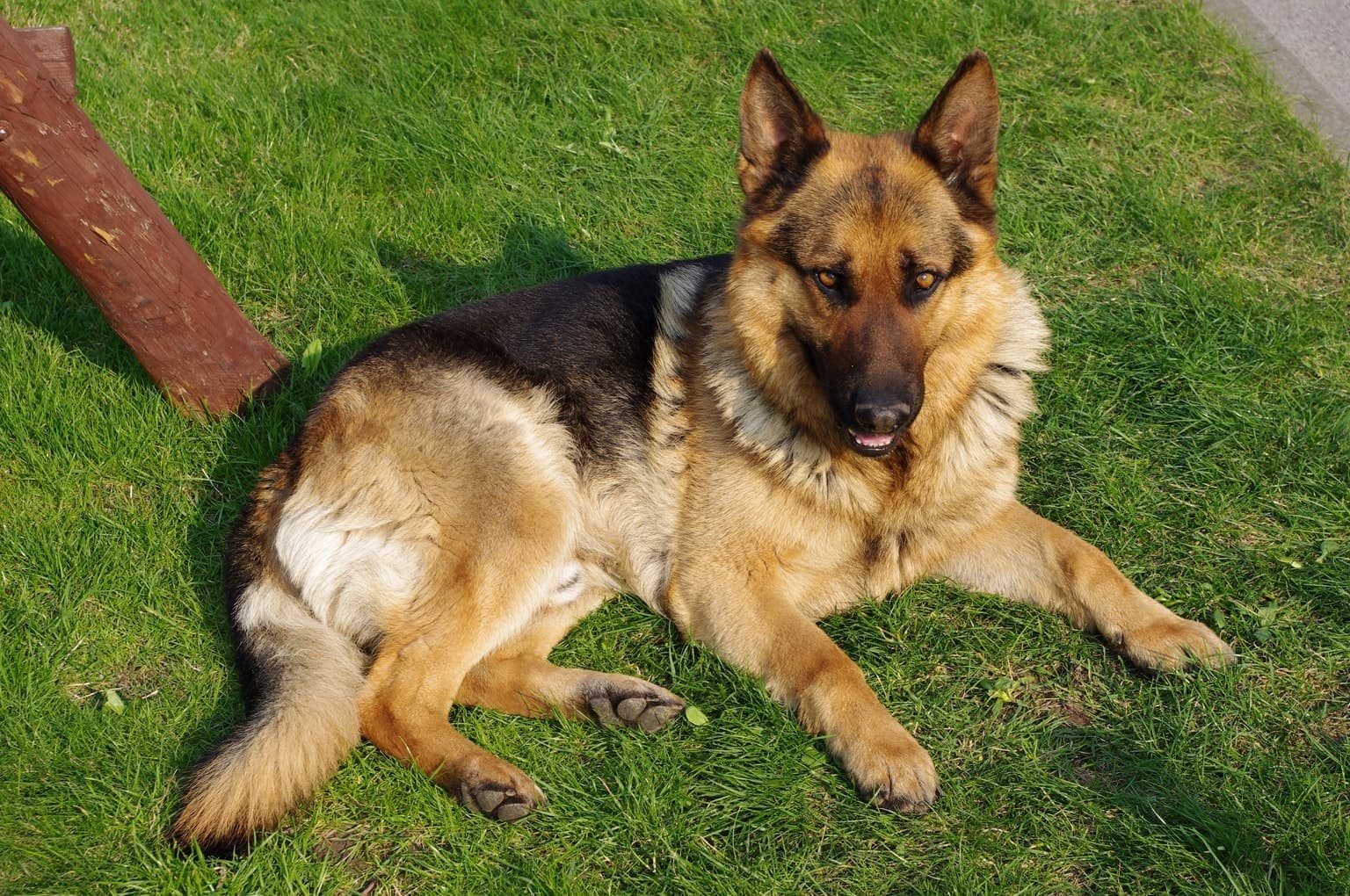
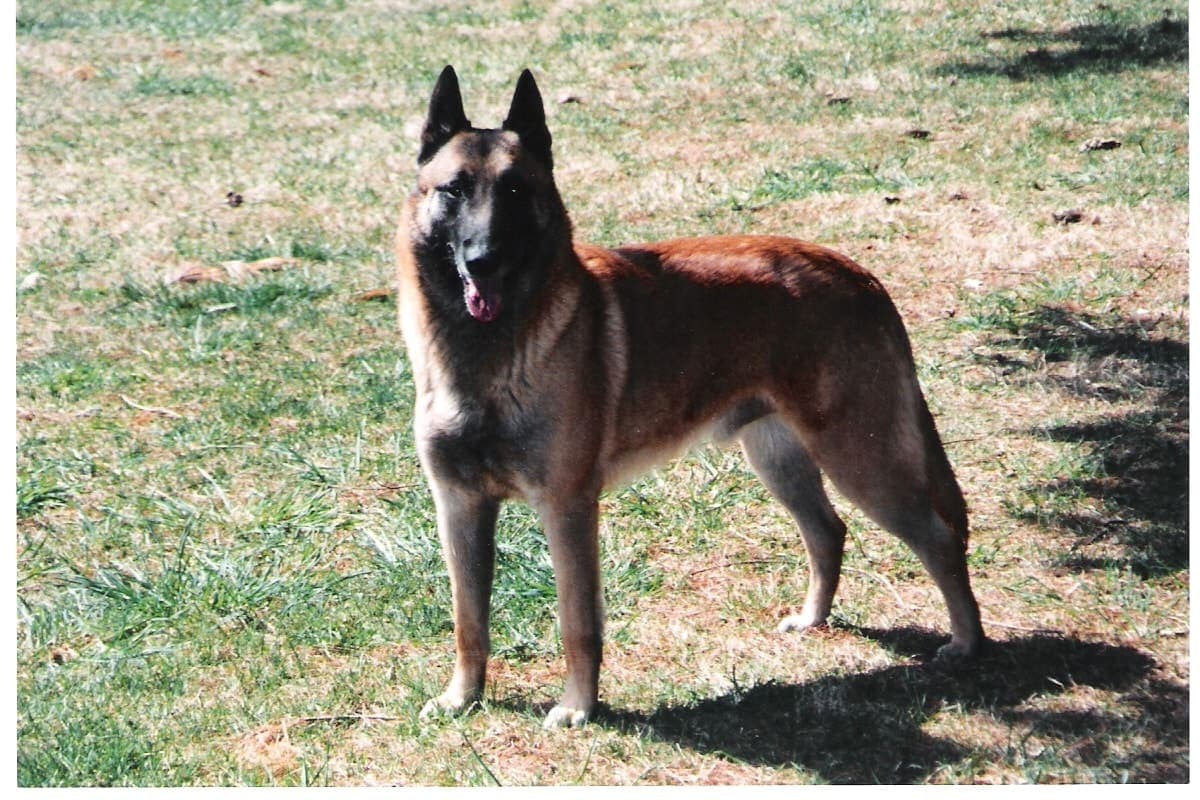
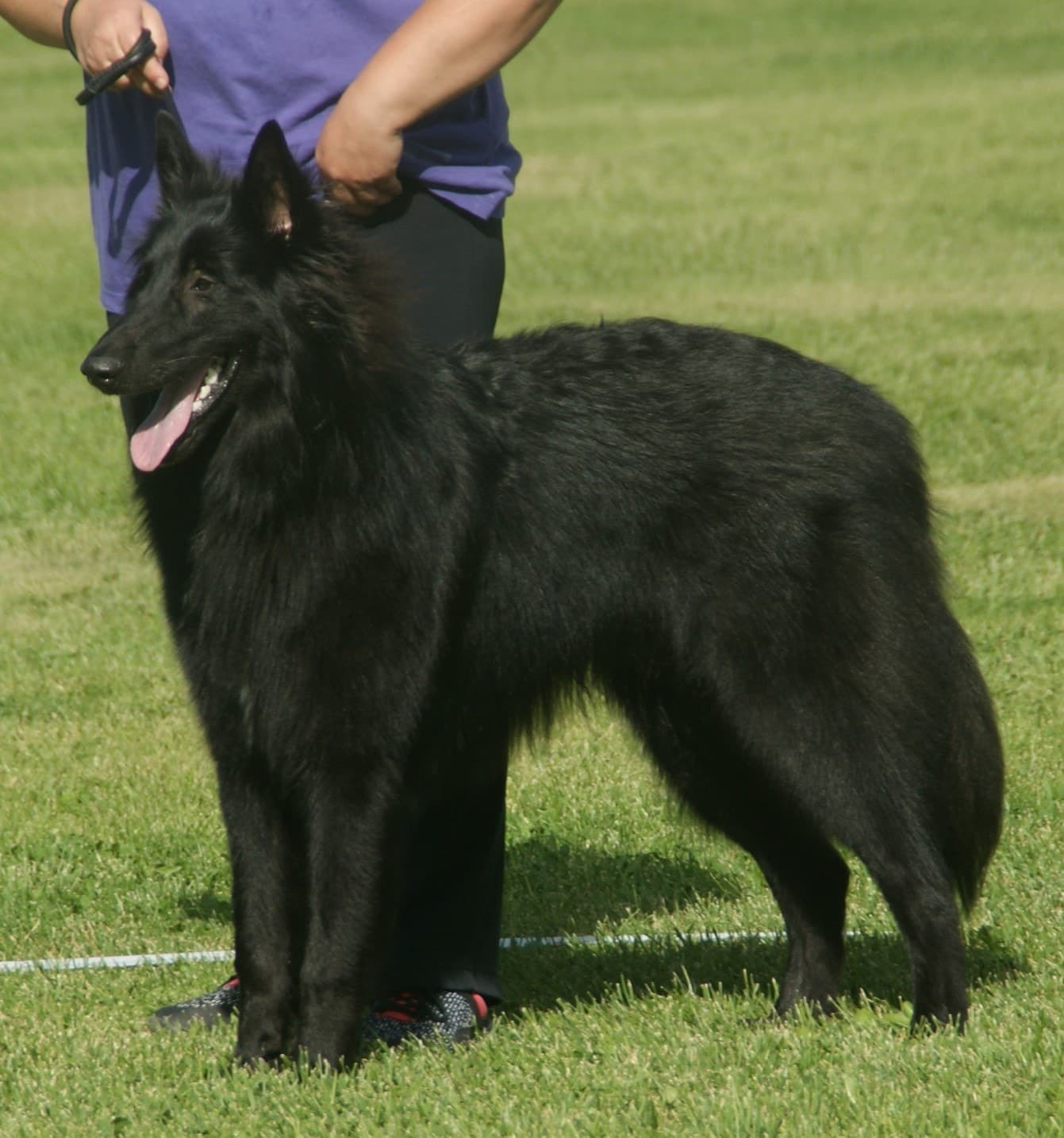
All of these are large, erect-eared herders with a long wedge head and a wolfish outline, and the fawn-and-black coats of the German Shepherd, Malinois, Tervuren and Dutch Shepherd overlap.
This is the one family with a measured safeguard in production. When a first pass returns an uncertain shortlist made up of three upright-ear working breeds, the detector runs a single low-reasoning second look before it answers; no other group gets a retry. In photos, the difference between a sloping German Shepherd back and a square Malinois outline disappears when the dog is sitting or shot from the front, and a dark sable German Shepherd can read as a Tervuren or a Groenendael. A side-on standing photo in daylight gives the detector the most to work with.
Visible tells
- A German Shepherd Dog's back slopes from the shoulders to the tail with deeply angled hindquarters, while the Belgian Malinois, Belgian Sheepdog and Belgian Tervuren stand square and level-backed on a lighter frame.
- The Belgian Sheepdog and Belgian Tervuren carry a long, straight coat with a full ruff and feathered legs; the Belgian Malinois and Dutch Shepherd are short-coated with a smooth outline.
- The Belgian Sheepdog is solid black, whereas the Belgian Tervuren is fawn to mahogany with black-tipped hairs and a black mask.
- A Dutch Shepherd is always brindle, with dark streaks over a gold or silver base, while a Belgian Malinois is a clear fawn with a black mask and never brindle.
- The Australian Kelpie is a size down from the rest, about 17-20 in and 31-46 lbs against 22-26 in for the shepherds, with a leaner head and a short, close coat.
Breeds in this group
Also in the benchmark, without a site profile yet: Belgian Tervuren, Dutch Shepherd, Australian Kelpie.
Accuracy for this group: not yet published. The next benchmark run will add it.
Northern spitz breeds
4 benchmark breeds, 20 reviewed photos
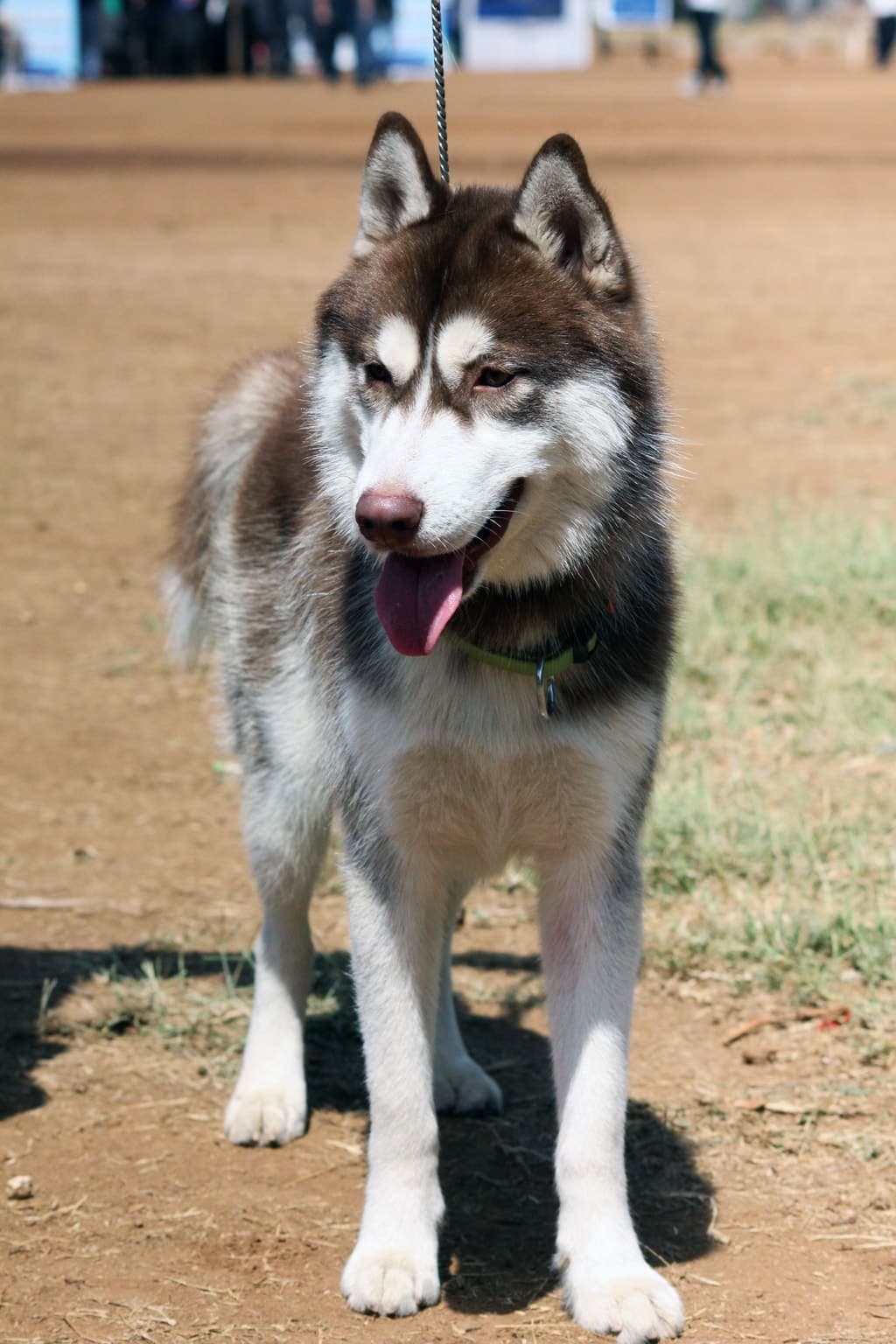
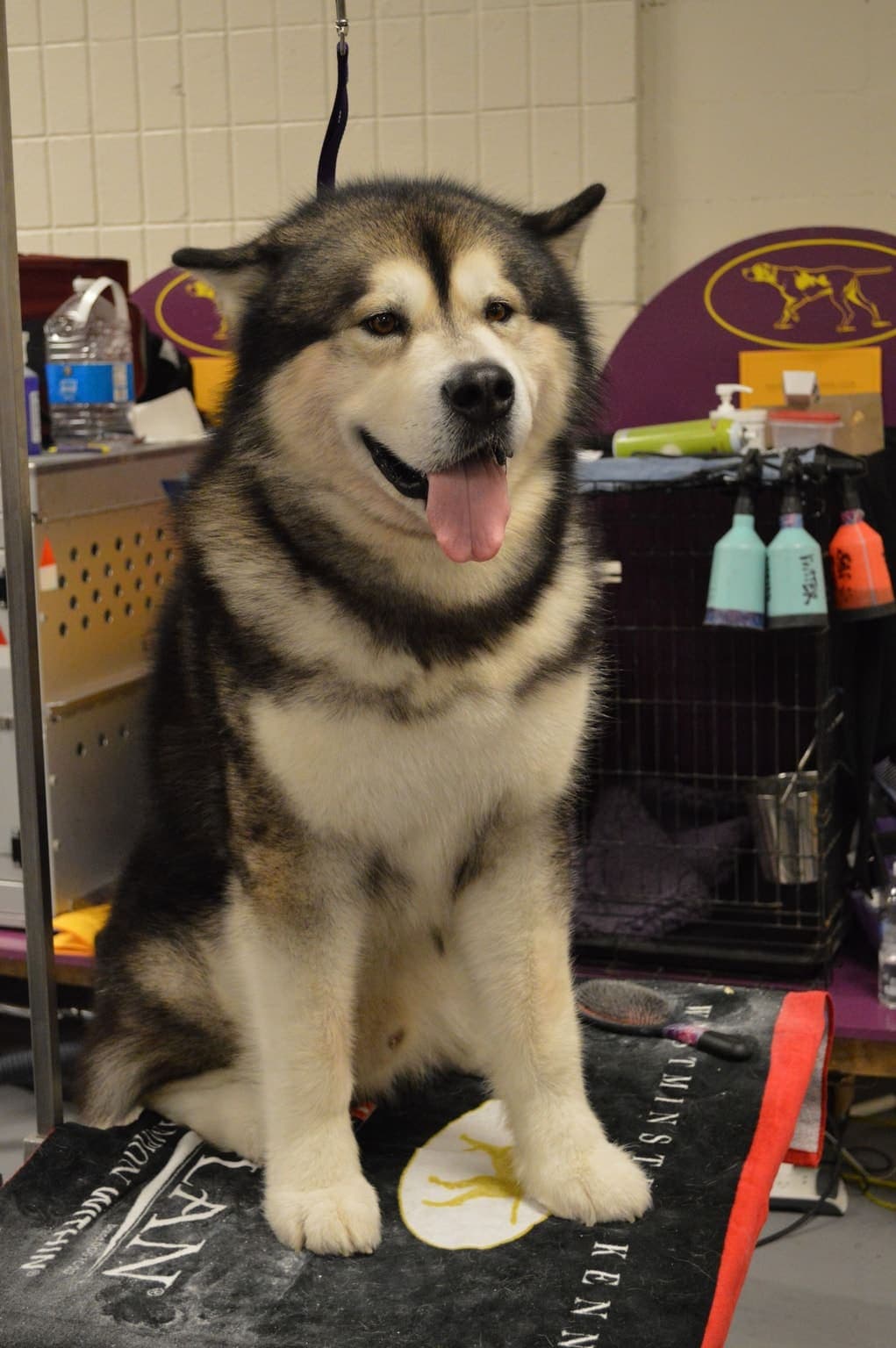
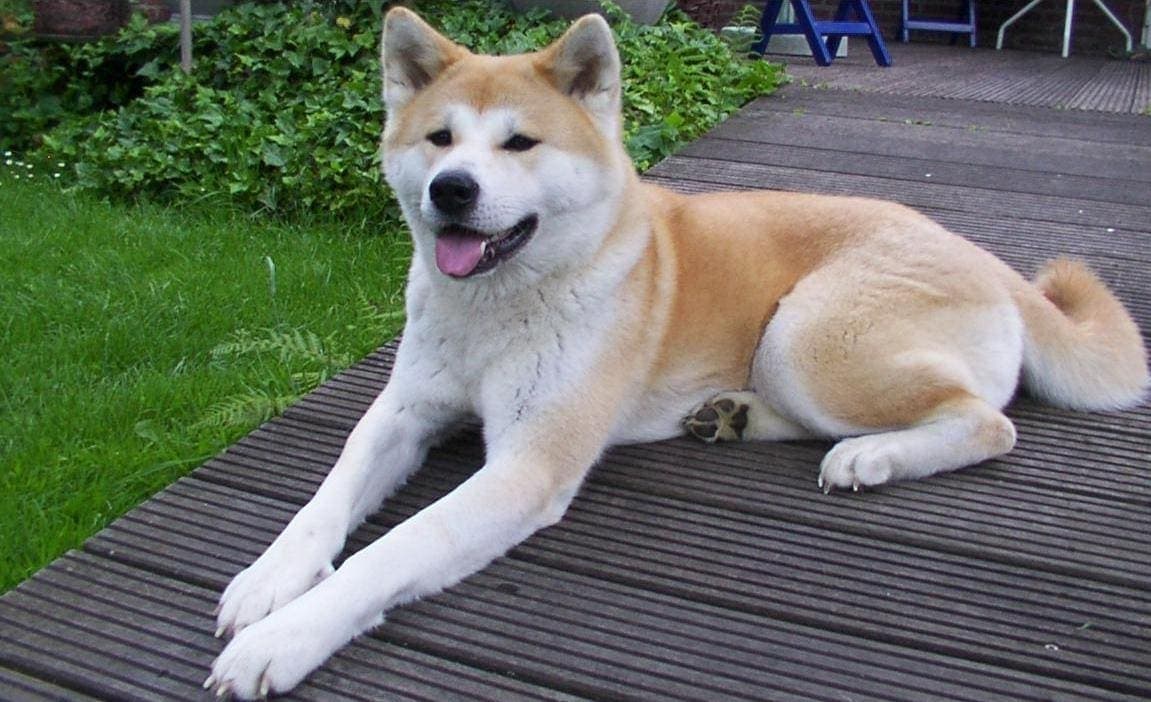
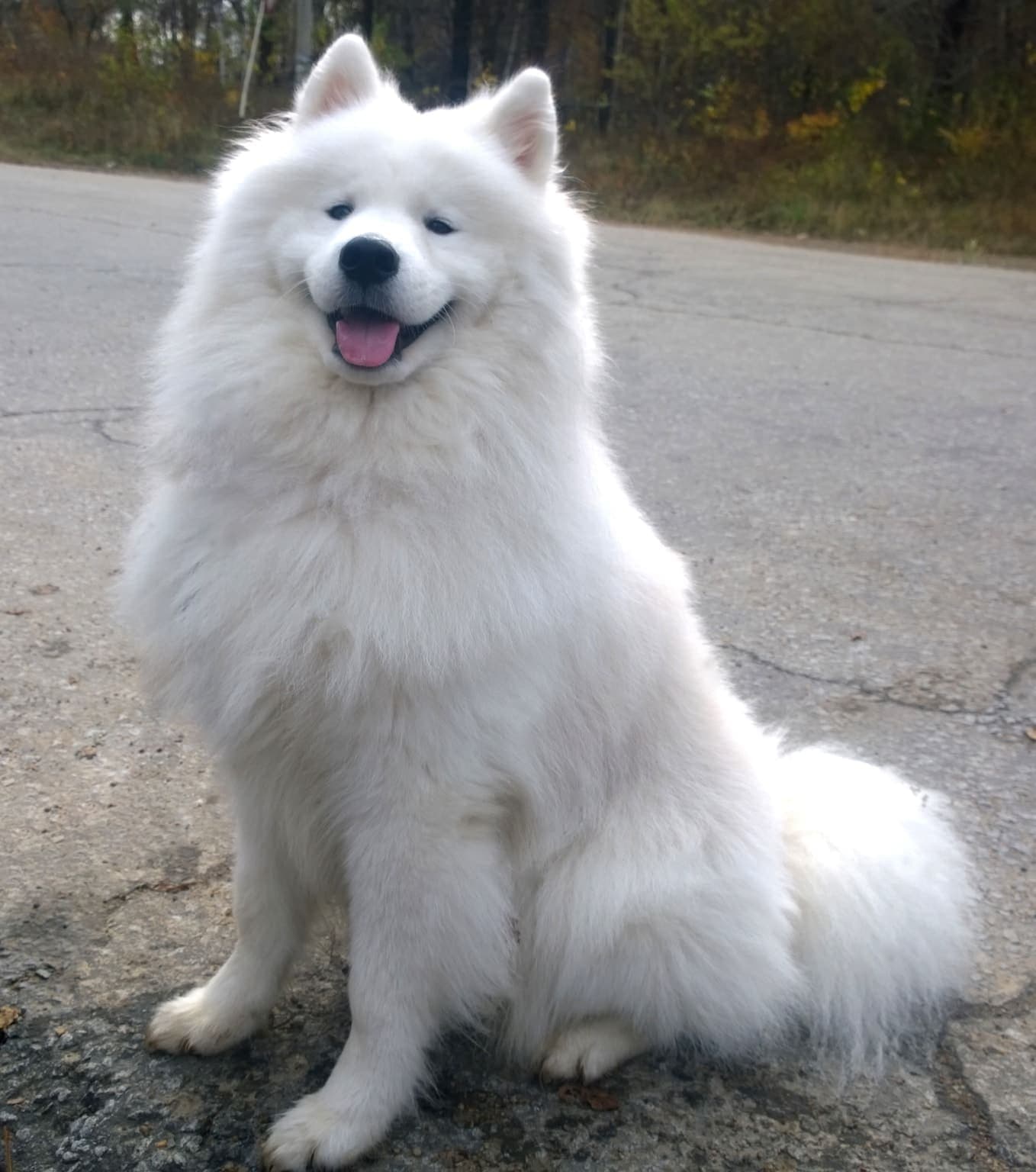
Thick double coats, erect triangular ears and tails carried over the back give all four the same snow-dog silhouette, especially in photos with nothing nearby for scale.
Nothing in a snow-dog photo says how big the dog is, and size is most of the difference between a Siberian Husky and an Alaskan Malamute. A tightly curled tail and a bear-like head point to an Akita, and a white stand-off coat with a smiling mouth points to a Samoyed, but a fluffy husky puppy or a Malamute mix can land anywhere in the group. For this pack, a full-body photo from the side, with the tail visible and something for scale, helps far more than a face shot.
Visible tells
- An Alaskan Malamute is far heavier-boned than a Siberian Husky, typically 75-85 lbs against 35-60 lbs, with a broad, deep skull and a bulkier chest.
- Compare tails: a Malamute's plumed tail waves over its back, a Siberian Husky's sickle tail usually drops when the dog relaxes, and an Akita's large tail is curled tightly over the back at all times.
- The Akita has a broad, bear-like head with small ears that tilt forward in line with the neck, while a Siberian Husky's ears are set high and point straight up.
- A Samoyed is pure white or biscuit with a stand-off coat, dark eyes and black lips whose upturned corners give the famous smile, whereas a Siberian Husky shows facial masks and often blue eyes.
- Ear set separates the two sled dogs: a Malamute's ears sit wide apart on the outer edges of the skull, while a Siberian Husky's ears are set high and close together.
Breeds in this group
Accuracy for this group: not yet published. The next benchmark run will add it.
Sighthounds
4 benchmark breeds, 20 reviewed photos
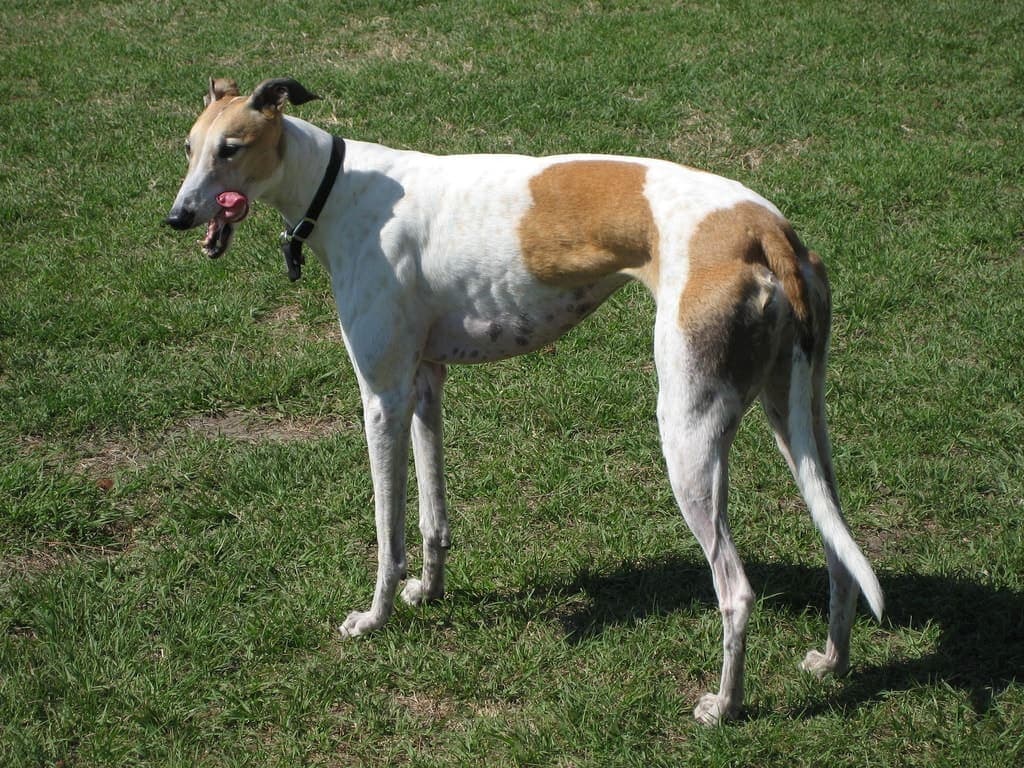
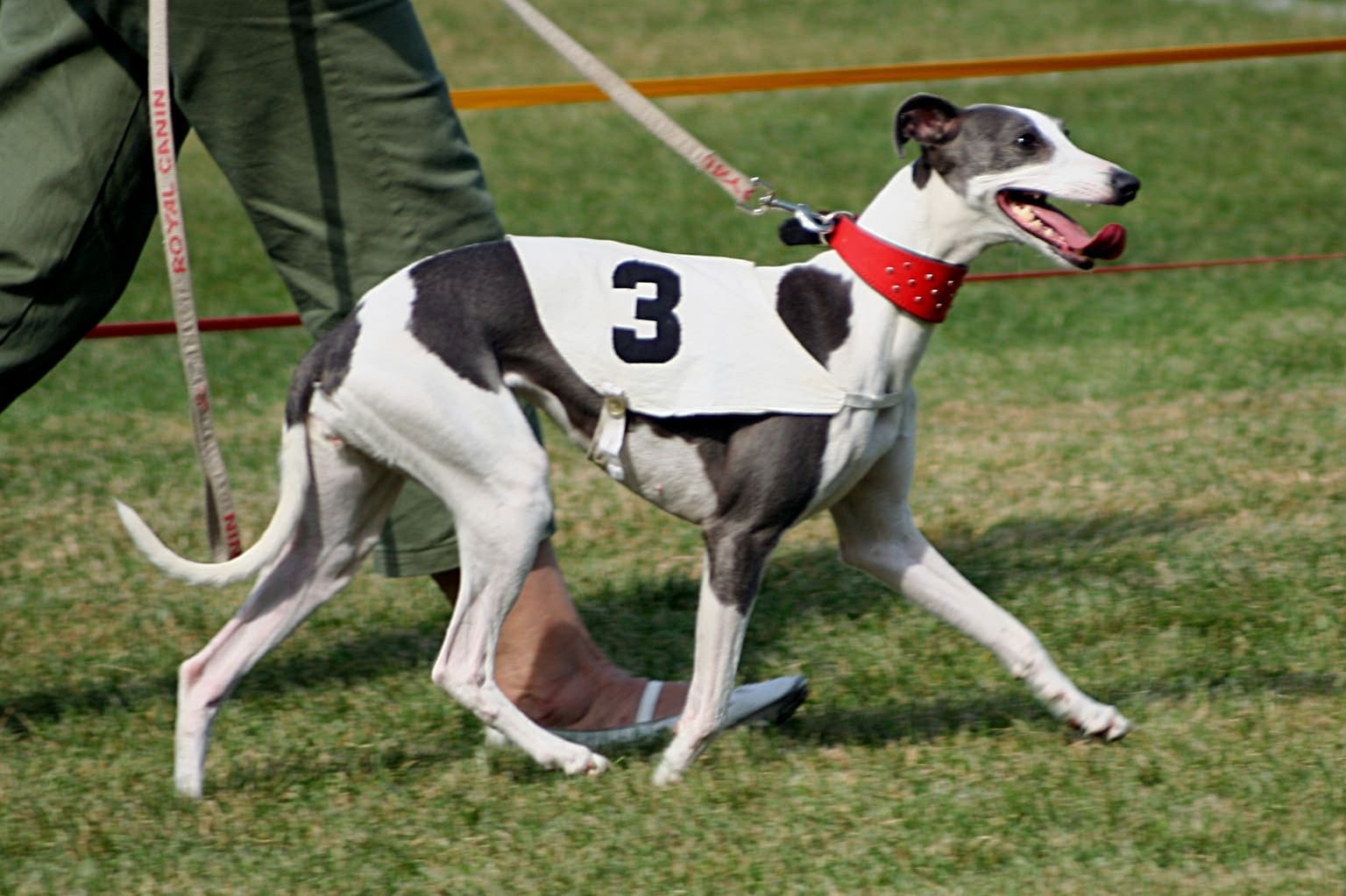
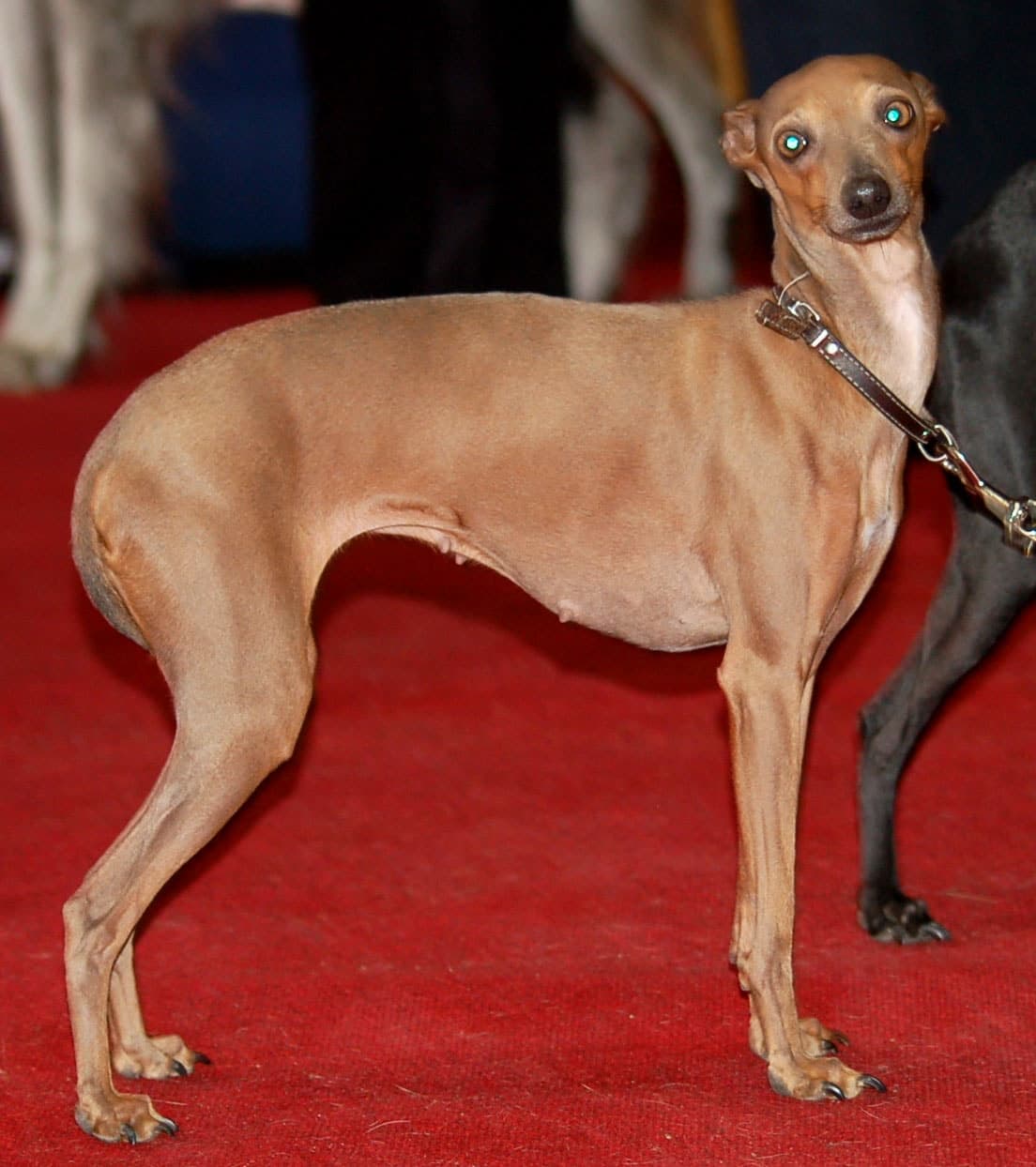
The Greyhound, Whippet and Italian Greyhound share the same deep-chested, tucked-up outline and long narrow head at three different sizes, so scale is hard to judge from a photo alone.
Three of these breeds are the same shape at three sizes, so the detector is often choosing between Whippet and Greyhound on bone and muscle alone. A curled-up Italian Greyhound on a sofa gives away its size; a Whippet standing alone in a field does not. Borzoi is the easier case because of the coat. If you photograph a sighthound, stand back, include the whole dog, and let something familiar sit in the frame for reference.
Visible tells
- Size is the main tell: a Greyhound stands 27-30 in and 60-70 lbs, a Whippet 18-22 in and 25-40 lbs, and an Italian Greyhound only 13-15 in and 7-14 lbs, so look for a doorway, sofa or person's leg for reference.
- An Italian Greyhound has fine, delicate bone and a high-stepping, prancing gait, while a Whippet is more solidly muscled through the thigh and moves with a low, ground-covering stride.
- A Whippet's topline shows a pronounced arch over the loin, whereas a Greyhound is longer through the body with heavier, more sculpted hindquarter muscle.
- A Borzoi is the only one of the group with a long, silky, wavy coat and feathering, paired with a very long, narrow head that curves down toward the nose; the other three are all smooth-coated.
Breeds in this group
Also in the benchmark, without a site profile yet: Borzoi.
Accuracy for this group: not yet published. The next benchmark run will add it.
Collie-type herders
5 benchmark breeds, 25 reviewed photos
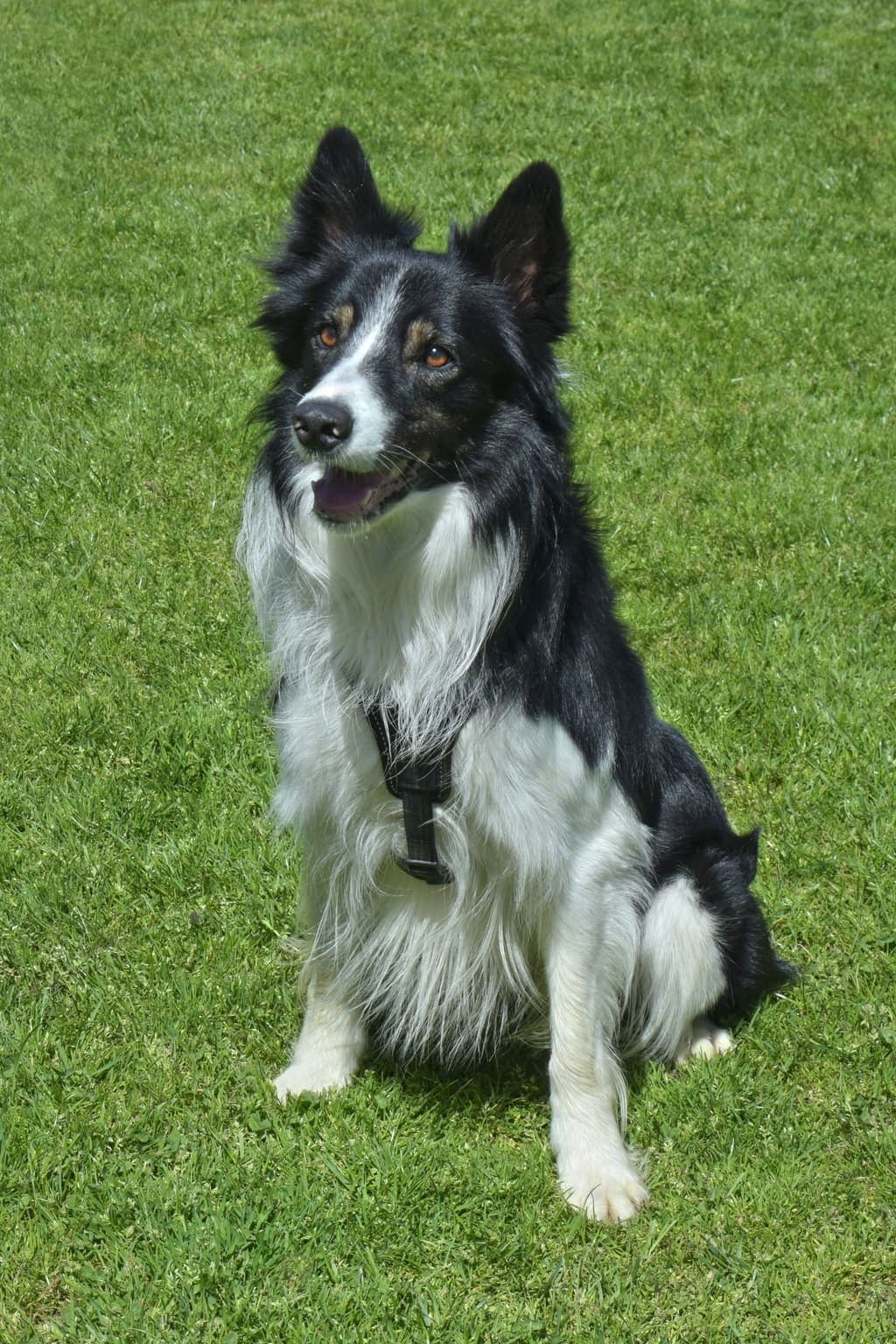
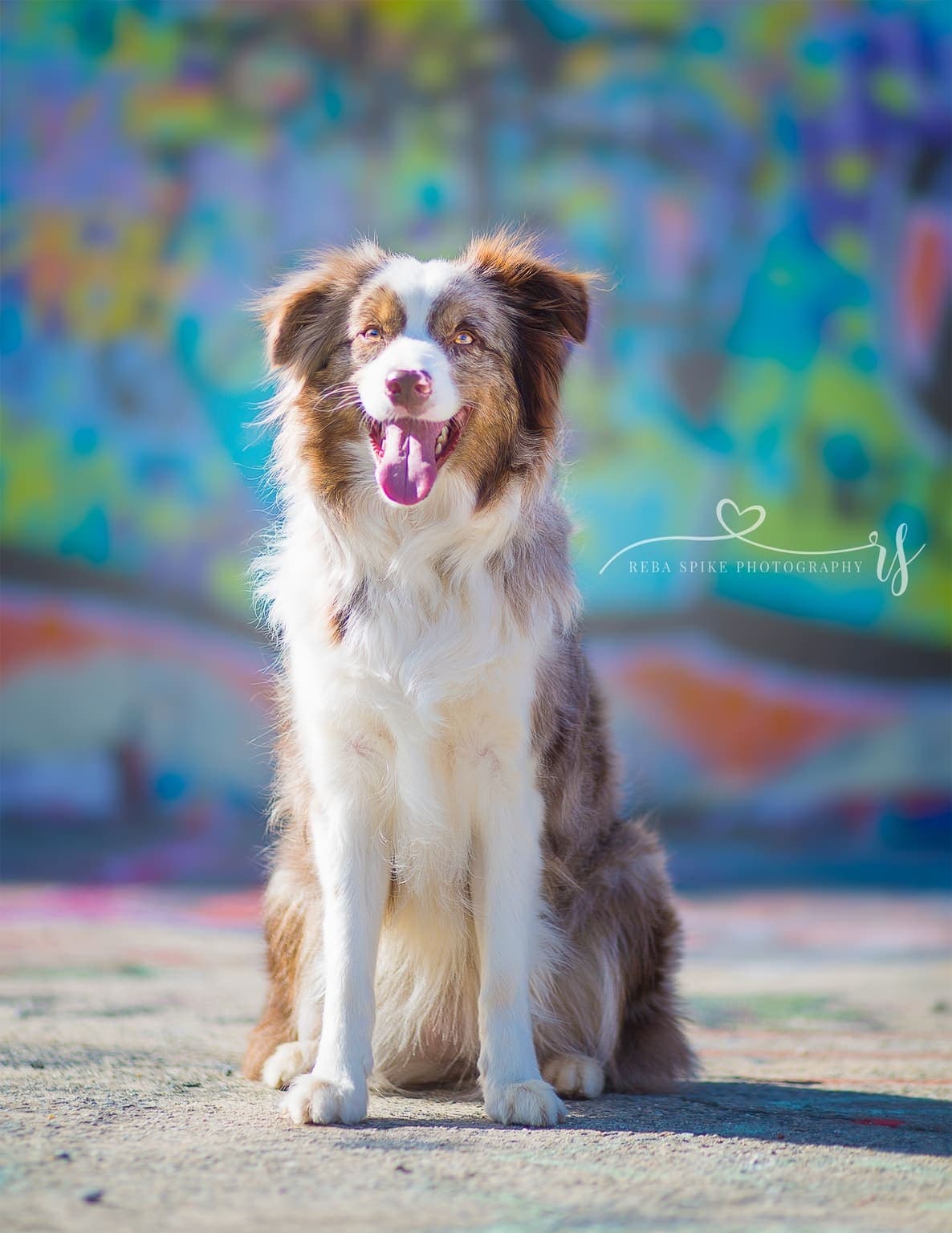
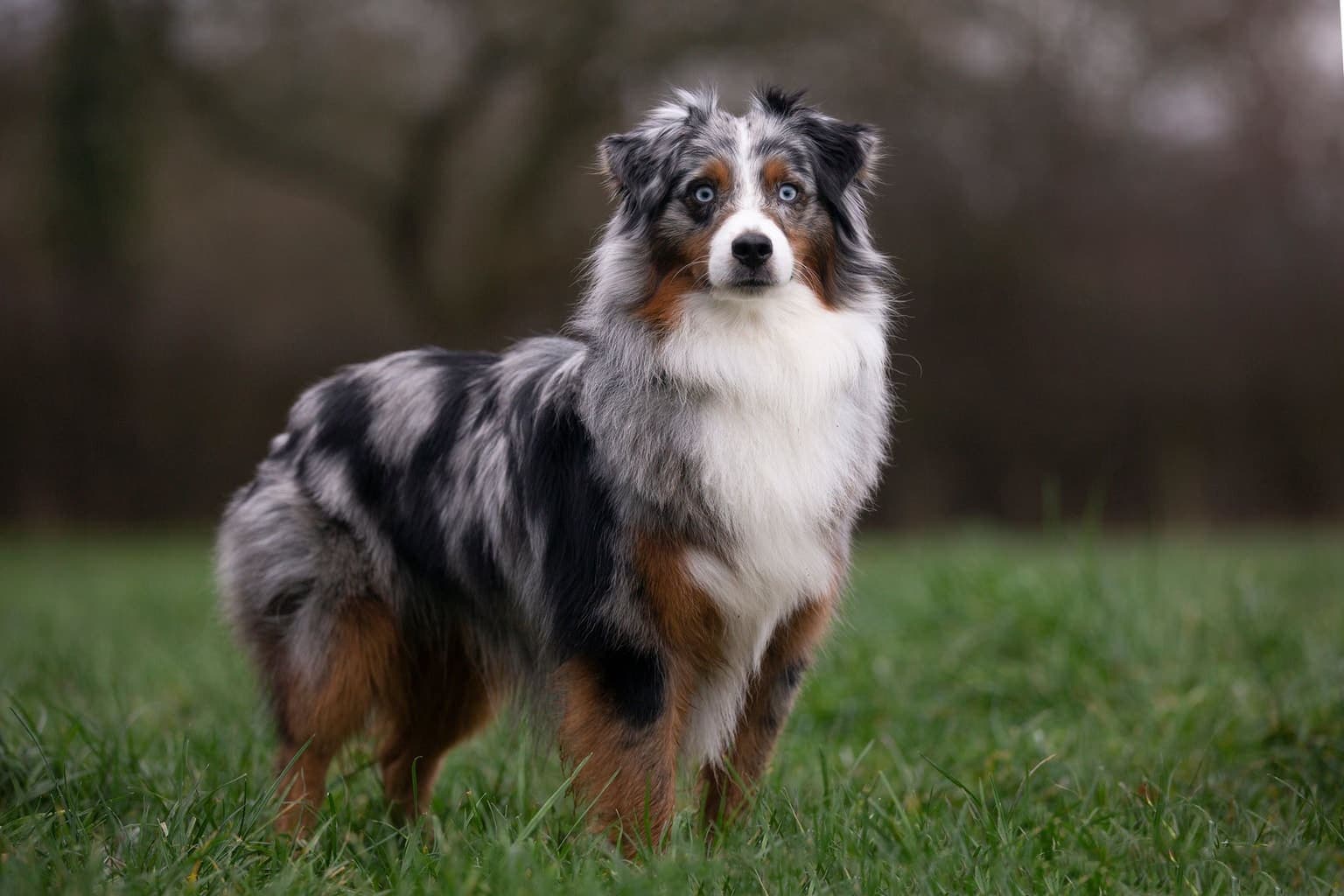
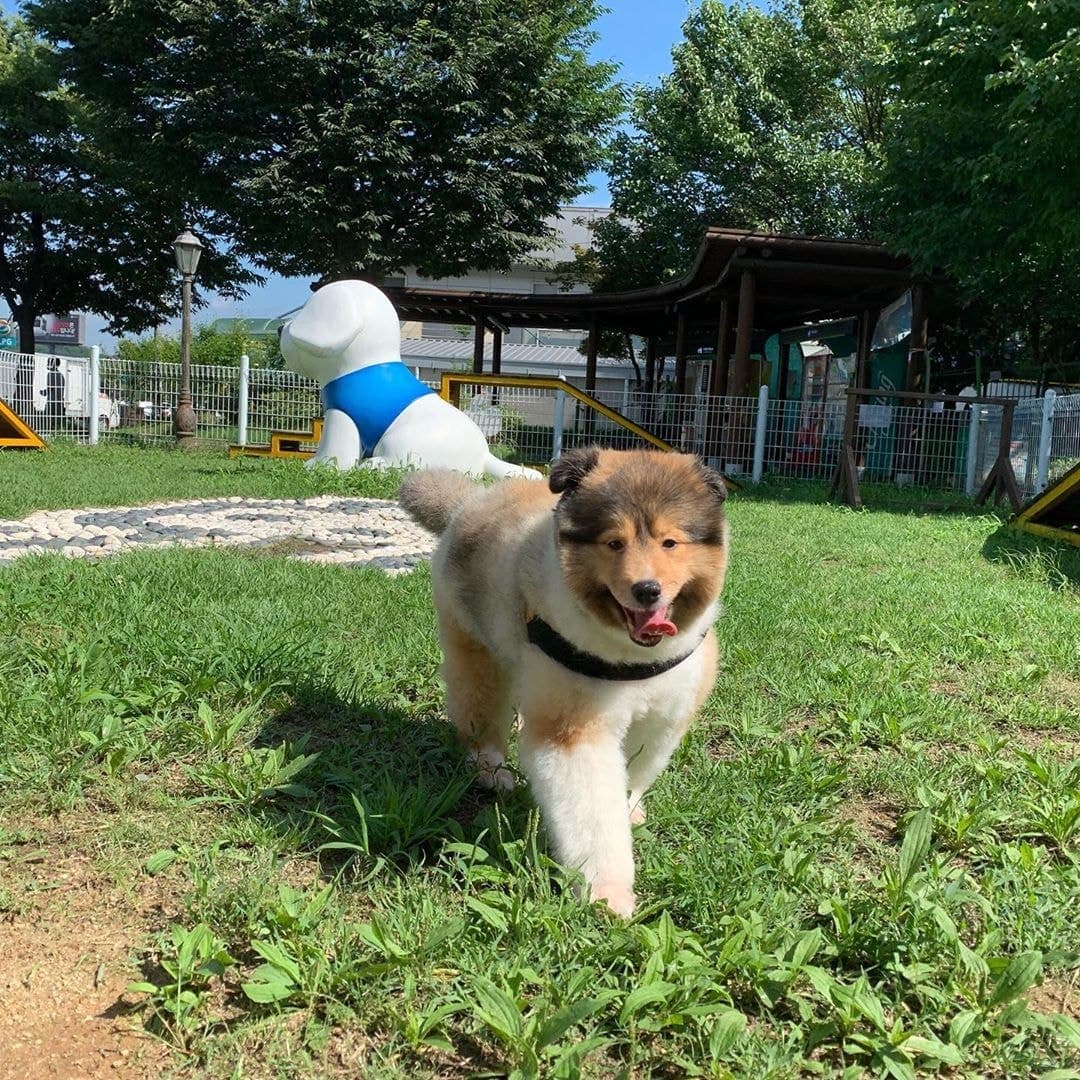
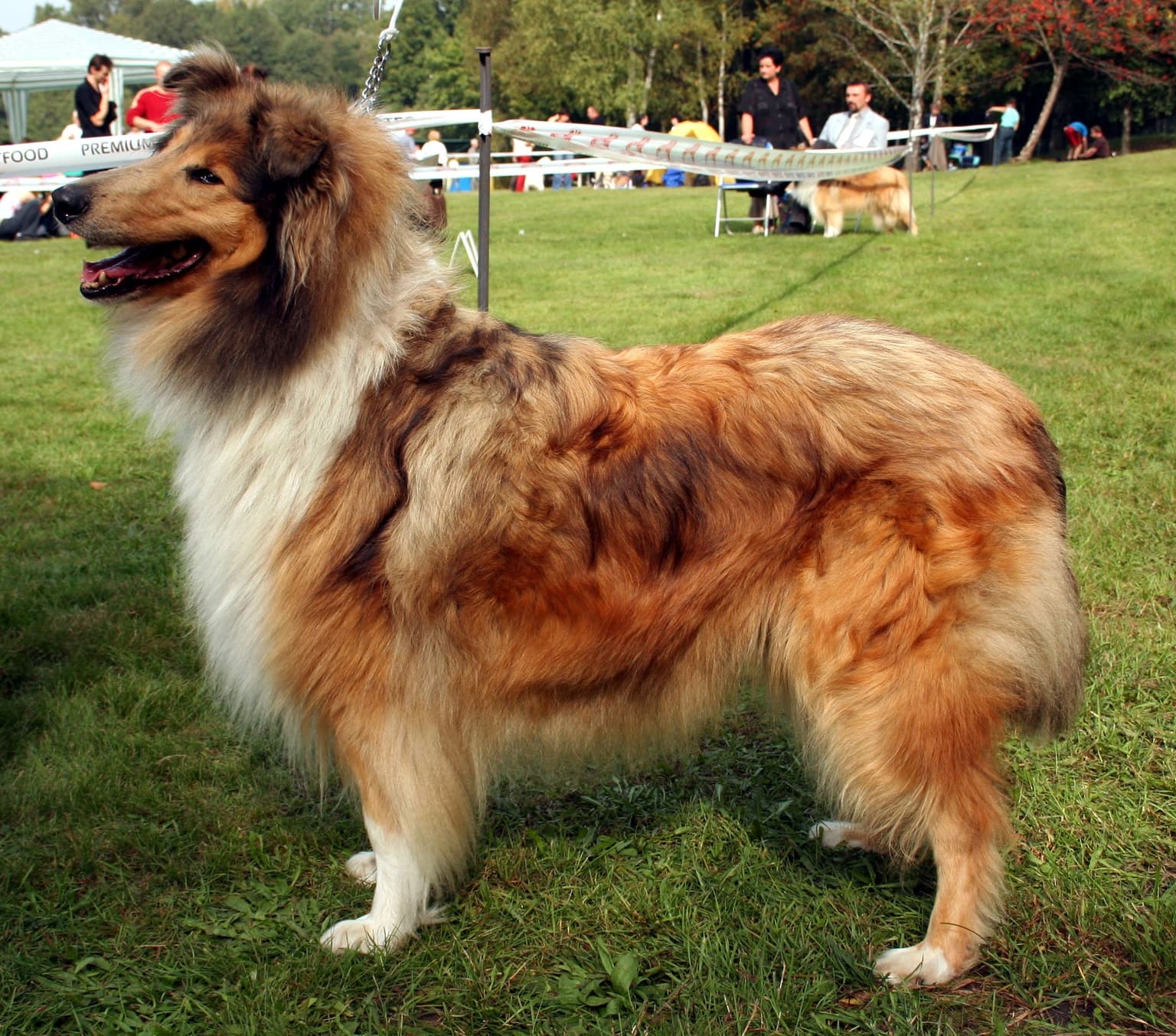
White collars and blazes, tipped or semi-erect ears and merle or tricolor coats run right across this group, and the Miniature American Shepherd is an Australian Shepherd at reduced scale.
Merle coats and white collars do most of the confusing here. A blue merle Australian Shepherd with a docked tail and a blue merle Miniature American Shepherd are the same picture at two sizes, and a sable Shetland Sheepdog is a Rough Collie in miniature. The detector leans on head shape, ear carriage, and tail. A photo that shows the whole dog standing, with the tail and ears visible, separates the group far better than a face close-up.
Visible tells
- The Rough Collie and Shetland Sheepdog have a long, refined wedge head with an almost flat skull and barely any stop, while the Border Collie and Australian Shepherd have a broader skull with a clear stop between the eyes.
- Check the tail: Australian Shepherds and Miniature American Shepherds have a docked or naturally short tail, while Border Collies, Shetland Sheepdogs and Rough Collies carry a long, feathered tail low with an upward swirl at the tip.
- Size splits the look-alikes: a Rough Collie stands 22-26 in and 50-75 lbs while a Shetland Sheepdog is 13-16 in and 15-25 lbs, and an Australian Shepherd is 18-23 in while a Miniature American Shepherd is 13-18 in and 20-40 lbs.
- Shetland Sheepdogs and Rough Collies carry their ears three-quarters erect with the tips folding forward, Australian Shepherds have triangular ears set high that break forward or to the side, and Border Collie ears vary from fully pricked to fully dropped.
- A Rough Collie or Shetland Sheepdog wears a profuse, stand-off coat with a full mane and frill; an Australian Shepherd's coat is moderate and lies closer, and a Border Collie may be smooth-coated altogether.
Breeds in this group
Accuracy for this group: not yet published. The next benchmark run will add it.
Welsh corgis
2 benchmark breeds, 10 reviewed photos
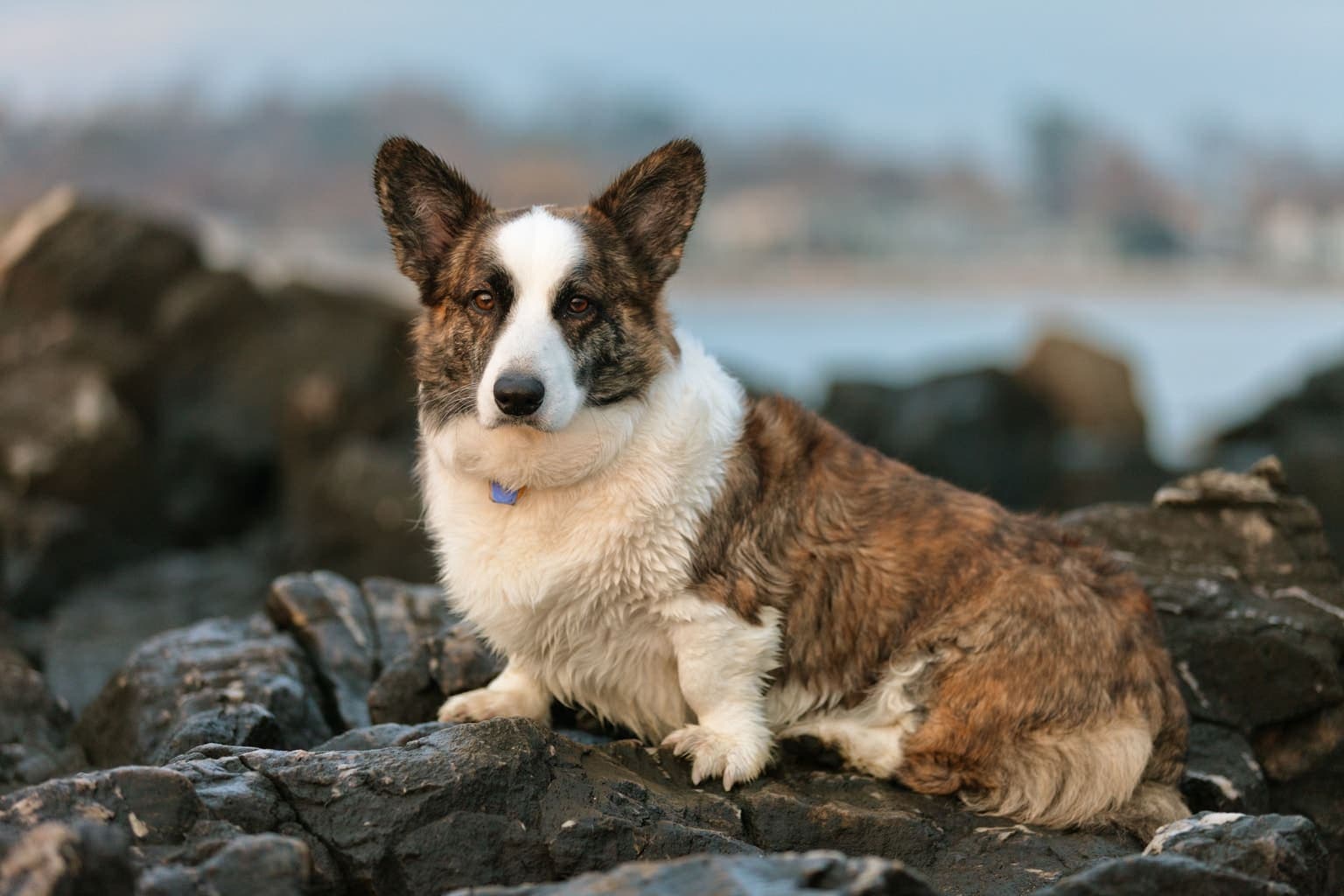
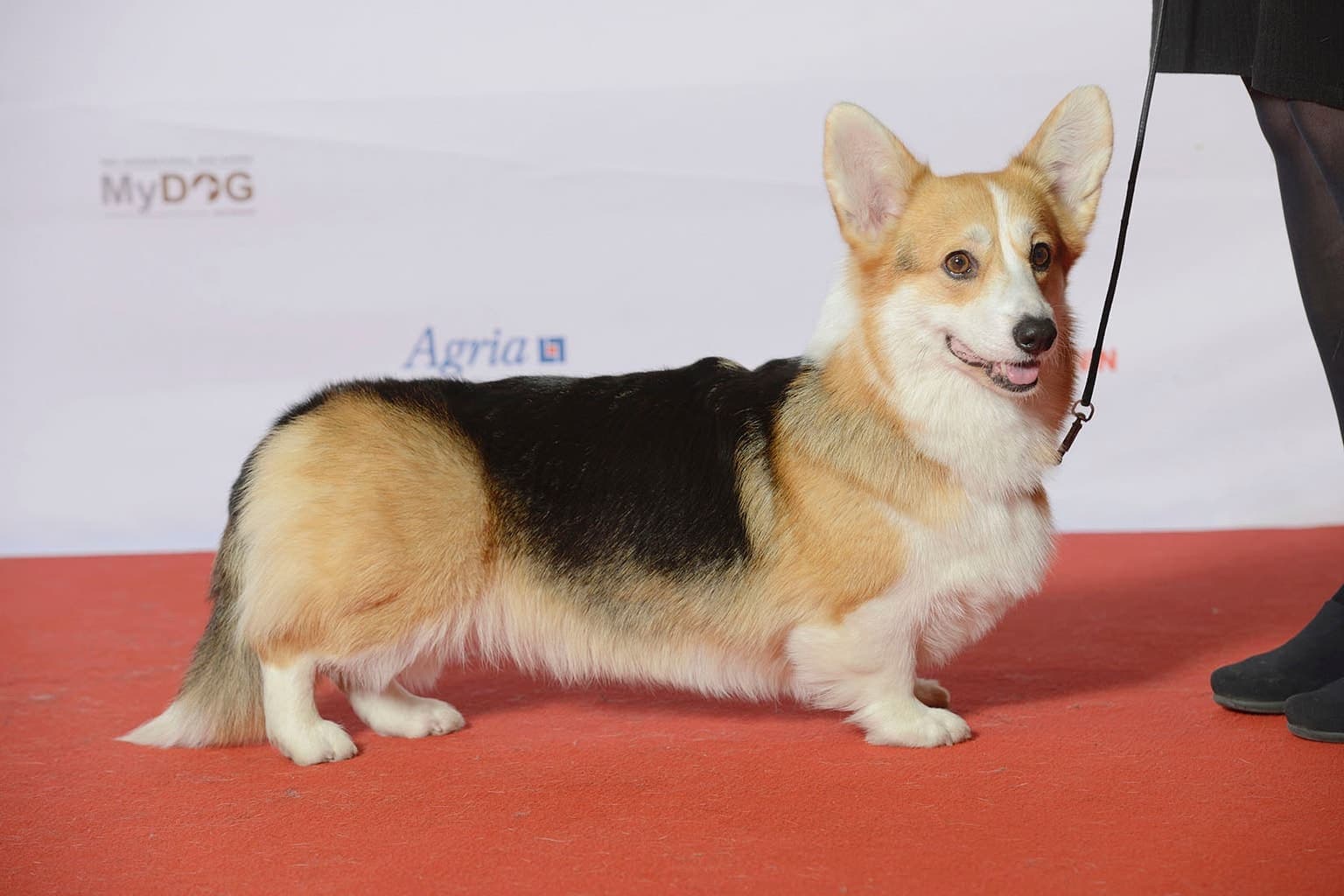
Both corgis are long, low herding dogs with big upright ears at almost identical height, and the tail that separates them is often hidden or cropped out of the frame.
Cardigans and Pembrokes were bred in neighboring Welsh counties and share the long, low herding outline and big ears. In a cropped photo of a red dog with a white chest, the detector tends toward the far more common Pembroke, and a docked Pembroke with a rounded rear is the easy case. A Cardigan photographed from the side with its full fox-brush tail in the frame is the clearest photo you can give it; blue merle or brindle settles the question as Cardigan.
Visible tells
- A Cardigan Welsh Corgi carries a long, fox-brush tail held low, while a Pembroke Welsh Corgi has a docked or naturally short tail that leaves the rear looking rounded.
- Cardigan ears are large with rounded tips, whereas Pembroke ears are a little smaller and finish in a slightly pointed tip.
- The Cardigan is heavier-boned and a touch longer at 25-38 lbs, with a slightly bowed front and feet that turn a little outward; the Pembroke is lighter at 24-30 lbs with a straighter front and a more refined outline.
- Blue merle and brindle coats occur only in the Cardigan, while a Pembroke comes in red, sable, fawn or black-and-tan, with or without white markings.
Breeds in this group
Accuracy for this group: not yet published. The next benchmark run will add it.
Flat-faced companions
3 benchmark breeds, 15 reviewed photos
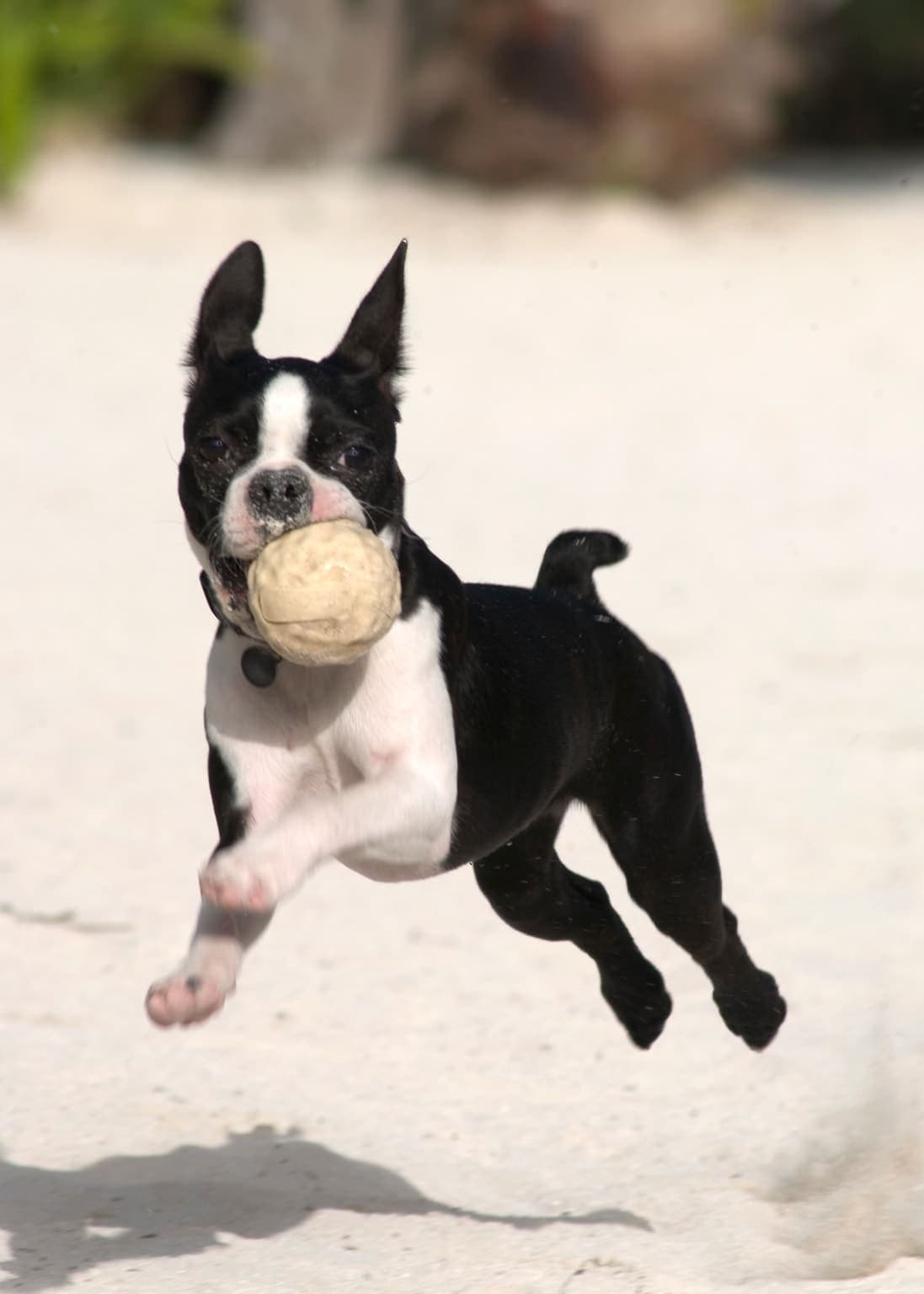
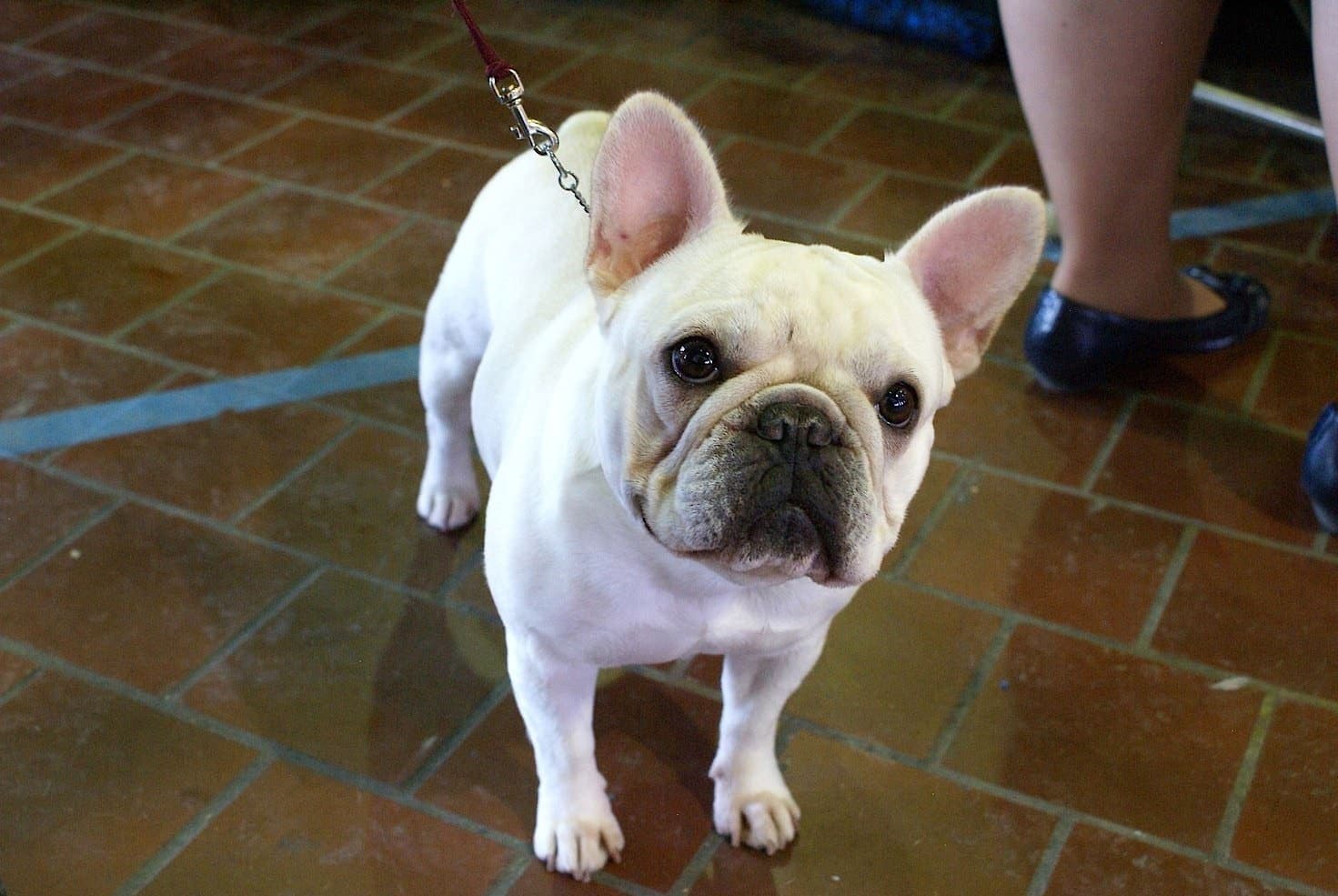
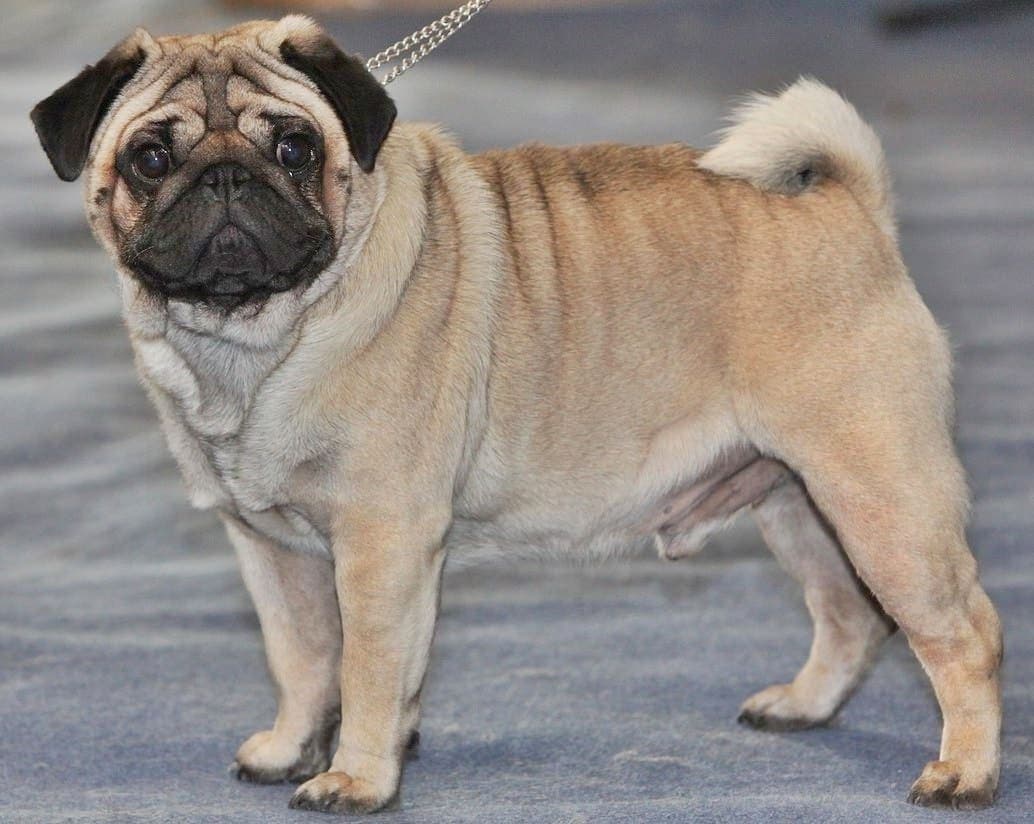
All three are compact small dogs with a short muzzle, broad skull and large round eyes, so a head-on photo shows the same flat, wide-eyed face.
Head-on, all three flat faces look alike, and ear shape is the tell the detector uses most. A Boston Terrier in black-and-white tuxedo markings is usually clear; a black French Bulldog with a white chest is the harder case, and a cream Frenchie can pass as a fawn Pug until the ears and tail are visible. Photograph the dog slightly from the side so both ears and the tail show, and keep the camera at the dog's eye level so the muzzle is not distorted.
Visible tells
- A French Bulldog's bat ears are broad at the base and rounded at the top, a Boston Terrier's ears are smaller, pointed and erect, and a Pug's ears are small, velvety and folded against the head.
- A Pug's tail curls tightly over the hip, ideally in a double curl, while Boston Terriers and French Bulldogs have a short, low-set tail that is straight or screwed.
- The Boston Terrier is square and leggy at 15-17 in with a tucked-up waist, the French Bulldog is low and wide at 11-13 in with a slight rise over the loin, and the Pug is a cobby 10-13 in.
- A Pug has a round head, deep forehead wrinkles and a broad black mask; a Boston Terrier's muzzle is short but square and smooth; a French Bulldog has heavy wrinkles over the nose beneath a flat skull.
- Boston Terriers wear a tuxedo pattern of black, brindle or seal with a white blaze, muzzle and chest, while French Bulldogs and Pugs are mostly fawn, brindle, black or cream without that symmetrical white marking.
Breeds in this group
Accuracy for this group: not yet published. The next benchmark run will add it.
White companion dogs
3 benchmark breeds, 15 reviewed photos
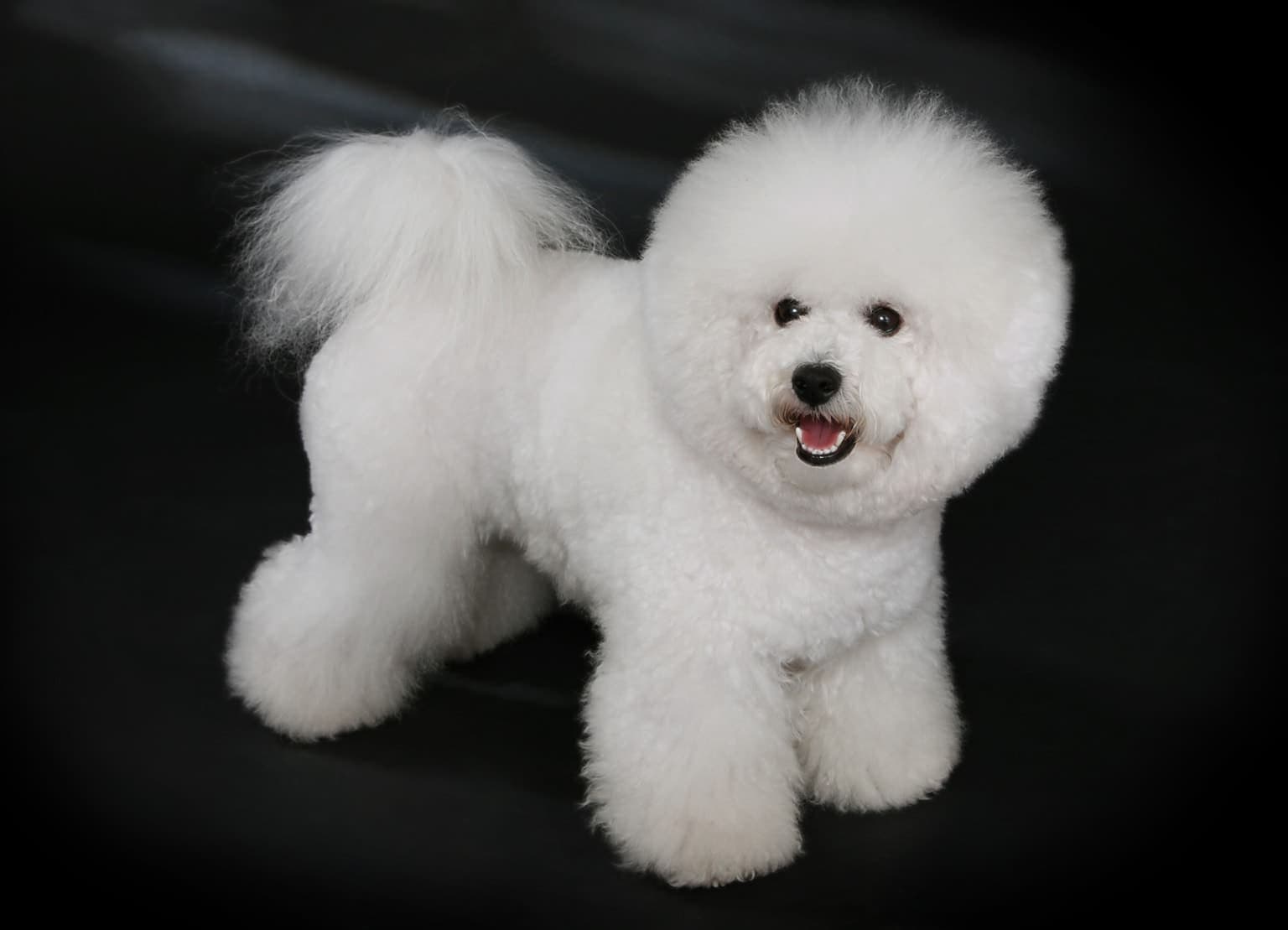
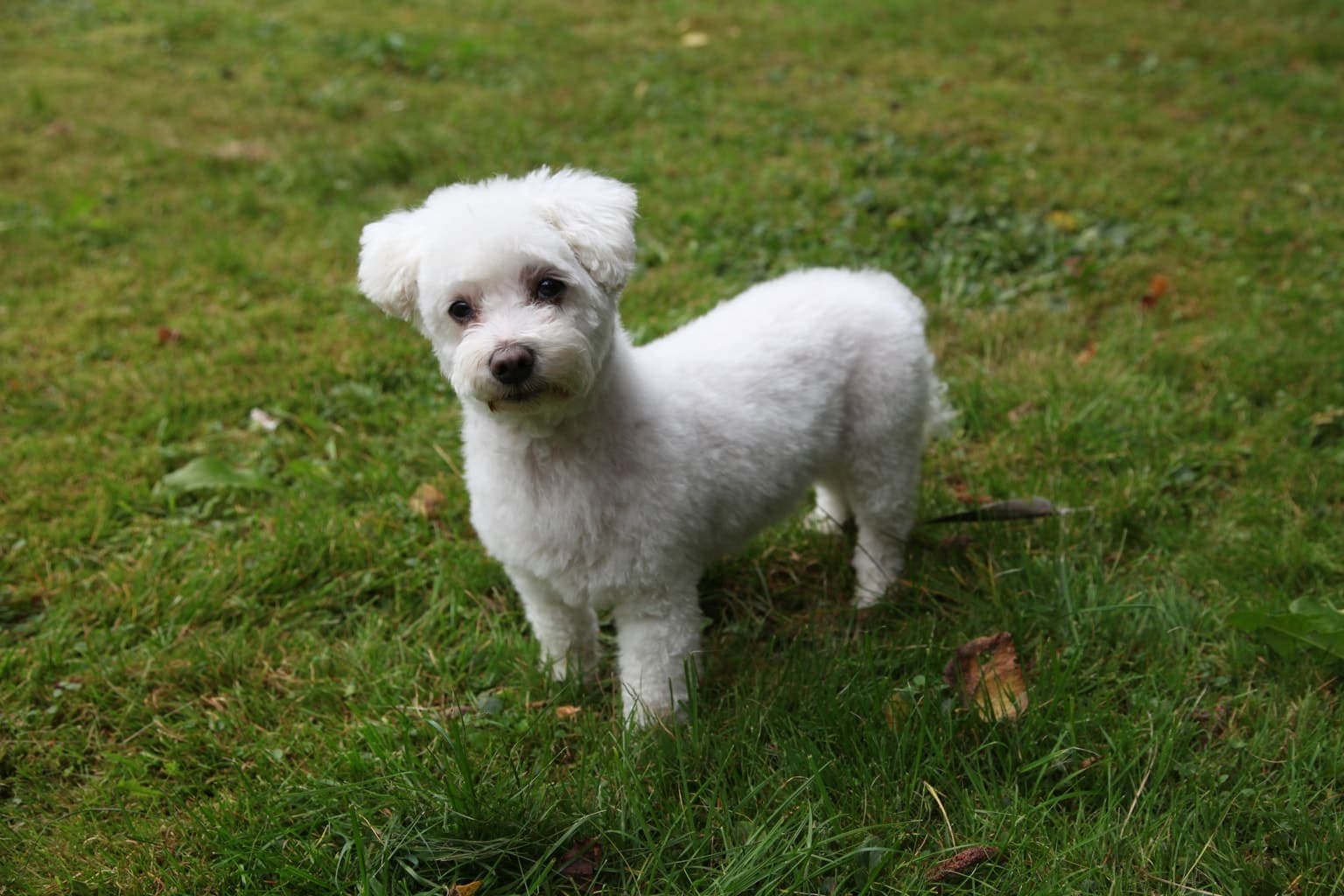
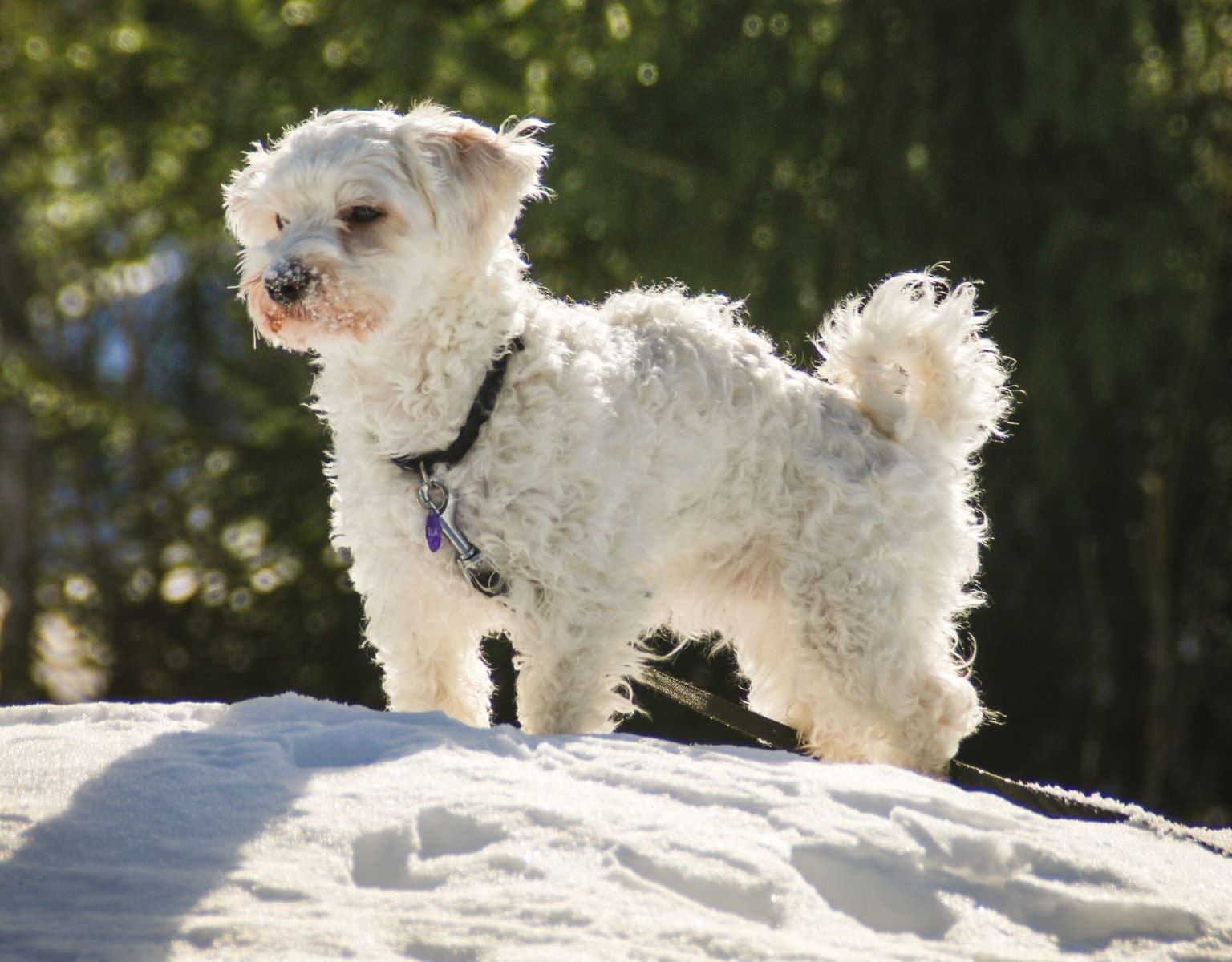
Small white lap dogs whose full coats hide the body underneath, and a pet trim removes the coat texture and length that would normally tell them apart.
Grooming decides this group. A Bichon Frise in a full powder-puff trim and a Maltese in a show coat are unmistakable, but the same two dogs in a short pet clip become small white dogs with dark eyes. The Havanese sits between them in coat and size and comes in colors the other two never do, so a non-white dog is the easy case. For a white dog, a close, well-lit photo that shows coat texture is worth more than a wide shot.
Visible tells
- A Bichon Frise has a springy, curly double coat usually scissored into a rounded powder-puff, a Maltese has a single, silky, dead-straight coat that hangs to the floor, and a Havanese has a soft, wavy-to-curly double coat that is often left natural.
- Any color other than white rules out both the Maltese and the Bichon Frise; only the Havanese comes in cream, gold, sable, black, chocolate and parti-color.
- Size runs from the Maltese at 4-7 lbs and 7-9 in, through the Havanese at 7-13 lbs and 8.5-11.5 in, to the Bichon Frise at 12-18 lbs and 9.5-11.5 in.
- A Bichon's head is trimmed into a dome with round dark eyes ringed by dark skin, a Maltese has a medium-length tapering muzzle with low-set ears under long fringe, and a Havanese has a broader skull with a full, blunt, rectangular muzzle.
Breeds in this group
Accuracy for this group: not yet published. The next benchmark run will add it.
Small rough-coated terriers
3 benchmark breeds, 15 reviewed photos
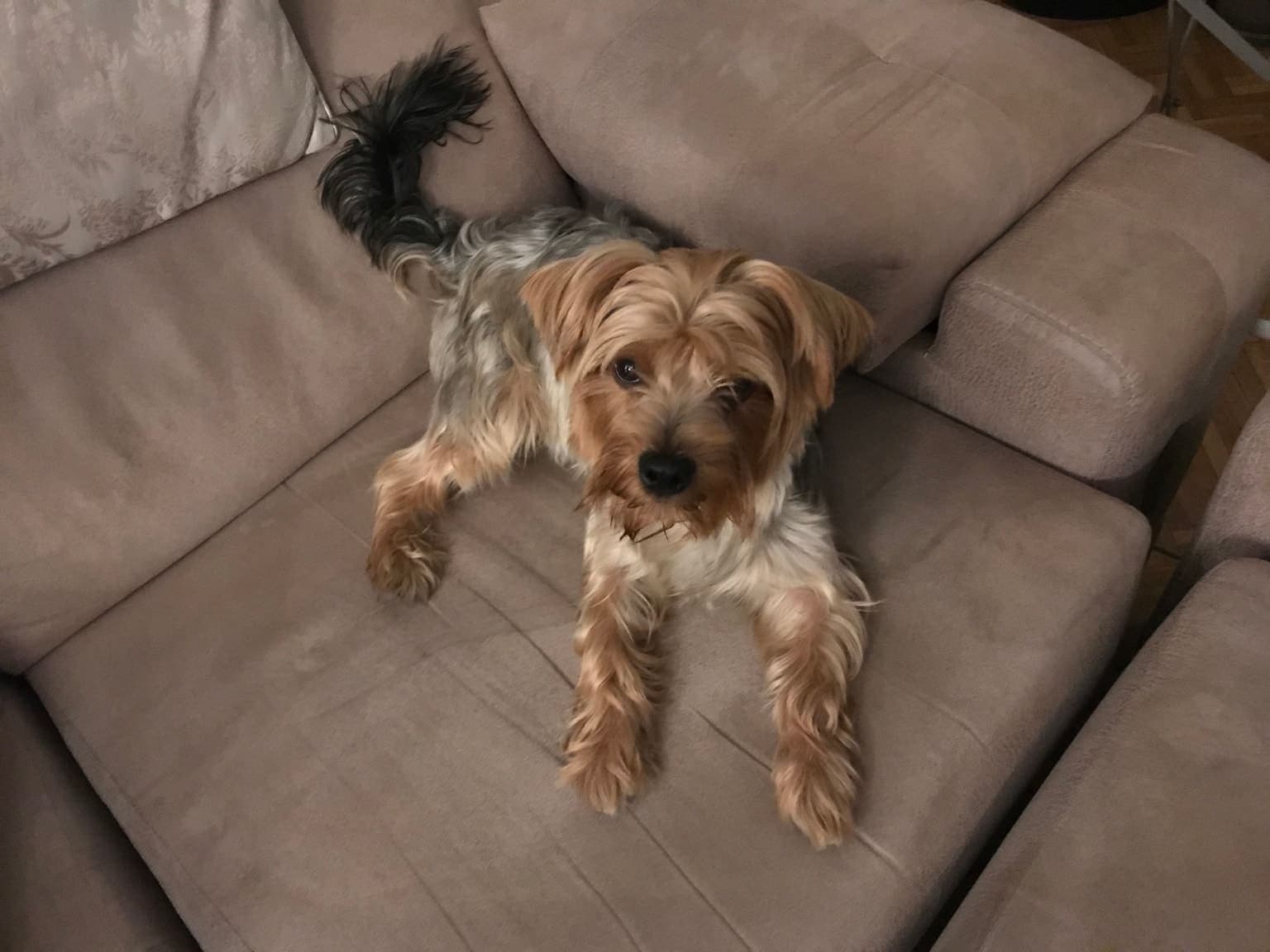
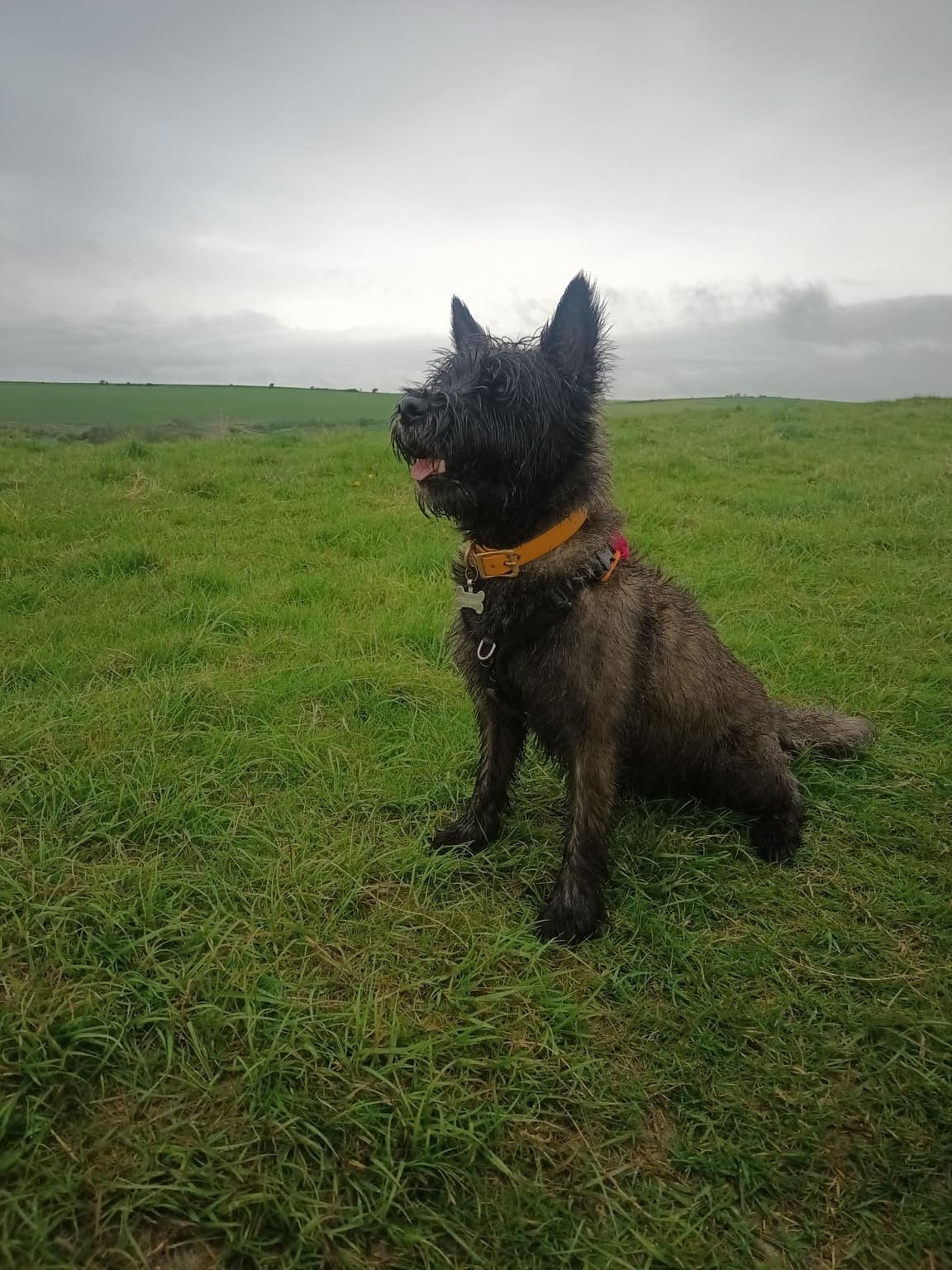
All three are small prick-eared terriers, and a Yorkshire Terrier in a short pet cut loses the silky floor-length coat that normally sets it apart from the harsh-coated Cairn and Australian Terrier.
Puppies cause most of the trouble here. A Yorkshire Terrier puppy is black and tan with a short coat and looks like a small rough terrier until the silky adult coat grows in, and an adult Yorkie in a short pet cut keeps that look. The Cairn Terrier's shaggy, harsh coat and fox-like face are the easier case in adults. Photograph the dog in profile so coat texture, body length, and ear set are all visible.
Visible tells
- A Yorkshire Terrier's coat is fine, glossy and silky, parted down the back and hanging straight, while the Cairn Terrier and Australian Terrier wear a harsh, wiry outer coat over a soft undercoat.
- The Yorkshire Terrier is the smallest at 4-7 lbs and 7-8 in, a Cairn Terrier is stockier at 13-14 lbs and 9-10 in with a wide stance, and an Australian Terrier stands 10-11 in and 15-20 lbs on a body noticeably longer than it is tall.
- A Cairn Terrier has a broad skull with shaggy brows and a fox-like expression, an Australian Terrier has a long, strong head topped by a soft topknot and a ruff at the neck, and a Yorkshire Terrier has a small, flat-topped skull.
- Blue-and-tan is shared by Yorkshire Terriers and Australian Terriers, so lean on coat texture and build rather than color; a brindle, wheaten, red or grey coat points to a Cairn Terrier.
Breeds in this group
Also in the benchmark, without a site profile yet: Australian Terrier.
Accuracy for this group: not yet published. The next benchmark run will add it.
Bull-and-terrier breeds
3 benchmark breeds, 15 reviewed photos
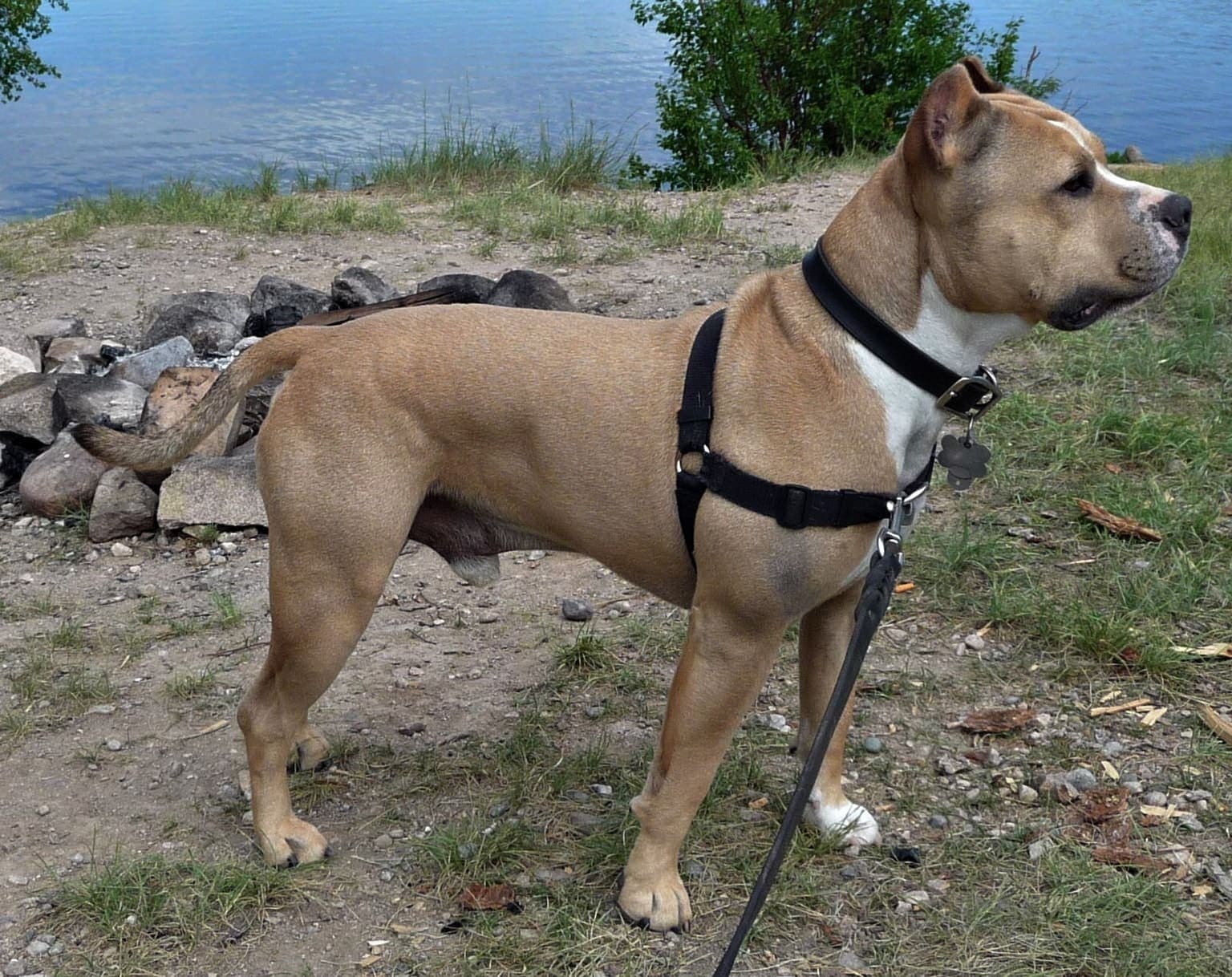
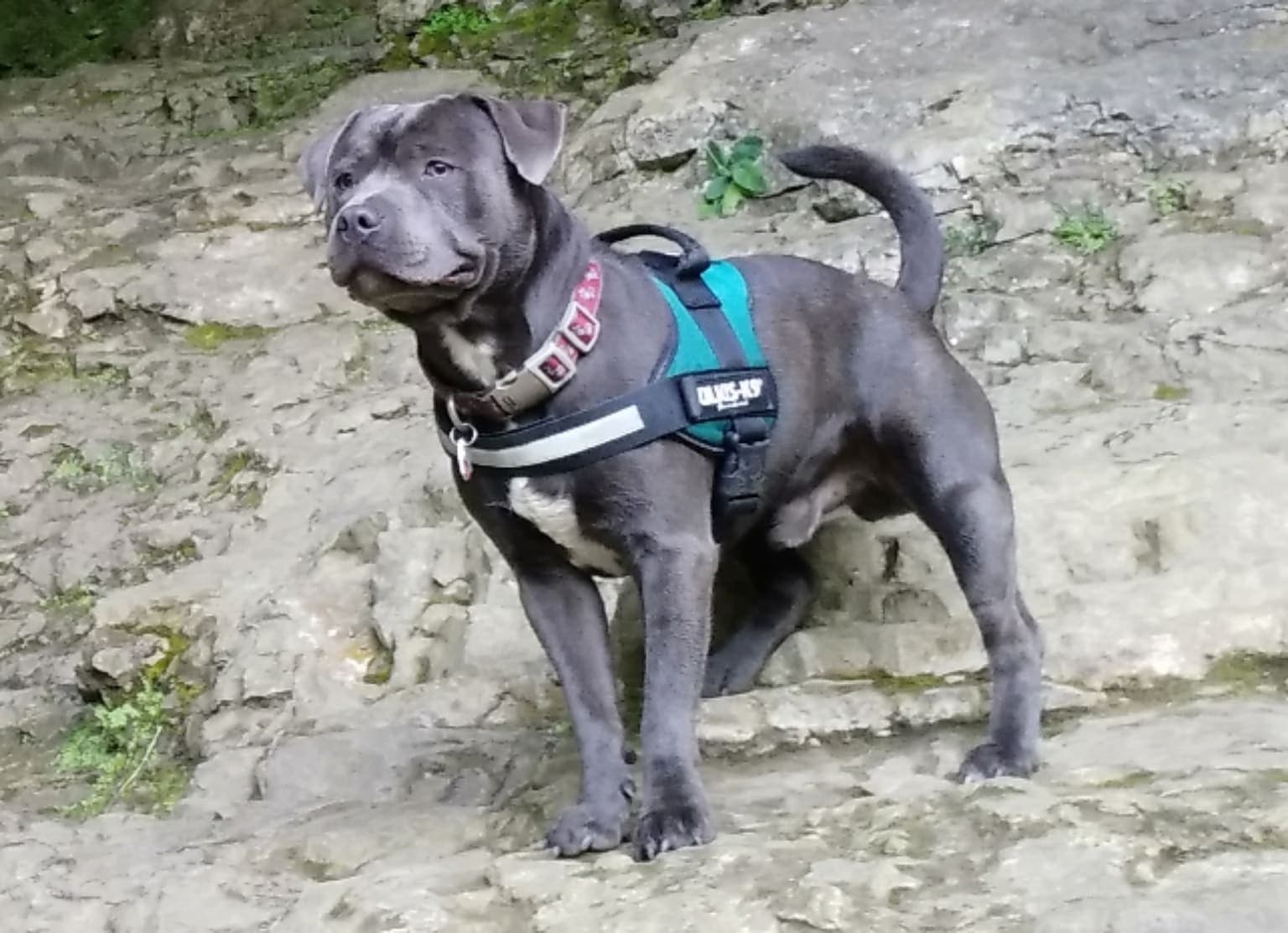
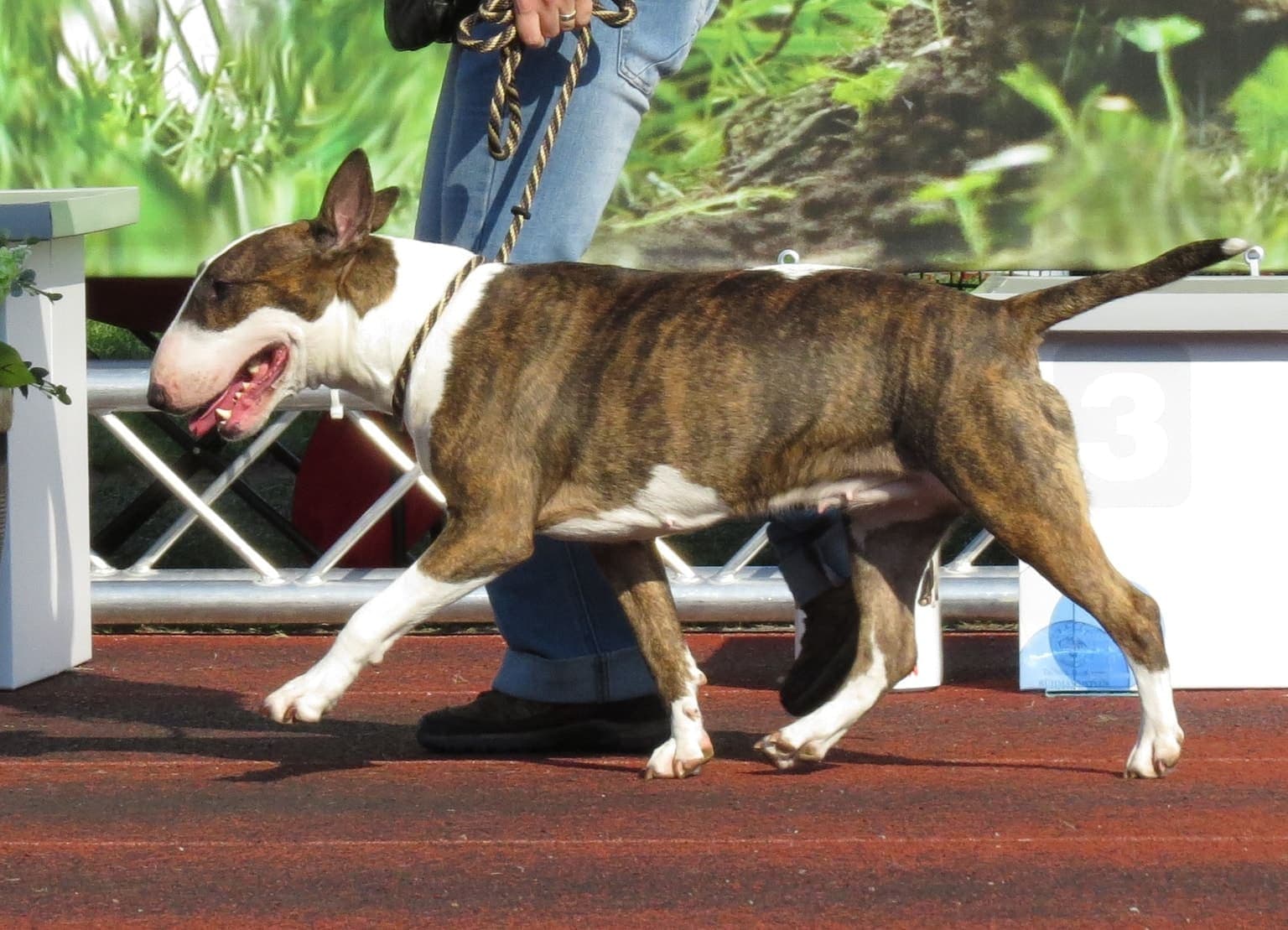
Broad chests, short glossy coats and blocky, heavily muscled builds put all three in the same frame, and brindle and pied coats appear across the group.
A Bull Terrier's egg-shaped head is one of the most recognizable outlines in the benchmark, so most confusion is between the American Staffordshire Terrier and the Staffordshire Bull Terrier, which differ mainly in height and head proportion. People also ask about the pit bull, which is a type rather than a registry breed; the detector names the registry breeds it can support. A side-on standing photo shows leg length and muzzle length, which is what separates the two Staffordshires.
Visible tells
- A Bull Terrier's egg-shaped head curves in one unbroken line from skull to nose with no stop, and its small, triangular eyes and naturally erect ears are unmistakable in profile.
- An American Staffordshire Terrier is clearly the taller dog at 17-19 in and 40-70 lbs, while a Staffordshire Bull Terrier stands 14-16 in and 24-38 lbs with a head that looks wide for its body.
- The Staffordshire Bull Terrier has a very short foreface with a pronounced stop and bulging cheek muscles, whereas the American Staffordshire Terrier has a medium-length muzzle that gives the head a longer look.
- Staffordshire Bull Terriers and Bull Terriers are never cropped, so cropped ears point to an American Staffordshire Terrier; uncropped, the Staffordshire Bull Terrier's ears are rose or half-pricked and the Bull Terrier's stand fully erect.
- A Bull Terrier stands 21-22 in on a short, rounded, barrel-like body that is deeper and rounder than the flat-sided athletic frame of the American Staffordshire Terrier.
Breeds in this group
Accuracy for this group: not yet published. The next benchmark run will add it.
Mastiff types
5 benchmark breeds, 25 reviewed photos
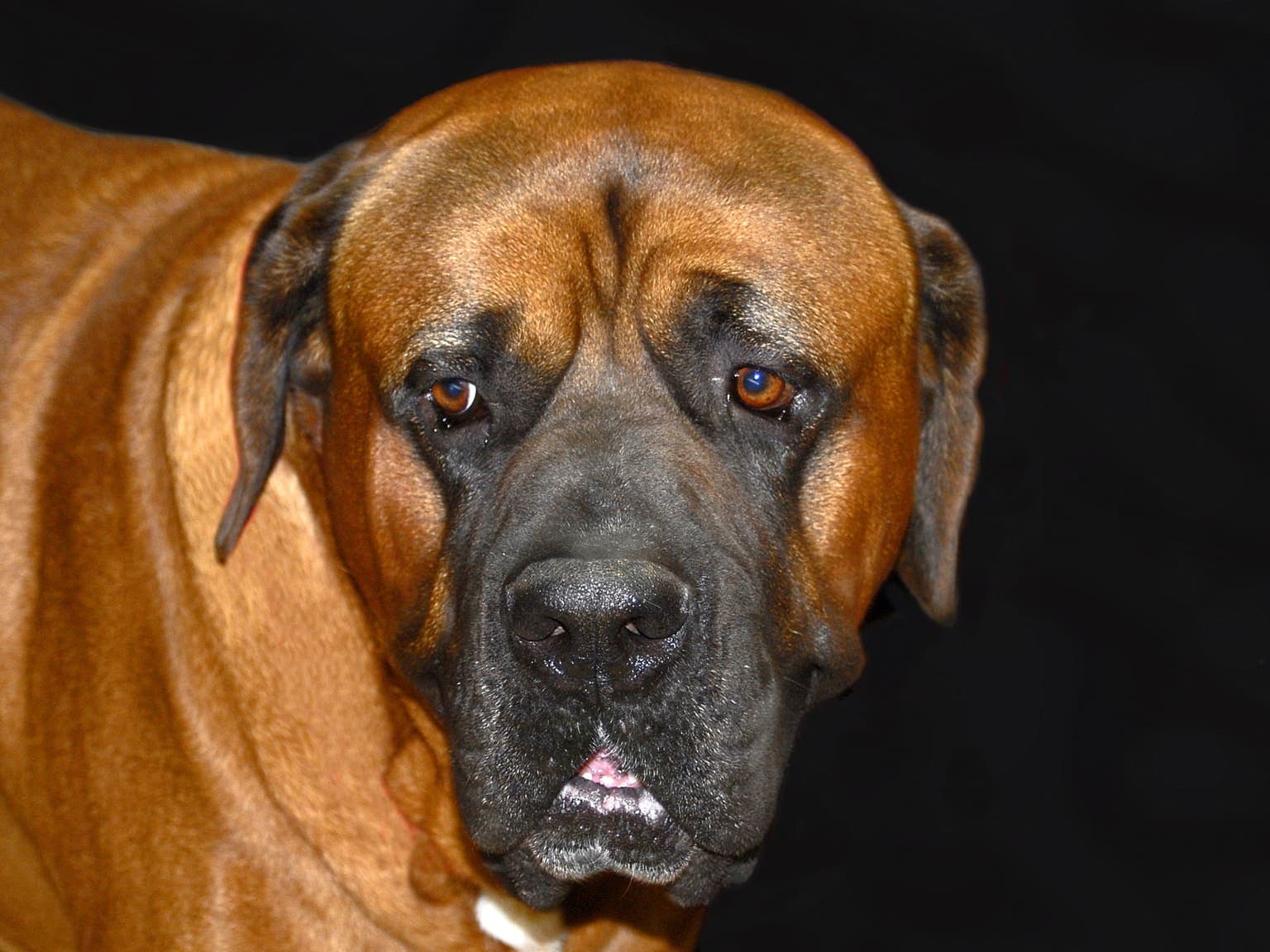
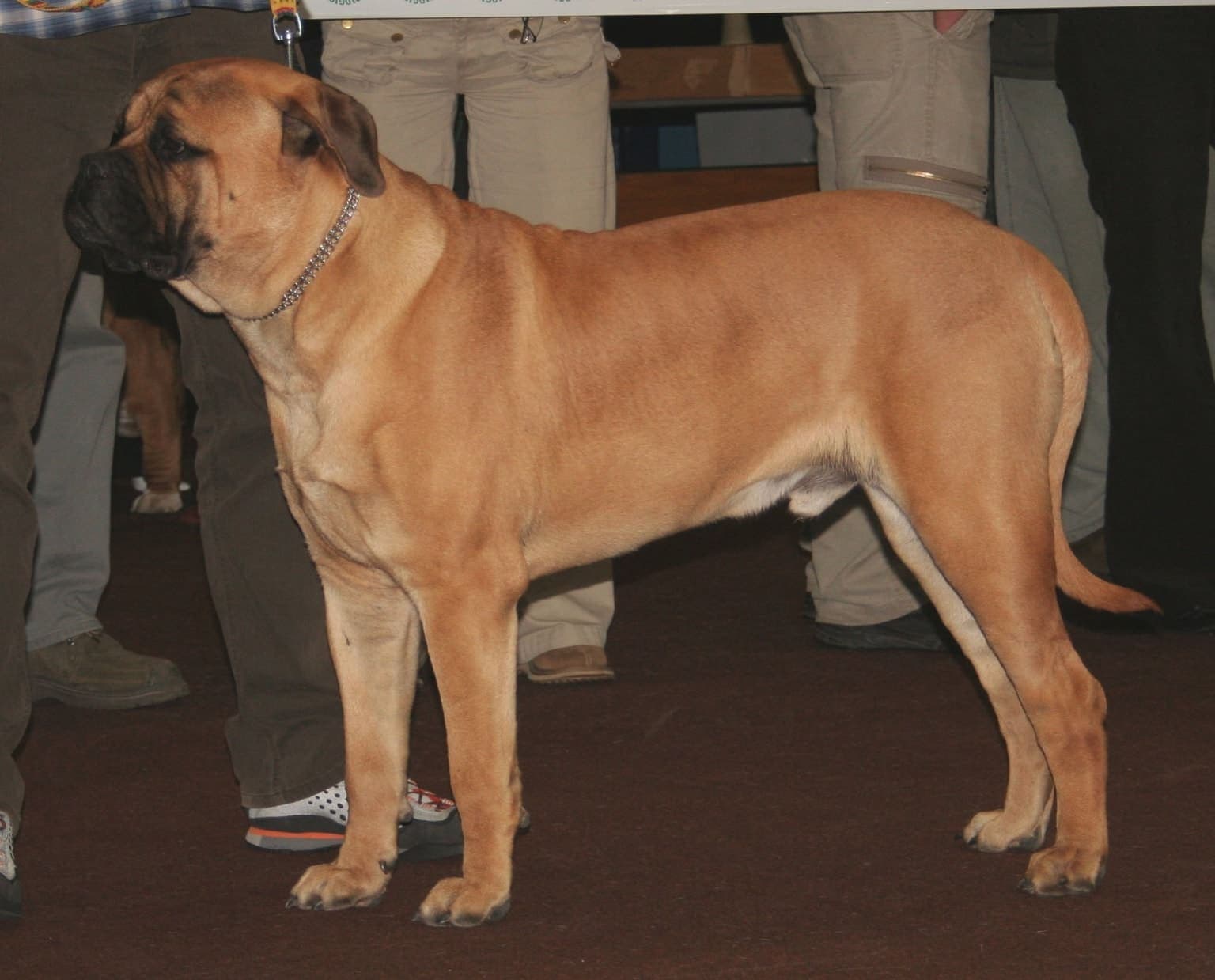
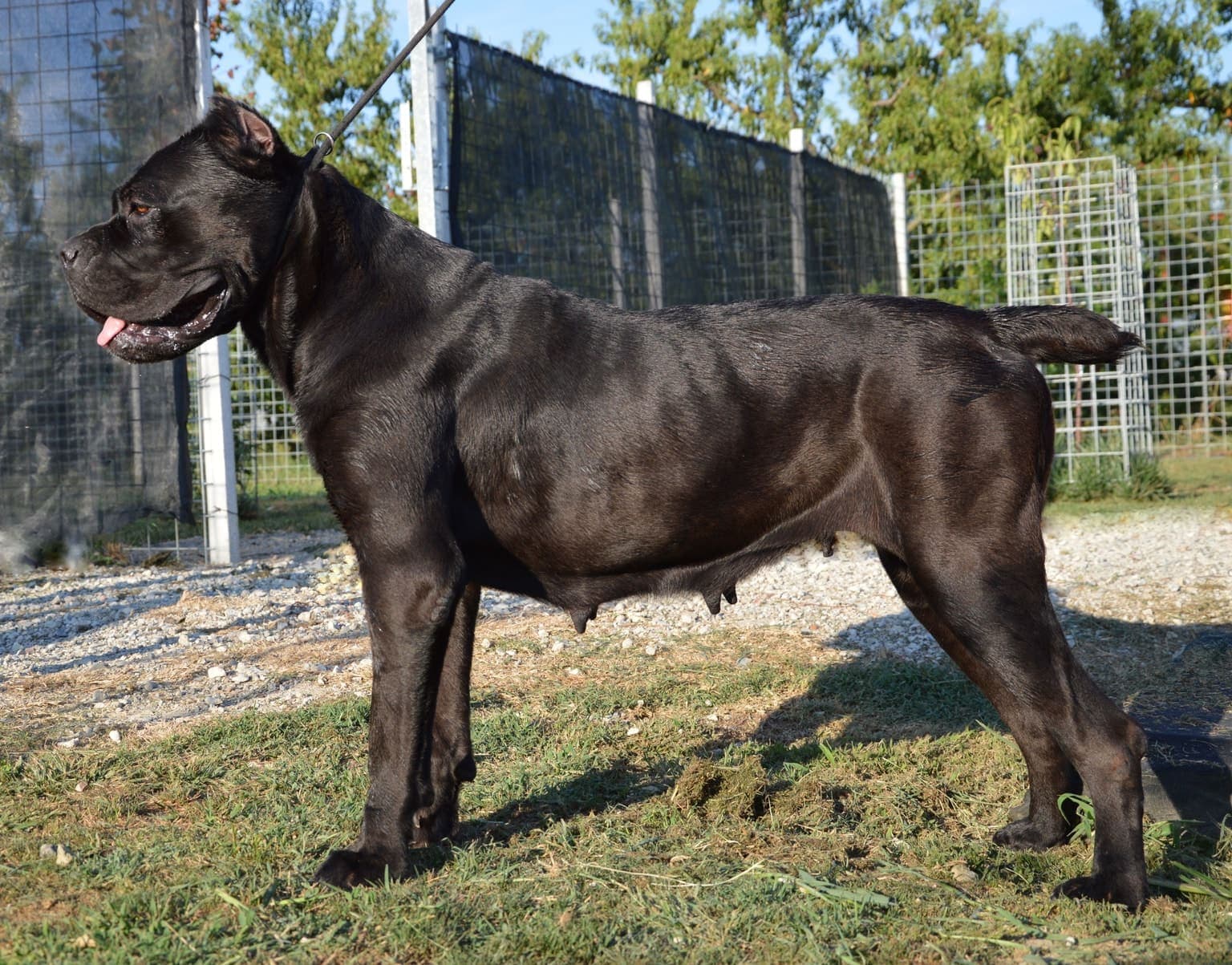
All are giant, heavy-headed dogs with loose lips and drop ears, mostly in fawn or brindle with a dark mask, so a close-up of a broad square head looks the same for each.
A tight crop of a broad fawn head with a black mask could be any of the smooth-coated members. The detector gets more from a full-body shot: the Mastiff's long rectangular body, the Bullmastiff's compact square outline, the Cane Corso's tighter skin and athletic frame, the Dogue de Bordeaux's red-fawn color and deep wrinkle, and the Tibetan Mastiff's heavy coat. A photo from a few steps back, in good light, does more than a close-up of the face.
Visible tells
- The Mastiff is the biggest at 120-230 lbs and 27.5-30+ in, with a long rectangular body, a black mask and pendant V-shaped ears; the Bullmastiff is squarer and more compact at 100-130 lbs and 24-27 in with a muzzle only about a third of the head's length.
- A Cane Corso is the athlete of the group at 85-120 lbs and 23.5-27.5 in, with tighter skin, less lip and dewlap, and a muzzle about as wide as it is long, often with short-cropped ears.
- A solid black or grey coat points to a Cane Corso, since the Mastiff and Bullmastiff come only in fawn, apricot, red or brindle.
- The Dogue de Bordeaux is always a rich red-fawn with the widest, most wrinkled head in the group, a very short upturned muzzle and often a red or brown mask and nose rather than a black one.
- A Tibetan Mastiff is the only long-coated member, with a heavy double coat, a thick mane and a plumed tail curled over the back, where every other mastiff type is smooth-coated with a hanging tail.
Breeds in this group
Also in the benchmark, without a site profile yet: Dogue de Bordeaux, Tibetan Mastiff.
Accuracy for this group: not yet published. The next benchmark run will add it.
Black retrievers
2 benchmark breeds, 10 reviewed photos
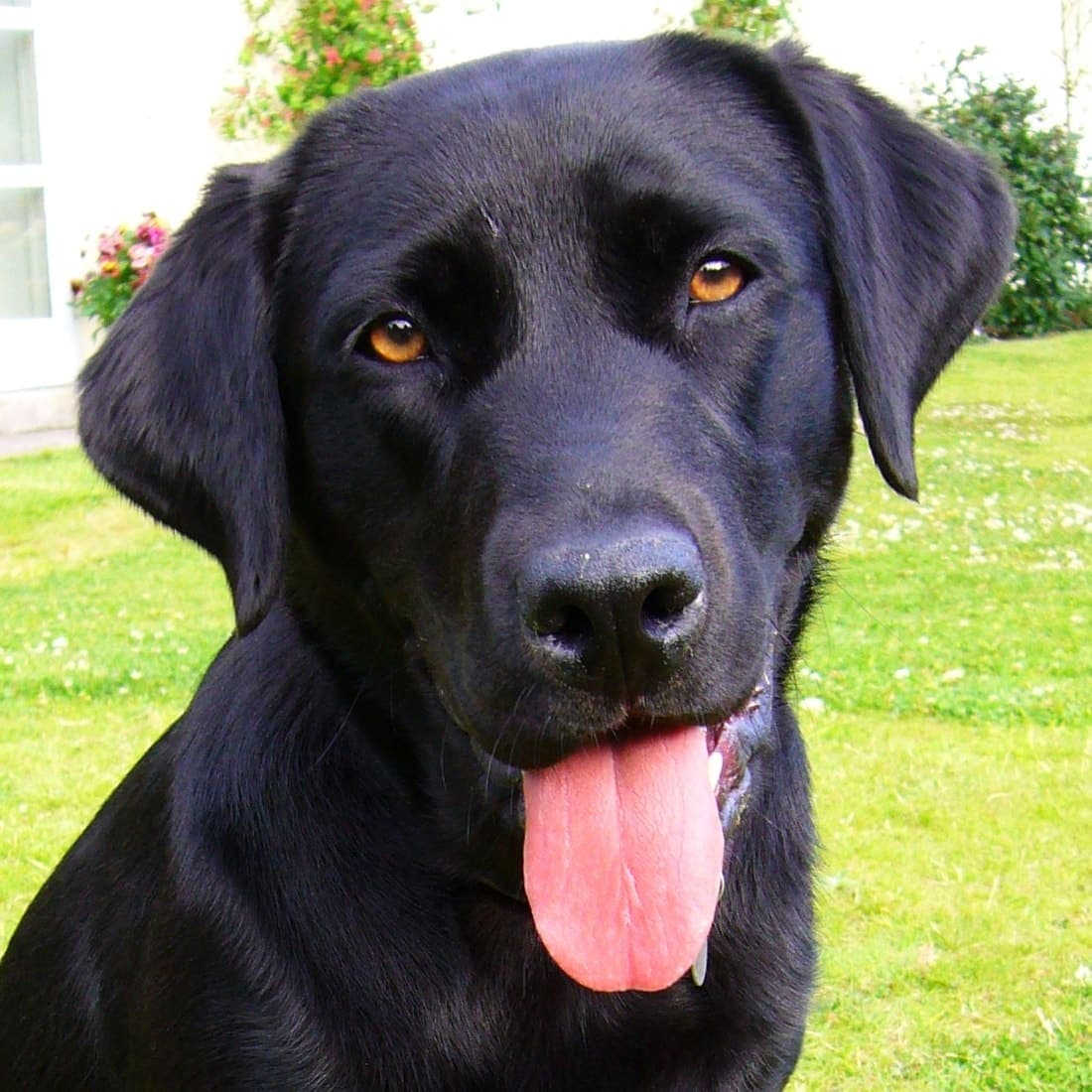
A black Labrador Retriever and a Flat-Coated Retriever are both black, drop-eared retrievers of the same height with a kindly expression, and a wet or backlit Lab looks longer-coated than it is.
A black Labrador Retriever is one of the most common dogs in the world, and a Flat-Coated Retriever is a rarer breed that looks like a leaner, longer-coated Lab. Wet coats, backlighting, and winter coats blur the difference. Black Labradors also overlap with countless black mixed dogs, which the detector describes as visual resemblance rather than ancestry. Photographing the dog dry, in profile, with the tail and chest feathering visible is the best way to separate the two.
Visible tells
- A Labrador Retriever's coat is short, dense and straight with a hard feel, while a Flat-Coated Retriever has a moderately long, flat-lying, glossy coat with feathering on the legs, chest, tail and belly.
- The Flat-Coated Retriever has a long, one-piece head where skull and muzzle flow together with a minimal stop, whereas the Labrador has a broad skull, a pronounced stop and a shorter, wider muzzle.
- A Labrador's thick otter tail is very wide at the base, tapers to the tip and is covered in short hair; a Flat-Coated Retriever's tail is straight, feathered and carried level with the back.
- Height will not help, since both stand around 22-24.5 in, so look at the outline: a Flat-Coated Retriever is leaner and racier with a longer neck, while a Labrador is stockier and shorter-coupled.
Breeds in this group
Also in the benchmark, without a site profile yet: Flat-Coated Retriever.
Accuracy for this group: not yet published. The next benchmark run will add it.
Fox terrier types
3 benchmark breeds, 15 reviewed photos
All three are mostly white, square-built terriers with V-shaped folded ears and a high-set tail, usually wearing tan or black patches on the head and body.
None of these three has a site profile yet, so they appear here by name only; all three are in the benchmark with five reviewed photos each. Smooth and Wire Fox Terriers are the same dog in two coats, and the Parson Russell Terrier is a close relative with a shorter head and body. In photos, a broken-coated Parson Russell can be read as a Wire Fox Terrier and the reverse. Head length and ear set are the details to keep sharp and visible.
Visible tells
- A Smooth Fox Terrier has a flat, hard, close coat, a Wire Fox Terrier has a dense, wiry, broken coat with a pronounced beard and leg furnishings, and a Parson Russell Terrier comes in either a smooth coat or a rougher broken coat that is much less profuse than the Wire's.
- Both fox terriers have a long, narrow head with a flat skull and barely any stop, while a Parson Russell Terrier has a shorter head with a moderate stop and a slightly wider skull.
- Fox terriers stand up to 15.5 in and weigh 15-19 lbs, while a Parson Russell Terrier is smaller at 12-15 in and 13-17 lbs, and its body is slightly longer than it is tall rather than square.
- On a Smooth or Wire Fox Terrier the folded ear sits well above the top of the skull, while a Parson Russell Terrier's button ear folds level with the top of the skull.
Breeds in this group
In the benchmark, without site profiles yet: Smooth Fox Terrier, Wire Fox Terrier, Parson Russell Terrier.
Accuracy for this group: not yet published. The next benchmark run will add it.
Schnauzers
3 benchmark breeds, 15 reviewed photos
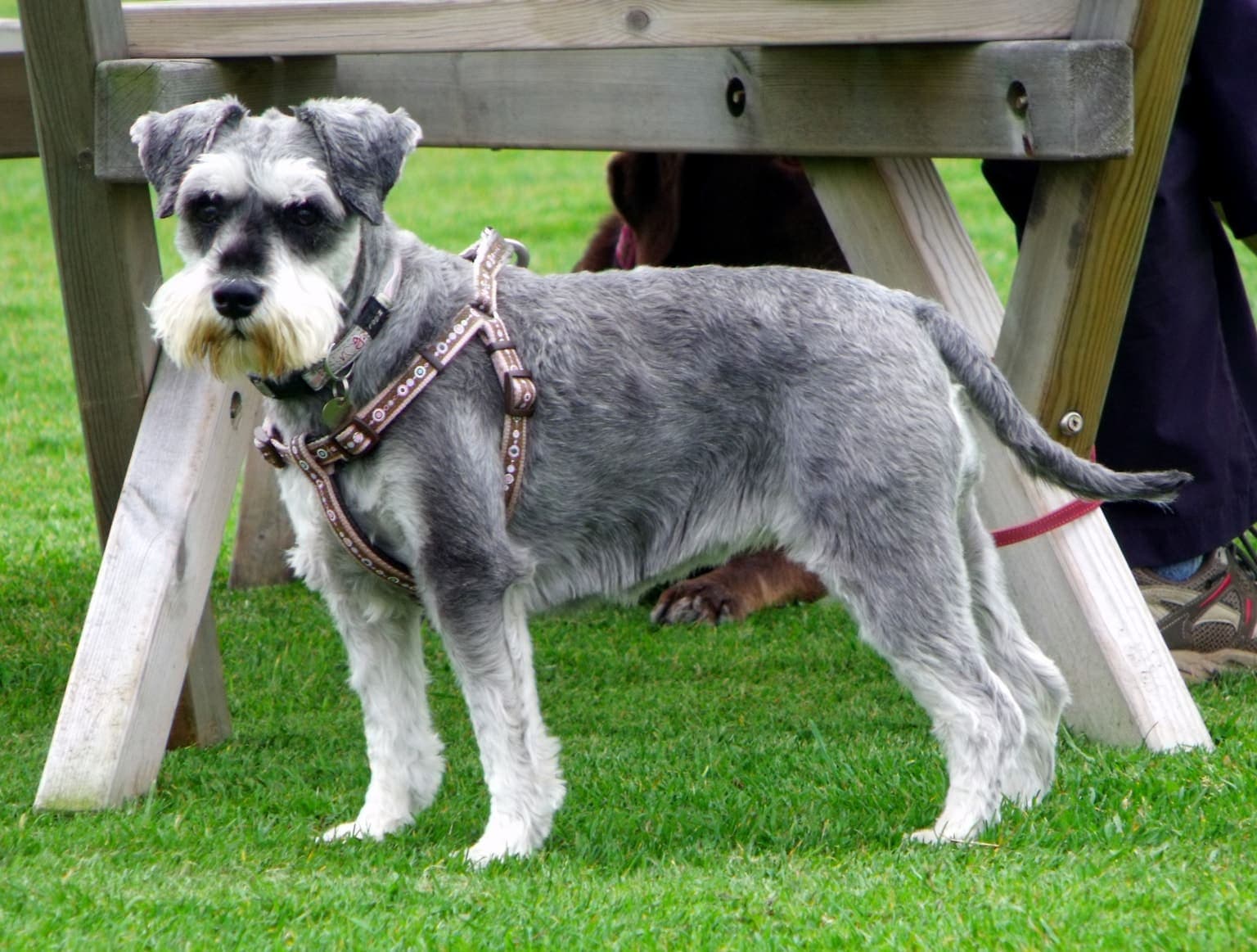
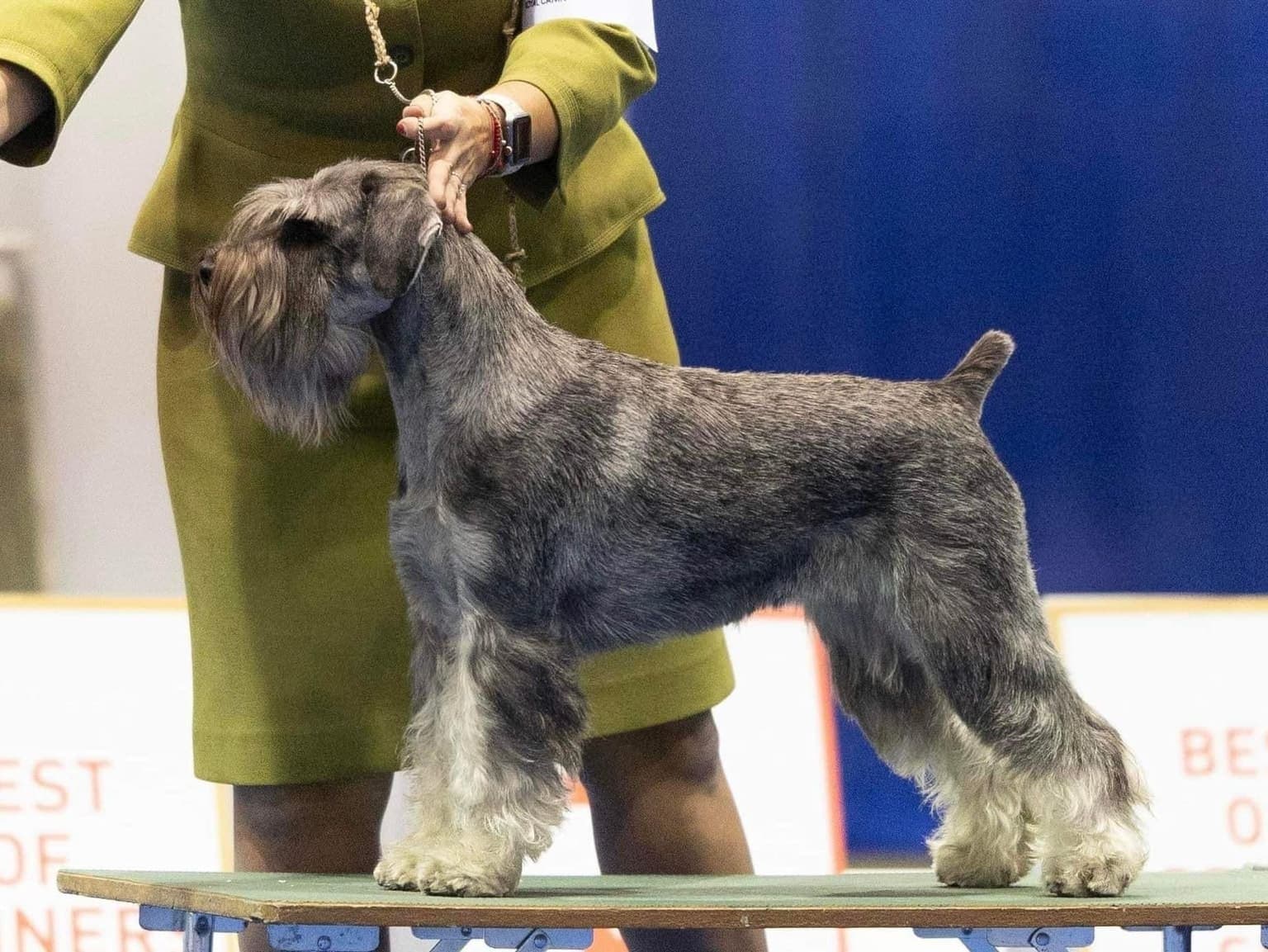
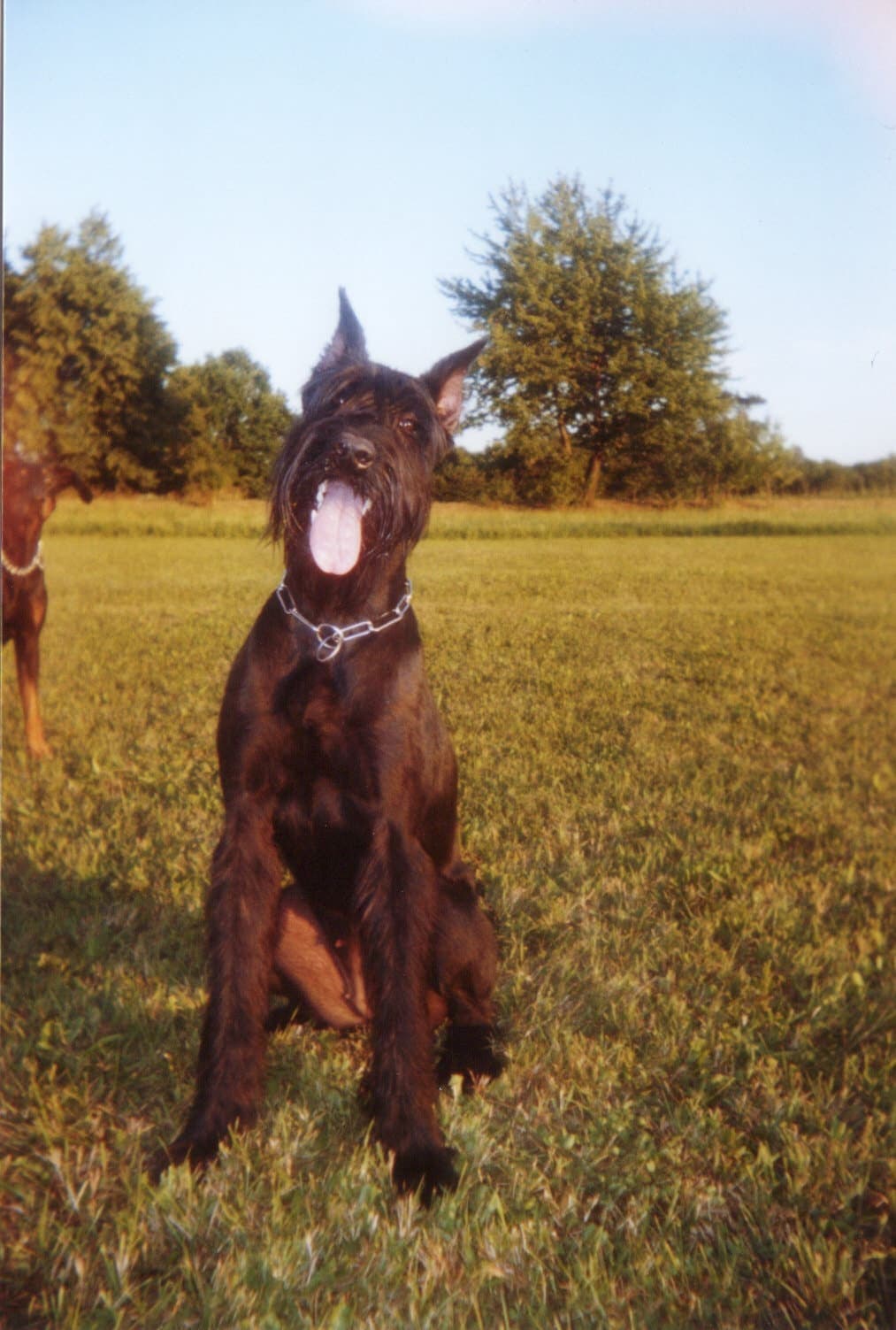
The three Schnauzers share the same bearded, bushy-browed rectangular head and clipped wiry coat at three sizes, and a photo without a reference object hides which size you are looking at.
The Schnauzers are one design in three sizes, and photos rarely show size. The detector can use a black-and-silver coat as a Miniature Schnauzer signal and heavy bone as a Giant Schnauzer signal, but a salt-and-pepper dog standing on its own in a park is a genuine coin toss between two sizes. A photo with a person, a chair, or a doorway in the frame turns the hardest pack into an easy one.
Visible tells
- Size is the main tell: a Miniature Schnauzer stands 12-14 in and 11-20 lbs, a Standard Schnauzer 17.5-19.5 in and 30-50 lbs, and a Giant Schnauzer 23.5-27.5 in and 55-85 lbs, so compare the dog to a knee, chair or doorway.
- A black-and-silver coat, with silver eyebrows, beard and legs on a black body, occurs only in the Miniature Schnauzer; Standard and Giant Schnauzers are solid black or salt-and-pepper.
- A Giant Schnauzer is heavy-boned, deep-chested and long-legged with a powerful, square outline, while a Miniature Schnauzer looks shorter on the leg and more compact for its body.
- In a pet trim, a Miniature Schnauzer's leg furnishings and beard are often left full and fluffy, whereas Standard and Giant Schnauzers usually show a harder, flatter body coat with shorter furnishings.
Breeds in this group
Accuracy for this group: not yet published. The next benchmark run will add it.
Companion spaniels
3 benchmark breeds, 15 reviewed photos
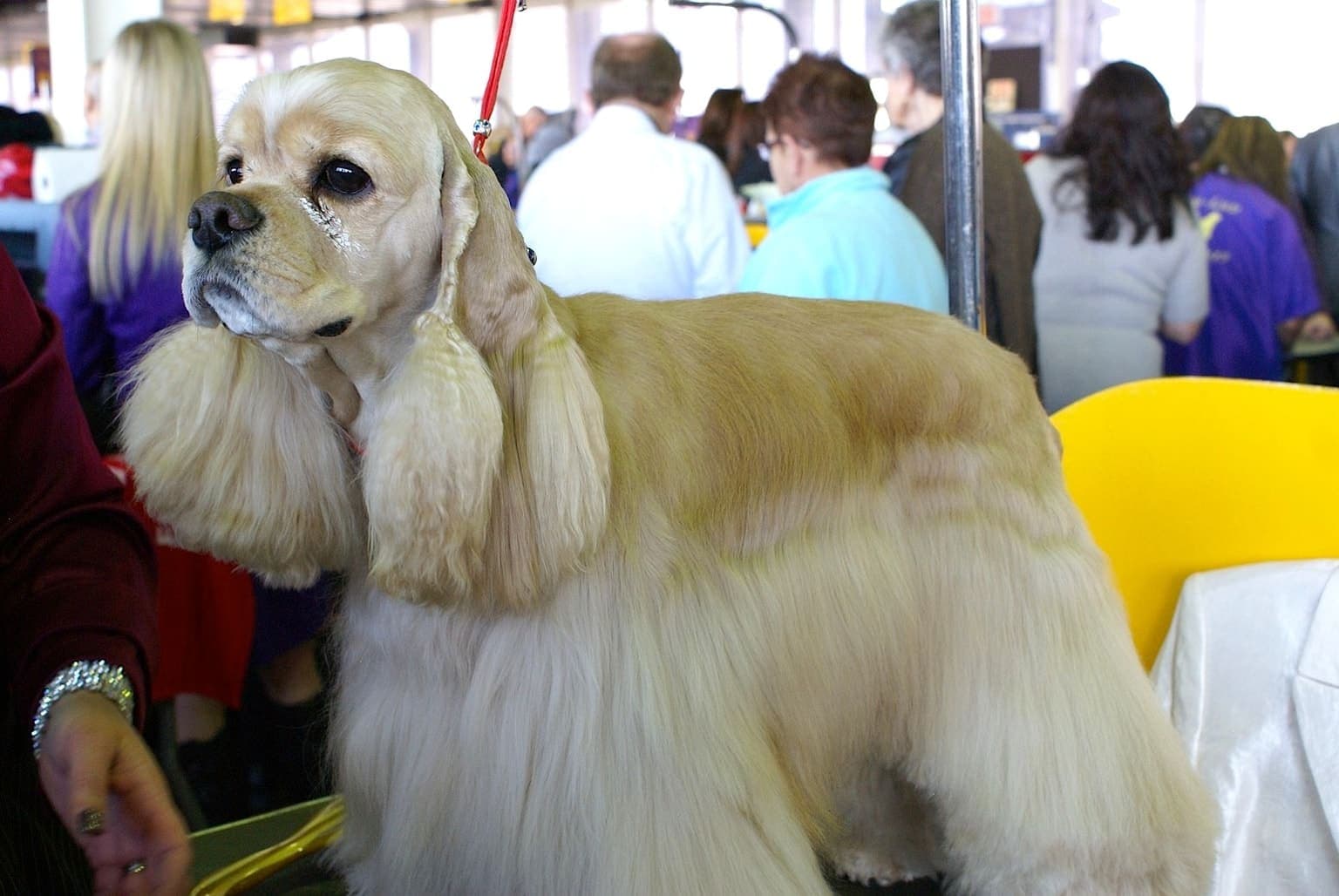
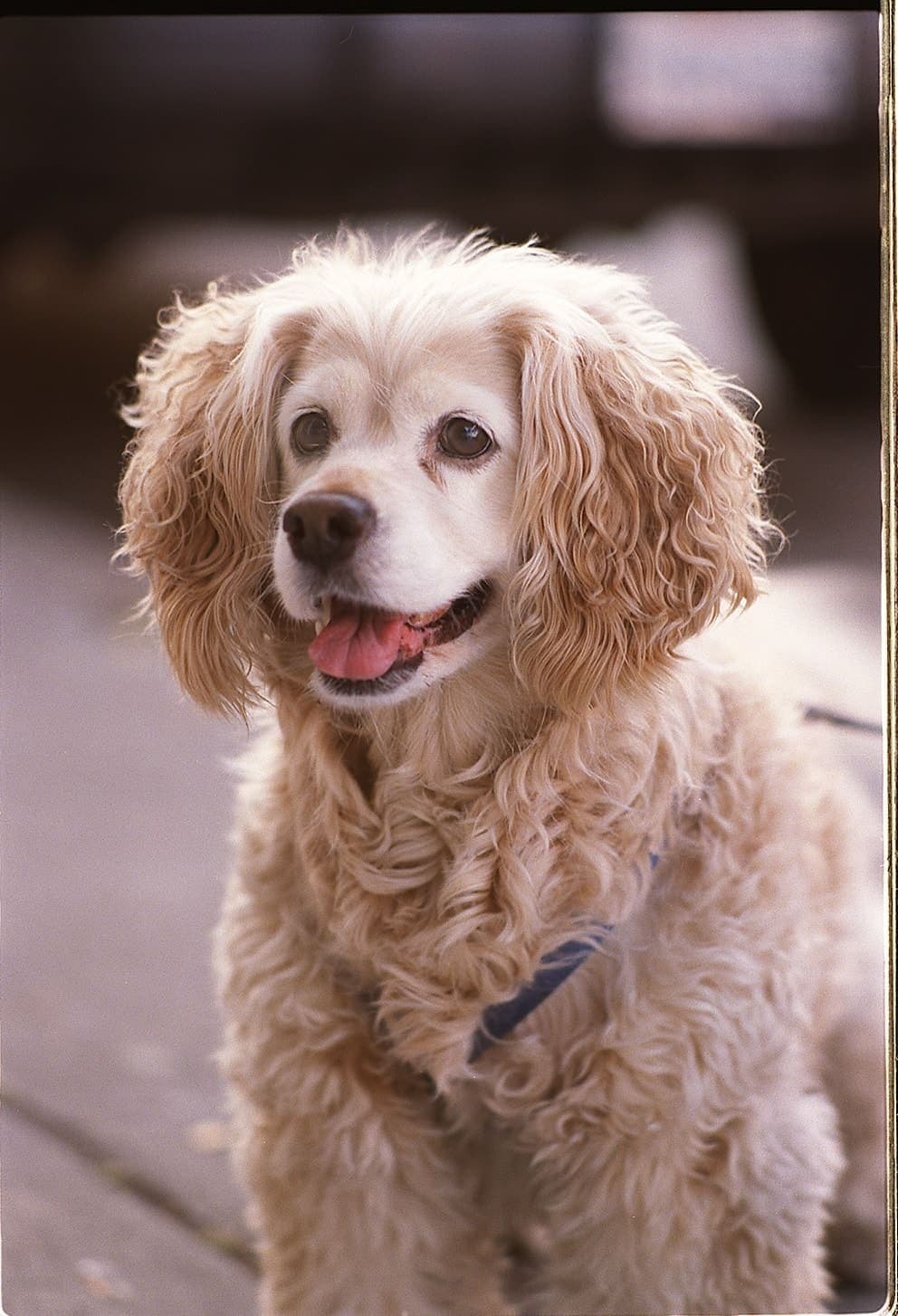
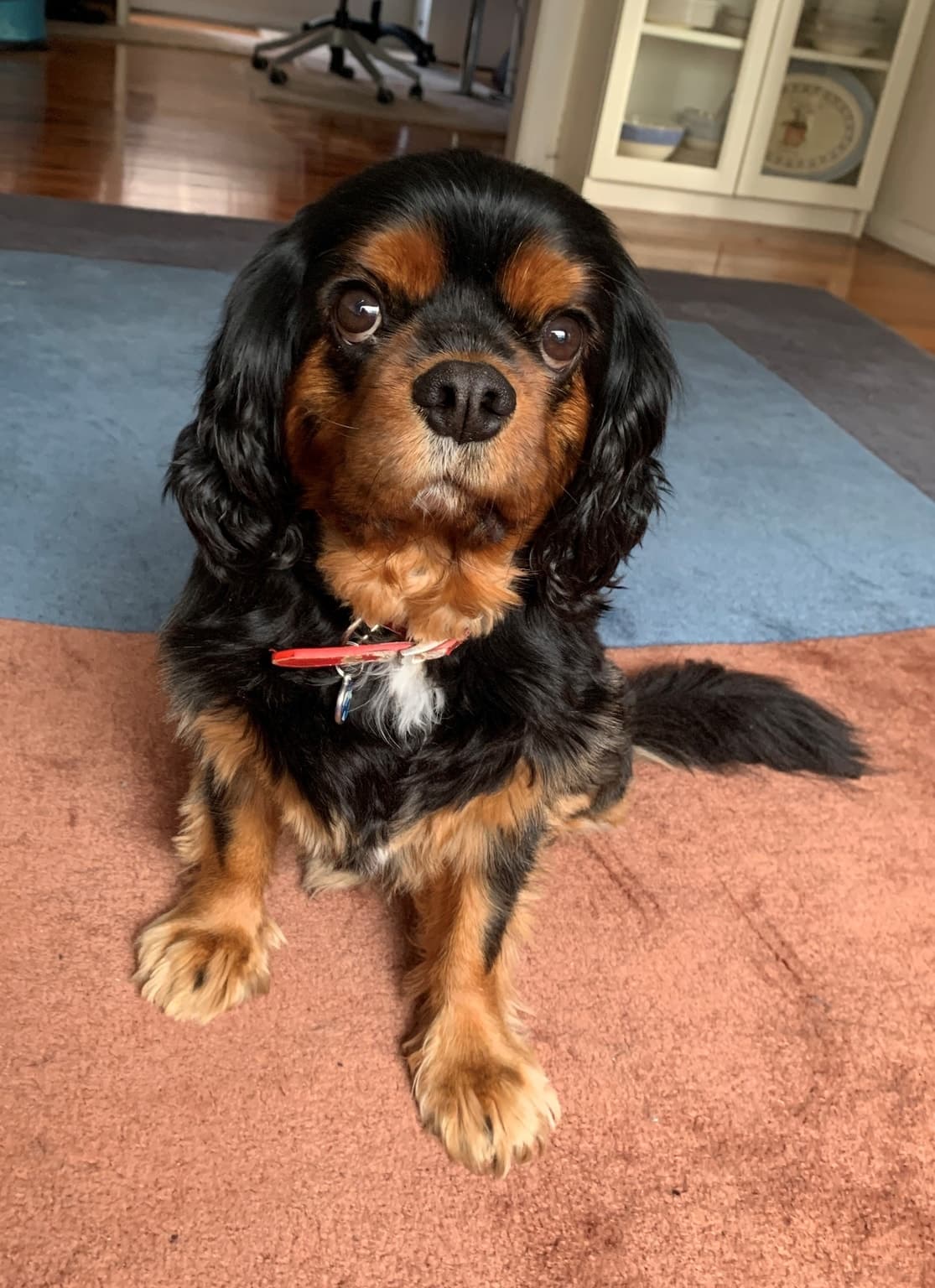
All three are long-eared, silky-coated spaniels with feathered legs, big dark eyes and a soft expression, and in red or tan shades their outlines overlap closely.
Silky feathering and long ears unify the group; skull shape separates it. The Cocker Spaniel's domed head and profuse skirt, the English Cocker's longer head and leggier frame, and the Cavalier's flat skull and toy size are all head-and-body details. A Blenheim Cavalier is usually easy; a solid red Cocker Spaniel and a ruby Cavalier are the pairing to watch. A profile photo of the head, plus a standing shot, gives the detector both signals.
Visible tells
- A Cocker Spaniel has a rounded, domed skull with a pronounced stop and a short, deep, square muzzle, while an English Cocker Spaniel has a flatter, longer skull with a moderate stop and a muzzle about as long as the skull.
- The English Cocker Spaniel is the tallest and leggiest at 15-17 in and 26-34 lbs, the Cocker Spaniel stands 13.5-15.5 in and 20-30 lbs, and the Cavalier King Charles Spaniel is the smallest at 12-13 in and 13-18 lbs.
- A Cavalier King Charles Spaniel has a nearly flat skull, a shallow stop and a short muzzle, with ears set high on the head, while both cockers set their ears at or below eye level.
- A Cavalier always carries a long, feathered tail level with its back, whereas Cocker Spaniels and English Cocker Spaniels in the United States are usually docked short.
- A Cavalier comes in only four patterns, Blenheim, tricolor, ruby and black-and-tan, so a solid buff, solid black or parti-colored dog is one of the cockers, and the Cocker Spaniel's coat is by far the most profuse with a skirt that can reach the ground.
Breeds in this group
Accuracy for this group: not yet published. The next benchmark run will add it.
Large guardian dogs
3 benchmark breeds, 15 reviewed photos
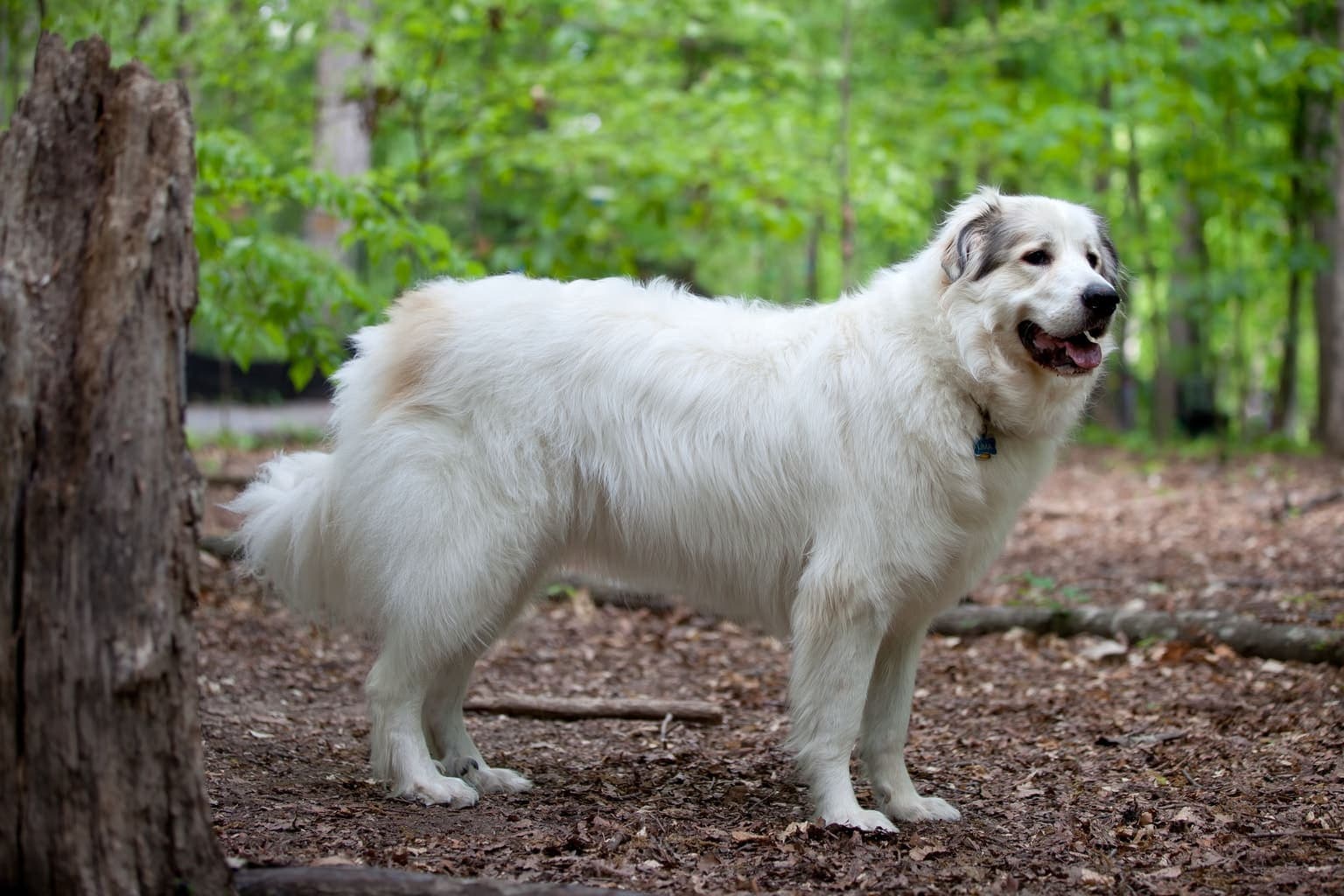
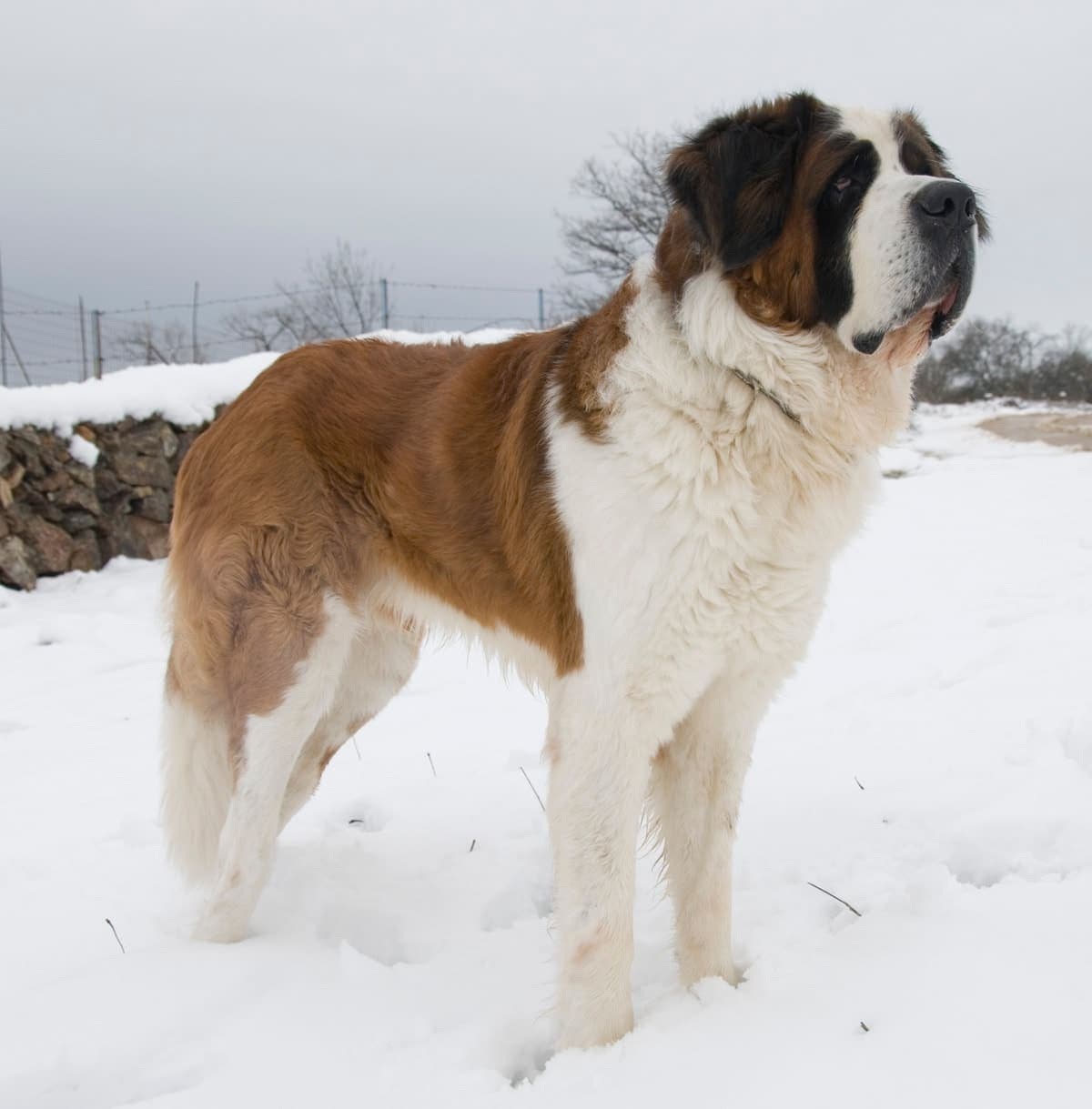
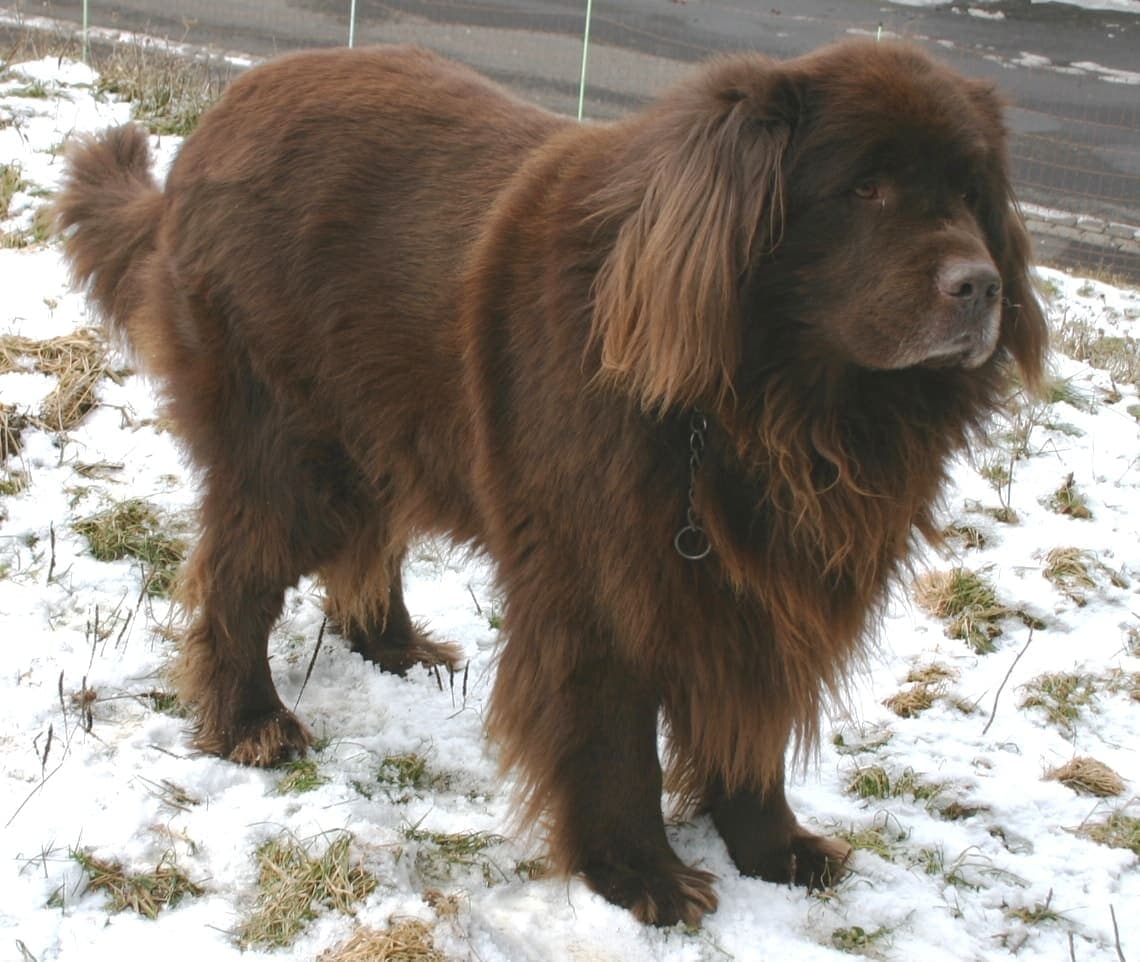
All three are giant, heavy-boned dogs with long coats, drop ears and broad heads, so from a distance or as puppies they simply read as one big shaggy dog.
Puppies of all three look like the same cream or brown bear cub, and color is the main adult tell. A Landseer Newfoundland, white with black patches, can look like a Saint Bernard from a distance, and a Great Pyrenees with tan head markings can pass as a light Saint Bernard. Head shape and coat texture settle it. Photograph the dog in daylight, standing, with its head in profile.
Visible tells
- Color settles most cases: a Great Pyrenees is white with at most grey, badger or tan markings on the head, a Saint Bernard is red or brindle with white and a dark shaded face, and a Newfoundland is black, brown, grey or black-and-white.
- A Saint Bernard has a massive head with a deeply wrinkled forehead, a pronounced stop and heavy hanging lips, a Newfoundland has a broad skull with a short square muzzle and no wrinkles, and a Great Pyrenees has a refined wedge head with almost no stop and tight lips.
- A Newfoundland's coat lies flat and looks oily and water-resistant, a Great Pyrenees has a coarse, straight or slightly wavy stand-off coat with a mane and pantaloons, and a Saint Bernard can be either smooth or rough-coated.
- Watch the tail: an alert Great Pyrenees curls its plumed tail up over its back in a wheel, while a Newfoundland's broad tail hangs down and a Saint Bernard's long heavy tail hangs low with a slight curve.
- A Great Pyrenees has double dewclaws on each hind leg, a detail you can spot in a side or rear view that neither the Saint Bernard nor the Newfoundland shares.
Breeds in this group
Accuracy for this group: not yet published. The next benchmark run will add it.
Use it on your own dog
If your dog belongs to one of these groups, the shortlist matters more than the top answer. Upload a clear, side-on, full-body photo in daylight, then read the three matches together: if all three come from the same pack, the detector has found the family and is asking you to check the tells above. Two photos from different angles will often agree where one is uncertain.
Identify a dog breed from a photoDataset and downloads
The composition of benchmark v2026.1 is published as a plain CSV with one row per breed: breed name, benchmark id, development, regression, and holdout photo counts, the confusion pack it belongs to, and the Creative Commons licenses used. Across the set, 300 photos are used for development, 100 for regression checks, and 100 are held out for final decisions, under 9 distinct licenses.
- Download the dataset composition (CSV, version 2026.1)
- Accuracy and testing methodology, including the full per-breed table, release gates, and known limitations.
To cite this page: Eday Studio LLC, “15 look-alike dog breed groups,” Dog Breed Detector research, version 2026.1, September 2, 2026. The version number changes only when the packs, the data, or the measured results change.