Cane Corso vs Mastiff vs Bullmastiff
The Cane Corso, the Mastiff and the Bullmastiff are the three big-headed guardians most often confused in photos, and in shelters. All three are huge, short-coated, broad-skulled dogs with a dark mask and a serious expression, and all three come in fawn and brindle. A fawn adult with a black muzzle lying on a porch could plausibly be any of them, which is why so many large rescue dogs are simply listed as a mastiff mix.
The fastest tell is colour, when it applies. Only the Cane Corso comes in black or gray; the Mastiff and Bullmastiff are always fawn, apricot, red or brindle. If the dog is solid black, blue-gray or gray brindle, it is a Corso or a Corso cross. When the dog is fawn, look at the skin and the ears instead. A Corso is tight-skinned and athletic, and in many countries its ears are cropped to short triangles. A Mastiff carries loose skin, heavy hanging lips and deep wrinkles over a truly enormous head. A Bullmastiff sits between them: compact and square, with a broad muzzle and a face that only wrinkles when the dog is alert.
Size settles most remaining cases. A Mastiff male stands at least 30 inches and can top 200 pounds. A Bullmastiff and a Corso are both in the 24 to 27 inch range, but the Bullmastiff carries more bulk on a shorter frame while the Corso looks like it could run all day.
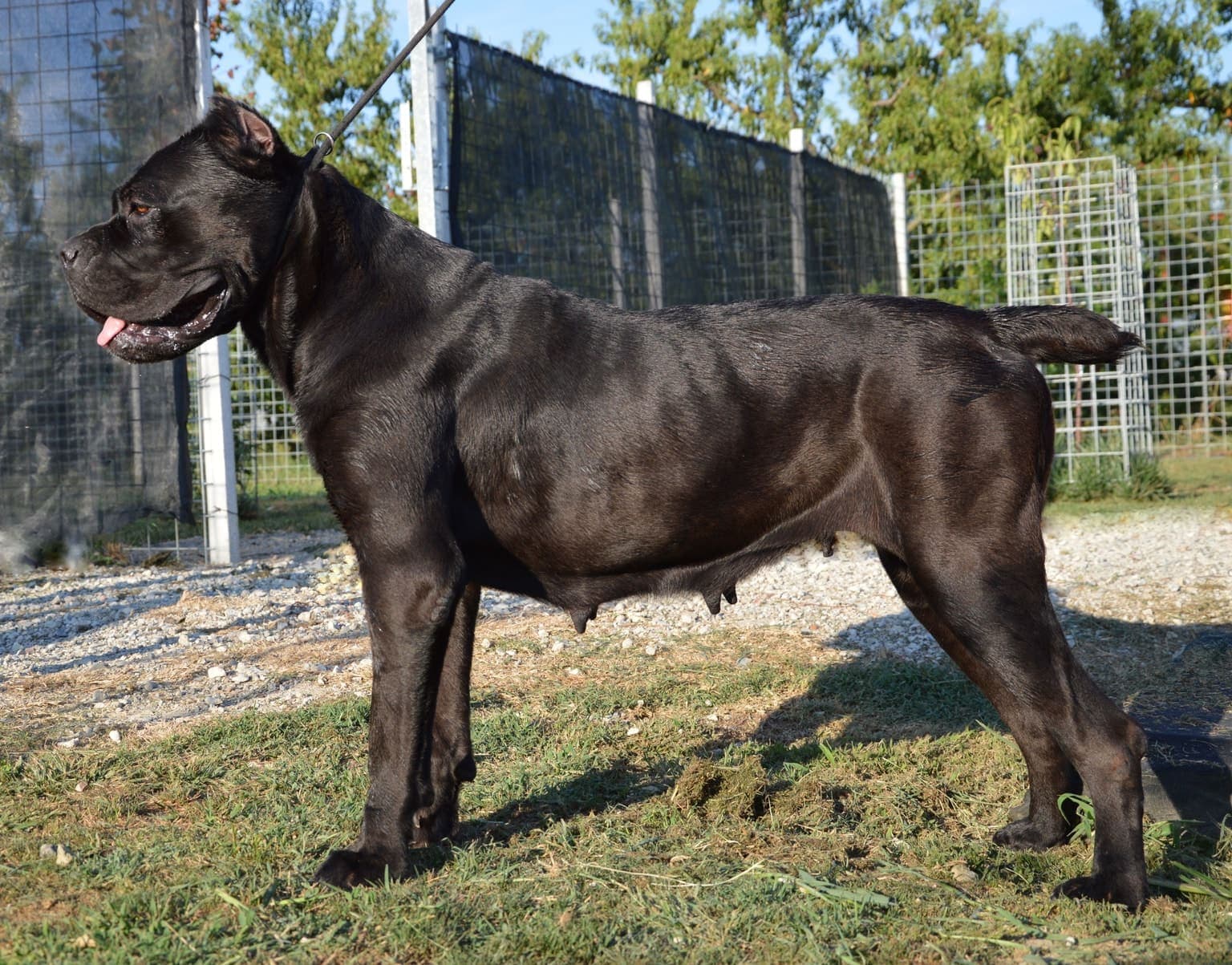
Photo by Topmoretta · CC BY-SA 4.0
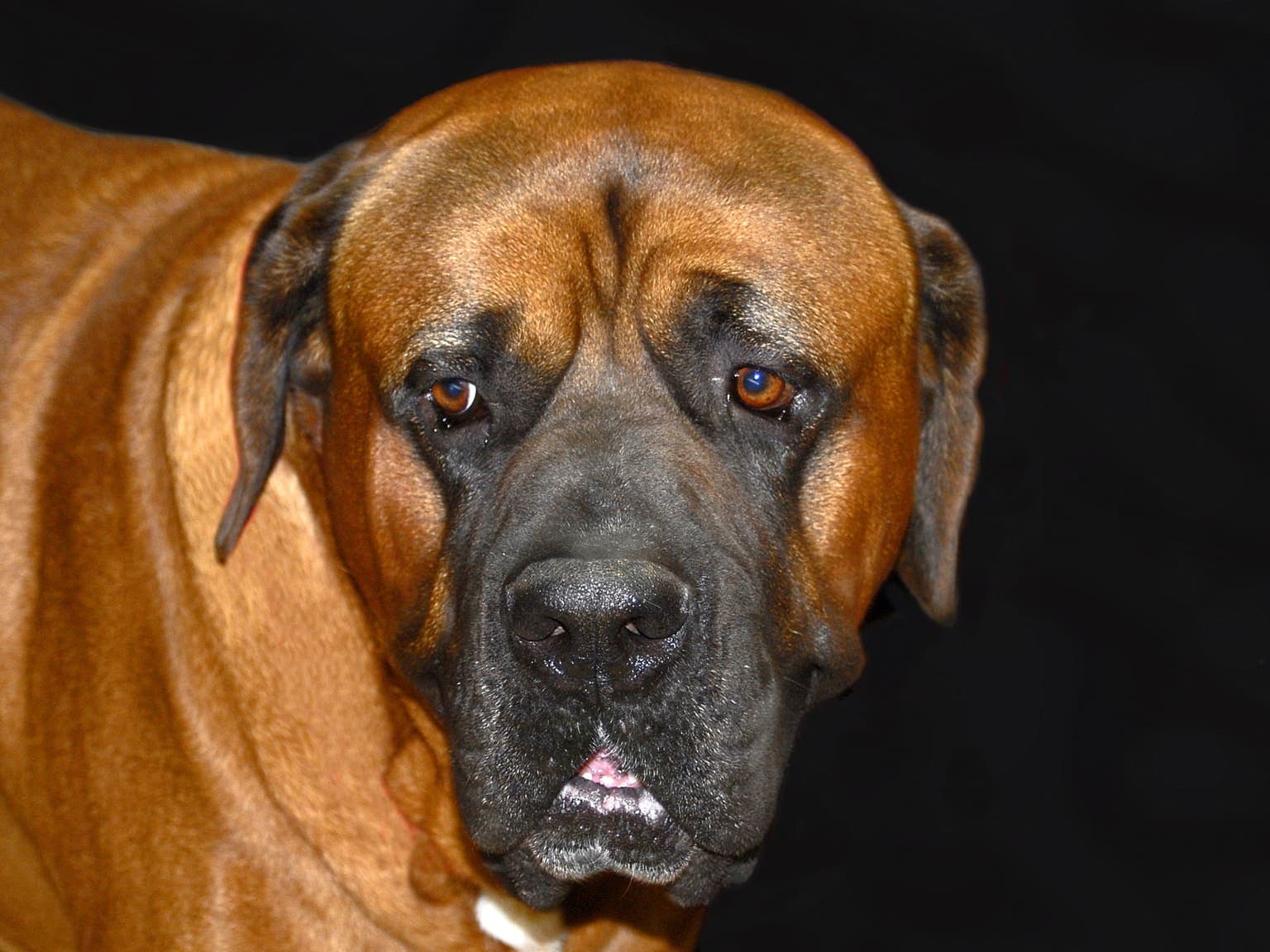
Photo by Ettore Balocchi · CC BY 2.0
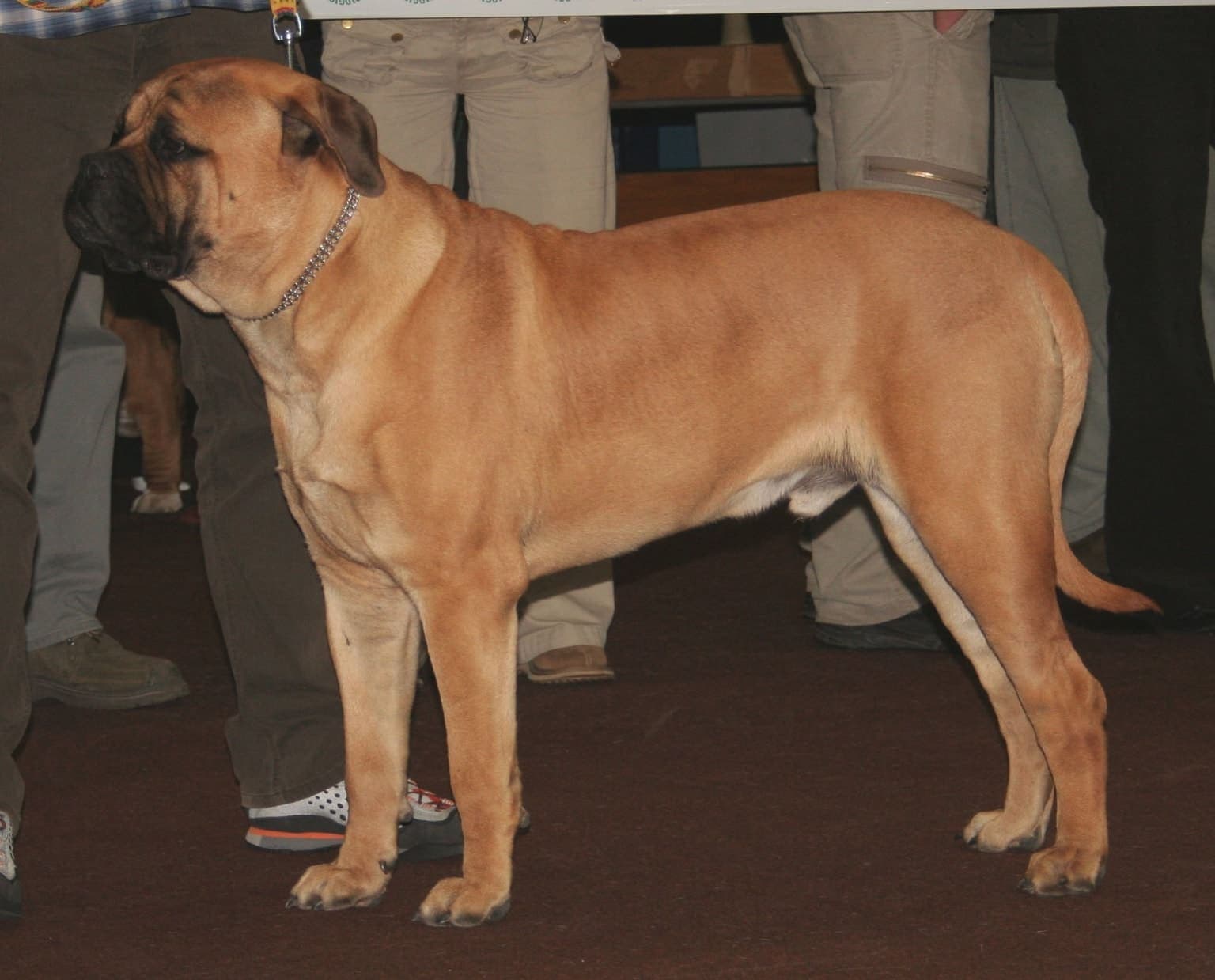
Photo by Pleple2000 · CC BY-SA 3.0
Quick facts
| Fact | Cane Corso | Mastiff | Bullmastiff |
|---|---|---|---|
| Group | Working | Working | Working |
| Size | giant | giant | giant |
| Height | 23.5-27.5 in | 27.5-30+ in | 24-27 in |
| Weight | 85-120 lbs | 120-230 lbs | 100-130 lbs |
| Lifespan | 9-12 years | 6-10 years | 7-9 years |
| Temperament | Confident, Protective, Intelligent, Loyal | Calm, Gentle, Protective, Steady | Loyal, Brave, Calm, Protective |
How to tell them apart
Read the rows top to bottom. The first two or three traits usually settle it; the rest confirm.
| Trait | Cane Corso | Mastiff | Bullmastiff |
|---|---|---|---|
| Head and muzzle | Large skull with a pronounced stop and a broad, deep muzzle about one third of the head length, tight skin, and a level or slightly undershot bite. | Massive, rectangular head with a short, blunt muzzle about half the length of the skull, heavy hanging flews and deep wrinkles when alert. | Large, broad skull with a moderate stop and a broad muzzle about one third of the head length, with wrinkles that appear mainly when the dog is attentive. |
| Ears | Medium triangular drop ears set high above the cheekbone, often cropped short into upright triangles where cropping is still allowed. | Small for the head, V-shaped with rounded tips, set high and wide apart and lying flat against the cheeks. | Medium V-shaped ears folded back, set high and wide, carried close to the cheeks and usually darker than the body. |
| Eyes and expression | Medium almond eyes, never round or bulging, with an alert and attentive look. | Medium, dark brown eyes set wide apart, with an alert but kindly expression softened by the wrinkles above them. | Medium dark eyes that give a keen, watchful expression on a mostly smooth face. |
| Body proportions and topline | Slightly longer than tall with a firm level topline and visible athleticism, so the dog looks built for a long trot rather than for bulk. | Massive, deep and rectangular, clearly longer than tall, with a straight level back and heavy bone throughout. | Compact and nearly square with a short, level back and a wide, deep chest, giving a solid, powerful outline. |
| Coat | Short, stiff, dense and shiny with a light undercoat. | Straight, coarse, moderately short outer coat over a dense undercoat. | Short and dense, lying close to the body. |
| Colour and markings | Black, gray, fawn, red, and black or gray brindle, with a black or gray mask on fawn and red dogs and small white patches allowed on chest, toes and chin. | Fawn, apricot or brindle only, always with a dark muzzle, ears and nose, and a mask that extends up between the eyes. | Red, fawn or brindle only, with a dark muzzle preferred and at most a small white mark on the chest. |
| Size | About 23.5 to 27.5 inches at the shoulder and 85 to 120 pounds. | At least 27.5 inches for females and 30 inches for males, and 120 to 230 pounds, the heaviest of the three by a wide margin. | About 24 to 27 inches at the shoulder and 100 to 130 pounds, heavier than a Corso of the same height. |
| Tail and gait | High-set, thick at the root and traditionally docked at the fourth vertebra; the natural tail is carried straight or slightly curved, and the trot is powerful and ground-covering. | Long, set moderately high, tapering to the hocks and hanging straight; the gait is a deliberate, powerful walk that may roll slightly. | Long, strong at the root, tapering to the hocks, carried straight or curved but never over the back; the gait is free, smooth and powerful. |
What the photo detector sees
For this group the photo detector keys on head mass relative to the body, how loose the skin is around the muzzle and neck, ear shape, and colour. Black, gray or gray-brindle coats and cropped ears push a result strongly toward Cane Corso. A very large head with pendulous lips and wrinkles on a long, heavy body pushes toward Mastiff. A square outline with a smooth face, a red or fawn coat and folded V ears pushes toward Bullmastiff. Body silhouette matters more than colour once the dog is fawn, because all three share the fawn-with-black-mask pattern.
The tool hesitates most on fawn adults photographed lying down or in a tight face crop, where head proportion and skin looseness are hard to judge. Puppies of all three are loose-skinned and wrinkly, so young Corsos and Bullmastiffs are frequently ranked as Mastiff. A Corso with natural drop ears loses one of its clearest signals. Mixes are common in this group, and related breeds such as the Dogue de Bordeaux, Boerboel and Presa Canario produce split results. The detector returns confidence-ranked visual matches and does not determine ancestry, so treat a close call as a description of appearance.
Living with them
Temperament differs more than looks suggest. The Cane Corso is the highest-drive dog of the three, with strong guarding instinct, real athleticism and a need for daily exercise plus mental work, and it suits experienced owners who will commit to early, extensive socialisation and consistent training. The Mastiff is the calmest, happy with steady walks and long naps, and its main demands are space, food, and manners training early while it is still small enough to manage. The Bullmastiff is in between: a moderate-exercise dog that is quiet indoors but naturally watchful, with the strength to need reliable obedience.
Practical care also differs. Mastiffs drool heavily, need their skin folds kept clean and are sensitive to heat, and their lifespan is the shortest at 6 to 10 years. Bullmastiffs have a shorter muzzle that makes hot weather a concern and live about 7 to 9 years. Cane Corsos drool the least, tolerate activity best and live 9 to 12 years. All three should be kept lean to protect their joints, and all three are large enough that leash skills and calm greetings are non-negotiable. Grooming is light for every one of them, with weekly brushing enough.
Not sure which one you have?
Upload a clear photo and the detector returns a ranked shortlist, so you can check the top matches against the tells above instead of guessing from one label.
Upload a photo and get a ranked shortlistFAQ
Can a photo tell a Cane Corso from a Mastiff or a Bullmastiff?
Often, especially when the coat is black or gray, the ears are cropped, or the whole dog is visible from the side. The detector reads head mass, skin looseness, ear shape and colour and returns confidence-ranked matches. Fawn adults in tight crops and puppies of any of the three are the cases where it is most likely to list more than one.
What is the difference between a Mastiff and a Bullmastiff?
The Mastiff is larger and longer, with a heavier head, hanging lips and more wrinkle, and it stands at least 27.5 to 30 inches. The Bullmastiff was developed in England from Mastiff and Bulldog stock as a gamekeeper's dog, and it is shorter, squarer and tighter in the face at 24 to 27 inches and 100 to 130 pounds. Both come only in fawn, red or apricot, and brindle.
Are Cane Corsos bigger than Bullmastiffs?
They are about the same height, with a Corso at 23.5 to 27.5 inches and a Bullmastiff at 24 to 27 inches, but the Bullmastiff is usually heavier at 100 to 130 pounds against the Corso's 85 to 120. The Corso looks taller because it is leaner and carries more leg under a tighter body.
What does a mastiff mix look like, and can the detector identify one?
A mix usually shows a broad head, a dark mask and a heavy body, with the details landing somewhere between the parent breeds. Photos of these dogs tend to return two or three of the mastiff-type breeds ranked close together. The detector describes visual similarity only, so it can suggest which breeds a dog resembles but cannot confirm which are in its background.
Which of the three is the best first big dog?
For most homes the Mastiff or Bullmastiff is the gentler choice, because both are calm indoors and need only moderate exercise, though both are heavy, drool and have shorter lifespans. The Cane Corso is more demanding, with higher drive and a stronger guarding instinct, and does best with an owner who has trained a large working dog before. Whichever you choose, early socialisation and manners training are essential.
Full profiles
Browse every pair in the breed comparison index.