Cardigan vs Pembroke Welsh Corgi
The two Welsh corgis are separate breeds from neighbouring Welsh counties, but they were shown as one breed until 1934 and share the same long, low, big-eared shape. Most people only know the Pembroke, because of its royal connection and its popularity online, so any short-legged dog with a fox face gets called a corgi and assumed to be a Pembroke. Photo models trained on far more Pembroke images than Cardigan images lean the same way.
The fastest tell is the tail. A Cardigan has a long, low-set, bushy tail like a fox brush that it carries level or down. A Pembroke is traditionally docked very short in countries that allow it, and some are born with natural bobtails. Where docking is banned, a Pembroke's natural tail is usually carried higher and looks less like a fox brush. If the tail is hidden, move to colour and ears: brindle or blue merle means Cardigan, and the Cardigan's ears are larger with more rounded tips.
The third clue is build. The Cardigan is longer, heavier and rounder in front, with front legs that curve slightly around a deep chest and feet that turn a little outward. The Pembroke is lighter, more rectangular and straighter in the front, and looks neater and more compact overall.
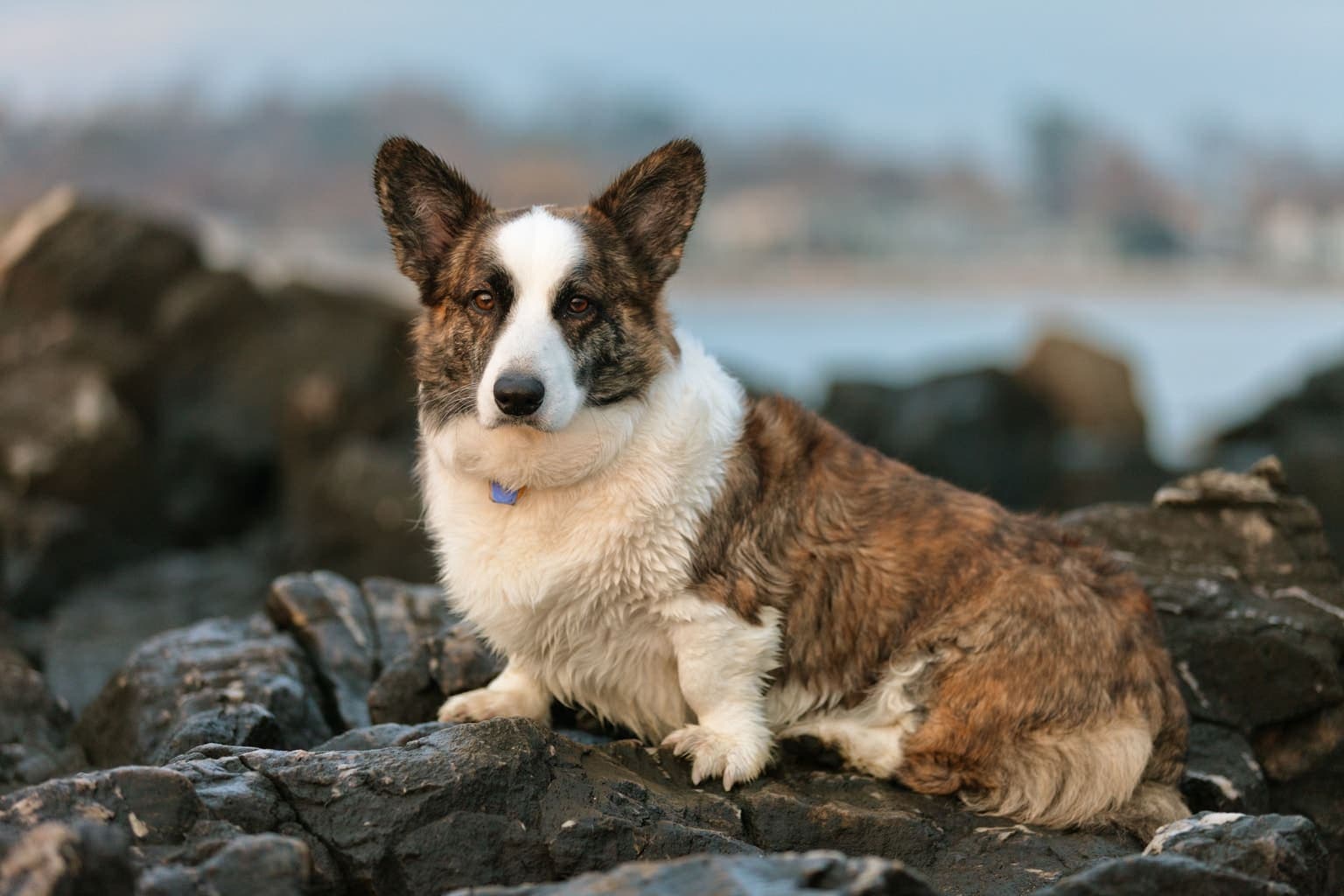
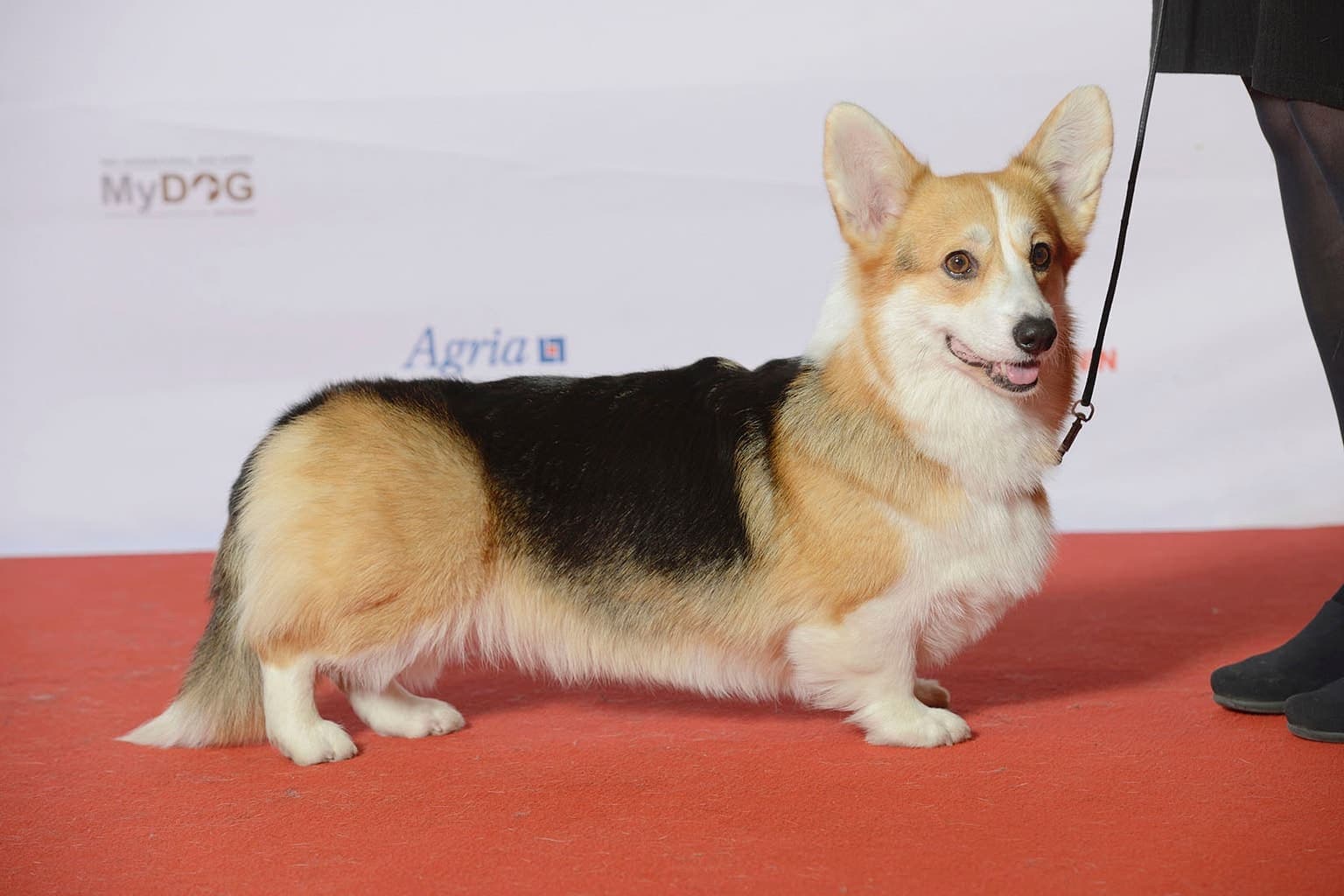
Quick facts
| Fact | Cardigan Welsh Corgi | Pembroke Welsh Corgi |
|---|---|---|
| Group | Herding | Herding |
| Size | medium | medium |
| Height | 10.5-12.5 in | 10-12 in |
| Weight | 25-38 lbs | 24-30 lbs |
| Lifespan | 12-15 years | 12-13 years |
| Temperament | Loyal, Smart, Alert, Steady | Bright, Bold, Affectionate, Alert |
How to tell them apart
Read the rows top to bottom. The first two or three traits usually settle it; the rest confirm.
| Trait | Cardigan Welsh Corgi | Pembroke Welsh Corgi |
|---|---|---|
| Head and muzzle | Refined but substantial head with a moderately wide flat skull, a moderate stop and a muzzle that is rounded rather than sharply pointed. | Fox-like head with a fairly wide flat skull, a moderate stop and a tapered muzzle about three fifths the length of the skull. |
| Ears | Large and prominent in proportion to the head, with rounded tips, set well back and carried slightly wider apart. | Medium-sized, firm and erect, tapering to a slightly rounded point, so they look neater and more triangular. |
| Eyes and expression | Medium to large, dark eyes with a watchful, steady expression; blue or partly blue eyes are allowed only in blue merles. | Oval, medium-sized brown eyes that harmonise with the coat, giving a bright, foxy, cheerful expression. |
| Body and topline | Long and heavy-boned, with a deep chest, front legs that curve slightly around the ribcage and feet that turn a little outward. | Lighter-boned and more rectangular, about 40 percent longer than tall, with a straighter front and feet pointing ahead. |
| Coat | Medium-length double coat with a slightly harsh outer texture, a little longer at the ruff, breeches and tail. | Medium-length double coat with a thick undercoat and a somewhat softer feel; overly long fluffy coats are a serious fault. |
| Colour and markings | Red, sable, brindle, black with or without tan or brindle points, and blue merle, usually with white flashings. | Red, sable, fawn and black and tan only, with or without white on the legs, chest, neck, muzzle and a narrow blaze. |
| Size | 10.5 to 12.5 in at the shoulder and roughly 25 to 38 lbs, noticeably heavier and bigger-boned. | 10 to 12 in and about 24 to 30 lbs, a little smaller and lighter on its feet. |
| Tail and gait | Long, low-set fox-brush tail carried low or level, never curled over the back; moves with a free, effortless stride. | Docked short or naturally bobtailed in many countries; when left natural the tail is often carried higher. Gait is free, smooth and quick. |
What the photo detector sees
The detector reads corgi photos from the outline first, and the tail is the single most reliable part of that outline. A full brush tail extending behind a long, low body pushes the result strongly toward Cardigan. Colour is the next strongest signal, because brindle and blue merle only occur in the Cardigan, and a merle coat with a blue eye is close to definitive. Ear size and rounding, the heavier bone, and the curved front with turned-out feet all add to the Cardigan score. A neat, bobtailed red-and-white dog with pointed ears and a straight front is the Pembroke pattern the model has seen most often.
It hesitates when the tail is out of frame or ambiguous. A sitting dog, a head-on shot, a tight face crop, or an undocked Pembroke from a country with a docking ban all remove the tail clue, and red-and-white or sable Cardigans are then hard to separate from Pembrokes because both breeds share those colours. Puppies have not yet grown into their bone and ear size. Corgi mixes, including corgi crosses with other breeds that carry a long tail, will often return both corgis in the ranked matches. The detector reports visual similarity in confidence order; it cannot determine which breed a dog actually descends from.
Living with them
Temperament differences are real but subtle. Both breeds are bright, alert herding dogs that learn quickly, bark readily and want to be part of everything. The Pembroke tends to be the more outgoing and bolder of the two, quick to make friends and quick to sound the alarm, with a busy, humorous energy. The Cardigan is usually steadier and a little more reserved with strangers, more inclined to watch and assess before engaging, which suits people who want a calmer companion. Both need early work on polite barking and greetings.
Care needs are nearly identical. Both shed heavily, especially in spring and autumn, and need weekly brushing that becomes daily during coat blows. Both are long-backed dogs that must be kept lean and discouraged from jumping off furniture to protect the spine. Daily walks plus training games or scent work keep them content, and both excel at agility-style sports. The Cardigan is slightly larger and heavier to lift, and its profile lists a lifespan of 12 to 15 years against 12 to 13 for the Pembroke.
Not sure which one you have?
Upload a clear photo and the detector returns a ranked shortlist, so you can check the top matches against the tells above instead of guessing from one label.
Upload a photo and get a ranked shortlistFAQ
Can a photo tell a Cardigan from a Pembroke Welsh Corgi?
Yes, in most photos where the tail and colour are visible. A long fox-brush tail, brindle or blue merle colouring, big rounded ears and a heavier front all point to Cardigan. A head-on close-up or a sitting red-and-white dog is much harder, and the detector may rank the two breeds close together.
Do Pembroke Welsh Corgis always have their tails docked?
No. Docking is traditional in the United States and some Pembrokes are born with natural bobtails, but docking is banned in the United Kingdom and much of Europe, so many Pembrokes there have full tails. An undocked Pembroke tail is usually carried higher and is less like the Cardigan's low fox brush.
Which corgi comes in blue merle?
Only the Cardigan. Blue merle, with or without tan or brindle points, is a recognised Cardigan colour, and brindle is also exclusive to the Cardigan. A merle or brindle corgi is a Cardigan or a mix, not a purebred Pembroke.
What does a Cardigan Pembroke corgi mix look like?
Usually a corgi with a mix of features, often a full tail on a lighter Pembroke-style body or Pembroke colouring with Cardigan ears and bone. The detector will typically return both breeds near the top of its results. Only a DNA test can say which breeds are actually in the dog.
Are Cardigans and Pembrokes the same size?
Close, but not the same. Both stand about 10 to 12.5 in at the shoulder, yet the Cardigan is heavier-boned and weighs roughly 25 to 38 lbs while the Pembroke is around 24 to 30 lbs. Side by side the Cardigan looks longer, deeper in the chest and more substantial.
Full profiles
Browse every pair in the breed comparison index.