Cavalier King Charles Spaniel vs Cocker Spaniel
The Cavalier King Charles Spaniel and the Cocker Spaniel are both small spaniels with long, feathered ears, large dark eyes, a silky coat and a soft expression. Their colours overlap as well: a ruby Cavalier and a red Cocker are both solid red, both breeds come in black with tan markings, and a Blenheim Cavalier and a red and white parti-colour Cocker are both red on white.
Look at where the ears join the head. A Cavalier's ears are set high, on top of the head, which makes the slightly rounded skull look flat between them. A Cocker Spaniel's ears are placed no higher than a line to the lower part of the eye, below a clearly rounded skull with a pronounced stop and a broad, deep, square muzzle. From the front, the Cavalier's ears frame the top of the face and the Cocker's hang from the side of it.
When the head is turned away, use size and the tail. The Cavalier is a toy dog of 12 to 13 in and 13 to 18 lbs. The Cocker is 13.5 to 15.5 in and 20 to 30 lbs, and its standard describes a docked tail. The Cavalier standard makes docking optional and allows no more than one third to be removed, and the tail carries long feathering.
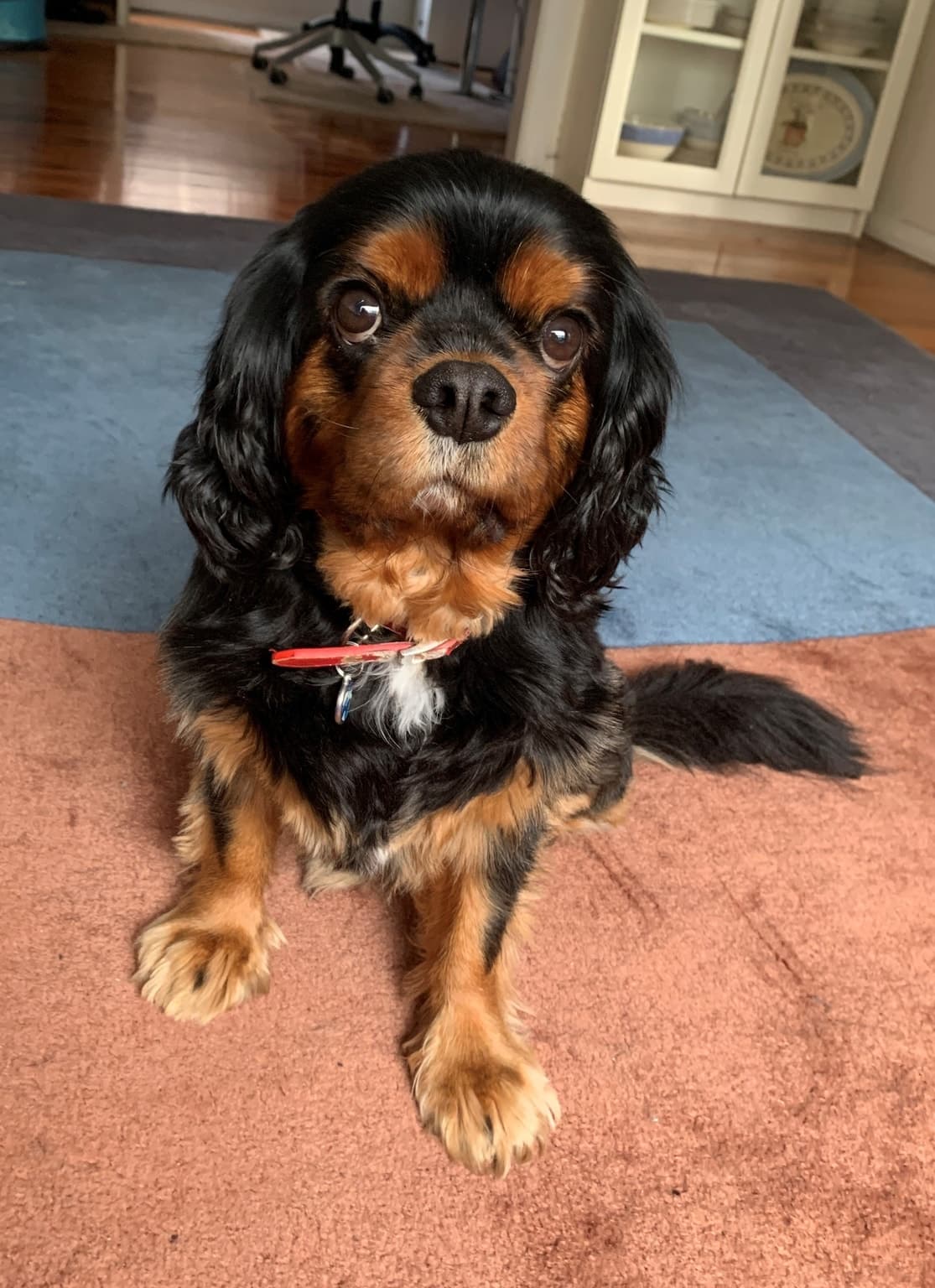
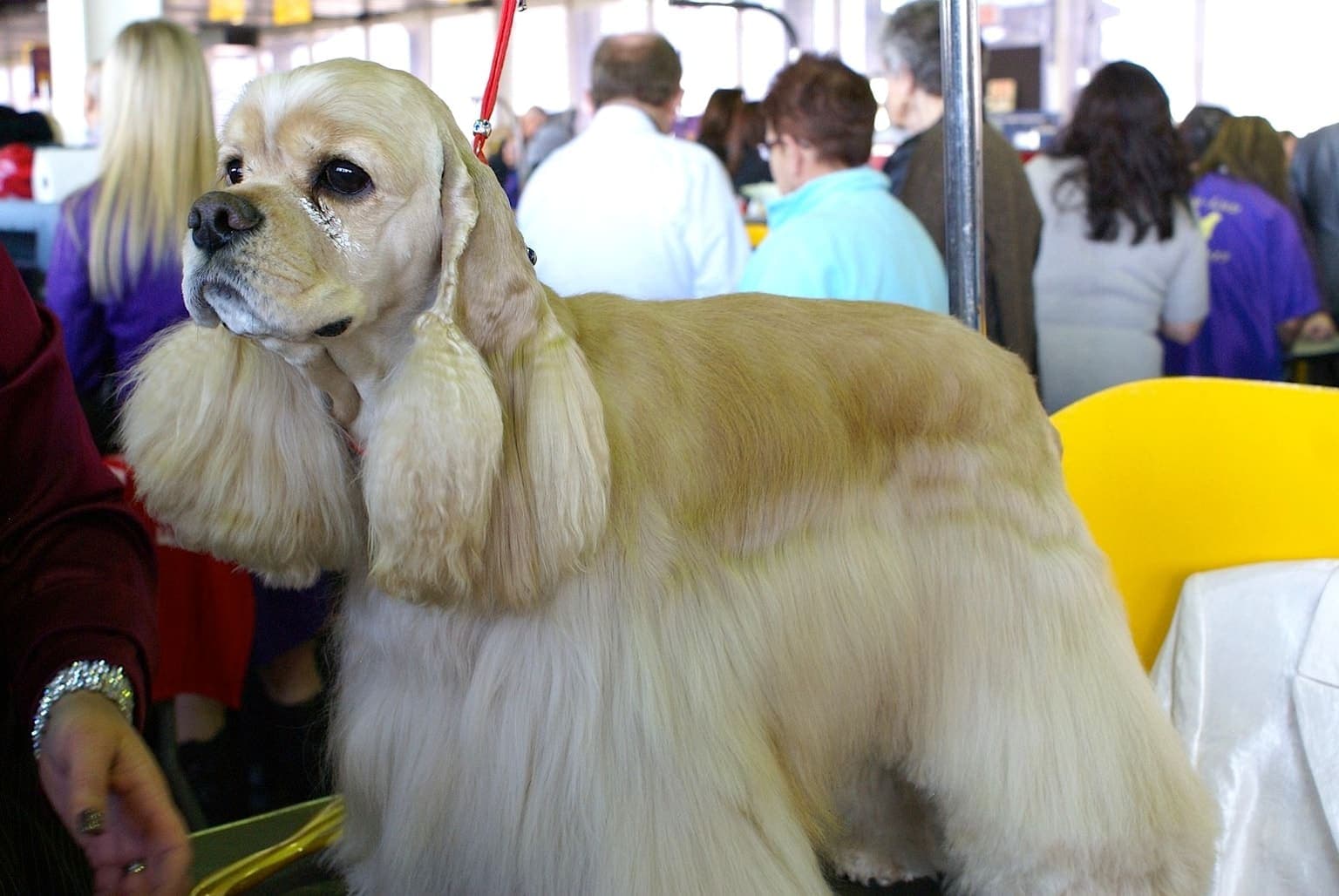
Quick facts
| Fact | Cavalier King Charles Spaniel | Cocker Spaniel |
|---|---|---|
| Group | Toy | Sporting |
| Size | small | small |
| Height | 12-13 in | 13.5-15.5 in |
| Weight | 13-18 lbs | 20-30 lbs |
| Lifespan | 12-15 years | 10-14 years |
| Temperament | Affectionate, Gentle, Social, Adaptable | Gentle, Affectionate, Merry, Sensitive |
How to tell them apart
Read the rows top to bottom. The first two or three traits usually settle it; the rest confirm.
| Trait | Cavalier King Charles Spaniel | Cocker Spaniel |
|---|---|---|
| Ears and skull | Ears set high, but not close, on top of the head, fanning slightly forward to frame the face when alert. The skull is slightly rounded and appears flat because of the high ear set; the stop is moderate. | Long, lobular ears placed no higher than a line to the lower part of the eye. The skull is rounded with no tendency toward flatness, with clearly defined eyebrows and a pronounced stop. |
| Muzzle | Full and slightly tapered, about 1.5 in from the base of the stop to the tip of the nose, with the face well filled below the eyes. The nose is black. | Broad and deep with square, even jaws, half as long as the skull. The nose is black in black dogs and may be brown, liver or black in other colours. |
| Size | 12 to 13 in and 13 to 18 lbs. The standard treats these as ideals and allows slight variations. | 13.5 to 15.5 in and 20 to 30 lbs. Ideal height is 15 in for males and 14 in for females; more than half an inch over is a disqualification. |
| Colour | Four colours only: Blenheim (chestnut on pearly white), tricolour (black on white with tan markings), ruby (solid red) and black and tan. Any other colour is a disqualification. | Three varieties: black, including black with tan points; any solid colour other than black, from lightest cream to darkest red, and brown; and parti-colour, including roans, where one colour must be white. |
| Tail and topline | Level topline. Docking is optional and limited to one third; the tail has long feathering, is carried never much above the level of the back, and is in constant motion when the dog is moving. | Topline slopes slightly from the shoulders to the tail. The standard describes a docked tail carried in line with the back or slightly higher. |
| Coat | Moderate length, silky and free from curl, with long feathering on ears, chest, legs, tail and feet. The standard permits no trimming except between the pads. | Short and fine on the head, medium length on the body with some undercoat, and well feathered on ears, chest, abdomen and legs. Trimming to show the dog's lines is accepted. |
| AKC group and origin | Toy Group. Developed in Britain in the 1920s, when breeders set out to revive the old type of toy spaniel kept by the British nobility. | Sporting Group, and its smallest member. Descends from the British cocker, a bird-hunting spaniel named for its work on woodcock; the American type diverged from the English one in the United States. |
What the photo detector sees
A photo taken from the front or from three-quarters shows the ear set, which is the most useful feature for this pair. Side-on portraits with the ears hanging forward hide it, and a picture with nothing for scale hides the size difference. A Cocker Spaniel that has been clipped short loses the feathering on its legs and underside and looks closer to a Cavalier, whose coat is left untrimmed. In the saved benchmark runs for this project, where the Cocker Spaniel is labelled American Cocker Spaniel, the mix-up runs in one direction: Cavalier reference photos were answered as American Cocker Spaniel in two of the saved answers, and the Cocker was the second choice in seven more. None of the Cocker Spaniel reference photos was answered as a Cavalier.
Colour rules a breed out more often than it confirms one. A buff, cream, brown, solid black or roan dog is not a Cavalier, because none of those is among its four colours. Red, black and tan, red and white, and black and white with tan occur in both. Two other spaniels sit close to this pair: the English Cocker Spaniel, which is taller than either, and the English Toy Spaniel, which the AKC breed history describes as having a domed skull and a flatter face than the Cavalier.
Living with them
Both are gentle, affectionate dogs that want to please. The AKC describes the Cavalier as friendly with strangers and other animals, bred as a lap dog but descended from sporting dogs, happy with moderate exercise and just as happy on the sofa. It also advises against letting a Cavalier off the lead, because the breed keeps its scenting and hunting instincts. The Cocker Spaniel is a sporting breed that should keep good muscle tone, though the AKC says it does not need a lot of exercise; walks and retrieving games suit it. It is sensitive to correction, so harsh handling is not productive.
Grooming is the larger difference. The Cavalier's coat needs regular brushing and an occasional bath. The Cocker Spaniel needs regular, thorough combing down to the skin and bathing, and the AKC suggests learning the routine or using a professional groomer; missed sessions lead to tangles and mats. Both need their ears checked regularly. The AKC lists mitral valve heart disease, syringomyelia, eye conditions, patella luxation, hip dysplasia and middle ear infections among the conditions Cavaliers are prone to, and names hips, patellas and eyes as health tests for Cocker Spaniels, so ask a breeder for results. The profiles list a lifespan of 12 to 15 years for the Cavalier King Charles Spaniel and 10 to 14 years for the Cocker Spaniel.
Not sure which one you have?
Upload a clear photo and the detector returns a ranked shortlist, so you can check the top matches against the tells above instead of guessing from one label.
Upload a photo and get a ranked shortlistFAQ
What is the difference between a Cavalier King Charles Spaniel and a Cocker Spaniel?
The Cavalier is a toy spaniel of 12 to 13 in and 13 to 18 lbs with ears set high on a flat-looking skull and a short, slightly tapered muzzle. The Cocker Spaniel is a sporting spaniel of 13.5 to 15.5 in and 20 to 30 lbs with low-set ears, a rounded skull, a pronounced stop and a broad, square muzzle. The Cavalier comes in four colours only, and the Cocker in many more.
Are Cavaliers and Cocker Spaniels related?
Both are spaniels, but from different branches. The Cavalier comes from the toy spaniels kept by the British nobility and is in the AKC Toy Group. The Cocker Spaniel comes from bird-hunting spaniels that worked woodcock and is in the Sporting Group.
Which is bigger, a Cavalier or a Cocker Spaniel?
The Cocker Spaniel. It stands 13.5 to 15.5 in and weighs 20 to 30 lbs, while the Cavalier stands 12 to 13 in and weighs 13 to 18 lbs.
Is a red and white spaniel a Cavalier or a Cocker?
It can be either. A Blenheim Cavalier has chestnut markings on a white ground, with chestnut ears and a white blaze, and a Cocker Spaniel can be a red and white parti-colour. Check the ear set and muzzle: ears on top of the head and a short, tapered muzzle point to a Cavalier.
Which needs more grooming?
The Cocker Spaniel. The AKC describes regular, thorough combing and bathing, often with a professional groomer, to prevent mats. The Cavalier's coat needs regular brushing and an occasional bath, and its standard does not allow trimming.
Full profiles
More look-alikes
Other comparisons that include one of these breeds or come from the same look-alike group:
Browse every pair in the breed comparison index.