German Shepherd vs Belgian Malinois
A sable German Shepherd and a Belgian Malinois can look like the same dog at first glance. Both carry upright ears, a black mask, a fawn to tan body with dark tipping, and the alert, forward-leaning posture of a working shepherd. Police and military footage has made the Malinois famous, and plenty of people now call any tan dog with a black face a Malinois, while others assume every upright-eared shepherd is a German Shepherd.
The fastest tell is the outline. A German Shepherd is longer than it is tall, with a topline that slopes from the withers down through a rounded croup, and hind legs that reach well back behind the body. A Malinois is square. Height and length are about equal, the back is level, and the legs stand under the body rather than trailing behind it. Look at the dog side-on and the difference in the topline usually settles it before you check anything else.
Colour helps too, but only as a supporting clue. A black and tan saddle pattern is a German Shepherd. A plain fawn dog with black-tipped hairs and no saddle could be either, which is exactly where photo models, and people, get stuck.
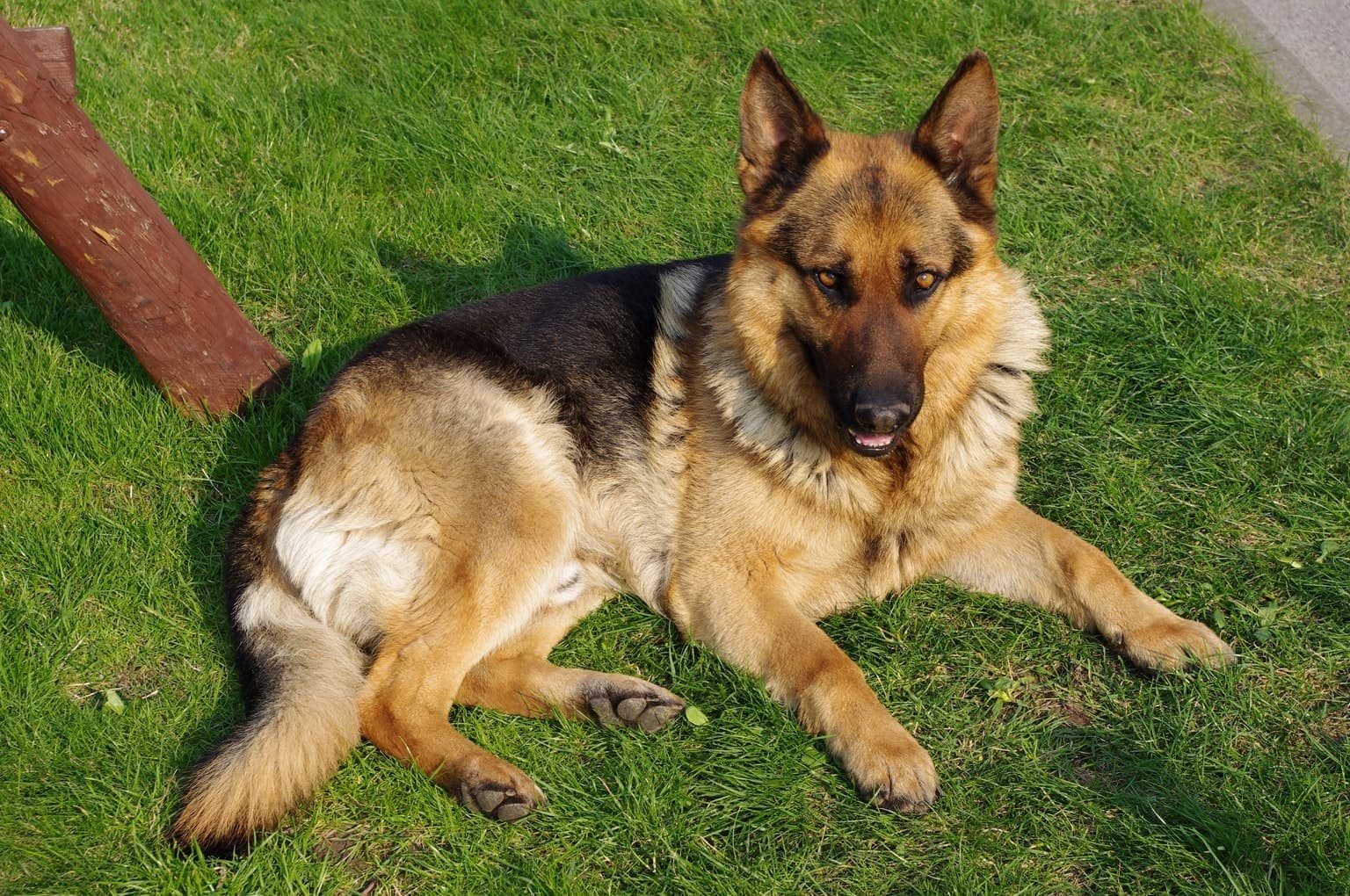
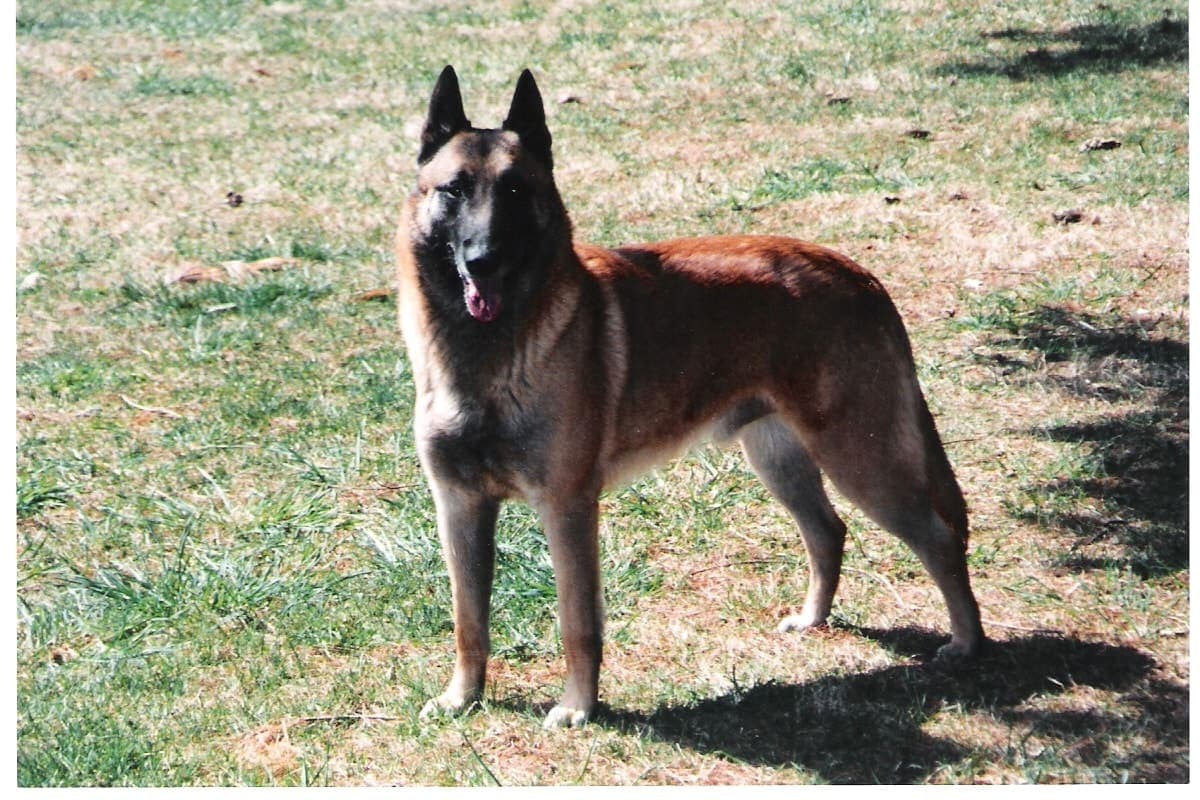
Quick facts
| Fact | German Shepherd Dog | Belgian Malinois |
|---|---|---|
| Group | Herding | Herding |
| Size | large | large |
| Height | 22-26 in | 22-26 in |
| Weight | 50-90 lbs | 40-80 lbs |
| Lifespan | 9-13 years | 12-14 years |
| Temperament | Loyal, Confident, Courageous, Highly trainable | Driven, Intelligent, Alert, Athletic |
How to tell them apart
Read the rows top to bottom. The first two or three traits usually settle it; the rest confirm.
| Trait | German Shepherd Dog | Belgian Malinois |
|---|---|---|
| Head and muzzle | Strong, moderately broad wedge with a defined stop and a deep, powerful muzzle that fills out the head. | Finer and more chiselled, with a flat skull that runs parallel to a pointed muzzle of the same length, giving a cleaner, lighter profile. |
| Ears | Large, broad at the base and moderately pointed, set high and carried open to the front. | Smaller in proportion to the head, stiffly triangular and set high, so they look neater and more upright. |
| Eyes and expression | Medium almond eyes, as dark as possible, giving a composed, watchful look. | Dark brown almond eyes with a bright, questioning intensity; the whole face reads as coiled and ready. |
| Body and topline | Longer than tall, with a topline that slopes from the withers into a long, gently rounded croup and well-angulated hindquarters. | Square outline with a level back, moderate angulation and legs set under the body, so the dog looks lighter and more upright. |
| Coat | Medium-length double coat with a dense, harsh outer layer; a long stock coat variety also exists. | Short, straight, weather-resistant coat that lies close, slightly longer on the neck and the back of the thighs. |
| Colour and markings | Black and tan with a saddle is the classic pattern; sable, bi-colour and solid black are also correct. | Rich fawn to mahogany with black tipping on the hairs, a black mask and black ears; never a saddle or solid black. |
| Size | 22 to 26 in at the shoulder and roughly 50 to 90 lbs, with a heavier, more substantial frame. | Also 22 to 26 in but lighter at about 40 to 80 lbs, built for speed rather than mass. |
| Tail and gait | Bushy tail hanging in a sabre curve to at least the hock; moves in a long, ground-covering trot with visible reach and drive. | Tail carried with a slight curve and never above the back; moves with a smooth, tireless, springy step and often circles rather than lining out. |
What the photo detector sees
For this pair the detector leans on silhouette more than anything else. The sloping back and long rear angulation of a German Shepherd produce a very different outline from the square, level-backed Malinois, and a clear side view resolves most photos. Ear shape and head substance are the next strongest signals: the German Shepherd's broader, heavier head and larger ears contrast with the Malinois' finer head and neat triangular ears. Coat texture matters as well. A German Shepherd's longer, denser coat softens the outline, especially around the neck and breeches, while a Malinois looks clean and short-coated everywhere except the ruff.
The model hesitates when the outline is hidden. Tight face crops of a sable German Shepherd remove the topline and leave only a black-masked fawn face, which is nearly identical to a Malinois. Puppies are hard because young German Shepherds have not yet developed their adult angulation or full coat, and Malinois pups are often born lighter and darken later. Working-line German Shepherds with straighter backs, Malinois with a heavier build, and shepherd crosses all land in the overlap, and the detector will return both breeds in its ranked matches rather than choosing confidently. It reports visual likeness, not pedigree.
Living with them
The two breeds share intelligence, loyalty and a need for a job, but they differ in intensity. A well-bred German Shepherd is steady and watchful, happy to train hard and then settle in the house. A Belgian Malinois runs hotter. Its drive is faster to trigger, slower to switch off, and without experienced handling and daily structured work it can tip into reactivity or destructive habits. Most trainers steer first-time owners and busy families toward the German Shepherd, and reserve the Malinois for people who already train dogs, compete in sports or work them professionally.
Exercise needs are high for both, with the Malinois needing more mental work on top of physical work. Grooming runs the other way: the German Shepherd sheds heavily year-round and needs regular brushing, while the short Malinois coat is easier to manage. The German Shepherd is also heavier and more prone to hip and joint problems, so keeping weight lean matters. Lifespans in the profiles run about 9 to 13 years for the German Shepherd and 12 to 14 for the Malinois.
Not sure which one you have?
Upload a clear photo and the detector returns a ranked shortlist, so you can check the top matches against the tells above instead of guessing from one label.
Upload a photo and get a ranked shortlistFAQ
Can a photo tell a German Shepherd from a Belgian Malinois?
Usually, yes, if the photo shows the dog from the side. The sloping back and long rear angulation of a German Shepherd, or the square, level outline of a Malinois, is the strongest visual difference and the one the detector keys on. A close-up of a sable face is much harder, because both breeds can share a black mask on a fawn head.
Is a Belgian Malinois just a smaller German Shepherd?
No. They are separate breeds from different countries, and the Malinois is one of four Belgian shepherd varieties rather than a variant of the German breed. Heights overlap almost completely; the real difference is the lighter frame, the square outline and the short fawn coat with black tipping.
Do Belgian Malinois come in black and tan?
Not in the saddle pattern. The Malinois standard calls for fawn to mahogany with black overlay and a black mask. A dog with a clear black saddle over tan legs is almost certainly a German Shepherd or a shepherd cross.
What does a German Shepherd Malinois mix look like?
Mixes often combine a sable or fawn coat with a moderately sloped back and medium-length hair, which is why they confuse both people and photo models. The detector will typically list both parent breeds near the top of its results. A DNA test is the only way to know the actual ancestry.
Which is better for a family?
For most households the German Shepherd is the safer choice. It is more forgiving of imperfect training and settles better indoors. A Malinois can be a wonderful family dog too, but only with an experienced owner who can give it structured work every day.
Full profiles
Browse every pair in the breed comparison index.