Labrador Retriever vs Golden Retriever
Labrador Retrievers and Golden Retrievers are the same height, close in weight, and share a broad head, drop ears, a kindly expression and a strong wish to carry things. A yellow Lab and a light Golden are also close in colour, and a wet dog or a young puppy of either breed hides the coat difference that normally separates them.
The coat is the fastest tell. A Labrador's coat is short, straight and very dense all over, and its tail is free of feathering. A Golden Retriever's coat is longer, straight or wavy, with feathering on the back of the front legs and the underbody, and heavier feathering on the front of the neck, the back of the thighs and the underside of the tail. Fringes of hair behind the legs and under the tail do not fit the Labrador standard.
The tail confirms it. A Labrador has an otter tail: very thick at the base, tapering to the tip, and covered all round in short, dense hair. A Golden's tail is thick and muscular at the base too, but it carries a plume of feathering underneath. Colour helps only one way: black and chocolate are Labrador colours and never occur in a Golden, whose coat is always a shade of gold.
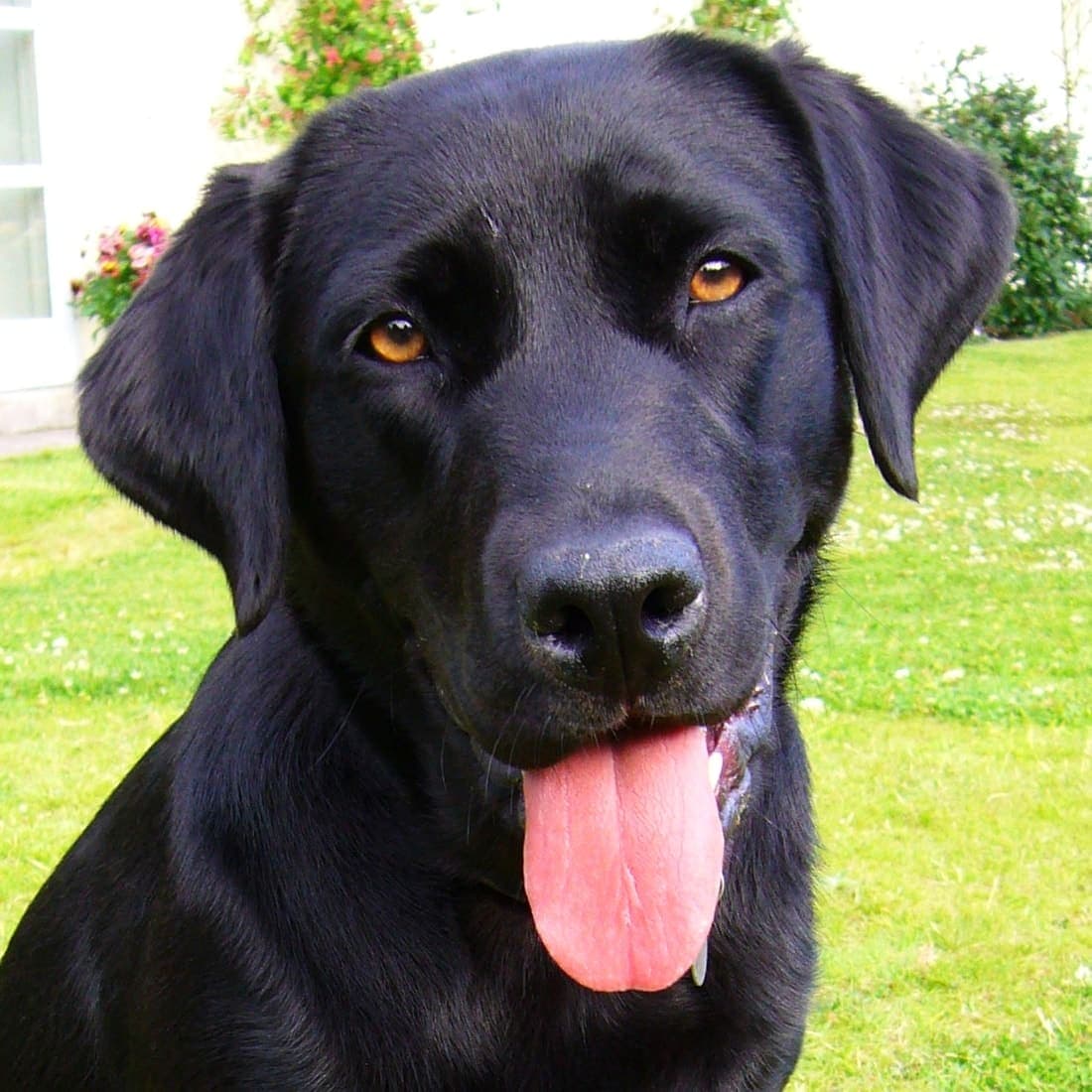
Photo by Jason Oatman · CC BY-SA 3.0
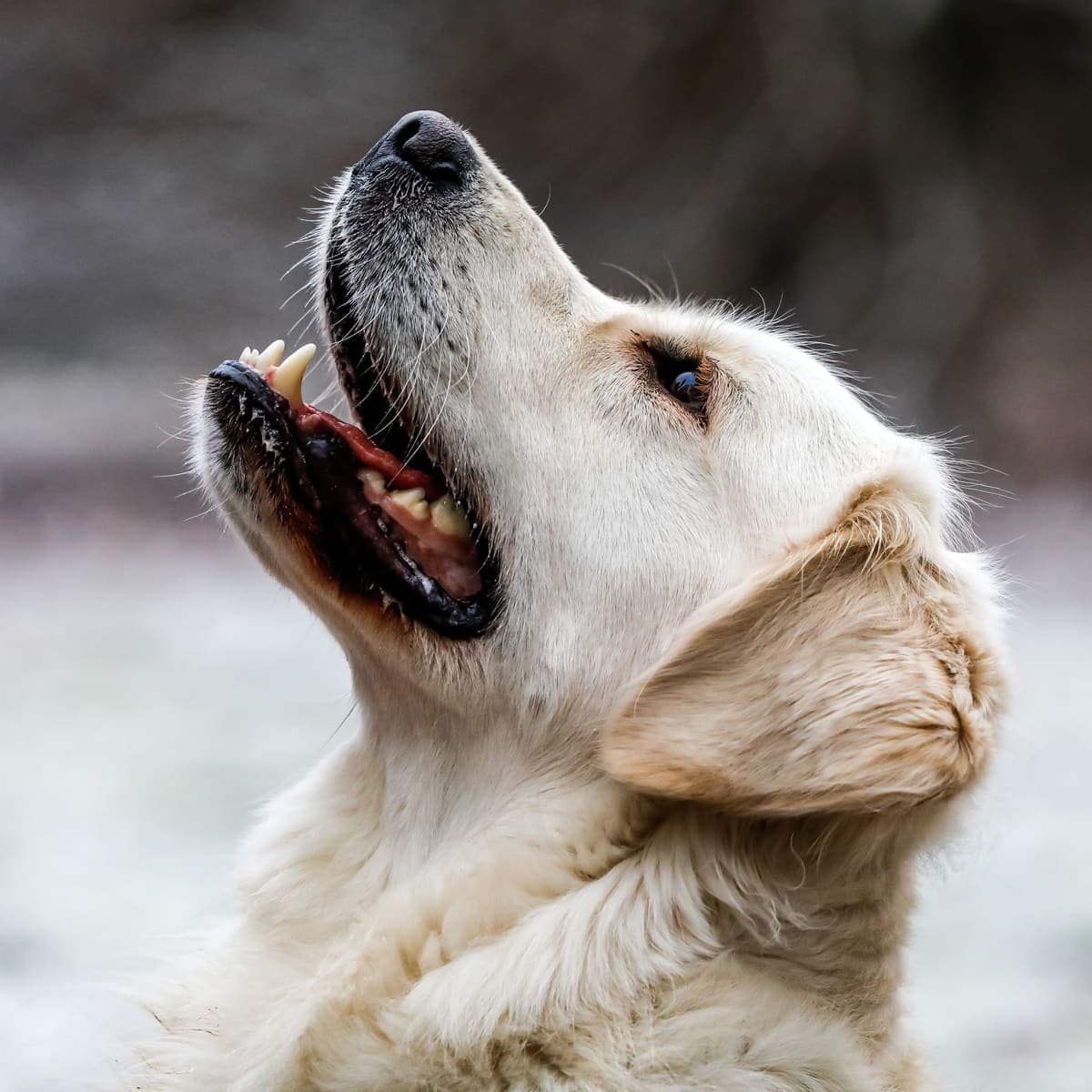
Photo by Dietmar Rabich · CC BY-SA 4.0
Quick facts
| Fact | Labrador Retriever | Golden Retriever |
|---|---|---|
| Group | Sporting | Sporting |
| Size | large | large |
| Height | 21.5-24.5 in | 21.5-24 in |
| Weight | 55-80 lbs | 55-75 lbs |
| Lifespan | 11-13 years | 10-12 years |
| Temperament | Friendly, Outgoing, Trainable, Eager-to-please | Gentle, Intelligent, Friendly, Reliable |
How to tell them apart
Read the rows top to bottom. The first two or three traits usually settle it; the rest confirm.
| Trait | Labrador Retriever | Golden Retriever |
|---|---|---|
| Coat | Short, straight and very dense, fairly hard to the touch, with a soft weather-resistant undercoat. A slight wave down the back is permitted. | Dense and water-repellent with a good undercoat, lying close to the body, straight or wavy, with feathering and an untrimmed natural ruff. |
| Tail | Otter tail: very thick at the base, tapering gradually, free of feathering and clothed all round in short, dense hair. | Thick and muscular at the base, carried level or with a moderate upward curve, feathered underneath. |
| Colour | Black, yellow or chocolate. Yellow ranges from fox-red to light cream. | Rich, lustrous golden of various shades. Feathering may be lighter than the rest of the coat. |
| Head | Clean-cut with a broad back skull and a moderate stop; powerful jaws and a muzzle that is neither long and narrow nor short and stubby. | Broad skull, slightly arched, with a well-defined but not abrupt stop and a straight muzzle that blends smoothly into the skull. |
| Ears | Hanging moderately close to the head, set rather far back and somewhat low on the skull. | Rather short, with the front edge attached well behind and just above the eye, falling close to the cheek. |
| Build | Strongly built, short-coupled and athletic; 21.5 to 24.5 in and 55 to 80 lbs. | Symmetrical, powerful and active, not clumsy or long in the leg; 21.5 to 24 in and 55 to 75 lbs. |
What the photo detector sees
For this pair, the saved benchmark runs for this project do not show the tested AI models confusing the two breeds' reference photos, which fits how different the coats are in a clear picture of an adult. The useful photo shows the side of the dog, including the tail and the backs of the legs, in dry conditions.
The hard cases are predictable. A soaked Golden's coat lies flat and looks short. A Golden clipped short for summer loses its feathering. Puppies of both breeds have short, fluffy coats until the adult coat comes in. A yellow dog with a moderately long coat may also be a Lab and Golden cross, which is a common deliberate cross and usually carries some feathering. The detector reports visual similarity, not ancestry.
Living with them
Temperament is close. Both are friendly, eager to please, easy to motivate with food or a ball, and both need daily exercise and training well beyond a short walk. Both are slow to mature and can be boisterous as adolescents. The Labrador is often the more exuberant and physically forceful of the two, and the Golden is often the softer and more sensitive to correction, but line and upbringing matter more than breed here.
Grooming is where they differ. A Labrador needs a weekly brush and sheds heavily in season. A Golden sheds as much and also needs regular brushing through the feathering to prevent mats, particularly behind the ears and on the trousers. Both breeds gain weight easily and do best on measured meals. The profiles list a lifespan of 11 to 13 years for the Labrador Retriever and 10 to 12 years for the Golden Retriever.
Not sure which one you have?
Upload a clear photo and the detector returns a ranked shortlist, so you can check the top matches against the tells above instead of guessing from one label.
Upload a photo and get a ranked shortlistFAQ
What is the difference between a Labrador and a Golden Retriever?
The coat and tail. A Labrador has a short, dense coat and a thick otter tail covered in short hair. A Golden Retriever has a longer coat with feathering on the legs, underbody, front of the neck and tail. Labradors are black, yellow or chocolate; Goldens are always a shade of gold.
Is a yellow Lab the same as a Golden Retriever?
No. Yellow is one of three Labrador colours, and a yellow Lab has the same short coat and otter tail as a black or chocolate one. A Golden Retriever is a separate breed with a longer, feathered coat.
Which is bigger, a Lab or a Golden?
They are nearly the same size. The profiles list 21.5 to 24.5 in and 55 to 80 lbs for the Labrador and 21.5 to 24 in and 55 to 75 lbs for the Golden Retriever.
Which sheds more?
Both shed heavily from a double coat. Golden hair is longer and more visible, and the feathering needs brushing to prevent tangles, so a Golden takes more grooming time. A Labrador's short hair is easier to manage but there is a lot of it.
What does a Lab and Golden Retriever mix look like?
Typically a retriever-shaped dog with a coat between the two parents: longer than a Lab's, often with light feathering on the tail and legs. Such a dog can look like either parent in a photo, so appearance alone cannot confirm the cross.
Full profiles
Browse every pair in the breed comparison index.