Shiba Inu vs Akita
The Shiba Inu and the Akita are both Japanese spitz breeds with small, forward-tilted triangular ears, a dense double coat and a tail curled over the back. A red dog of either breed, photographed alone, shows the same outline and the same alert expression, which is why the Shiba is so often described as a small Akita.
They are not close in size. A Shiba Inu stands 13.5 to 16.5 in and weighs 17 to 23 lbs. An Akita stands 24 to 28 in and weighs 70 to 130 lbs, so an adult Akita is roughly four to five times the weight of a Shiba. Next to a person, a Shiba's back is around knee height and an Akita's is at mid-thigh or higher.
When scale is missing, look at the head and the colour pattern. The Akita has a massive, broad head that forms a blunt triangle seen from above, with a deep muzzle and heavy bone throughout. The Shiba's head is moderate in size and in proportion to a much lighter body. Every Shiba also has urajiro: cream to white ventral markings on the sides of the muzzle, the cheeks, the throat, chest and underside. Akitas come in any colour except merle and liver, including white, brindle and pinto, often with a black mask or a white blaze.
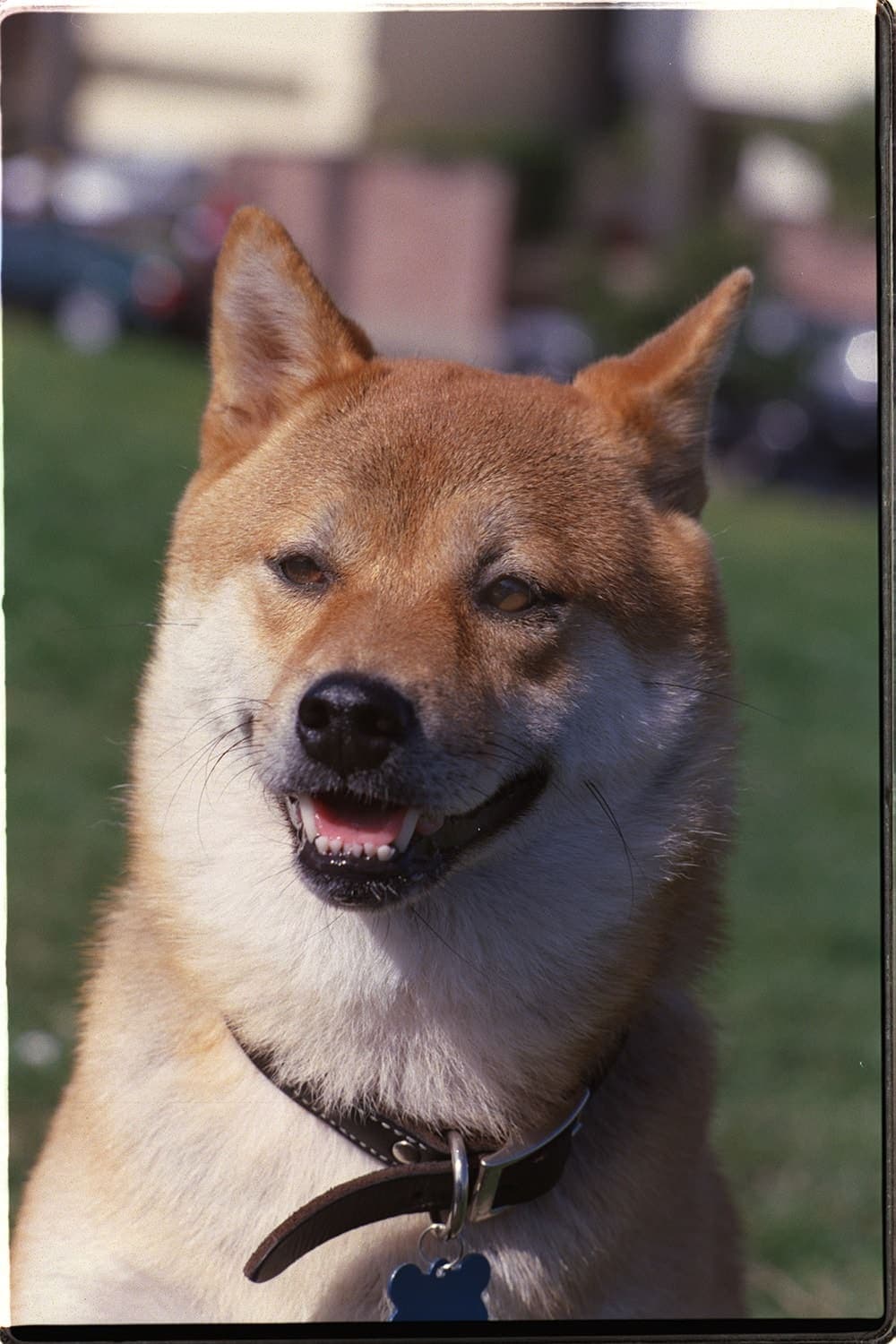
Photo by Nancy Wong · CC BY-SA 4.0
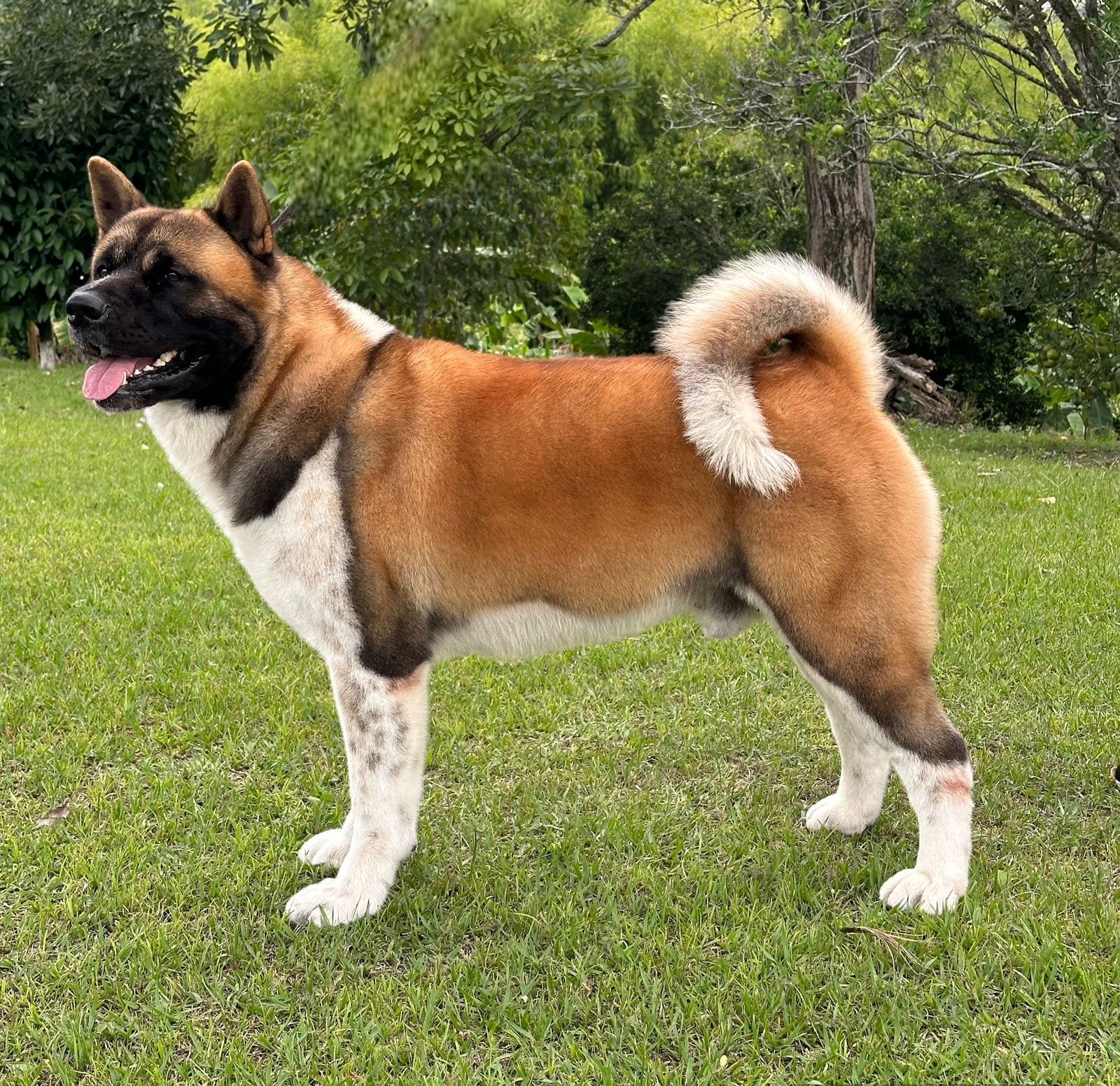
Photo by Edwin Campos · CC BY-SA 4.0
Quick facts
| Fact | Shiba Inu | Akita |
|---|---|---|
| Group | Non-Sporting | Working |
| Size | small | giant |
| Height | 13.5-16.5 in | 24-28 in |
| Weight | 17-23 lbs | 70-130 lbs |
| Lifespan | 13-16 years | 10-14 years |
| Temperament | Independent, Alert, Clean, Confident | Loyal, Dignified, Quiet, Protective |
How to tell them apart
Read the rows top to bottom. The first two or three traits usually settle it; the rest confirm.
| Trait | Shiba Inu | Akita |
|---|---|---|
| Size | 13.5 to 16.5 in and 17 to 23 lbs. Males 14.5 to 16.5 in, females 13.5 to 15.5 in. | 24 to 28 in and 70 to 130 lbs. Males 26 to 28 in, females 24 to 26 in. |
| Head | Moderate in size with full cheeks, a moderate stop and a firm, full, round muzzle that tapers slightly; red dogs with urajiro have a fox-like look. | Massive but in balance with the body, a blunt triangle seen from above, with a broad skull and a broad, full muzzle. |
| Ears | Small, triangular, firmly erect and tilted forward, following the arch of the neck. | Small for the head, triangular with slightly rounded tips, strongly erect and angled forward over the eyes in line with the back of the neck. |
| Colour and markings | Red, black and tan, or sesame, always with cream to white urajiro on the muzzle sides, cheeks, throat, chest, belly and legs. Cream is a very serious fault in the AKC standard. | Any colour including white, brindle and pinto; merle and liver are disqualifications. Markings are well balanced, with or without a mask or blaze; pinto has large patches on a white ground. |
| Body and bone | Compact and well muscled with moderate bone; slightly longer than tall. | Large and powerful with much substance and heavy bone; longer than tall, with a wide, deep chest. |
| Coat | Stiff, straight outer coat over a soft, thick undercoat; short on the face, ears and legs, longer and standing open on the tail. | Straight, harsh outer coat standing somewhat off the body over a thick, soft undercoat; about 2 in long at the withers and rump. |
| Tail | Thick and strong, carried over the back in a sickle or curled position. | Large and full, set high and carried over the back or against the flank in a three-quarter, full or double curl. |
What the photo detector sees
A photo that shows the dog beside a person, furniture or a doorway settles this pair at once. Without scale the useful evidence is head mass relative to the body, bone in the legs and the colour pattern. A red Shiba's urajiro is tidy and sits on the face, underside and inside of the legs, sometimes with white socks or a white tail tip, while a pinto, brindle or black-masked dog points to an Akita.
Naming adds a complication. The AKC registers one Akita breed, while Japan's national kennel club and the international federation FCI treat the lighter, fox-faced Japanese Akita and the heavier American Akita as two breeds. A red Japanese-type Akita with white urajiro-style markings looks much more like a large Shiba than an American-type Akita does. AI models may answer with either Akita name, and the benchmark runs saved with this project contain one case of a Shiba Inu reference photo answered as Akita.
Living with them
Both breeds are independent, clean, quiet in the house and reserved with strangers, and both need early socialisation and patient, consistent training. The Shiba is agile, quick to bolt and difficult to recall, so secure fencing and a lead matter more than strength. The Akita is a powerful guardian breed that is often intolerant of other dogs, particularly of the same sex, and it needs an experienced owner who can manage a dog of 70 to 130 lbs.
Both shed lightly for most of the year and very heavily twice a year, when daily brushing is needed. Exercise needs are moderate for both: daily walks and play, not endurance work. The profiles list a lifespan of 13 to 16 years for the Shiba Inu and 10 to 14 years for the Akita.
Not sure which one you have?
Upload a clear photo and the detector returns a ranked shortlist, so you can check the top matches against the tells above instead of guessing from one label.
Upload a photo and get a ranked shortlistFAQ
What is the difference between a Shiba Inu and an Akita?
Size above all. A Shiba Inu is 13.5 to 16.5 in and 17 to 23 lbs; an Akita is 24 to 28 in and 70 to 130 lbs. The Akita also has a much broader, heavier head and comes in almost any colour, while a Shiba is red, black and tan or sesame with cream to white urajiro markings.
Is a Shiba Inu a small Akita?
No. They are separate Japanese breeds with separate standards. They share spitz features, namely erect ears, a double coat and a curled tail, but the Shiba is a small breed in the AKC Non-Sporting Group and the Akita is a large breed in the Working Group.
How big does an Akita get compared with a Shiba?
An adult Akita stands 24 to 28 in and weighs 70 to 130 lbs. An adult Shiba Inu stands 13.5 to 16.5 in and weighs 17 to 23 lbs.
Are American and Japanese Akitas the same breed?
It depends on the registry. The AKC registers a single breed called the Akita. The Japan Kennel Club and the FCI separate the Akita, the Japanese type, from the American Akita. The Japanese type is lighter, with a more fox-like face and a limited range of colours.
Which is easier for a first-time owner?
Neither is a typical first dog, because both are independent and need careful socialisation. The Shiba's small size makes mistakes easier to manage. The Akita's strength and protective nature call for an owner with experience of large dogs.
Full profiles
Browse every pair in the breed comparison index.