West Highland White Terrier vs Cairn Terrier
West Highland White Terriers and Cairn Terriers are small, short-legged, rough-coated terriers from the Scottish Highlands, with small pointed erect ears, deep-set eyes under shaggy brows, a black nose and a short tail carried upright. They come from the same working terrier stock, and a pale cream or wheaten Cairn beside a Westie that needs a bath can look like two dogs of one breed.
Colour is the fastest tell. A Westie is white and only white. A Cairn may be any colour except white: wheaten, red, sandy, grey and brindle are all usual, often with darker ears, muzzle and tail tip. A clean white dog is not a Cairn, and a dog that is clearly coloured through the body coat is not a Westie.
For a very pale Cairn, look at the build and the trim. The Westie is the slightly larger and heavier dog, 10 to 11 in and 15 to 20 lbs against 9.5 to 10 in and 13 to 14 lbs, and its head is usually trimmed into a full, round frame. The Cairn is kept in a more natural, tousled coat, with a head that is short and broad for its length and a foxy expression.
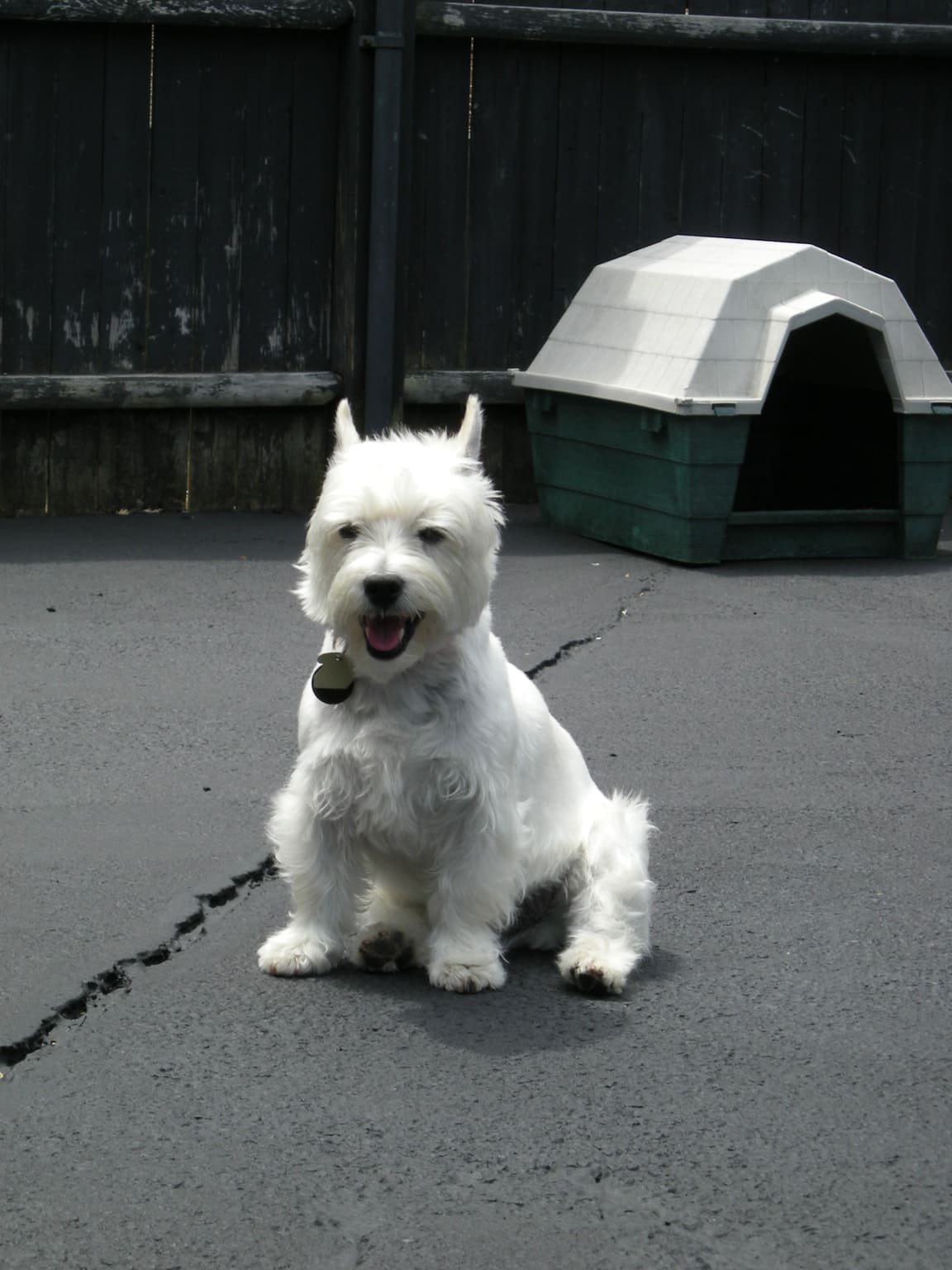
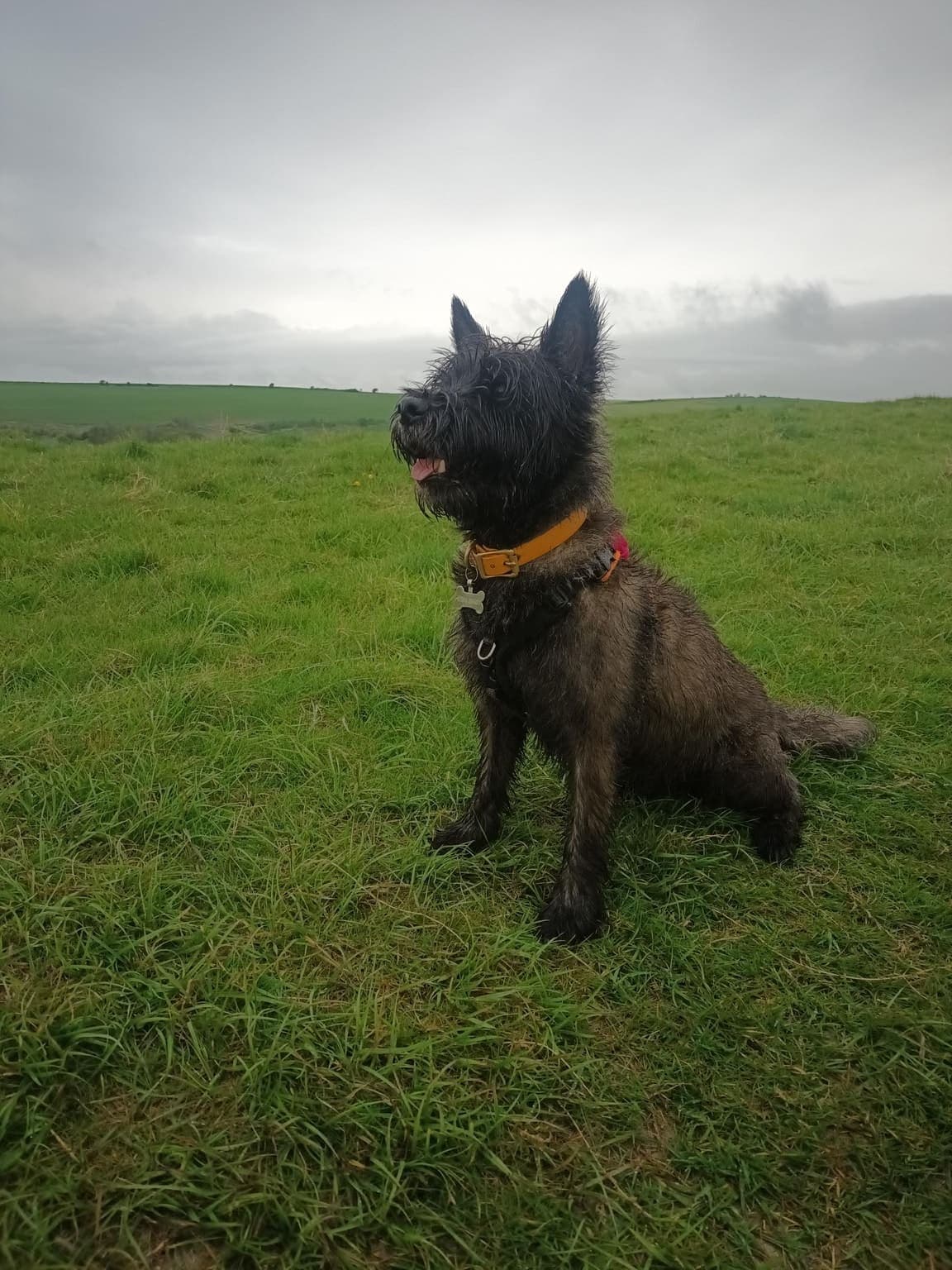
Quick facts
| Fact | West Highland White Terrier | Cairn Terrier |
|---|---|---|
| Group | Terrier | Terrier |
| Size | small | small |
| Height | 10-11 in | 9.5-10 in |
| Weight | 15-20 lbs | 13-14 lbs |
| Lifespan | 13-15 years | 13-15 years |
| Temperament | Confident, Friendly, Independent, Spirited | Curious, Brave, Lively, Independent |
How to tell them apart
Read the rows top to bottom. The first two or three traits usually settle it; the rest confirm.
| Trait | West Highland White Terrier | Cairn Terrier |
|---|---|---|
| Colour | White, as the breed name says. The standard prefers a hard coat with some wheaten tipping to a soft white one. | Any colour except white. Dark ears, muzzle and tail tip are desirable. |
| Size | 10 to 11 in and 15 to 20 lbs. Males about 11 in, females about 10 in. | 13 to 14 lbs. The AKC standard gives 10 in and 14 lbs for males and 9.5 in and 13 lbs for females. |
| Head | Broad skull, slightly domed between the ears, with a blunt muzzle slightly shorter than the skull; hair on the head is shaped to look round. | Skull broad in proportion to its length with a decided stop; muzzle strong but not too long or heavy; shorter and wider than in other terriers. |
| Ears | Small, tightly erect, pointed, set wide apart on the top outer edge of the skull; hair on the ears is trimmed short and velvety. | Small, pointed and erect, set wide apart on the side of the head, free of long hair. |
| Coat | Double coat; straight, hard outer coat about 1.5 to 2 in long, shorter on the neck and shoulders, shaped by plucking. | Double coat; profuse, harsh, weather-resistant outer coat with a short, soft undercoat, kept natural and slightly shaggy. |
| Body | Compact, with a short back and a deep chest; slightly shorter in body than tall at the shoulder. | Well-proportioned with a medium-length back; body length from chest to rump is about one and a half times its height. |
| Tail | Relatively short and carrot-shaped, covered in hard hair with no feathering, carried gaily but not over the back; never docked. | In proportion to the head, well furnished with hair but not feathered, carried gaily but not curled over the back. |
What the photo detector sees
Colour separates this pair in any clear photo, and the saved benchmark runs for this project do not show the tested AI models confusing the two breeds' reference photos. Overexposed pictures cause most of the difficulty: strong sun can bleach a cream or light wheaten Cairn to near white, and indoor lighting can make a Westie's coat look cream or yellowish.
When colour is doubtful, look for darker points. A Cairn commonly has darker ears and muzzle than body, while a Westie is white throughout. Grooming changes the outline more than anything else. Other small white terriers and crosses, and breeds such as the Norwich, Norfolk and Scottish Terrier, share parts of the same outline, so a dog that fits neither description cleanly may be something else.
Living with them
Both are confident, busy, independent terriers bred to hunt small animals among rocks, and both will chase, dig and bark given the chance. They need daily walks, play and training that stays interesting, and a secure garden. The Westie is often the more sociable with visitors, and the Cairn is often described as the more workmanlike and curious, but the two are close in temperament and individual dogs vary.
Coat care is where they differ in practice. A Westie's white coat shows dirt and is usually trimmed or hand-stripped every several weeks to keep its shape. A Cairn's coat is brushed weekly and tidied by hand-stripping a few times a year, and it is meant to look natural. Both breeds can have sensitive skin. The profiles list a lifespan of 13 to 15 years for both.
Not sure which one you have?
Upload a clear photo and the detector returns a ranked shortlist, so you can check the top matches against the tells above instead of guessing from one label.
Upload a photo and get a ranked shortlistFAQ
What is the difference between a Westie and a Cairn Terrier?
Colour first: a West Highland White Terrier is always white, and a Cairn Terrier is any colour except white. The Westie is slightly larger at 15 to 20 lbs against 13 to 14 lbs, and its head is trimmed round, while the Cairn has a more natural, shaggy coat.
Are Westies and Cairn Terriers related?
Yes. Both descend from the working terriers of the Scottish Highlands, and they were once treated as the same type and interbred. They have been registered as separate breeds for more than a century.
Can a Cairn Terrier be white?
No. The AKC standard accepts any colour except white. A Cairn can be a very pale cream or wheaten, which is where confusion with a Westie starts.
Which is bigger?
The West Highland White Terrier, by a small margin. It stands 10 to 11 in and weighs 15 to 20 lbs. The Cairn Terrier standard gives 9.5 to 10 in and 13 to 14 lbs.
Do they shed?
Both shed lightly. The harsh outer coat is traditionally removed by hand-stripping, which keeps its texture and colour. Clipping is easier and common for pets, but it softens the coat over time.
Full profiles
Browse every pair in the breed comparison index.