Bouvier des Flandres
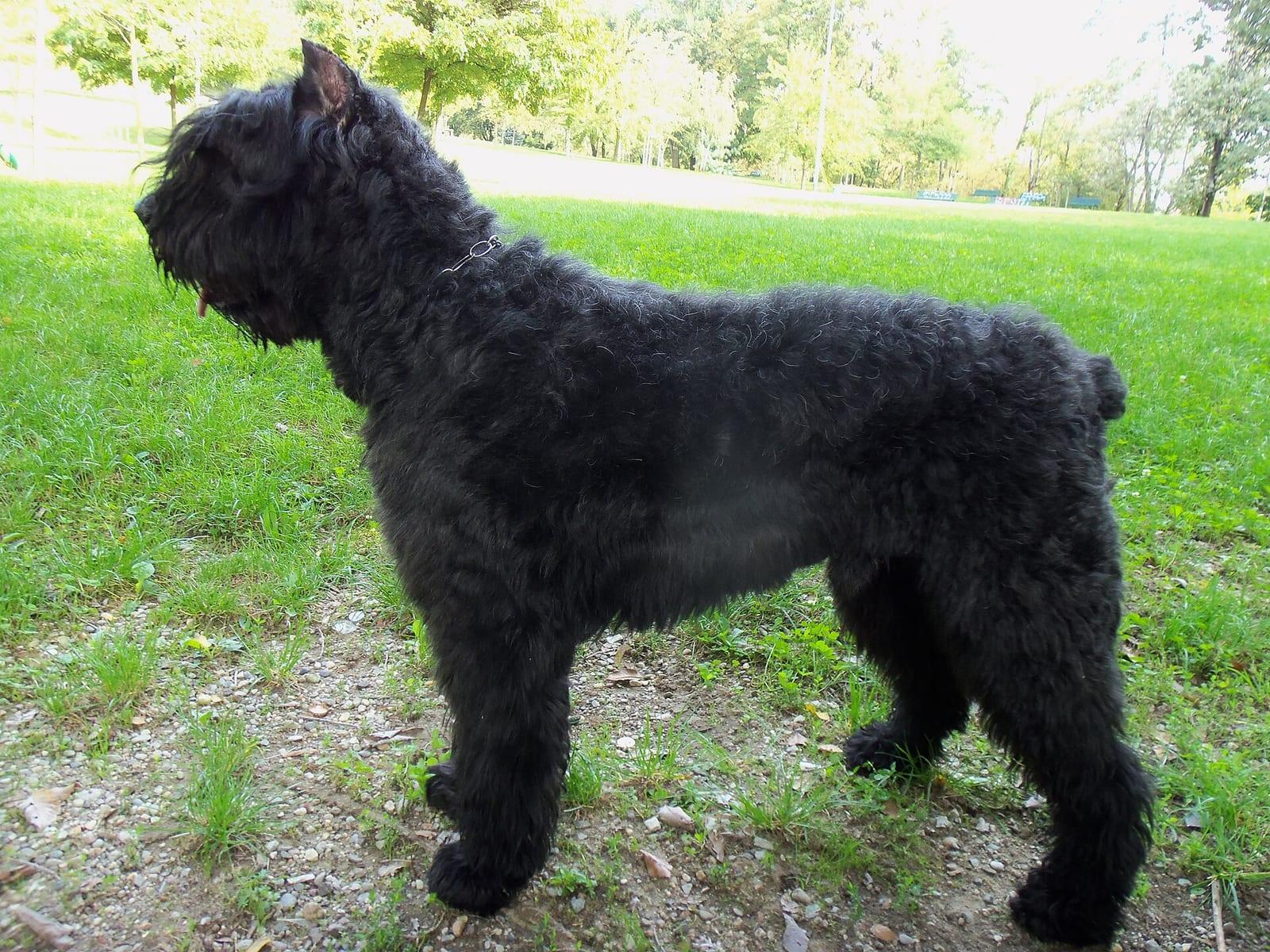
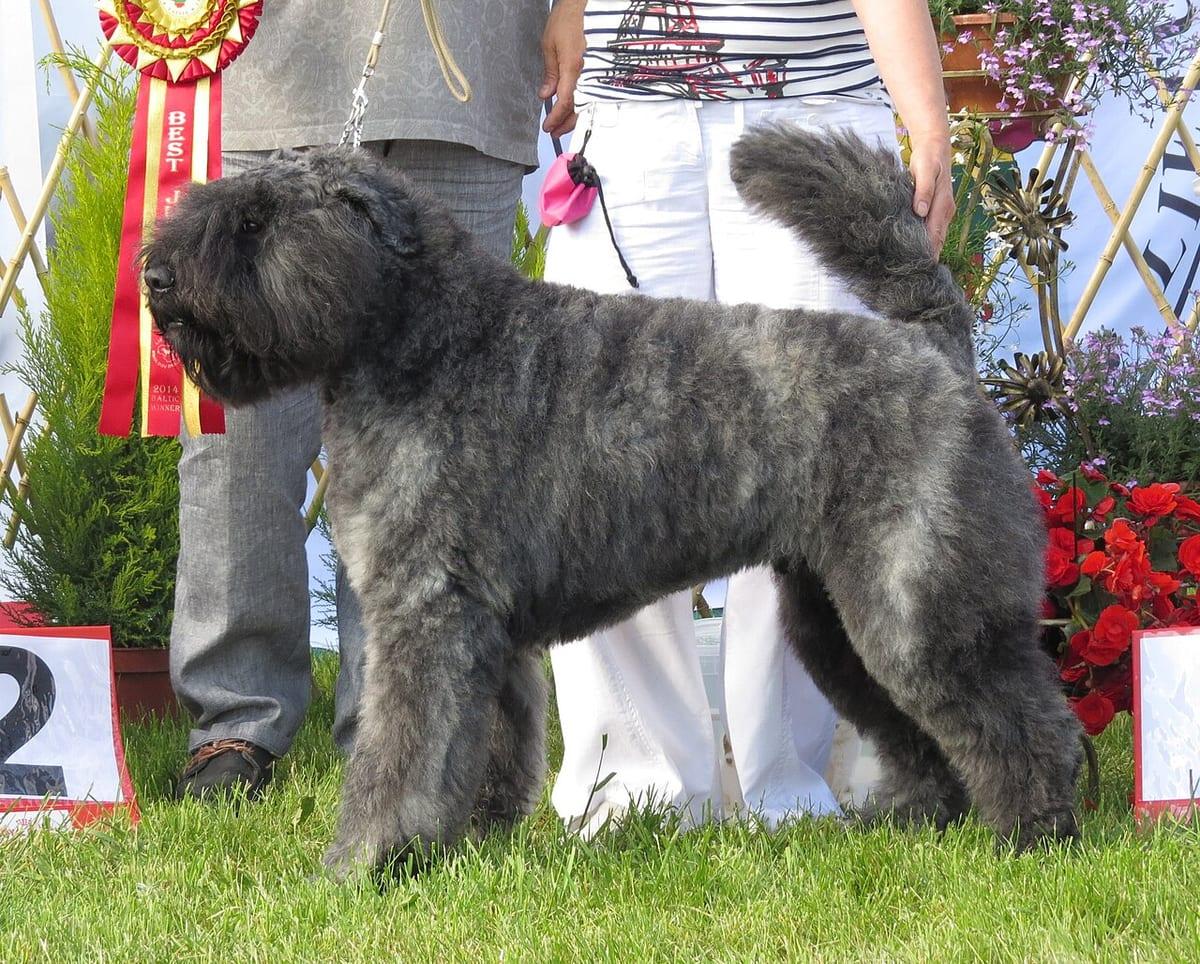
Photo by Томасина · CC BY-SA 4.0
Bouvier des Flandres are powerful herding dogs known for a sturdy build, a shaggy coat, and a steady, protective temperament. They bond closely with family and can be reserved with strangers, making socialization and training essential. Bouviers enjoy work to do and excel in obedience and working-style sports when given structure. Their coat requires consistent grooming to prevent mats and keep the skin healthy. With clear leadership, enrichment, and grooming, Bouviers make loyal companions and capable guardians.
How to recognize a Bouvier des Flandres
- A powerfully built, compact, short-bodied dog with a rough, tousled coat and a notably rugged look.
- A very thick beard and mustache and upstanding eyebrows give the large head a gruff expression, and the eyebrows never hide the eyes.
- The outline is square, with body length equal to height at the shoulder, over a short, broad back with a firm, level back line.
- The tail is docked to 2 or 3 vertebrae, set high and preferably carried upright when the dog moves.
- The ears are set high and alert and are triangular when cropped.
Quick facts
- Group: Herding
- Size: large (large dog breeds)
- Height: 23.5-27.5 in
- Weight: 70-110 lbs
- Males, per the AKC standard: 24.5-27.5 in
- Females, per the AKC standard: 23.5-26.5 in
- Lifespan: 10-12 years
- Temperament: Steady, Protective, Intelligent, Loyal
- AKC recognized: 1931
The standard names 26 inches for males and 25 inches for females as ideal, severely penalizes heights outside the ranges, and gives no weight.
Coat and colors
A tousled double coat with a rough, harsh, dry outer layer about 2.5 inches long over a fine, dense undercoat, plus a very thick beard and mustache. The standard allows only slight trimming to accent the body line and faults coats that are silky, woolly, too long or too short.
From fawn to black, passing through salt and pepper, gray and brindle, with a small white star on the chest allowed. The standard severely penalizes chocolate brown, white and parti-color and otherwise favors no color.
History and original work
Bouviers come from Flanders, a historic region that covered parts of what are now Belgium, France, and the Netherlands, and both Belgium and France claim the breed. The name roughly means cowherd of Flanders: farmers there kept one all-purpose dog to drive cattle, guard the farm, and pull carts. The breed was nearly lost in both world wars and later worked in Europe as a police dog and guide dog.
The standard gives its origin as a cattle herder and general farm helper that also pulled carts, and says the harsh double coat protects it in all weather. It also mentions work as an ambulance, messenger, guard, tracking and guide dog.
Breeds mistaken for the Bouvier des Flandres
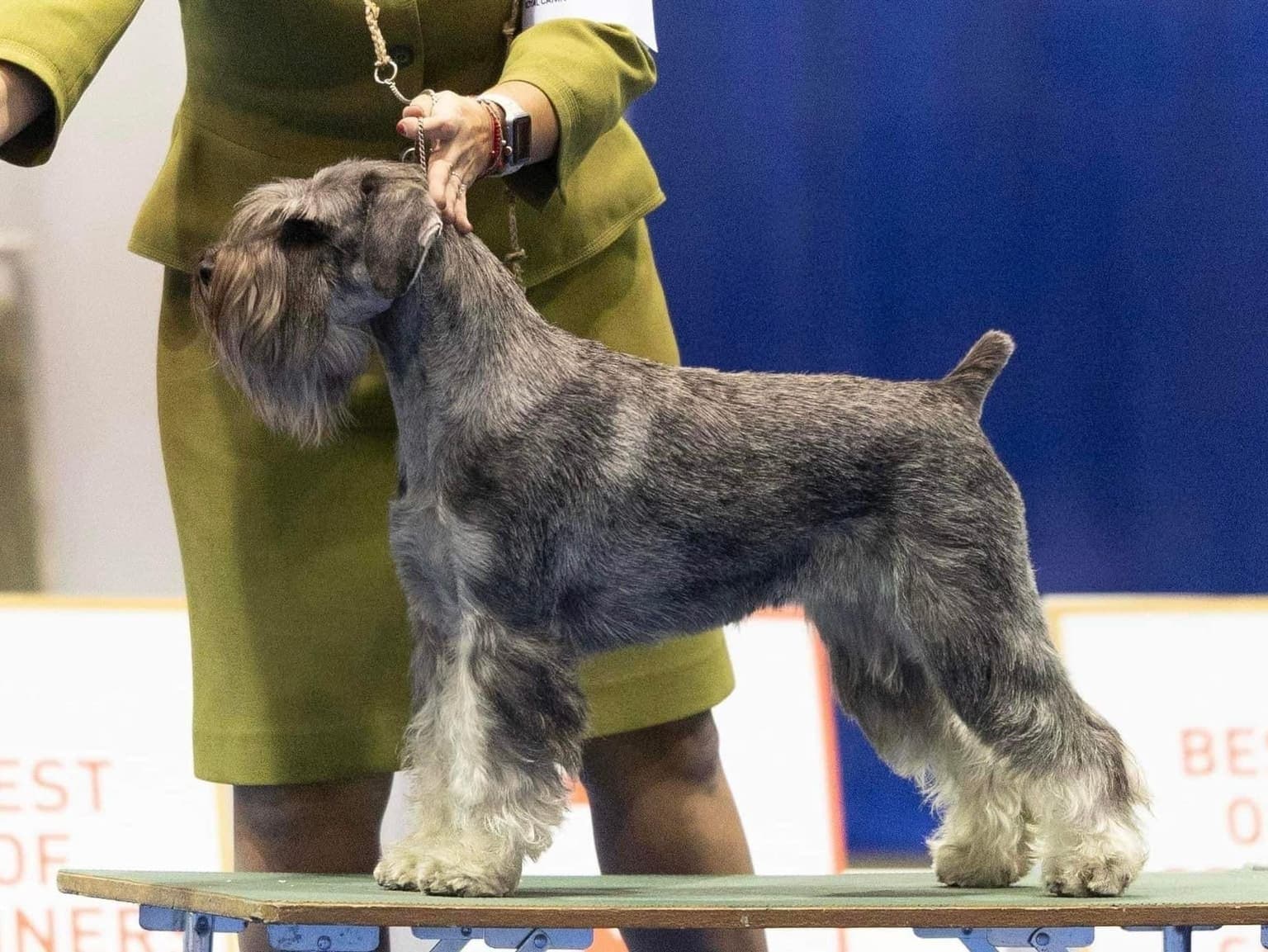
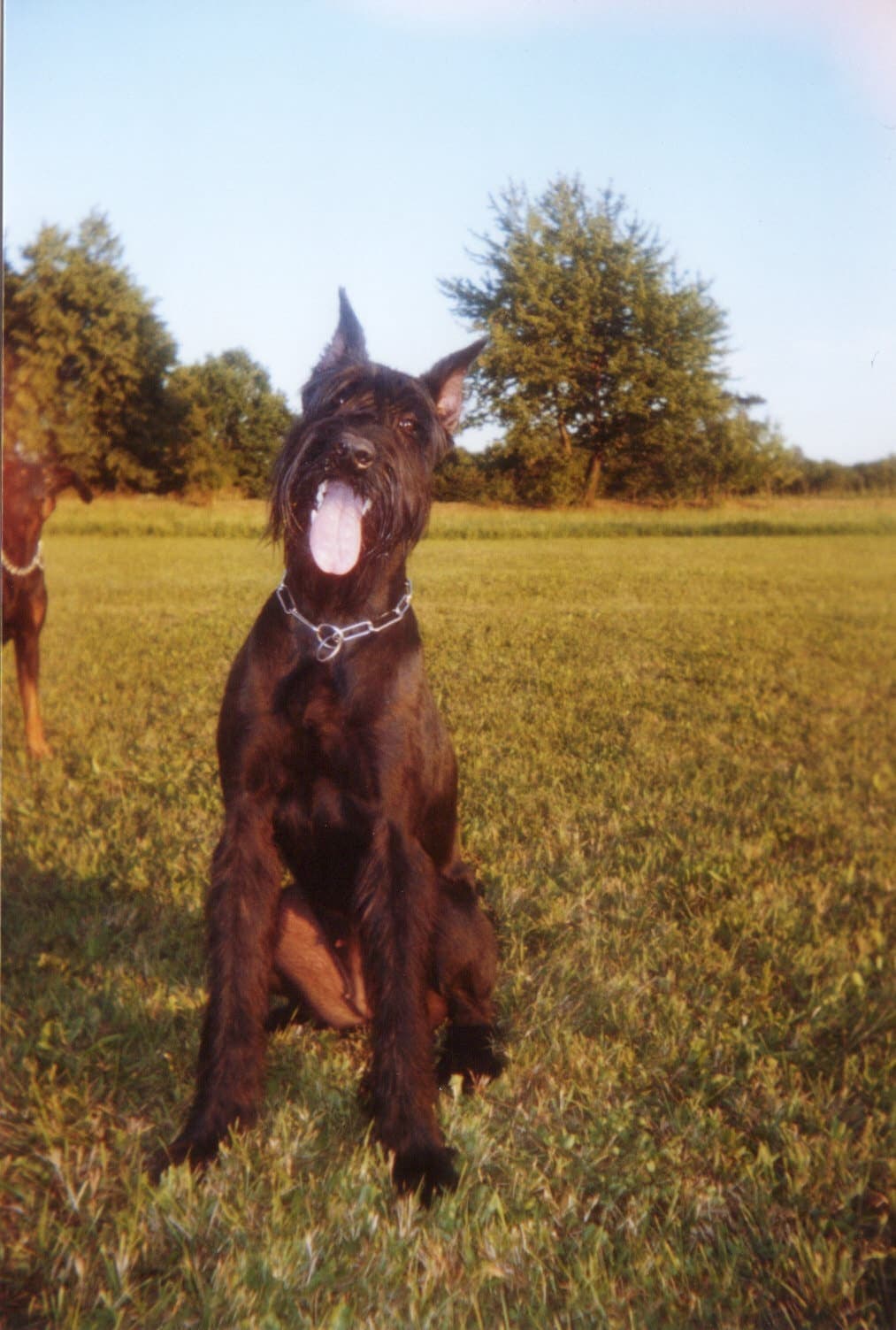
- Giant Schnauzer: A Giant Schnauzer has a hard, wiry coat that is solid black or pepper and salt, while the Bouvier des Flandres has a tousled coat in colors from fawn through brindle and gray to black.
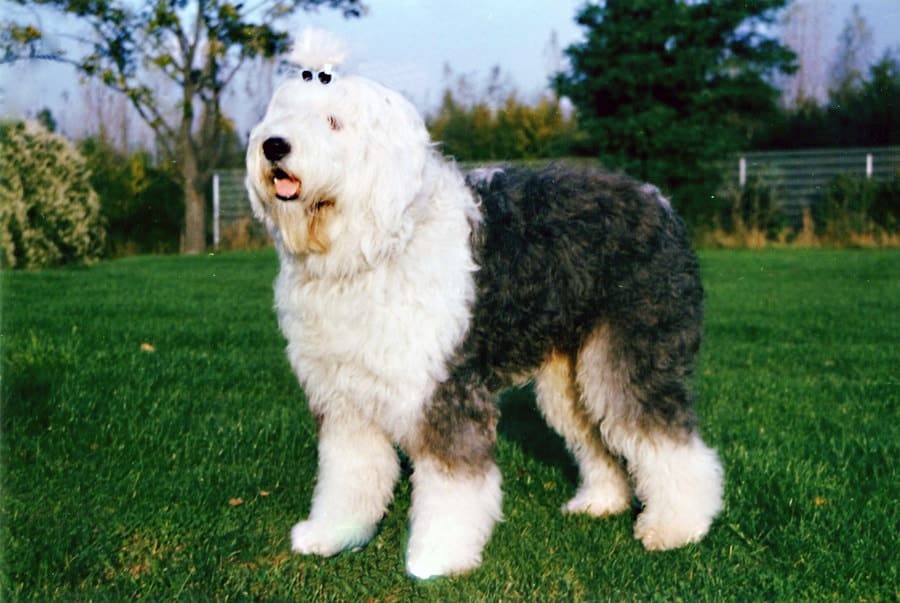
- Old English Sheepdog: An Old English Sheepdog has a profuse, shaggy coat in gray, grizzle or blue, with or without white, while the Bouvier des Flandres has a harsh coat about 2.5 inches long with at most a small white chest star.
Care tips
- Groom frequently; dense coats mat without regular brushing and trimming.
- Give them daily exercise and training; working dogs need structure.
- Start socialization early to build stable behavior with strangers and other dogs.
- Teach calm leash manners—strength is significant.
- Check ears, paws, and coat after outdoor activity for debris.
Sources
- American Kennel Club: Bouvier des Flandres: Primary registry overview for breed history, group, structure, and typical traits.
- AKC official standard: Bouvier des Flandres: Source for the identifying features, coat, colors, and size by sex on this page.