Old English Sheepdog
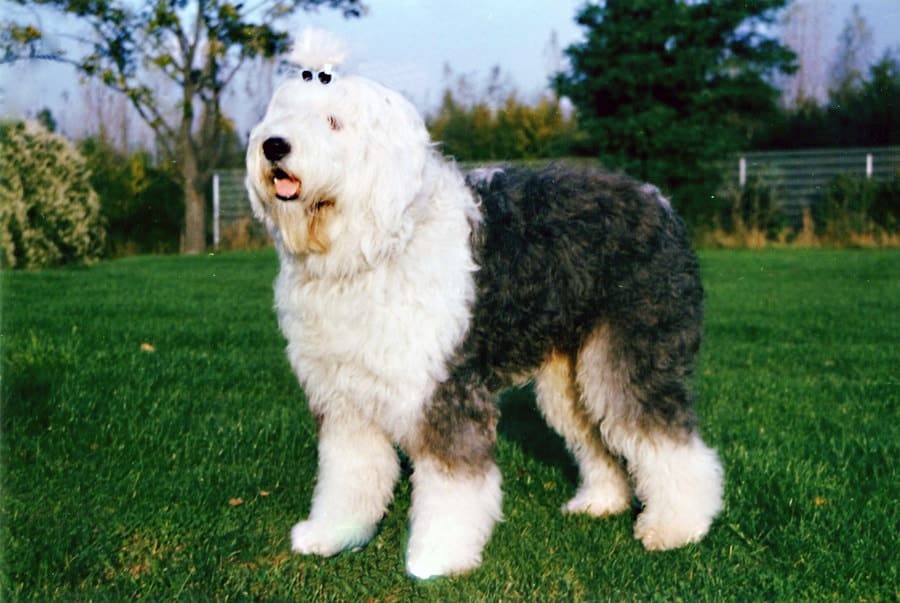
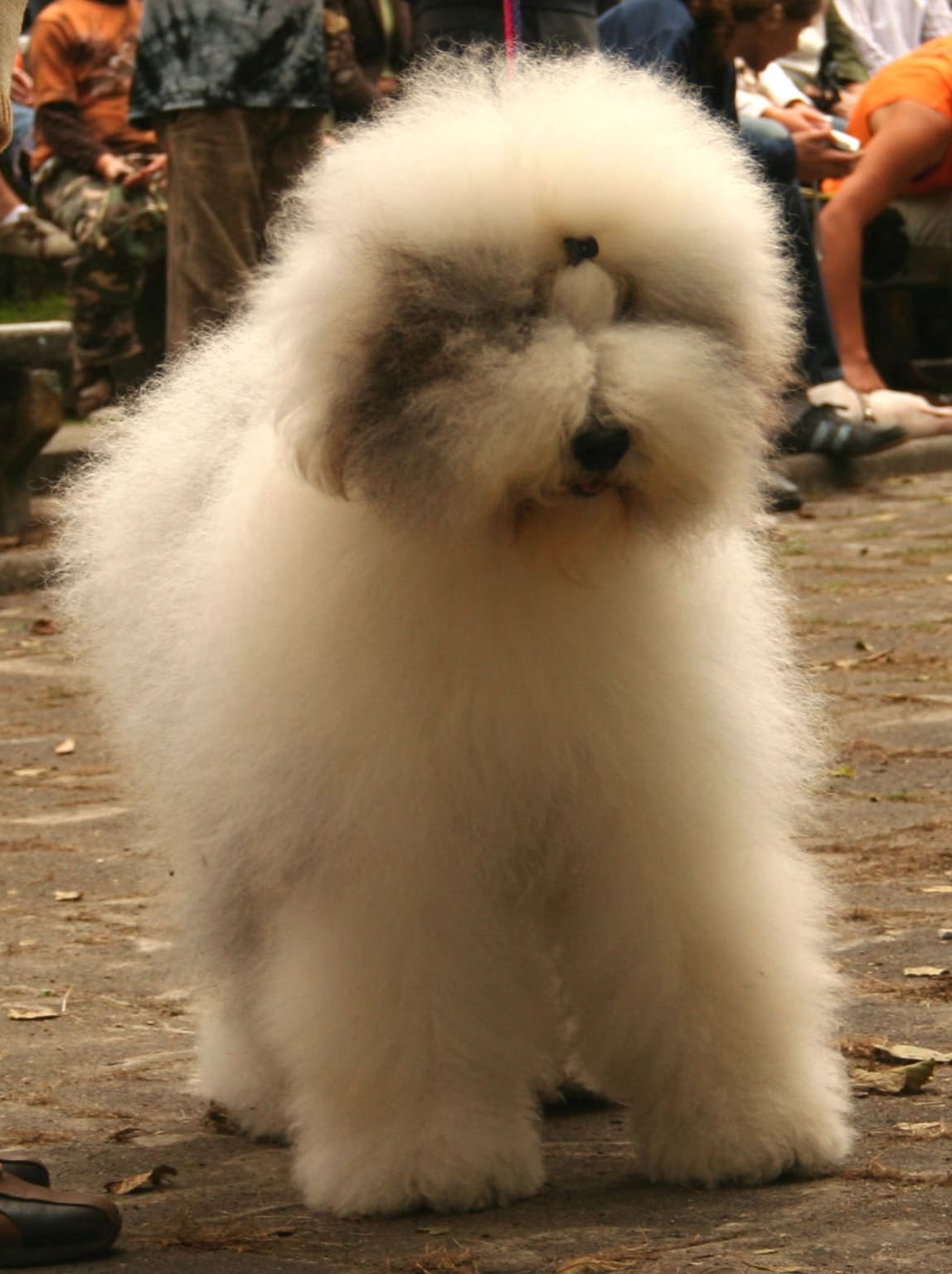
Photo by Pleple2000 · CC BY-SA 3.0
Old English Sheepdogs are large herding dogs known for a shaggy coat and a playful, good-natured personality. They enjoy being part of family life and are affectionate and gentle, while still needing daily exercise and brain games. Their double coat, typically blue-gray and white, requires significant grooming to prevent mats and keep the skin healthy. Old English Sheepdogs can be trainable and enjoy activities that involve teamwork. Put in the grooming time, train them, and socialize them early—they make charming companions with a fun-loving spirit.
How to recognize a Old English Sheepdog
- The back line is lower at the shoulder than at the loin, which the standard singles out as a distinguishing mark of the breed.
- A profuse, shaggy coat covers the whole dog, including the skull, with the thickest, longest hair on the hindquarters.
- The tail is a natural bobtail or is docked close to the body.
- The body is square, compact and thickset, broader at the rump than at the shoulders.
- Eyes may be brown, blue or one of each, and the nose is always black and large.
Quick facts
- Group: Herding
- Size: large (large dog breeds)
- Height: 21+ in
- Weight: 60-100 lbs
- Males, per the AKC standard: at least 22 in
- Females, per the AKC standard: at least 21 in
- Lifespan: 10-12 years
- Temperament: Gentle, Playful, Smart, Affectionate
- AKC recognized: 1888
The standard sets no upper height limit and no weight, and says type, character and balance matter more than size.
Coat and colors
Profuse, hard-textured and shaggy, neither straight nor curly, over a waterproof undercoat. The standard allows no artificial change to the natural outline or texture, except that the feet and rear may be trimmed for cleanliness.
Any shade of gray, grizzle, blue or blue merle, with or without white markings, or the reverse. The standard calls any shade of brown or fawn distinctly objectionable.
History and original work
Old English Sheepdogs were most likely developed in the west of England, in Devon, Somerset, and Cornwall, during the 1700s. Despite the name, they worked mainly as drovers, moving cattle along country roads from pasture to market. Some shepherds sheared the dogs once a year and spun the clippings into yarn.
The standard describes a shepherd's or drover's dog whose thickset, muscular, able-bodied build and agility fit it for that demanding work, which is why it puts soundness first. It adds that the bark is loud with a distinctive ring.
Breeds mistaken for the Old English Sheepdog
- Tibetan Terrier: A Tibetan Terrier is far smaller at 14-17 in with a feathered tail curled over its back, while the Old English Sheepdog stands 21 in or more and has a bobtail or a tail docked close.
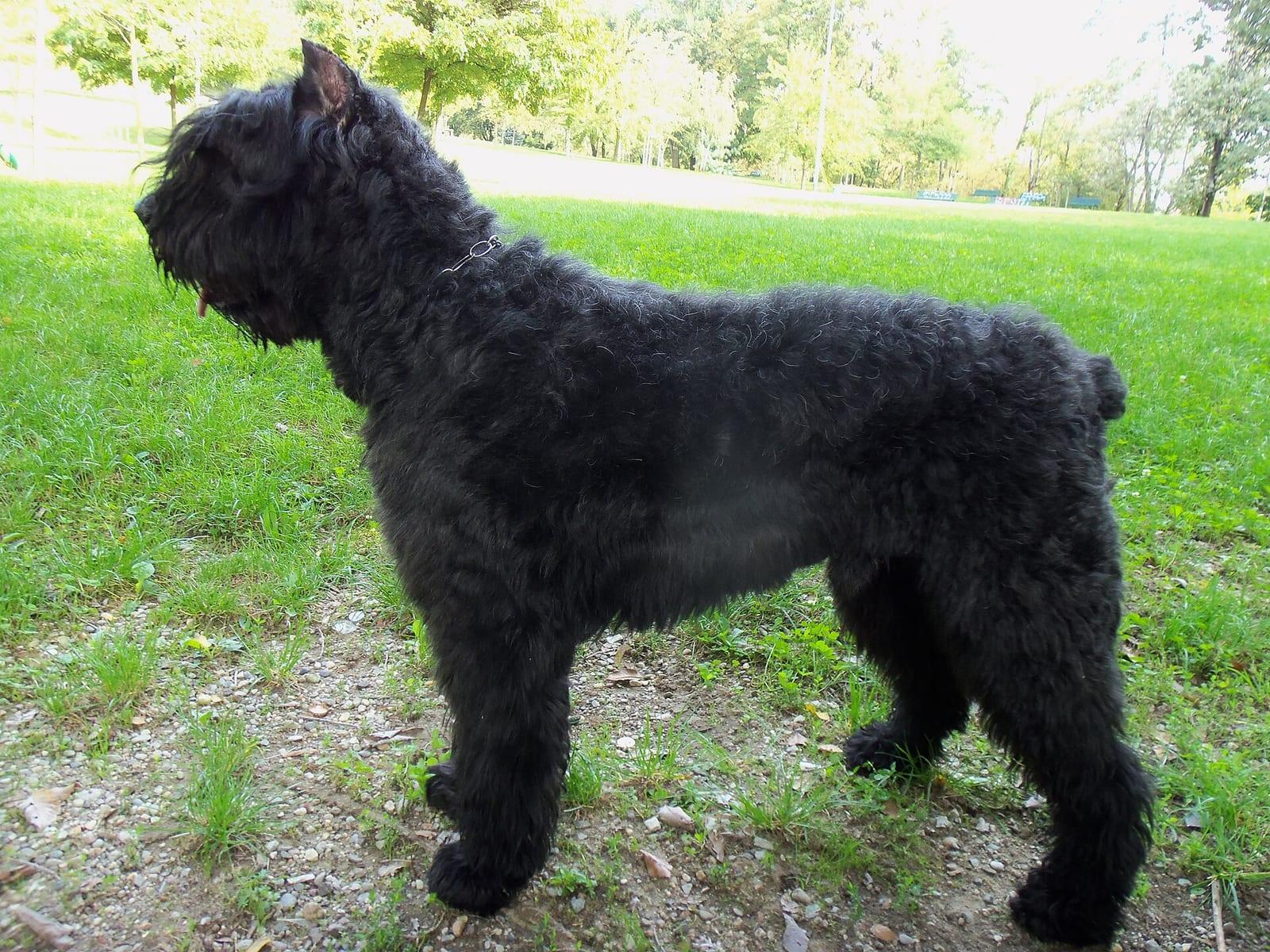
- Bouvier des Flandres: A Bouvier des Flandres has a harsh, tousled coat trimmed to about 2.5 in in colors from fawn to black, while the Old English Sheepdog's profuse, shaggy coat is gray, grizzle or blue, with or without white.
- Puli: A Puli is smaller, ideally 16-17 in, with a solid-colored coat that forms cords if left to develop, while the Old English Sheepdog stands 21 in or more with a shaggy coat free from curl.
Care tips
- Brush the coat down to the skin at least weekly; shaggy coats mat quickly if neglected.
- Give them daily exercise and training to keep them engaged.
- Start socialization early to build polite behavior with strangers and dogs.
- Teach leash manners; large dogs need reliable handling.
- Keep coat trimmed around eyes to maintain visibility and comfort.
Sources
- American Kennel Club: Old English Sheepdog: Primary registry overview for breed history, group, structure, and typical traits.
- AKC official standard: Old English Sheepdog: Source for the identifying features, coat, colors, and size by sex on this page.