Bulldog
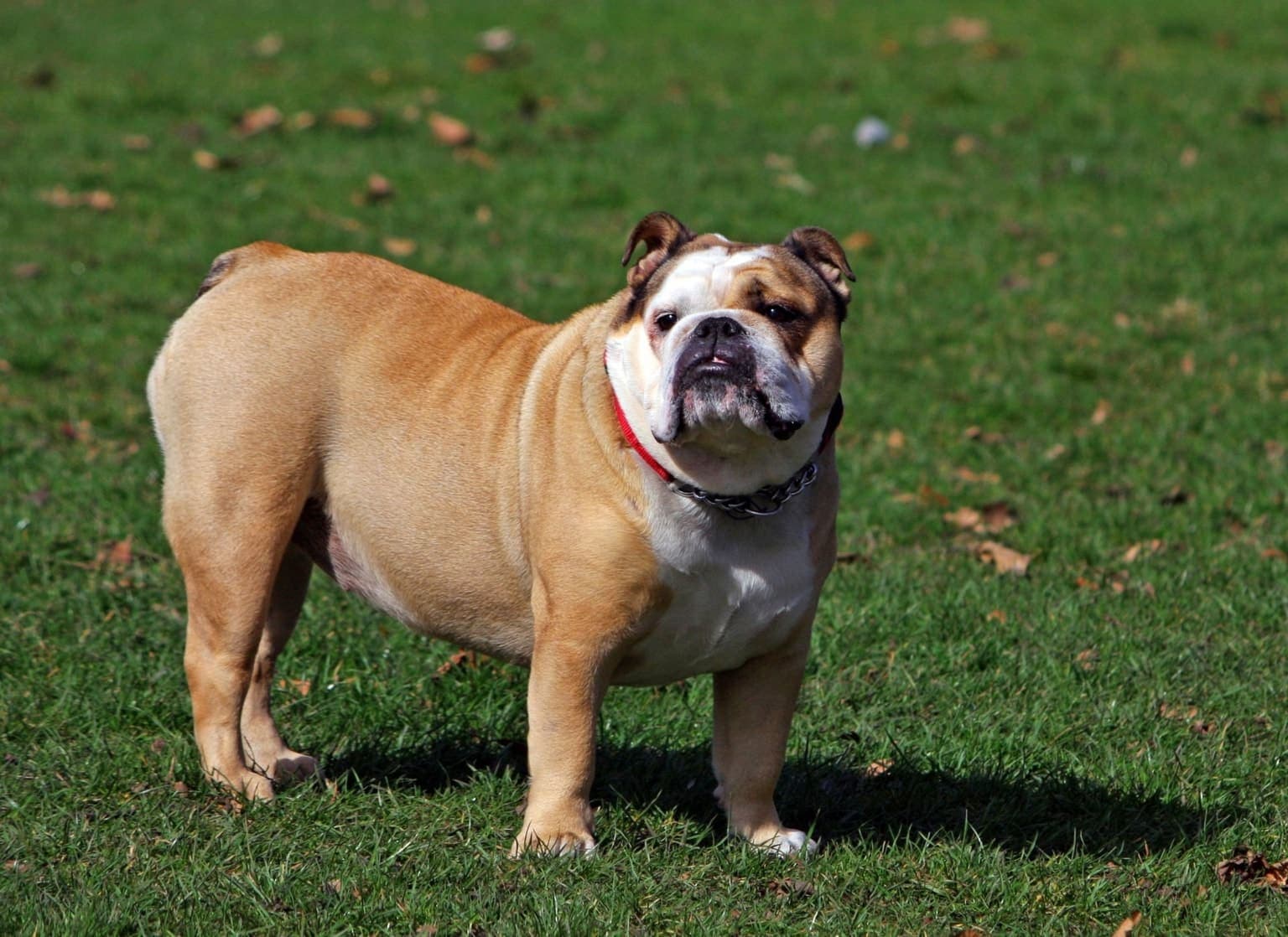
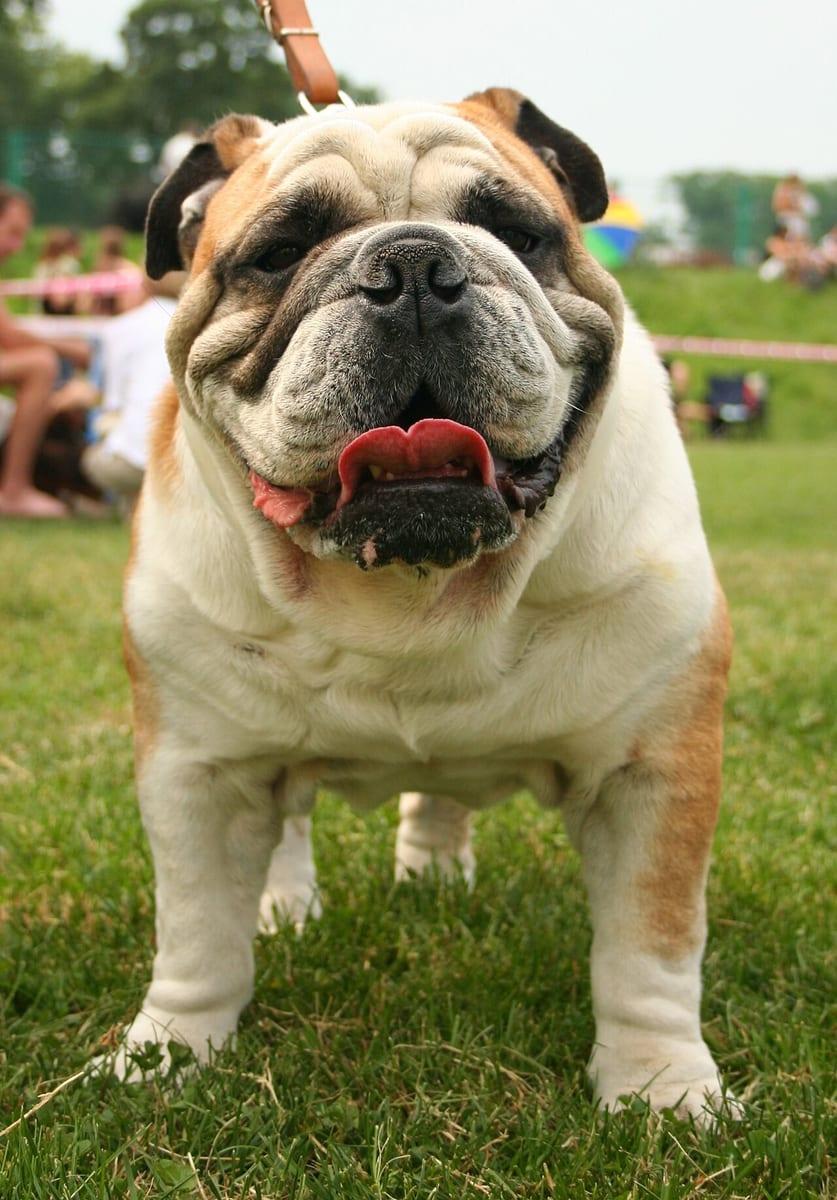
Photo by Pleple2000 · CC BY-SA 3.0
Bulldogs are sturdy, easygoing companions whose wrinkled faces and relaxed personalities have earned them legions of devoted fans. These dogs are affectionate and loyal—happiest when lounging near their people. They prefer short bursts of activity over long runs, and that short muzzle makes them sensitive to heat. Keep training gentle and patient, and watch their weight carefully to support healthy breathing and joints.
How to recognize a Bulldog
- The head is massive and very short-faced, covered with heavy wrinkles, with a broad, upturned muzzle and a nose tip set back deeply between the eyes.
- The lower jaw projects well in front of the upper and turns up, and thick, deep upper lips hang over it at each side.
- Small, thin "rose ears" sit high and wide apart and fold inward at the back edge, showing part of the inside.
- The back dips behind the shoulders, rises to loins higher than the shoulders, then curves down to the tail, an arch the standard calls a "roach back" or "wheel-back".
- The body is heavy, thick-set and low-swung with wide shoulders and a short, low-hung tail, and the gait is a loose-jointed, shuffling roll.
Quick facts
- Group: Non-Sporting
- Size: medium (medium dog breeds)
- Height: 14-15 in
- Weight: 40-50 lbs
- Males, per the AKC standard: about 50 lbs
- Females, per the AKC standard: about 40 lbs
- Lifespan: 8-10 years
- Temperament: Calm, Courageous, Affectionate, Stubborn
- AKC recognized: 1886
The standard gives no height; it asks that the skull, measured around in front of the ears, be at least as large as the height at the shoulders.
Coat and colors
Straight, short, flat, close, fine in texture, smooth and glossy, with no fringe, feather or curl. The skin is soft and loose, with heavy wrinkles on the head and face and two loose folds hanging at the throat.
Red, white, fawn, fallow or any combination of these, with patterns such as brindle, piebald, ticking, black masks and black tipping. The standard disqualifies all other colors or markings and the merle pattern.
History
Bulldogs are thought to date to 13th-century England, where they were bred for bullbaiting. After England banned blood sports with animals in 1835, the breed lost its job and faced extinction. Admirers then spent decades reshaping it into the calmer, gentler companion known today.
Breeds mistaken for the Bulldog
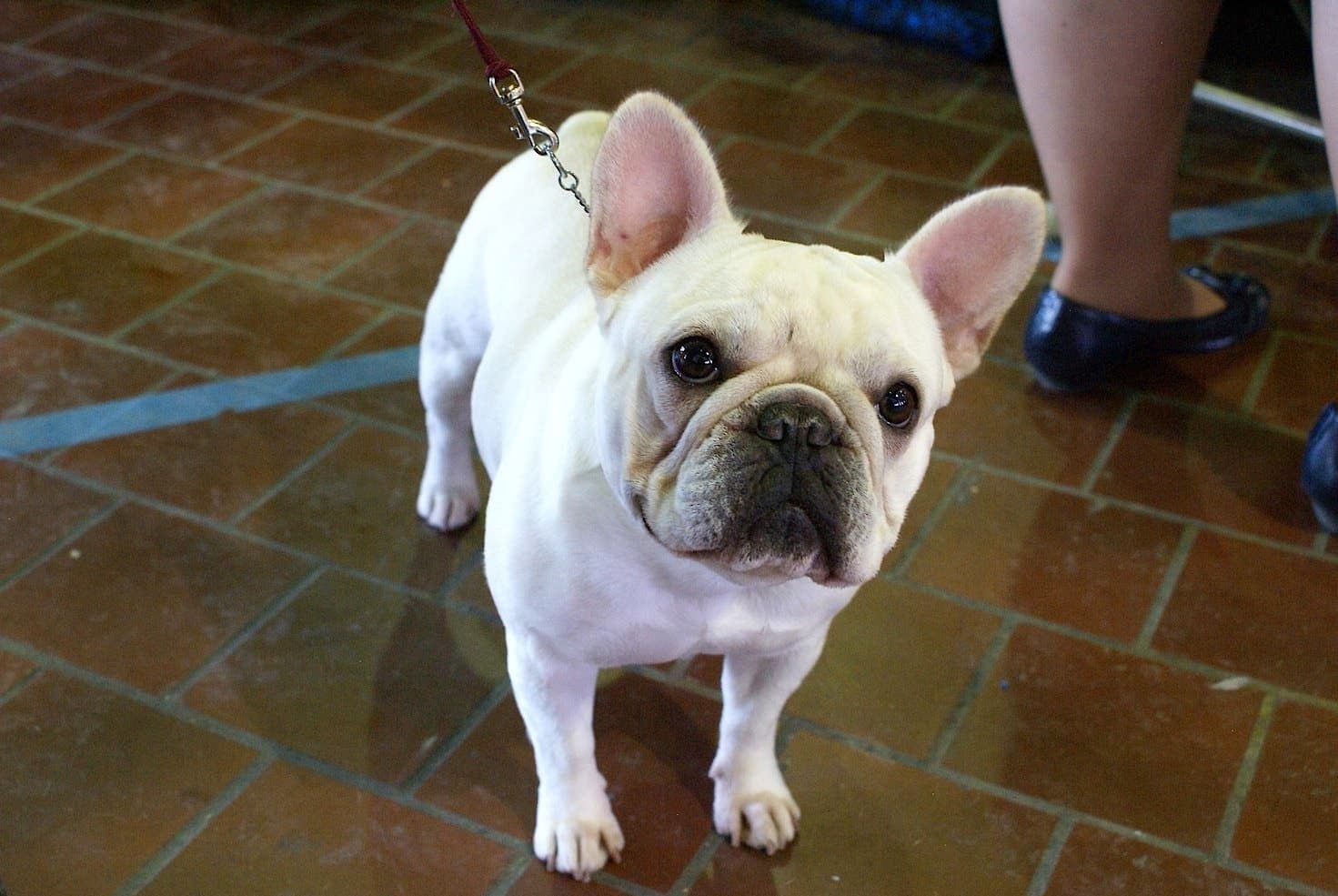
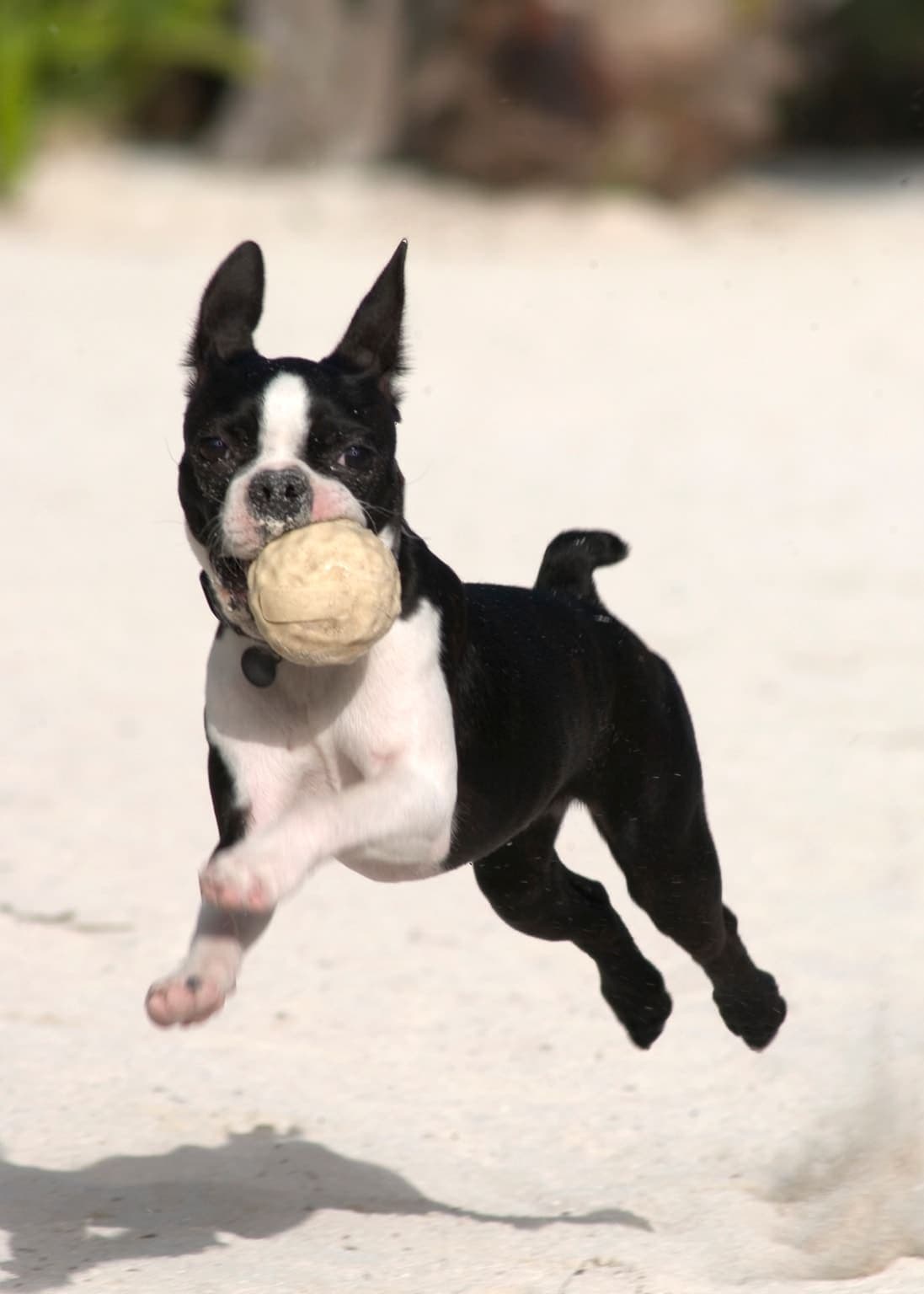
- French Bulldog: A French Bulldog must not exceed 28 lbs and carries large, round-topped bat ears erect, while the Bulldog weighs about 40-50 lbs and has small "rose ears" that are not carried erect.
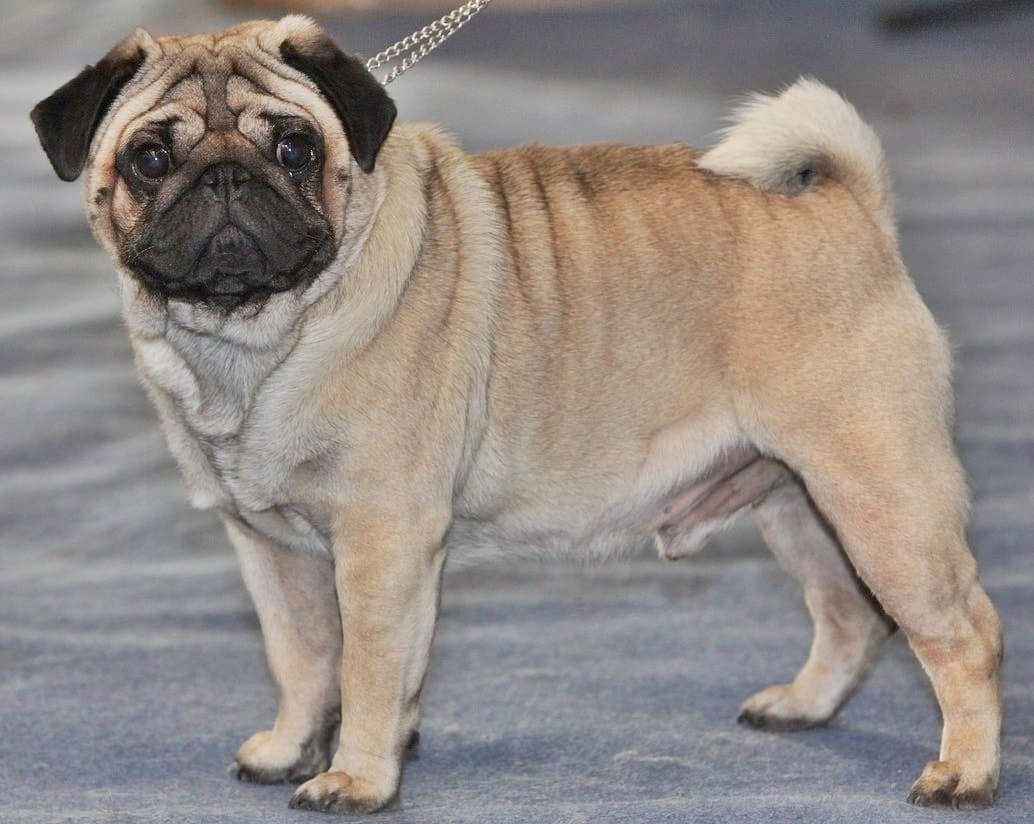
- Pug: A Pug weighs 14-18 lbs, comes only in fawn or black and curls its tail tightly over the hip, while the Bulldog weighs about 40-50 lbs and has a short tail hung low.
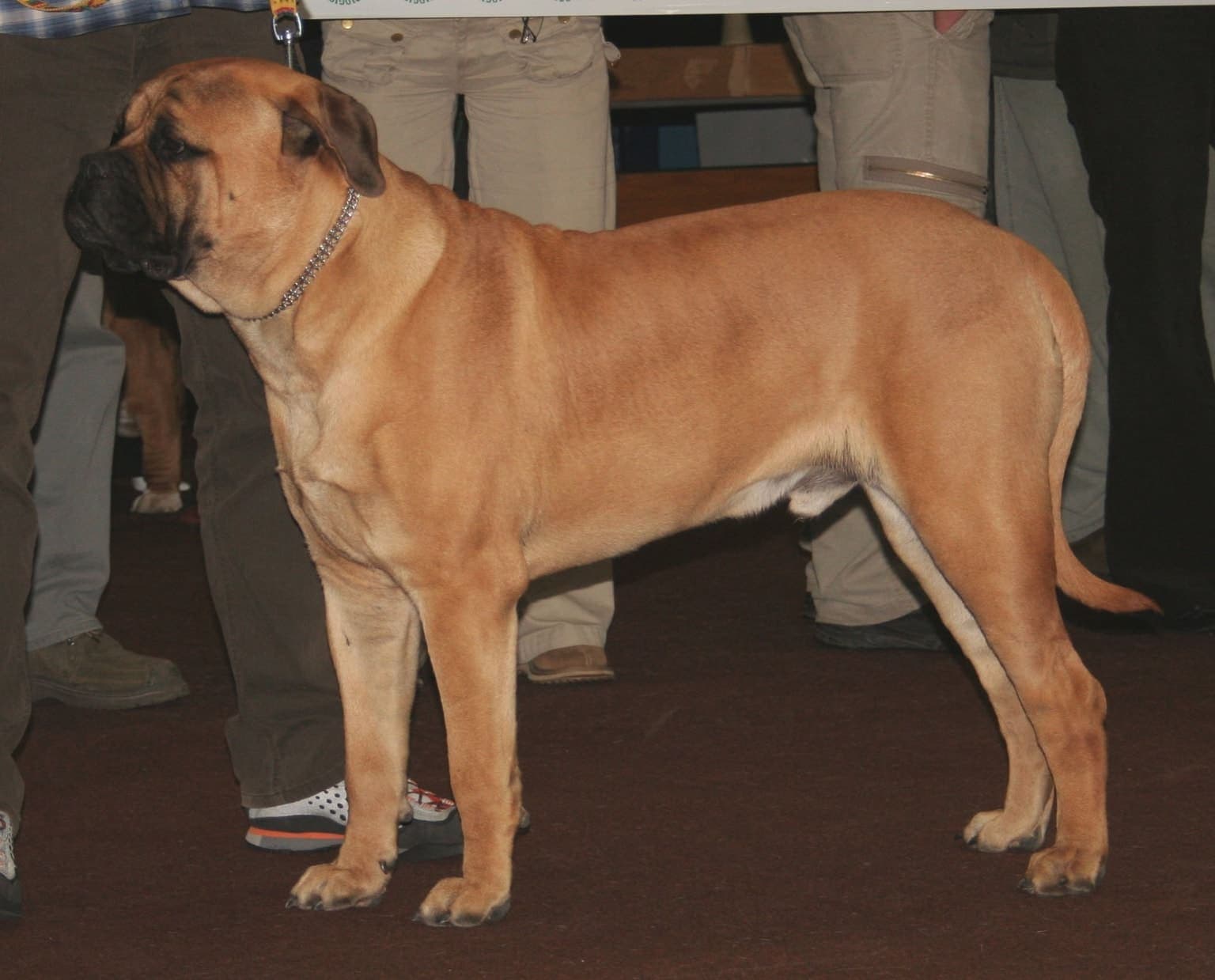
- Bullmastiff: A Bullmastiff stands 24-27 in and weighs 100-130 lbs, with V-shaped ears carried close to the cheeks, while the Bulldog weighs about 40-50 lbs and has small "rose ears".
Side by side: Bulldog vs French Bulldog.
Care tips
- Avoid overheating; provide cool rest areas and shade in warm weather.
- Clean facial folds regularly to prevent skin irritation.
- Keep exercise low-impact and consistent to support joints.
- Watch diet closely—Bulldogs can gain weight easily.
- Use harnesses for walks to reduce pressure on the neck.
Sources
- American Kennel Club: Bulldog: Primary registry overview for breed history, group, structure, and typical traits.
- AKC official standard: Bulldog: Source for the identifying features, coat, colors, and size by sex on this page.