Bulldog vs French Bulldog
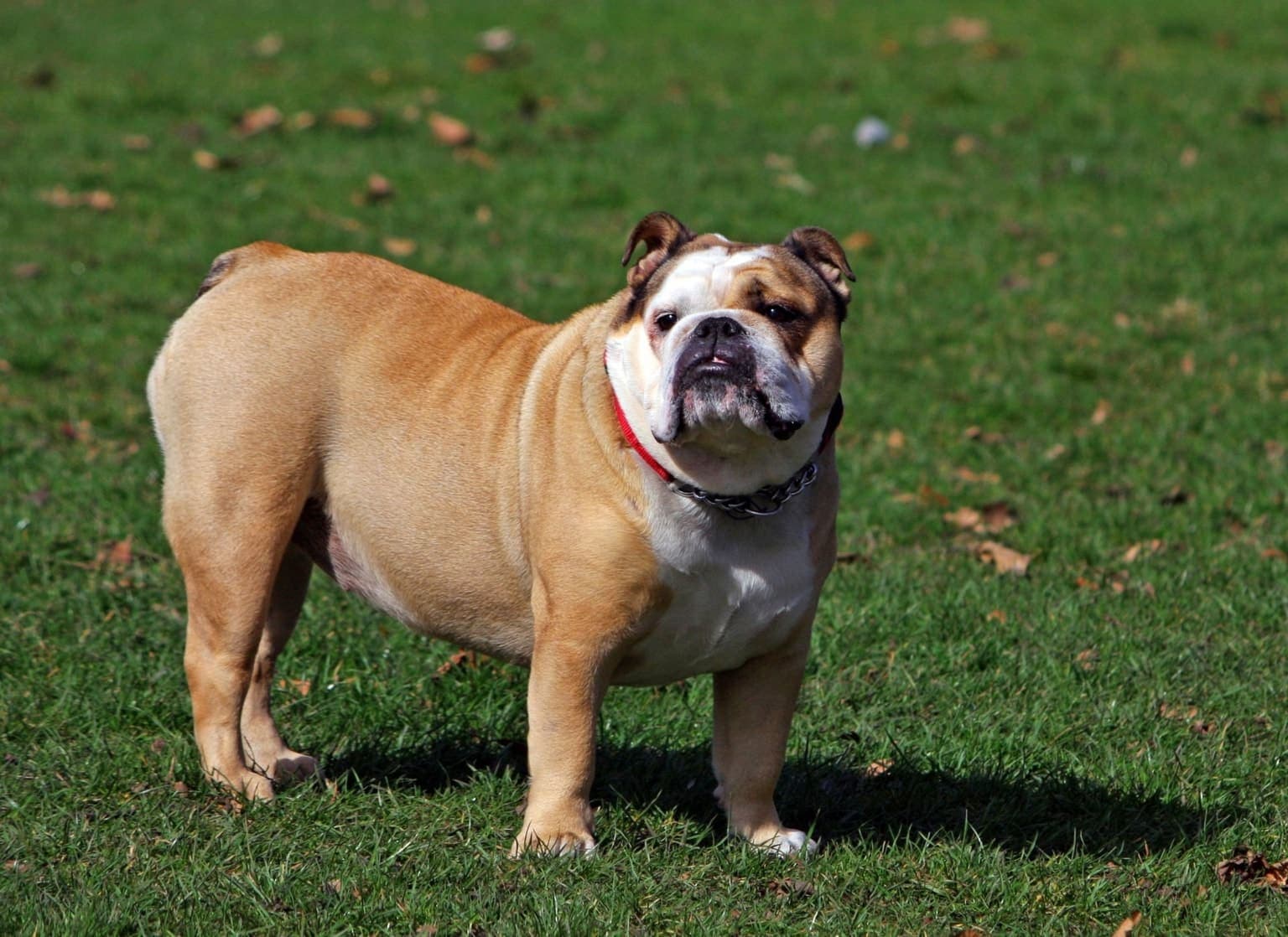
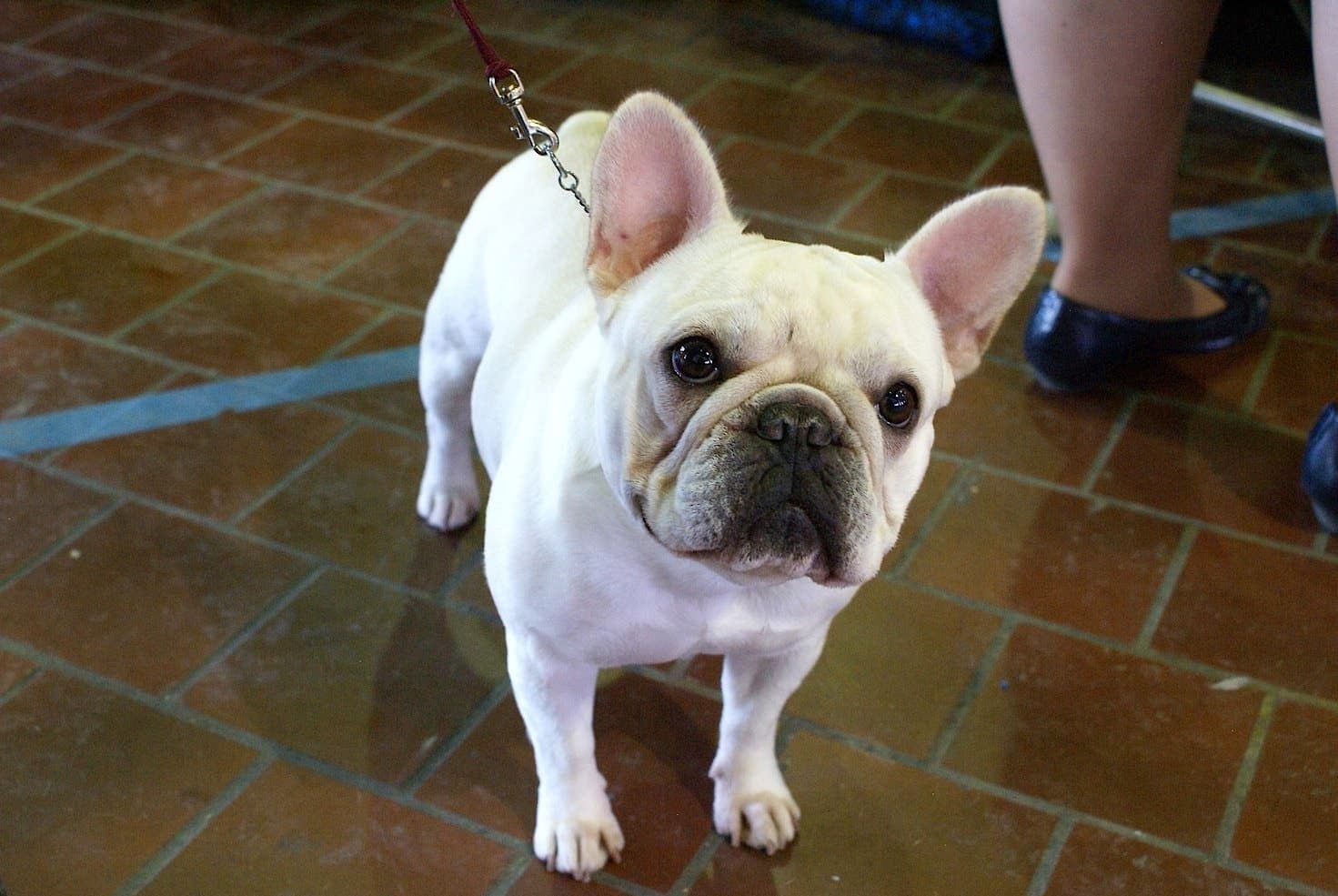
The Bulldog, also known as the English Bulldog, and the French Bulldog are built to one pattern: a large head with an extremely short muzzle and an undershot, upturned lower jaw, a wide chest on short forelegs set far apart, a back that rises from the shoulders to the loin, and a short tail that is straight or screwed and hangs low. Both have a smooth coat that comes in fawn, white, brindle and piebald. The AKC describes the French Bulldog as resembling a Bulldog in miniature, apart from its ears.
The ears are the fastest tell. A French Bulldog has bat ears: broad at the base, long, rounded at the top and carried erect, and its standard disqualifies any other ear. A Bulldog has small, thin ears set high and wide apart, ideally rose ears that fold over and back, and its standard says they should not be carried erect.
Size is the second tell. The Bulldog standard gives about 50 lbs for a mature male and about 40 lbs for a female. The French Bulldog standard disqualifies a dog over 28 lbs. The Bulldog also carries more loose skin, with heavy wrinkles over the head and face and two hanging folds of dewlap from jaw to chest.
Quick facts
| Fact | Bulldog | French Bulldog |
|---|---|---|
| Group | Non-Sporting | Non-Sporting |
| Size | medium | small |
| Height | 14-15 in | 11-13 in |
| Weight | 40-50 lbs | under 28 lbs |
| Lifespan | 8-10 years | 10-12 years |
| Temperament | Calm, Courageous, Affectionate, Stubborn | Affectionate, Playful, Adaptable, People-oriented |
How to tell them apart
Read the rows top to bottom. The first two or three traits usually settle it; the rest confirm.
| Trait | Bulldog | French Bulldog |
|---|---|---|
| Ears | Small and thin, set high and as wide apart as possible. The rose ear, folding inward at the back and curving over and backward, is the most desirable. Ears should not be carried erect. | Bat ears: broad at the base, elongated, with a round top, set high and carried erect with the opening to the front. Any other ear is a disqualification. |
| Size | 40 to 50 lbs: about 50 lbs for males and about 40 lbs for females in the AKC standard, which gives no height. The site's breed profile lists 14 to 15 in. | Under 28 lbs; over 28 lbs is a disqualification in the AKC standard, which gives no height. The site's breed profile lists 11 to 13 in. |
| Head and skull | Very large: the skull's circumference in front of the ears should be at least the dog's height at the shoulder. The forehead is flat, and the cheeks are well rounded and protrude sideways beyond the eyes. | Large and square. The top of the skull is flat between the ears and the forehead is slightly rounded. |
| Wrinkles and dewlap | Head and face covered with heavy wrinkles. Two loose, pendulous folds run from jaw to chest, forming the dewlap. The chops are thick and very deep, completely overhanging the lower jaw at each side. | Heavy wrinkles form a soft roll over the extremely short nose, and the skin is loose at the head and shoulders. The neck has loose skin at the throat, and the flews hang over the lower jaw at the sides. |
| Forelegs and gait | Short, very stout forelegs set wide apart with a bowed outline, and elbows that stand well out from the body. The gait is a loose-jointed, shuffling, sidewise motion that gives a characteristic roll. | Short, stout, straight forelegs set wide apart. The gait is free and vigorous with reach and drive, the front feet tracking wider than the rear. |
| Colour | Red, white, fawn, fallow or any combination, with brindle, piebald, ticking, black masks and black tipping. Other colours and the merle pattern are disqualifications. | White, cream, fawn or any combination, with brindle, piebald, black masks, black shadings and white markings. Solid black, black and tan, blue, liver and merle are among the disqualifications. |
| AKC group and origin | Non-Sporting Group, recognised in 1886. Developed in England for bullbaiting and remade as a companion after blood sports were banned in 1835. | Non-Sporting Group, recognised in 1898. Developed in France from toy Bulldogs taken there by English lace makers in the mid-1800s. |
What the photo detector sees
Ear carriage shows from almost any angle, so a photo that includes the top of the head usually settles this pair. In the saved benchmark runs for this project, none of the tested AI models answered a French Bulldog reference photo as a Bulldog, and the Bulldog was the second suggestion in seven of the fifteen saved answers for those photos.
The pictures that hide the difference are the ones that cut off or cover the ears, and ones with nothing for scale: the two breeds share a face pattern, a roach back, a low tail and several colours, so body shape alone gives little away. In those, look for the Bulldog's heavier head wrinkles, the double fold of dewlap and the elbows set out from the body. Other small flat-faced breeds can enter the picture too. The AKC history says the French Bulldog was developed with crosses to other breeds, perhaps terriers and Pugs.
Living with them
Both are companion breeds. The Bulldog standard asks for an equable, kind disposition and a pacific, dignified manner, and the AKC describes the breed as mellow, sweet and easygoing. The French Bulldog standard describes an affectionate, even-tempered dog that is generally active, alert and playful, and the AKC adds that Frenchies do not bark much. Neither needs a lot of exercise: the AKC suggests regular moderate walks for a Bulldog and a short walk or play session each day for a French Bulldog.
Heat and water are the shared concerns. The AKC warns that the short muzzle of both breeds makes breathing difficult in hot or humid weather. It says French Bulldogs cannot swim, and that Bulldogs should not be in water more than elbow deep without close supervision. Both need their facial wrinkles kept clean and dry. The AKC advises brushing a Bulldog two or three times a week and a French Bulldog weekly. The profiles list a lifespan of 8 to 10 years for the Bulldog and 10 to 12 years for the French Bulldog.
Not sure which one you have?
Upload a clear photo and the detector returns a ranked shortlist, so you can check the top matches against the tells above instead of guessing from one label.
Upload a photo and get a ranked shortlistFAQ
What is the difference between a Bulldog and a French Bulldog?
Ears and size. A Bulldog weighs about 40 to 50 lbs and has small, folded rose ears, heavy wrinkles and a dewlap. A French Bulldog weighs under 28 lbs and has large, erect bat ears. The Bulldog comes from England and the French Bulldog was developed in France.
Is a French Bulldog a small Bulldog?
It descends from one. The AKC history says toy-sized Bulldogs kept by English lace makers were taken to northern France in the mid-1800s, where they were crossed with other breeds and developed bat ears. The AKC registers the two as separate breeds with separate standards.
Which is bigger, a Bulldog or a French Bulldog?
The Bulldog. Its standard gives about 50 lbs for males and 40 lbs for females, and the site's breed profile lists a height of 14 to 15 in. A French Bulldog must not exceed 28 lbs under its standard, and its profile lists 11 to 13 in.
Can a Bulldog or a French Bulldog be blue or merle?
Not under the AKC standards. The Bulldog standard disqualifies merle and any colour or marking it does not list. The French Bulldog standard lists blue, blue fawn, liver, solid black, black and tan and merle among its disqualifying colours. Both standards also disqualify blue or green eyes.
Can Bulldogs and French Bulldogs cope with heat and swimming?
Both need care. The AKC says the short muzzle of each breed can make breathing difficult in heat and humidity, so exertion in hot weather should be avoided. It says French Bulldogs cannot swim, and that Bulldogs should stay out of water more than elbow deep unless closely supervised.
Full profiles
More look-alikes
Other comparisons that include one of these breeds or come from the same look-alike group:
Browse every pair in the breed comparison index.