Chow Chow
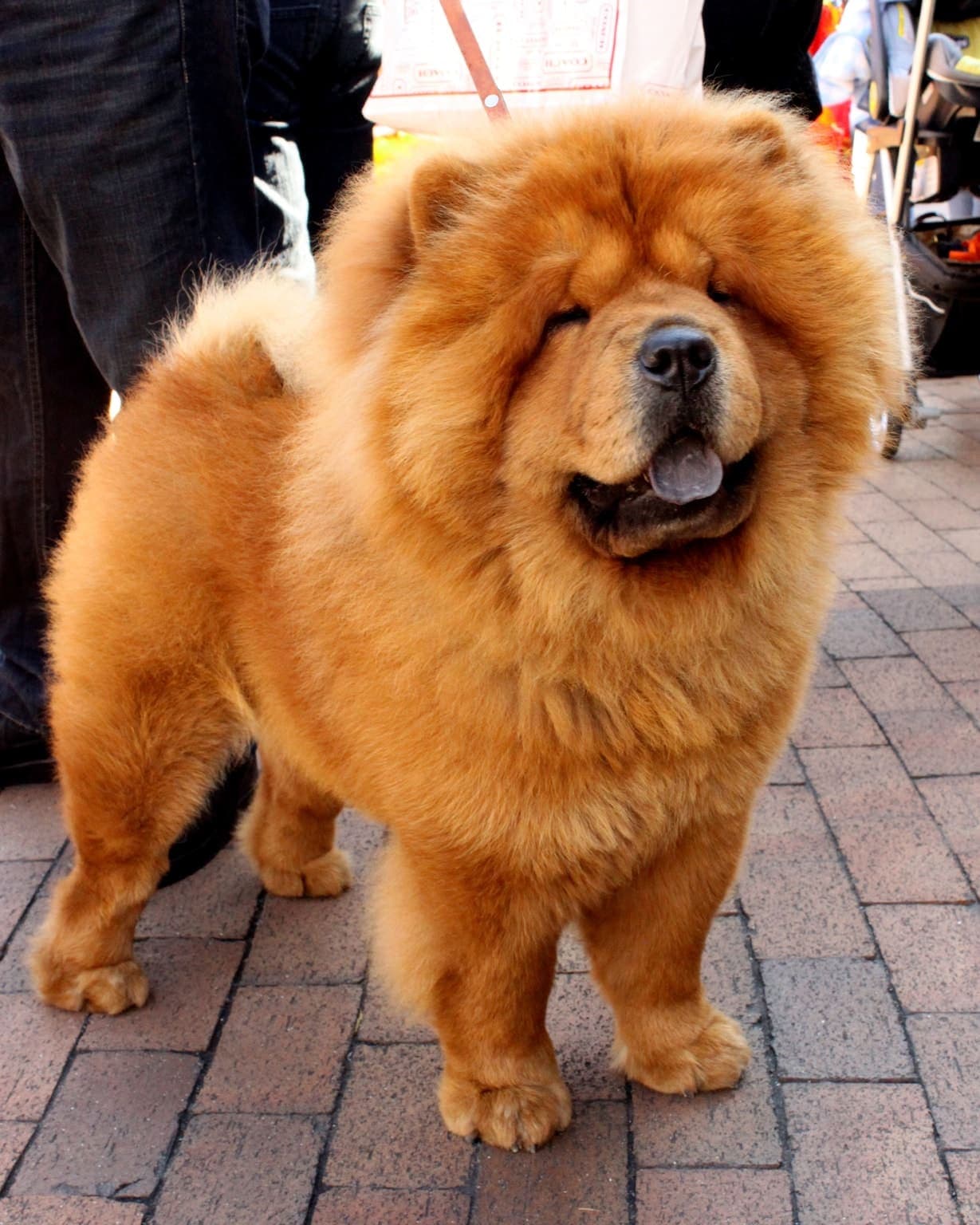

Photo by Andrea Arden · CC BY 2.0
Chow Chows are distinctive spitz-type dogs known for a lion-like mane, blue-black tongue, and a dignified, reserved personality. Many Chows bond strongly with their family but are aloof with strangers, so early socialization and calm, consistent training are important. The double coat can be rough or smooth and comes in red, black, blue, cinnamon, or cream. Their thick coat requires routine brushing to help prevent mats, and they can overheat in warm climates. Chow Chows often prefer a quieter lifestyle with steady walks and respectful interaction, making them a good fit for owners who appreciate independence and structure.
How to recognize a Chow Chow
- The top and edges of the tongue are solid blue-black, and a red or pink tongue, or one with pink spots, is a disqualification.
- The scowling expression comes from a marked brow, a furrow between the deep-set, almond-shaped eyes and small, stiffly erect ears tilted slightly forward.
- The build is square, compact and heavy boned, with the tail set high and carried close to the back.
- Hind legs with little bend at the joints produce a short, stilted gait that the standard calls unique to the breed.
- The large head has a broad, flat skull and a short, broad, deep muzzle, framed by a profuse ruff in the rough coat.
Quick facts
- Group: Non-Sporting
- Size: medium (medium dog breeds)
- Height: 17-20 in
- Weight: 45-70 lbs
- Lifespan: 8-12 years
- Temperament: Independent, Reserved, Dignified, Loyal
- AKC recognized: 1903
The standard gives an average adult height of 17-20 in for both sexes and no weight, and says overall proportions and type take precedence over size.
Coat and colors
Both coat types are double: the rough coat is abundant, dense, straight and stands off the body, with a profuse ruff and feathered tail, and the smooth coat is hard and dense with no obvious ruff or feathering. Obvious trimming or shaping is undesirable.
Five solid colors, judged equally: red (light golden to deep mahogany), black, blue, cinnamon (light fawn to deep cinnamon) and cream, sometimes with lighter shading in the ruff, tail and feathering. The standard disqualifies a spotted or non-black nose except in blue and cream dogs.
History and original work
Chow Chows are thought to be among the oldest dog breeds, and they appear in Chinese artifacts from the Han Dynasty more than 2,000 years ago. Over the centuries they were companions to Chinese nobles and also worked as guard dogs, haulers, and hunters. The breed caught on in the West in the 1800s after Queen Victoria acquired one.
The standard describes an all-purpose dog of China used for hunting, herding, pulling and protecting the home. It asks for a powerful, sturdy dog that stays active and agile, and credits the straight hind leg with excellent endurance rather than speed.
Breeds mistaken for the Chow Chow
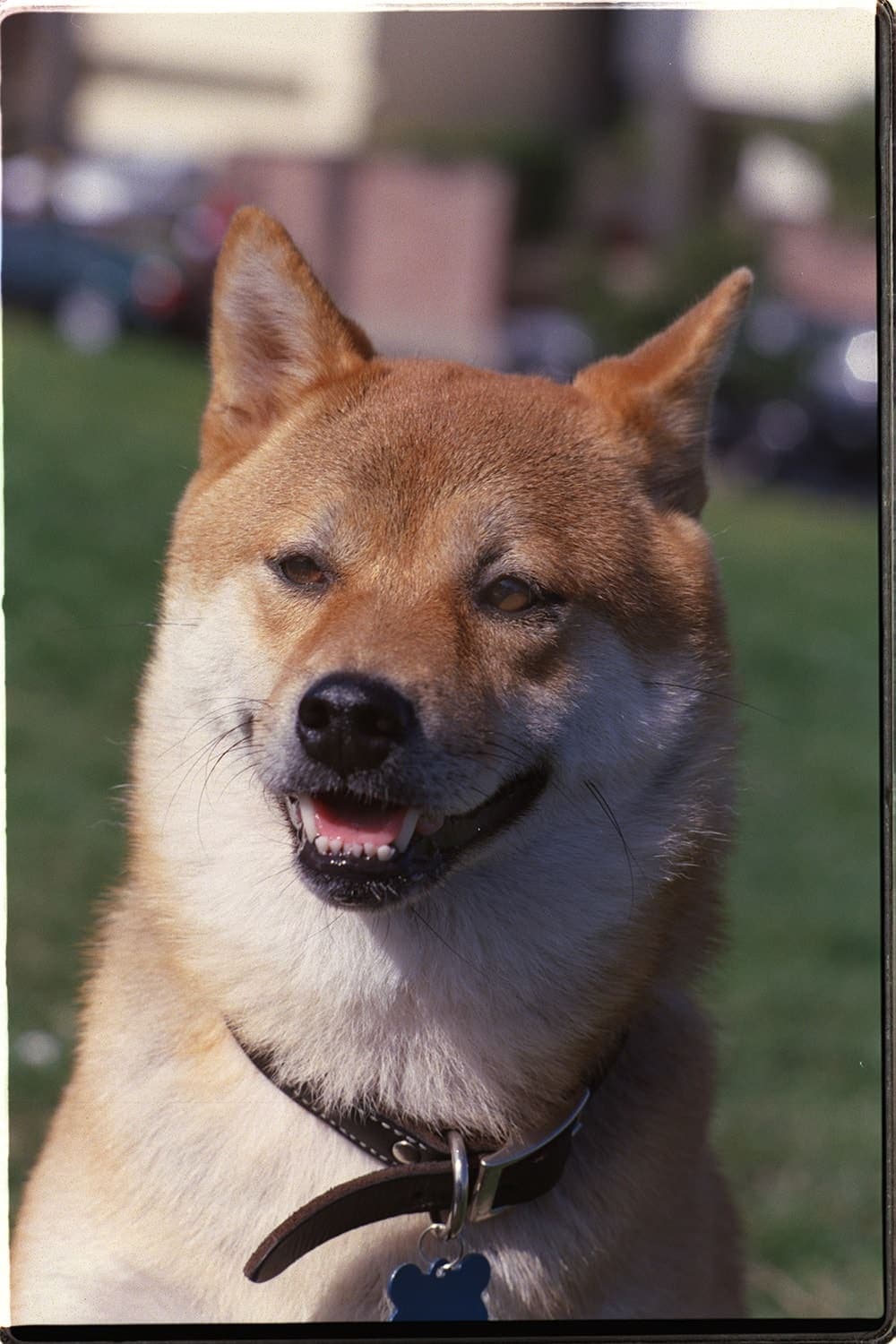
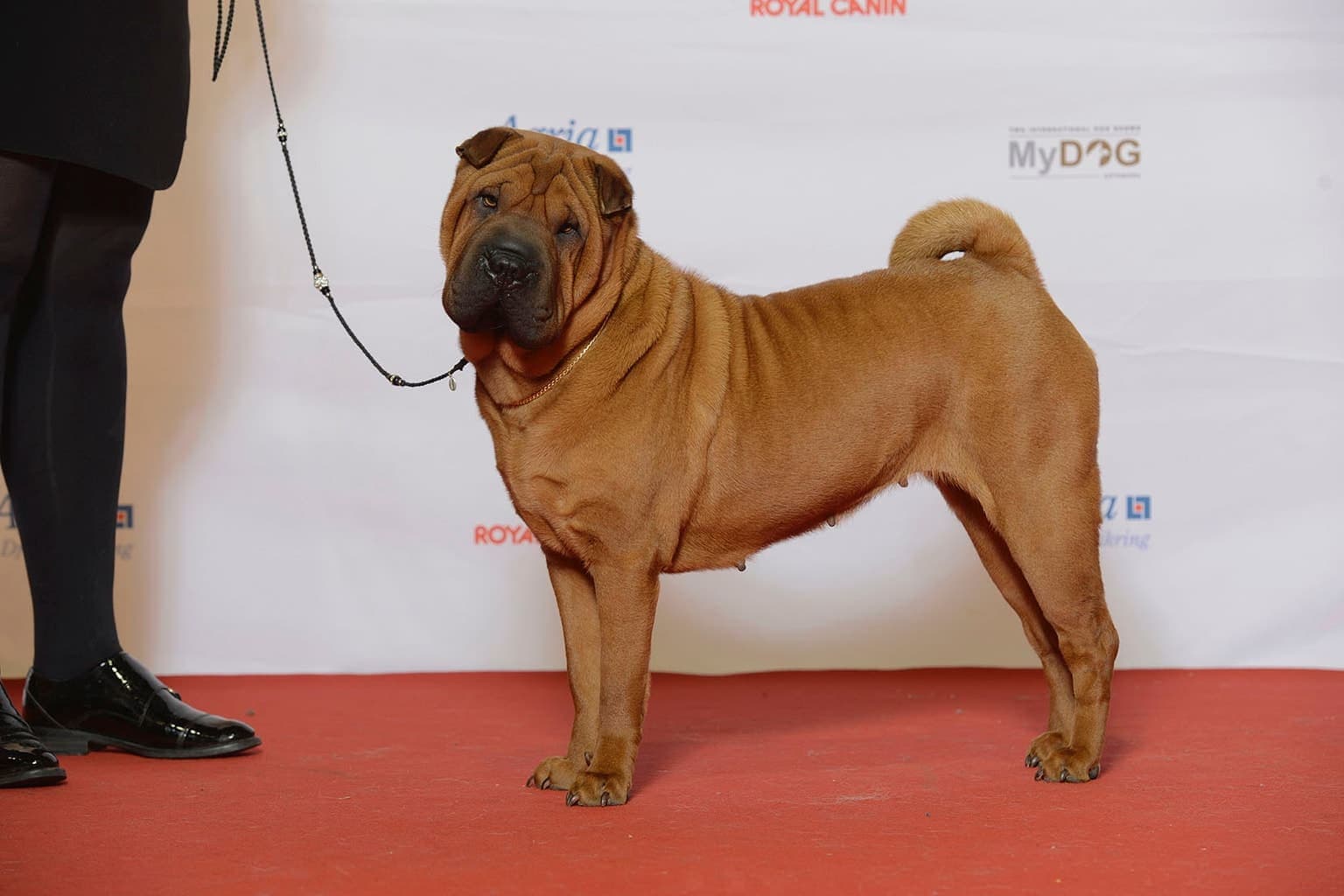
- Chinese Shar-Pei: A Chinese Shar-Pei has extremely small ears lying flat against the head and a harsh coat no longer than 1 in, while the Chow Chow has stiffly erect ears and, in the rough coat, a profuse ruff.
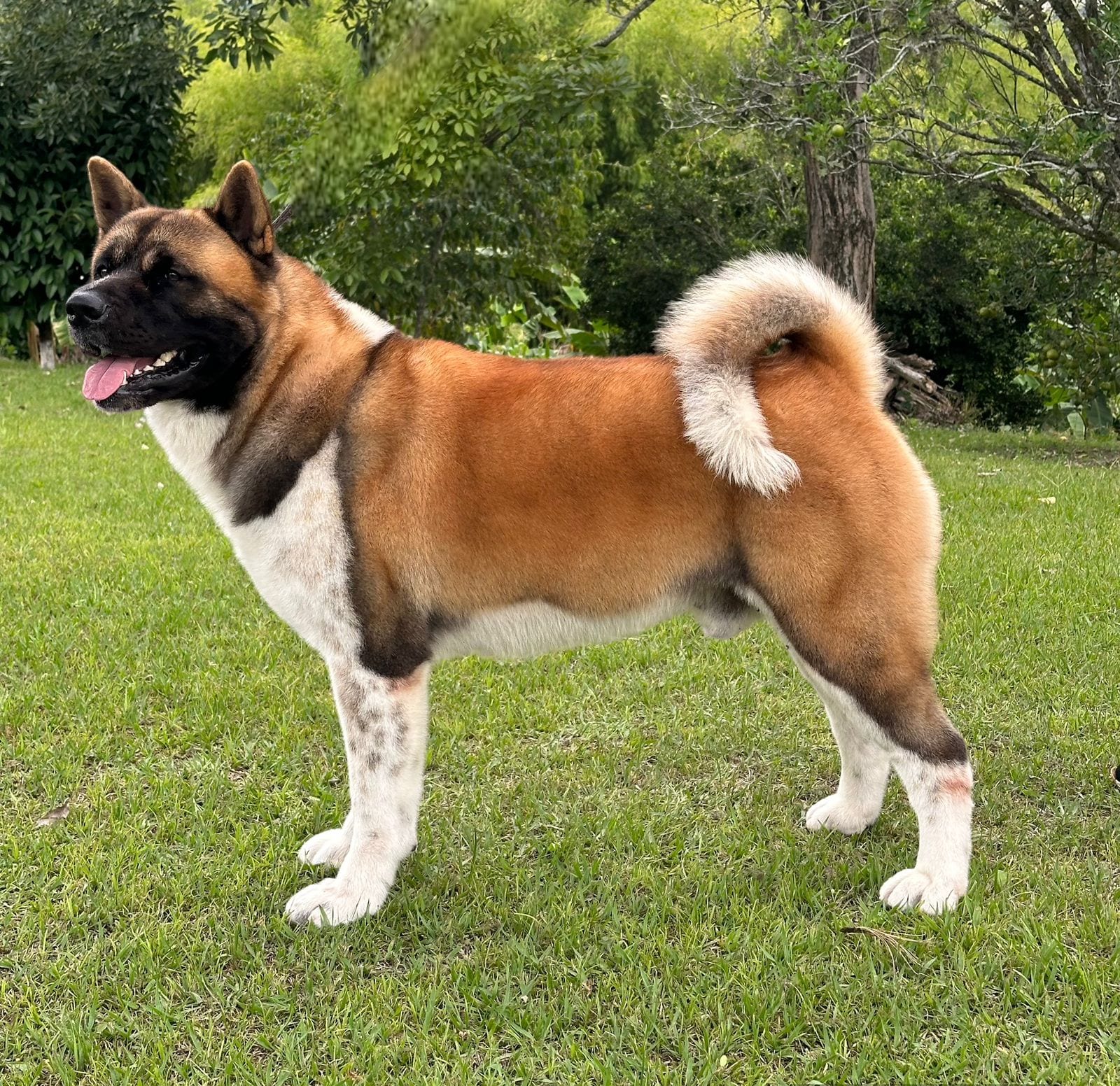
- Akita: An Akita has a pink tongue and stands 24-28 in at the shoulder, while the Chow Chow has a blue-black tongue and averages 17-20 in.
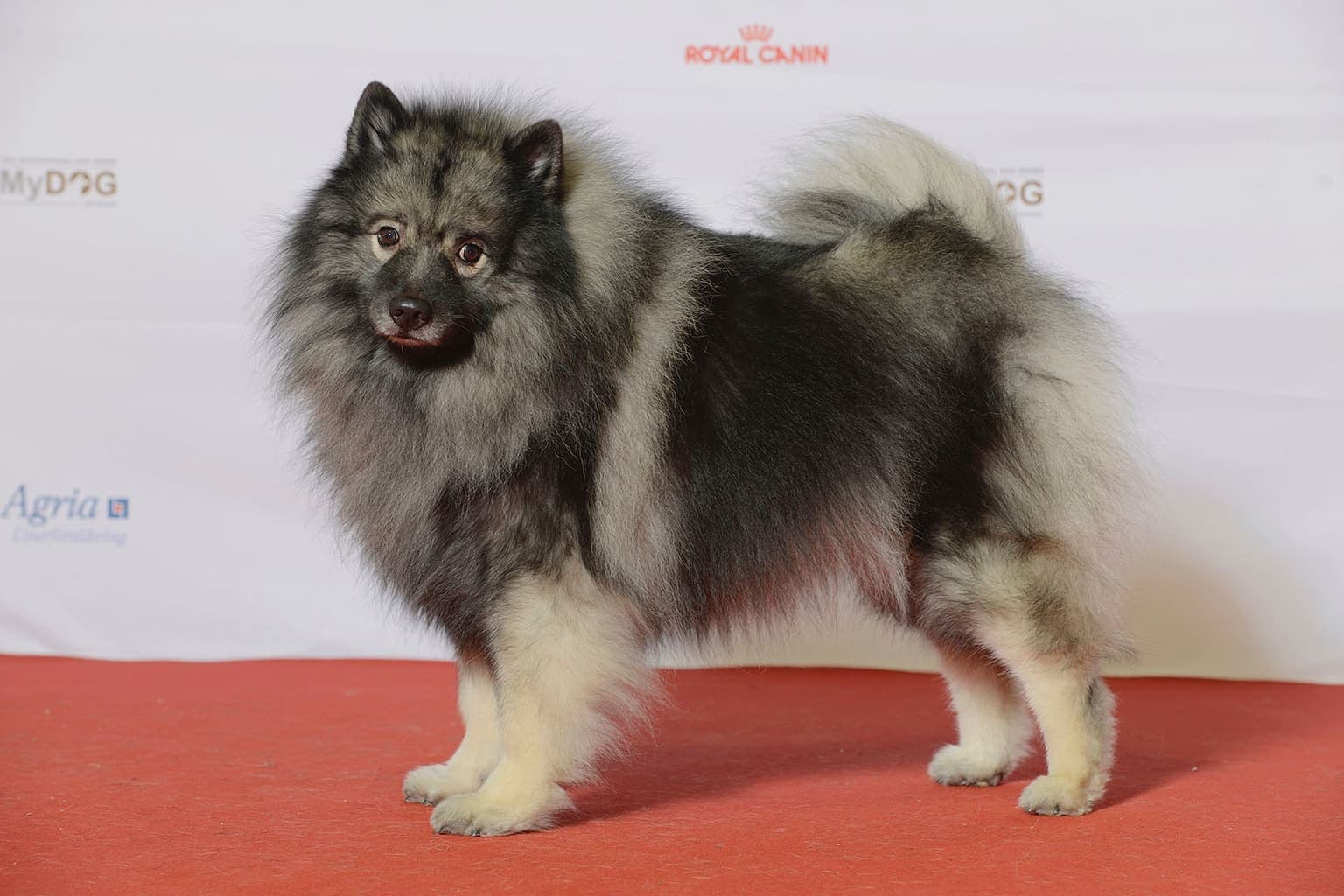
- Keeshond: A Keeshond is a mixture of gray, black and cream with the eye markings called "spectacles", while the Chow Chow is a single solid color with a blue-black tongue.
Side by side: Chow Chow vs Chinese Shar-Pei.
Care tips
- Brush frequently; dense coats mat and shed heavily if neglected.
- Start socialization early to build stable behavior around strangers.
- Avoid overheating—exercise in cooler parts of the day.
- Train consistently; independence takes patience and clear rules.
- Monitor skin health under the coat; thick fur can hide irritation.
Sources
- American Kennel Club: Chow Chow: Primary registry overview for breed history, group, structure, and typical traits.
- AKC official standard: Chow Chow: Source for the identifying features, coat, colors, and size by sex on this page.