Greyhound
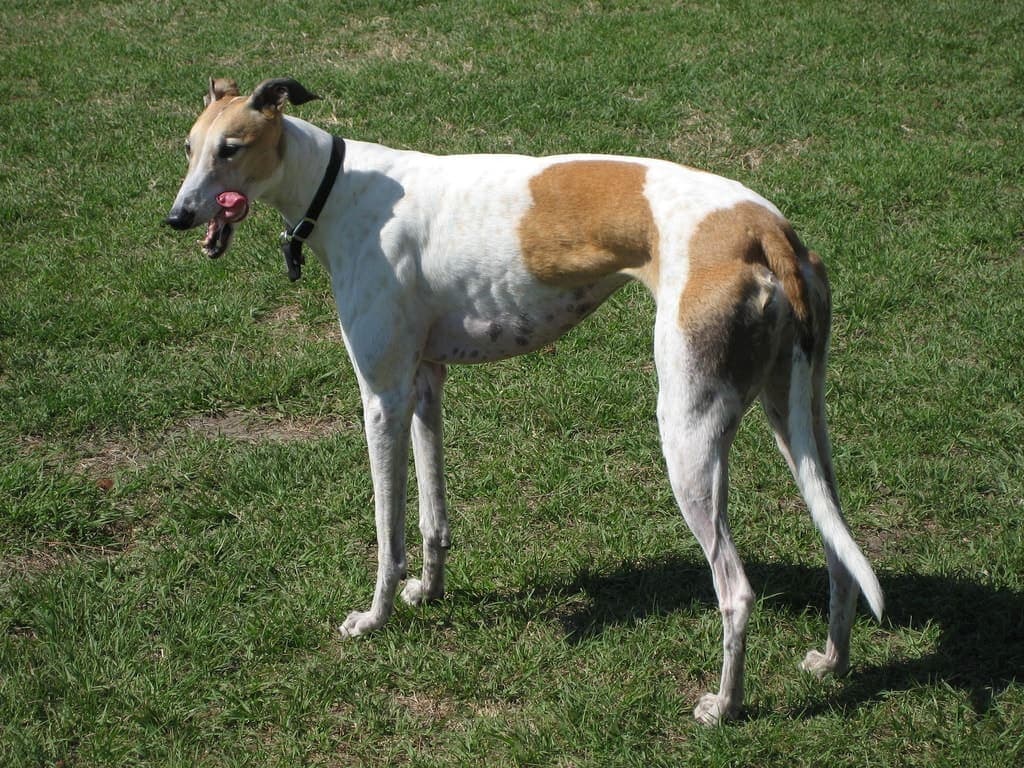
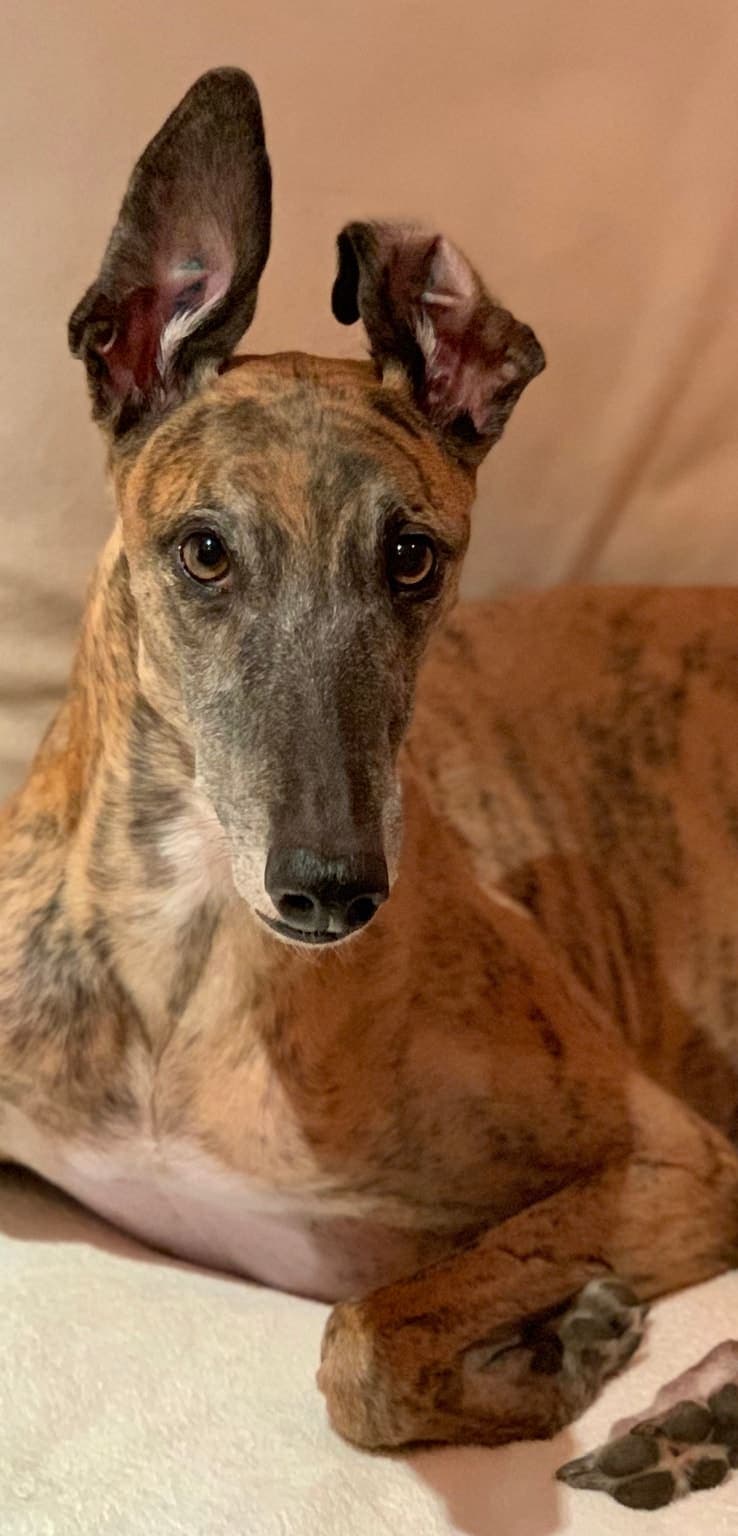
Greyhounds are elegant sighthounds famous for speed, but many are surprisingly calm and relaxed at home. They enjoy short bursts of running followed by long naps, which makes them good companions for people who can provide safe exercise outlets. Greyhounds can be independent and sensitive, so positive training and gentle handling are important. Their thin coat and low body fat mean they can chill easily and may need warmth in cold climates. Given the right setup, Greyhounds are often quiet, affectionate pets.
The Greyhound is a large dog in the Hound group, known for Gentle, Quiet, Independent. Adults typically weigh 60-70 lbs and stand 27-30 in, with a lifespan around 10-14 years.
Quick facts
- Group: Hound
- Size: large
- Lifespan: 10-14 years
- Weight: 60-70 lbs
- Height: 27-30 in
- Temperament: Gentle, Quiet, Independent, Affectionate
Temperament & day-to-day life
Temperament helps you predict what daily life with this breed may feel like. The Greyhound is often described as Gentle, Quiet, Independent, Affectionate. Individual dogs vary, but these traits are a solid starting point when you’re planning training, enrichment, and routines.
If you’re researching this breed because you’re trying to identify your own dog, use temperament as supporting evidence—not the final verdict. Compare size, proportions, and behavior patterns, then explore visual matches from a photo using the AI dog breed identifier.
Training & exercise
Hounds were developed to follow scent or sight. Many have strong instincts to track, chase, or explore—traits that show up clearly on walks.
Recall and leash skills are especially important. Use high-value rewards and practice in low-distraction environments before leveling up.
Enrichment that taps into sniffing and tracking (scent games, long-line walks) can be as valuable as pure running for many hounds.
History
Greyhounds are one of the oldest dog types, historically prized for speed in hunting and sport. Modern Greyhounds are well known for racing heritage and are often adopted as companions after retirement.
Care tips
Good care is less about perfection and more about consistency. Start with simple routines you can keep up—daily movement, a predictable feeding plan, and regular check-ins for ears, nails, and skin.
- Provide safe exercise with fenced running areas or structured play.
- Use a martingale collar or harness; narrow heads can slip collars.
- Keep warm in cooler weather due to short coat and low body fat.
- Introduce stairs and slippery floors carefully; many need confidence-building.
- Practice recall cautiously; prey drive can override commands.
How the detector tells a Greyhound apart
Our reviewed benchmark groups the Greyhound with breeds that share its silhouette, coat, or head type, so the photo detector is measured against them directly. These are the visible differences the model keys on, and the ones to check yourself when two matches sit close together.
Look-alike group: Sighthounds
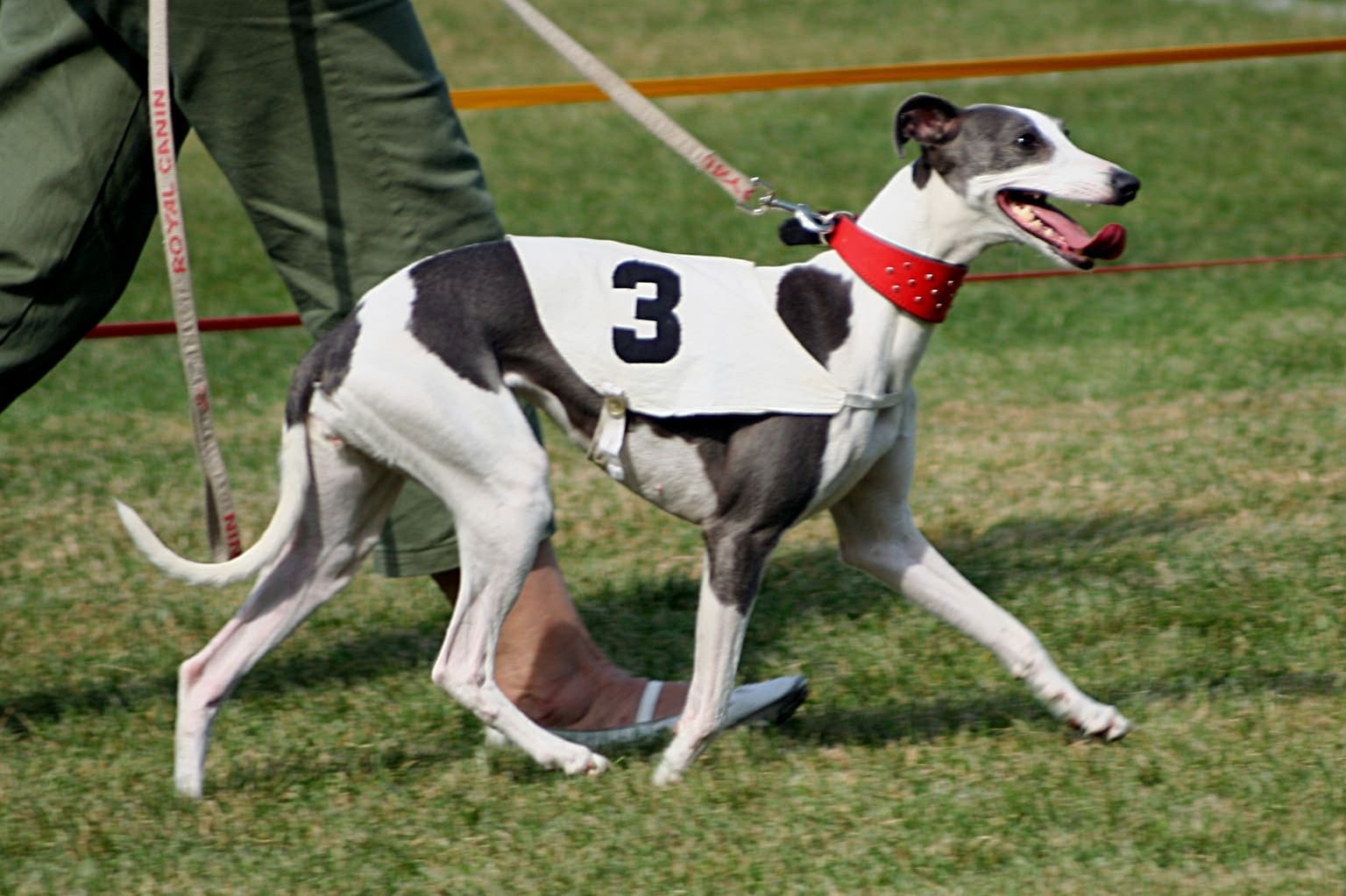
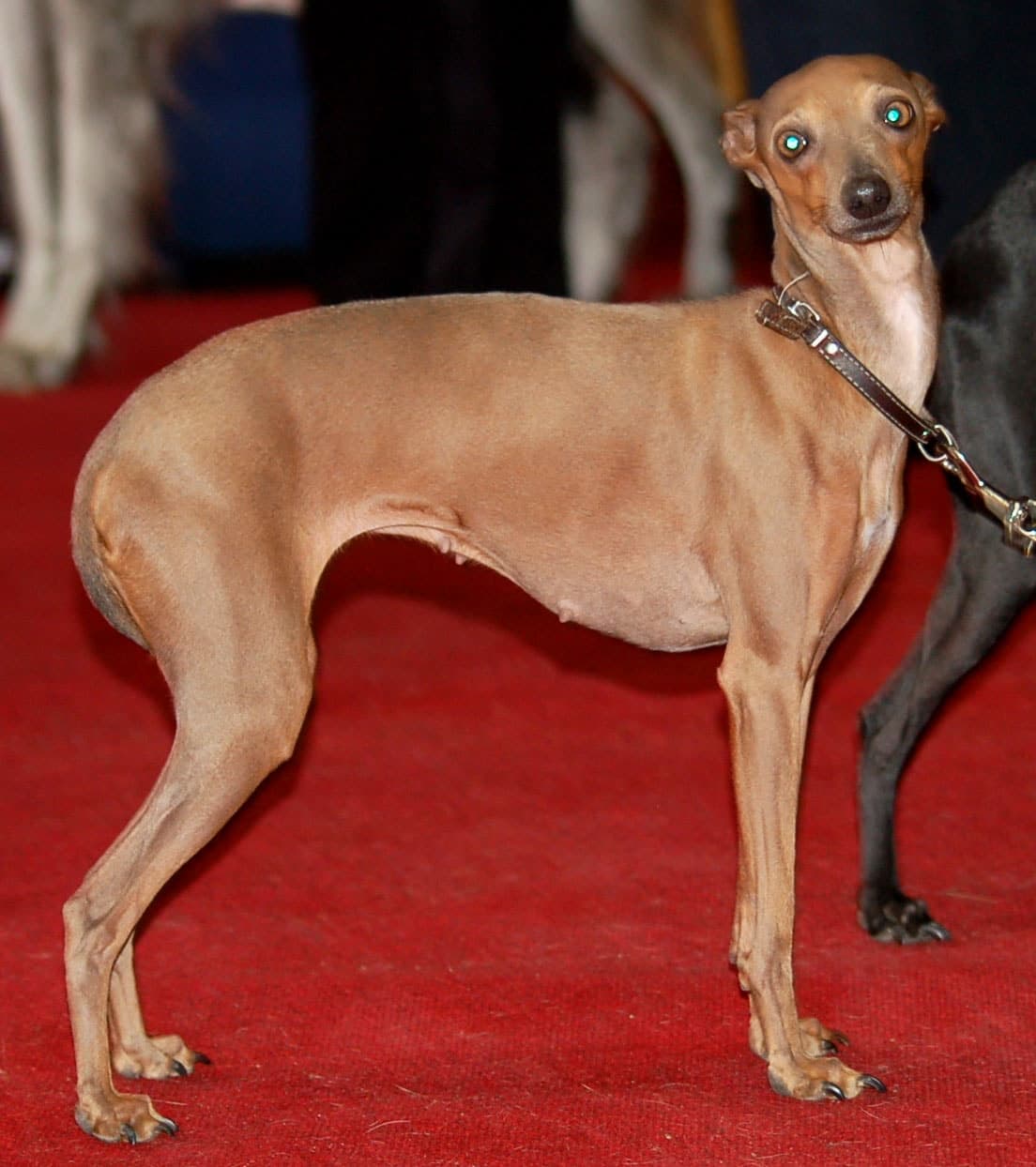
The Greyhound, Whippet and Italian Greyhound share the same deep-chested, tucked-up outline and long narrow head at three different sizes, so scale is hard to judge from a photo alone.
- Size is the main tell: a Greyhound stands 27-30 in and 60-70 lbs, a Whippet 18-22 in and 25-40 lbs, and an Italian Greyhound only 13-15 in and 7-14 lbs, so look for a doorway, sofa or person's leg for reference.
- An Italian Greyhound has fine, delicate bone and a high-stepping, prancing gait, while a Whippet is more solidly muscled through the thigh and moves with a low, ground-covering stride.
- A Whippet's topline shows a pronounced arch over the loin, whereas a Greyhound is longer through the body with heavier, more sculpted hindquarter muscle.
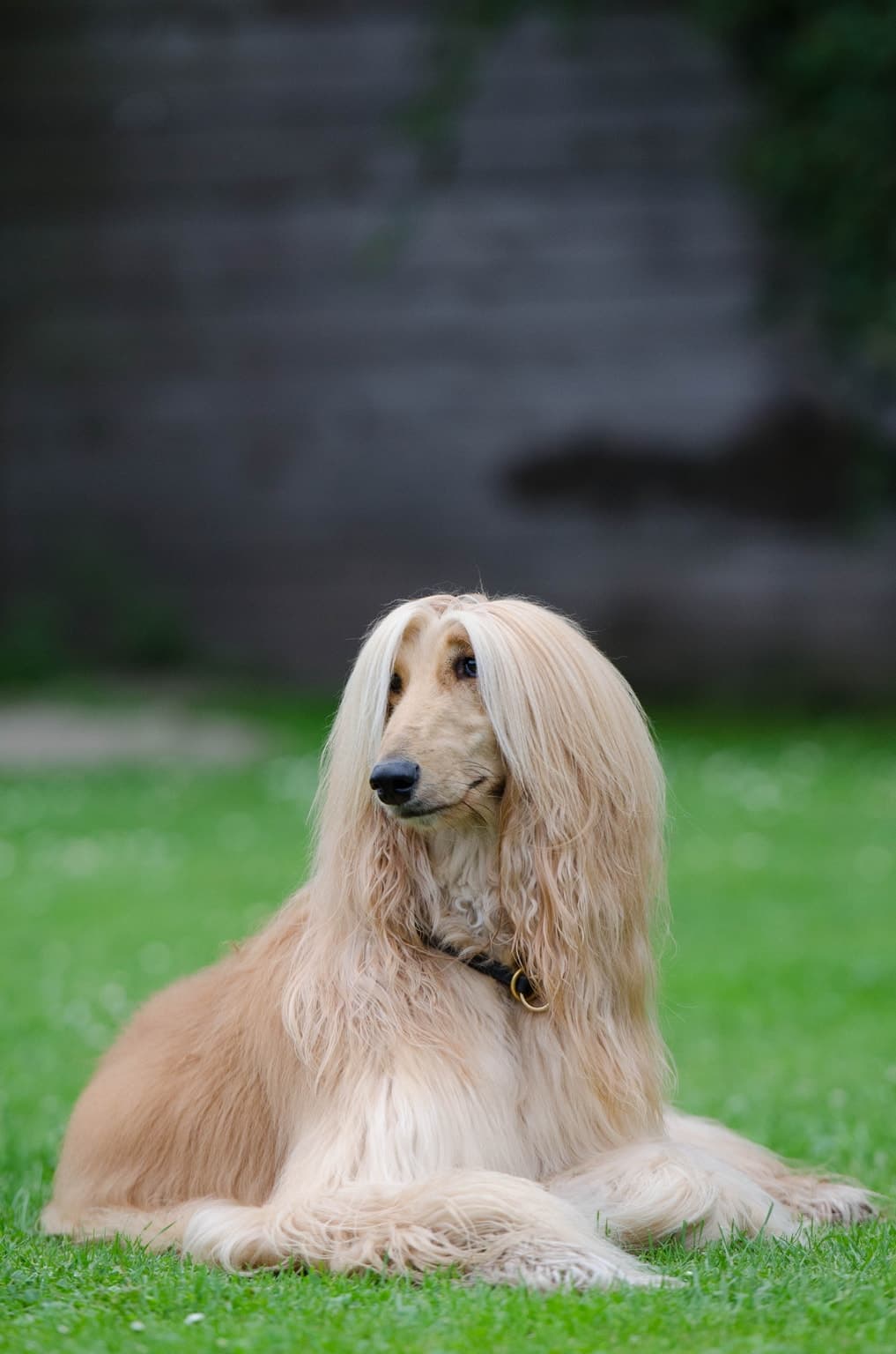
- A Borzoi is the only one of the group with a long, silky, wavy coat and feathering, paired with a very long, narrow head that curves down toward the nose; the other three are all smooth-coated.
Also in this group in the benchmark: Borzoi.
Commonly mistaken for:
Side-by-side guides:
Read how the groups were built and how the model is tested in the confused dog breeds study and the testing methodology.
Similar breeds to compare
Many breeds share similar silhouettes and features. If you’re comparing AI results or deciding between breeds, it helps to read a few profiles side by side. Common look-alikes and close cousins to the Greyhound include Whippet, Italian Greyhound, Saluki, Afghan Hound.
When you compare, focus on structure (muzzle length, ear set, body proportions) as much as coat color. Then confirm by looking at temperament and daily care needs.
FAQ
How big do Greyhounds get?
Most adult Greyhounds fall around 60-70 lbs and stand 27-30 in. Genetics, diet, and activity level all influence where an individual dog lands within that range.
How long do Greyhounds live?
The typical lifespan is 10-14 years. Preventive vet care, healthy weight, and consistent daily exercise are some of the biggest factors that support longevity.
What is the Greyhound temperament like?
Many owners describe this breed as Gentle, Quiet, Independent, Affectionate. Early socialization and reward-based training help those traits show up as calm confidence at home and on walks.
How can I identify a Greyhound from a photo?
Upload a clear photo (ideally with the full body visible) to our dog breed identifier. Use the results as a starting point, then compare likely matches in the breed directory. If you are still asking what breed is my dog, that guide walks through ear set, muzzle, coat, and size before you upload.
Sources and further reading
This profile is reviewed against primary registry material. General care information is educational; ask a veterinarian about an individual dog's health or treatment.
- American Kennel Club: Greyhound: Primary registry overview for breed history, group, structure, and typical traits.
See our editorial and correction policy.