Great Pyrenees vs Newfoundland vs Saint Bernard
All three are huge, heavy-coated, gentle-faced dogs bred for cold mountain or maritime work, so they get confused on paper more than in person. In a photo, though, a Newfoundland's black coat, a Great Pyrenees' white coat and a Saint Bernard's red-and-white patches can blur into one big fluffy dog, especially with puppies.
The fastest tell is colour. A Great Pyrenees is white, or white with grey, badger or tan markings mostly on the head and ears. A Newfoundland is solid black, brown or grey with at most some white on the chest and toes, unless it is the white-and-black Landseer pattern. A Saint Bernard is white with red or brindle patches and a dark mask, and it never comes in a solid colour.
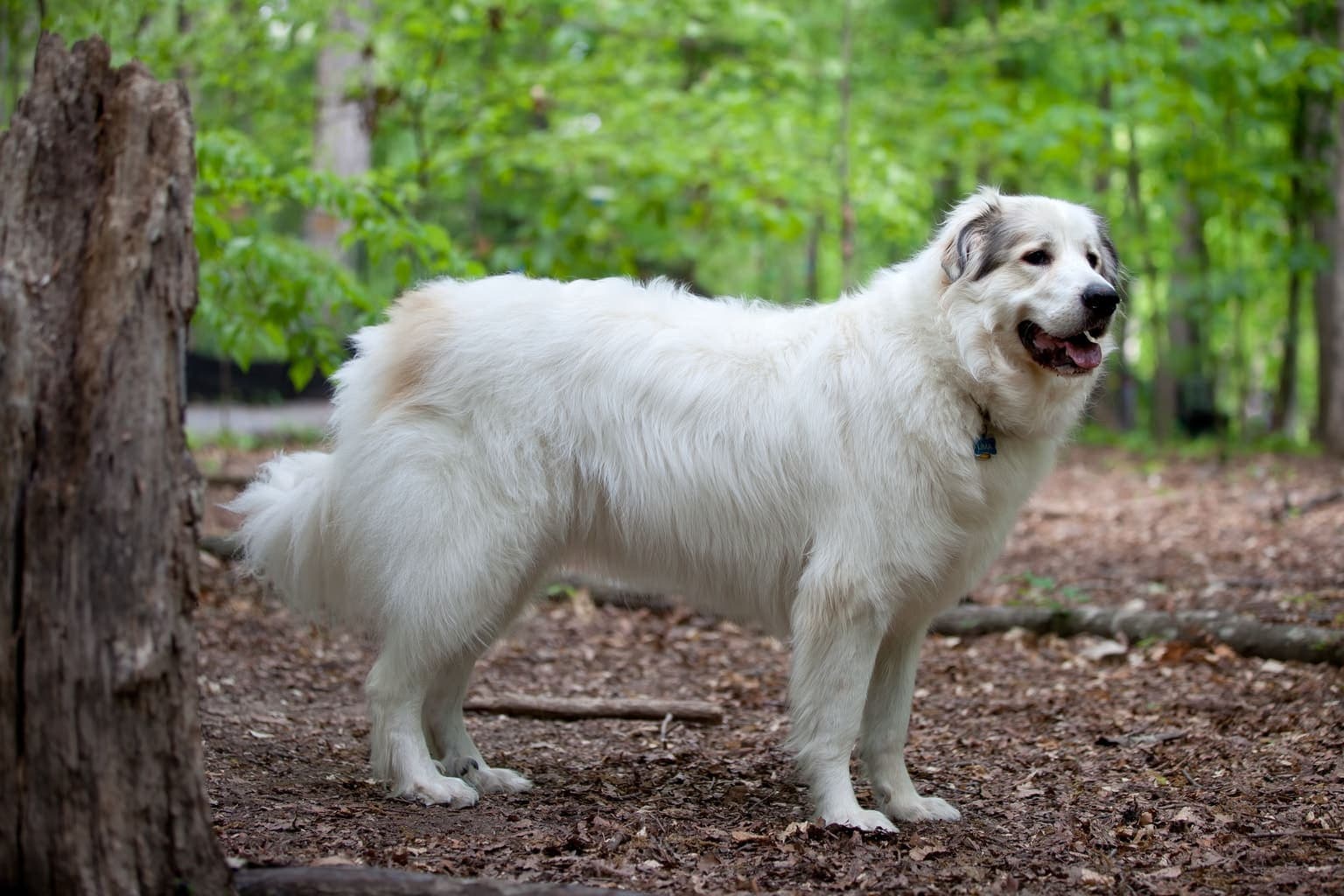
Photo by HeartSpoon · CC BY-SA 4.0
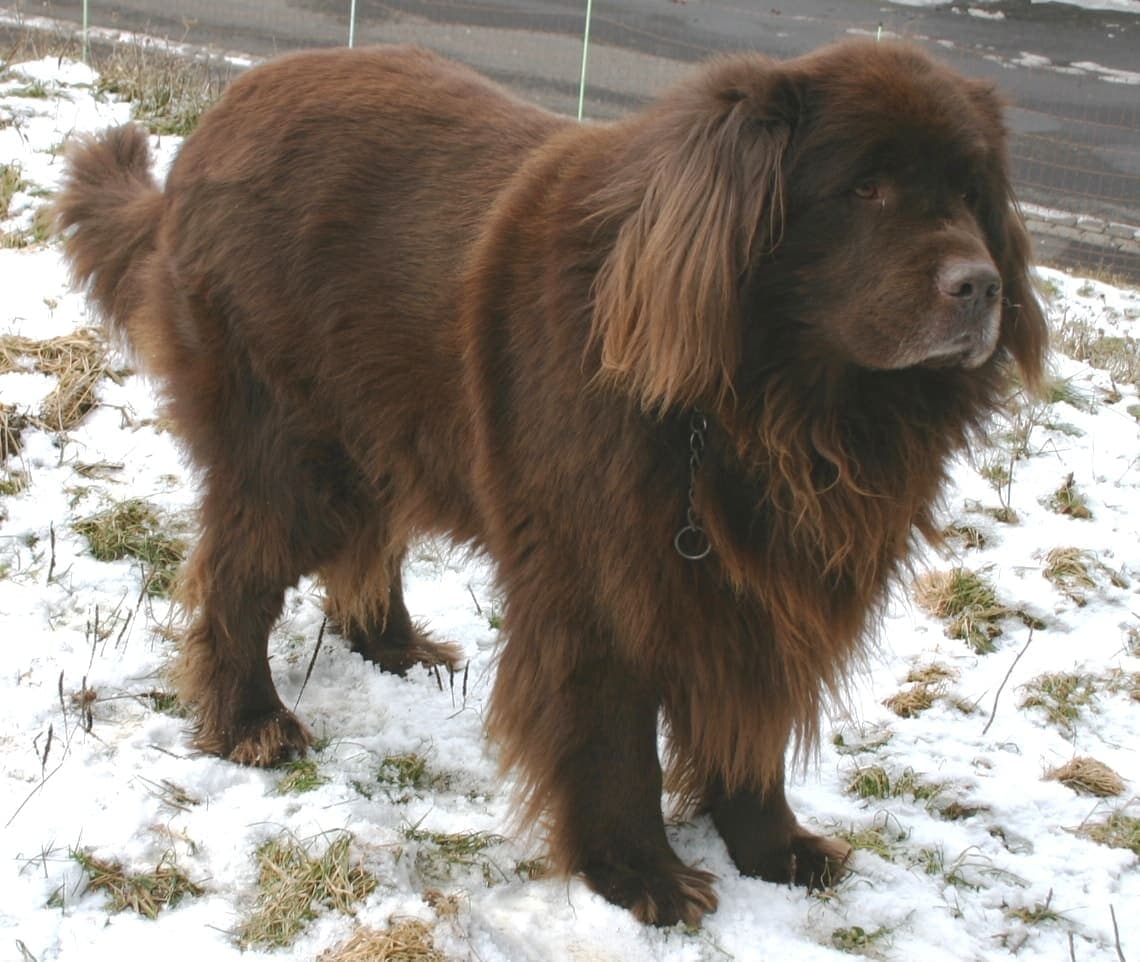
Photo by SKern · CC BY-SA 3.0
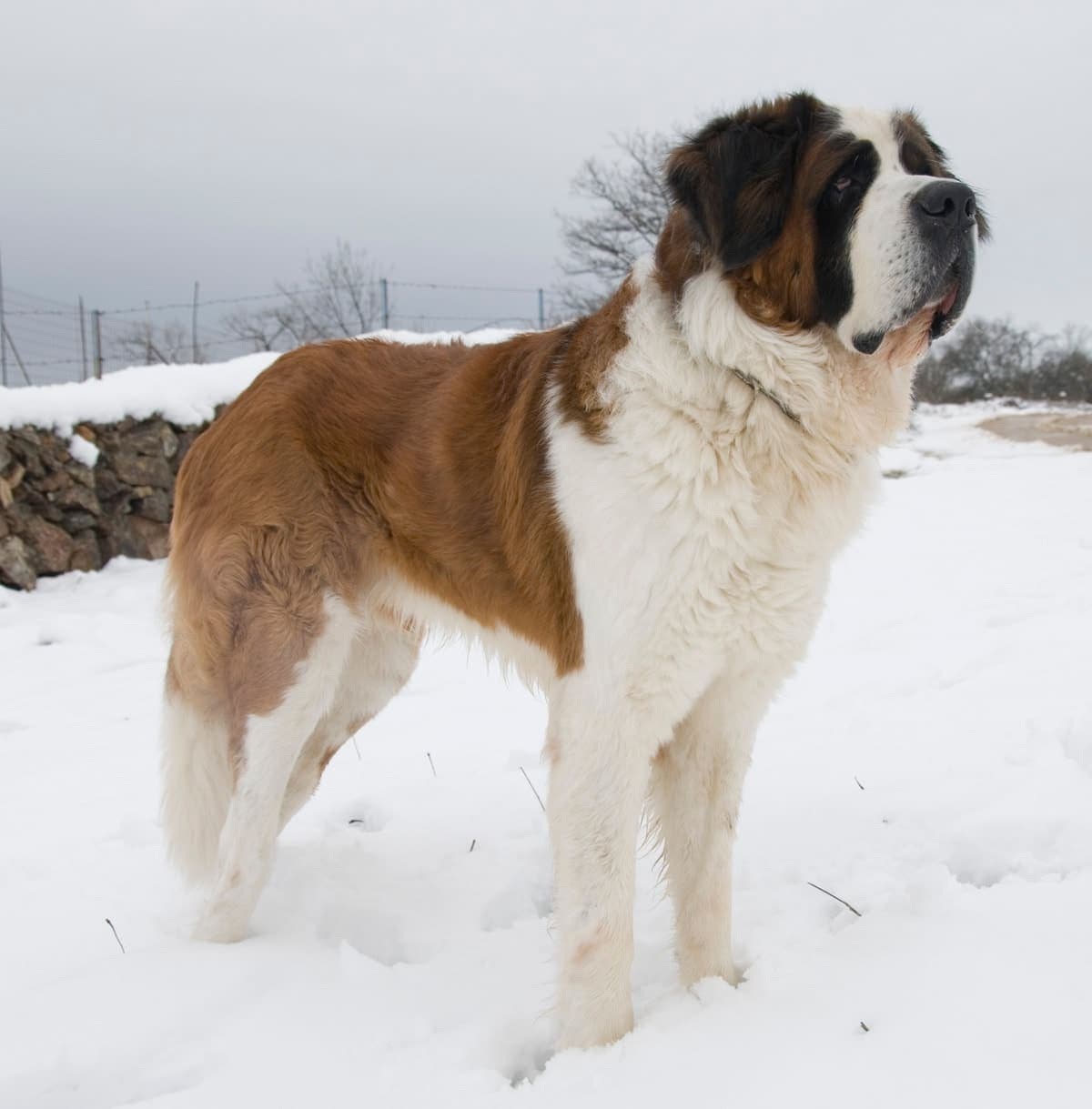
Photo by Rafael Dominguez Rodriguez · CC BY-SA 4.0
Quick facts
| Fact | Great Pyrenees | Newfoundland | Saint Bernard |
|---|---|---|---|
| Group | Working | Working | Working |
| Size | giant | giant | giant |
| Height | 25-32 in | 26-28 in | 26-30 in |
| Weight | 85-120 lbs | 100-150 lbs | 120-180 lbs |
| Lifespan | 10-12 years | 9-10 years | 8-10 years |
| Temperament | Calm, Protective, Independent, Gentle | Gentle, Patient, Sweet, Good-natured | Gentle, Friendly, Patient, Steady |
How to tell them apart
Read the rows top to bottom. The first two or three traits usually settle it; the rest confirm.
| Trait | Great Pyrenees | Newfoundland | Saint Bernard |
|---|---|---|---|
| Head and muzzle | Wedge-shaped head with a slightly rounded crown and no apparent stop; the muzzle equals the skull in length and the head looks refined for its size. | Massive, broad skull with a moderate stop and a clean, deep, square muzzle shorter than the skull; heavy but tidy, with no loose skin. | The most massive head: a strongly arched skull, a very pronounced stop, a short muzzle deeper than it is long, heavy hanging flews and a forehead that wrinkles when alert. |
| Ears and eyes | Small V-shaped ears with rounded tips set at eye level and carried low; almond-shaped, slightly slanted dark brown eyes give a thoughtful look. | Small triangular ears set level with or just above the brow; small, deep-set, widely spaced dark eyes give a soft, benevolent expression. | Medium ears set high with a strong fold at the base; deep-set dark brown eyes with lower lids that often sag to show haw, giving a friendly, slightly mournful face. |
| Size and build | 25 to 32 inches and 85 to 120 pounds, the tallest and rangiest, slightly longer than tall; big but not heavy. | 26 to 28 inches and 100 to 150 pounds, broad, deep and heavily boned, lower and more barrel-shaped than a Pyrenees. | 26 to 30 inches and 120 to 180 pounds, the heaviest of the three, massive from every angle. |
| Coat | Long, thick, coarse, straight or slightly wavy outer coat over a woolly undercoat, with a pronounced neck ruff and feathered legs and tail. | Flat, water-resistant double coat of moderate length, coarse with an oily feel, lying closer than a Pyrenees' coat. | Two varieties: a dense, smooth short coat, and a longhaired coat of medium length, plain to slightly wavy, never shaggy or curly. |
| Colour and markings | White, or white with grey, badger, reddish brown or tan markings mainly on the head and ears, never covering more than a third of the dog. | Solid black, brown or grey, sometimes with a little white on the chest, toes and tail tip; the Landseer pattern is white with black patches. | White with red or brindle patches, or red with white; a white chest, feet, tail tip, noseband and collar are required, and a dark mask is typical. |
| Tail | Well-plumed tail reaching at least to the hock, carried low at rest and often curled over the back in a wheel when excited or moving. | Broad-based, strong tail reaching to the hock, hanging straight or slightly curved at rest and carried out, never over the back, in motion. | Long, heavy tail that hangs straight or curves gently upward in the lower third, carried lower than a Pyrenees' and never rolled over the back. |
| Feet and gait | Double dewclaws on each hind leg, required by the standard and easy to spot in a side photo; the gait is smooth, unhurried and ground-covering. | Large, webbed feet; the trot has strong drive and reach with a slight roll through the body. | Broad, strong feet with well-arched toes; movement is steady and powerful with a long stride, often looking heavy in front. |
What the photo detector sees
The detector keys first on colour pattern and then on head shape. A mostly white dog with a wedge head and almond eyes ranks Great Pyrenees, with Samoyed, Kuvasz or Maremma sometimes following. A solid black or brown dog with a broad head and small ears ranks Newfoundland. Red-and-white patching with a dark mask, a sharp stop and hanging flews ranks Saint Bernard. Silhouette helps too: the Pyrenees is taller and lighter, the Newfoundland lower and rounder, the Saint heaviest through the head and neck.
It hesitates when the strong cue is missing. A Landseer Newfoundland shares its white-and-black patching with a Saint's layout, leaving the model to rely on the Newfoundland's cleaner muzzle and moderate stop. A fluffy Saint puppy, a head-only close-up of a badger-marked Pyrenees, or a wet Newfoundland that has lost its coat bulk can each rank across several breeds. Without a scale reference all three overlap with Bernese Mountain Dog, Leonberger or a large mix. The result is a confidence-ranked list of visual matches, not a statement of ancestry.
Living with them
The temperaments differ more than the looks. A Great Pyrenees is a livestock guardian: independent, nocturnal by instinct, a habitual barker, wary of strangers and inclined to roam, so it needs a secure fence and an owner comfortable with an independent dog. A Newfoundland is the gentlest and most biddable, a patient water dog that tolerates children well, though it drools and sheds heavily. A Saint Bernard sits between them: friendly, steady and patient, with the heaviest drool and the shortest lifespan of the group at 8 to 10 years.
None of them needs much running; all three want moderate, low-impact exercise, cool temperatures and joint-friendly routines while growing. All shed heavily and need brushing several times a week. Space and cost are the practical limits: a big car, big food bills and early manners training so a 120-pound adult is safe around guests. For a companion that follows you around the house, choose the Newfoundland or the Saint Bernard; for a dog to watch a property and livestock, the Pyrenees is the only one bred for it.
Not sure which one you have?
Upload a clear photo and the detector returns a ranked shortlist, so you can check the top matches against the tells above instead of guessing from one label.
Upload a photo and get a ranked shortlistFAQ
Can a photo tell a Great Pyrenees from a Saint Bernard?
Usually, yes. A mostly white body with a wedge head is a Pyrenees; red or brindle patches with a dark mask and a heavy, wrinkled head is a Saint. It hesitates on a tight head shot of a badger-marked Pyrenees or a pale young Saint, so use a full side view.
Can a photo tell a Newfoundland from a Saint Bernard?
In most cases, since a solid black or brown coat rules out a Saint immediately. The exception is a Landseer Newfoundland, white with black patches, which can pass for a Saint at a distance; look for the Newfoundland's cleaner muzzle, moderate stop and lack of hanging flews.
Which of the three is the biggest?
The Saint Bernard is the heaviest at 120 to 180 pounds. The Great Pyrenees is the tallest, with big males topping 30 inches while weighing considerably less. The Newfoundland sits between them but carries the most bone for its height.
What if my dog looks like a mix of these breeds?
Pyrenees and Saint Bernard mixes are common in rescue. The detector will typically return two or three of these breeds with split confidence. That is a visual resemblance, not a parentage claim; a DNA test confirms what is in the mix.
Why does a Great Pyrenees have extra toes on its back legs?
Those are double dewclaws, and the breed standard requires them on each hind leg. They are a signature of the breed and useful in a photo, because Newfoundlands and Saint Bernards do not have them.
Full profiles
Browse every pair in the breed comparison index.