Irish Setter vs Gordon Setter vs English Setter
The Irish Setter, the Gordon Setter and the English Setter share one outline: a tall bird dog with a long head, low-set hanging ears, a deep chest and a flat, silky coat that grows into long feathering on the ears, chest, belly, backs of the legs and tail. They stand at similar heights, and all three have been AKC breeds since 1878. The AKC points out that they are three separate breeds, not colour varieties of one setter.
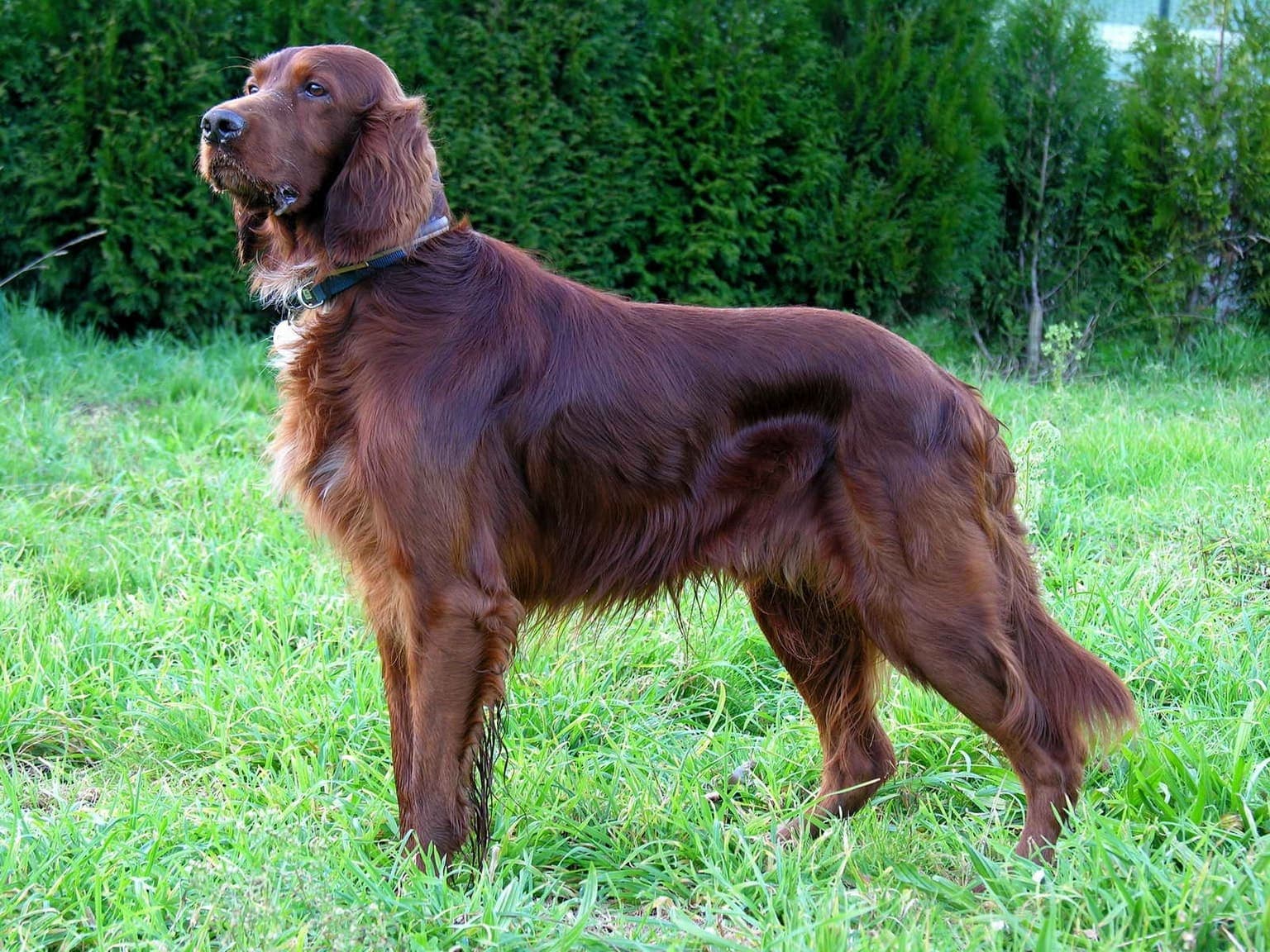
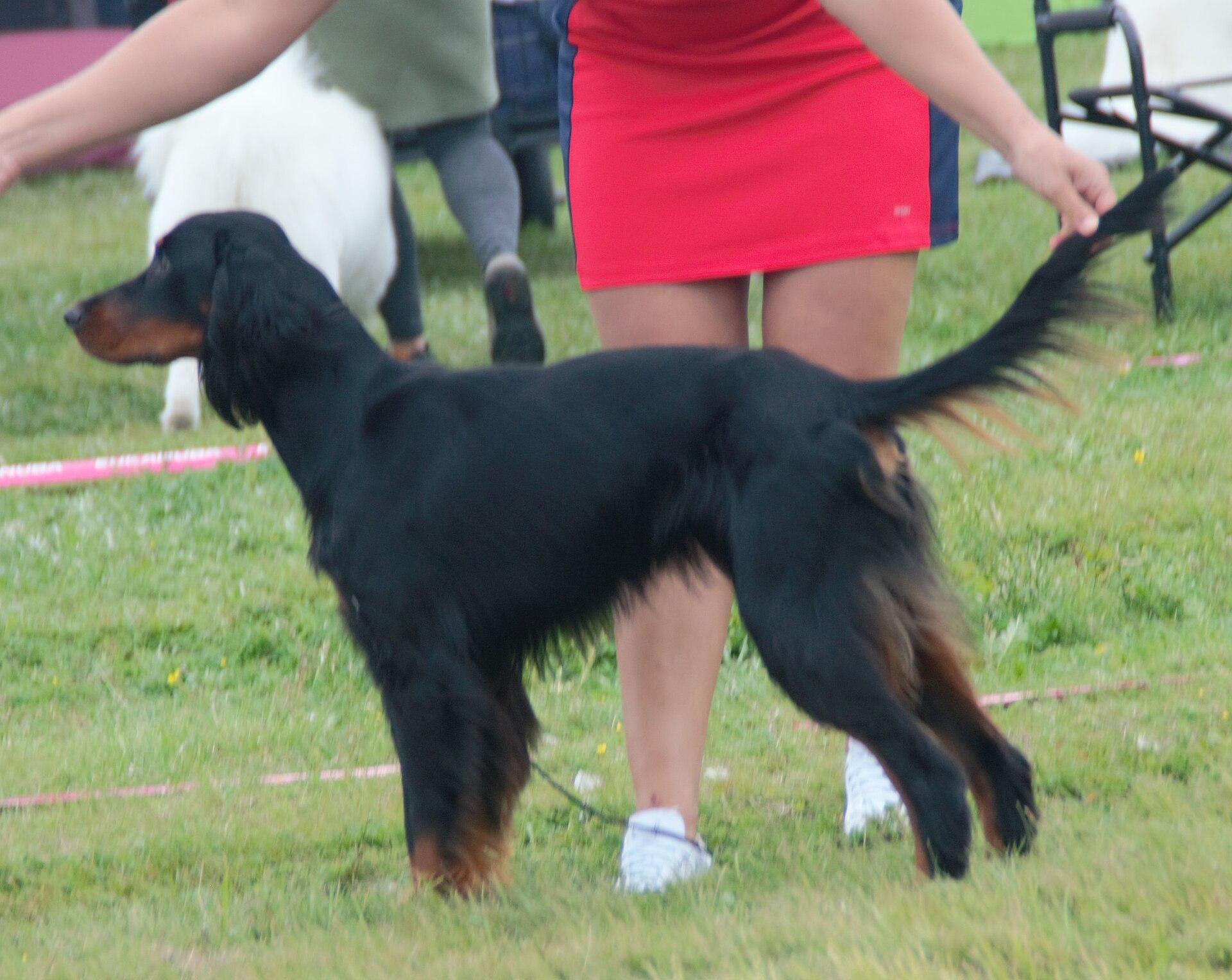
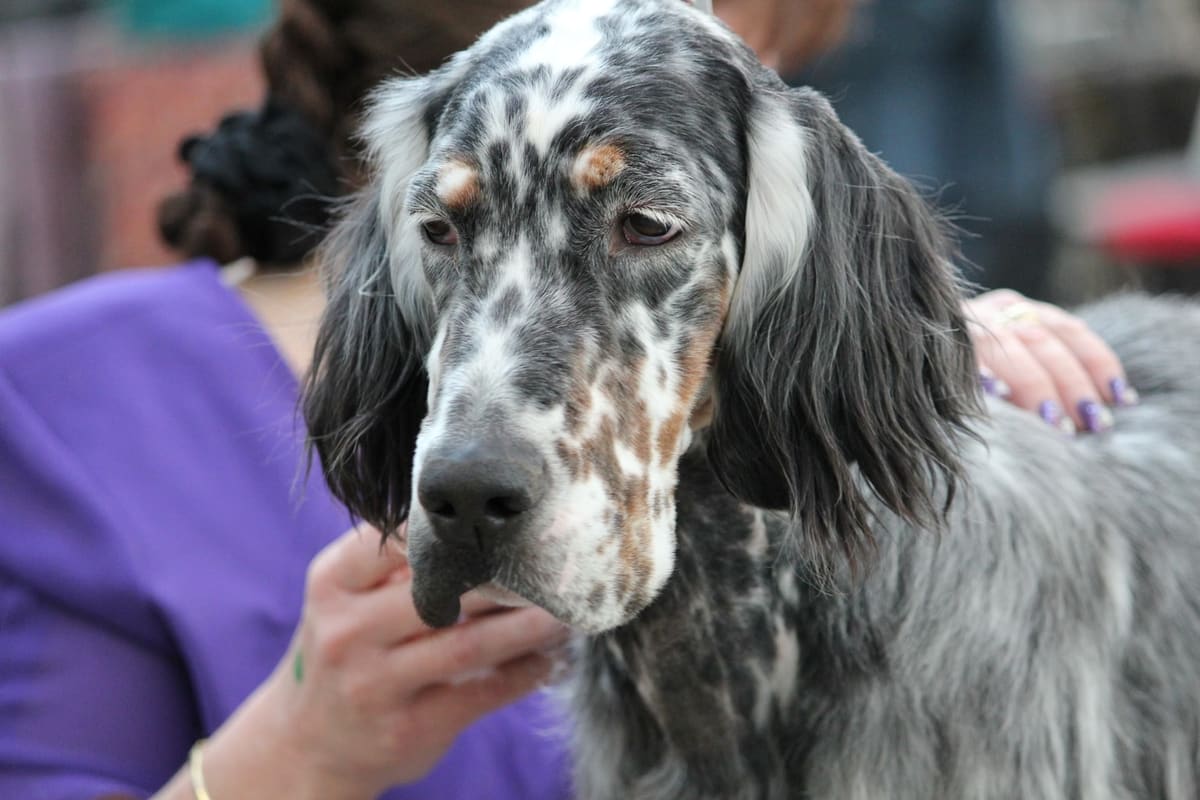
Colour is the fastest tell, and it works from across a street. An Irish Setter is mahogany or rich chestnut red with no black. A Gordon Setter is black with clearly defined tan markings. An English Setter has a white ground flecked with darker hairs, a pattern called belton.
When colour is hidden, as in a black-and-white photo or a silhouette, look at build and head. The Gordon is the heaviest for its height, with a rather short back, plenty of bone and a deep, fairly heavy head. The Irish Setter is slightly longer than tall, with a long, lean head at least twice as long as it is wide between the ears. The English Setter's head is also long and lean, but its muzzle is square with fairly pendant flews, and its eyes are nearly round.
Quick facts
| Fact | Irish Setter | Gordon Setter | English Setter |
|---|---|---|---|
| Group | Sporting | Sporting | Sporting |
| Size | large | large | medium |
| Height | 25-27 in | 23-27 in | 23-27 in |
| Weight | 60-70 lbs | 45-80 lbs | 45-80 lbs |
| Lifespan | 12-15 years | 12-13 years | 12 years |
| Temperament | Outgoing, Energetic, Affectionate, Playful | Loyal, Confident, Affectionate, Steady | Gentle, Friendly, Energetic, Affectionate |
How to tell them apart
Read the rows top to bottom. The first two or three traits usually settle it; the rest confirm.
| Trait | Irish Setter | Gordon Setter | English Setter |
|---|---|---|---|
| Colour and markings | Mahogany or rich chestnut red with no black. A small amount of white on the chest, throat or toes, or a narrow streak on the skull, is not penalised. | Black with rich chestnut or mahogany tan markings: two spots over the eyes, the sides of the muzzle, the throat, two spots on the chest, the lower legs and around the vent. Predominantly tan, red or buff dogs are disqualified. | White ground with darker hairs mixed in, from distinct flecks to roan shading: orange, blue (black on white), lemon or liver belton, or tricolour, which is blue belton with tan on the muzzle, over the eyes and on the legs. |
| Size | 25 to 27 in and 60 to 70 lbs. The standard's ideal is 27 in and about 70 lbs for males, 25 in and about 60 lbs for females. | 23 to 27 in and 45 to 80 lbs. Males 24 to 27 in and 55 to 80 lbs, females 23 to 26 in and 45 to 70 lbs. | The profile lists 23 to 27 in and 45 to 80 lbs. The AKC standard gives about 25 in for males and about 24 in for females, and no weight. |
| Build | Substantial yet elegant, slightly longer than tall, with a topline that inclines slightly downward from withers to tail. | Sturdily built with plenty of bone and substance, a strong, rather short back and a body about as long as it is tall. The standard says its weight for its height makes it heavier than other setters. | Elegant, substantial and symmetrical, with a topline that is level or slopes slightly downward and a moderate tuck-up. |
| Head | Long and lean, at least twice as long as the width between the ears, with delicate chiselling, a distinct stop and upper lips that are fairly square but not pendulous. | Deep rather than broad and fairly heavy, with a nicely rounded skull, a clearly indicated stop and a fairly long muzzle that is not pointed. The flews are not pendulous. | Long and lean with a well defined stop and parallel planes; the muzzle is long and square in profile, with squared, fairly pendant flews. |
| Eyes and nose | Somewhat almond-shaped eyes, dark to medium brown. Nose black or chocolate. | Oval eyes of fair size, dark brown. Broad black nose. | Nearly round, fairly large eyes, dark brown. Nose black or dark brown. |
| Coat and tail | Straight, fine and glossy, as free as possible from curl or wave, with long silky feathering. The tail tapers to a fine point, nearly reaches the hock and carries a moderately long fringe. | Soft and shining, straight or slightly waved but not curly. The tail is short, not reaching below the hocks, with feather that forms a triangle, longest near the root. | Flat, without curl or woolliness, with feathering of good length that does not hide the dog's lines. The tail reaches the hock or slightly less and is carried level, with a silky fringe hanging loosely. |
| AKC group and origin | Sporting Group. Bred by Irish huntsmen of the 1800s to move freely and swiftly over wide, flat country. | Sporting Group. A Scottish setter bred for difficult conditions; by the early 1800s the Duke of Gordon's kennel was producing setters recognisable as the breed. | Sporting Group. Bred on English country estates from old spaniel and pointer breeds, with a history of some 400 years. |
What the photo detector sees
In a clear colour photo the coat separates these three at once. In the saved benchmark runs for this project, none of the fifteen answers for Irish Setter reference photos and none of the fifteen for English Setter photos named another setter first. Gordon Setter was the second choice in three of the Irish Setter answers and in three of the English Setter answers, while the Irish and English Setters were never each other's second choice. The runs did not include Gordon Setter reference photos.
Photos hide more than you might expect. A Gordon's tan sits on the muzzle, throat, chest, lower legs and over the eyes, so from behind or in deep shade the dog can read as plain black. A tricolour English Setter carries tan in the same places, on the muzzle, over the eyes and on the legs; its white, flecked ground is what separates it from a Gordon. An English Setter may also have solid patches on the head and ears, which makes a close-cropped head shot less reliable than a view of the body. In a black-and-white picture, fall back on build and head shape.
Living with them
All three are affectionate Sporting dogs that need daily exercise. The AKC standard gives the Irish Setter a rollicking personality and an outgoing, stable temperament, and the AKC adds that it responds best to positive, reward-based training and not well to harsh corrections. The Gordon Setter is described as alert, confident, loyal and affectionate; the AKC calls Gordons stubborn yet very soft and loving, and closely bonded to their family. The English Setter is gentle, affectionate and friendly, very sensitive to reprimands, and according to the AKC usually settles as a quiet companion indoors after its daily run or walk.
The feathered coats all need regular brushing to prevent tangles and mats: at least twice a week for the Irish Setter and at least once a week for the Gordon and the English Setter, by the AKC's guidance. The AKC notes that bloat, a sudden and life-threatening stomach condition, can occur in all three, and advises owners to learn the signs. The profiles list a lifespan of 12 to 15 years for the Irish Setter, 12 to 13 years for the Gordon Setter and 12 years for the English Setter.
Not sure which one you have?
Upload a clear photo and the detector returns a ranked shortlist, so you can check the top matches against the tells above instead of guessing from one label.
Upload a photo and get a ranked shortlistFAQ
What is the difference between an Irish Setter, a Gordon Setter and an English Setter?
Colour first. The Irish Setter is solid mahogany or chestnut red, the Gordon Setter is black with tan markings, and the English Setter is white flecked with orange, black, lemon or liver. The Gordon is also the heaviest and most substantial of the three.
Are the three setters the same breed in different colours?
No. The AKC states that the English, Gordon and Irish Setters are three separate breeds, not colour varieties under one setter heading. They were developed in England, Scotland and Ireland respectively, and each has its own standard. The AKC does call the Gordon the Irish Setter's kinsman from Scotland.
Which setter is the biggest?
The Gordon Setter is the heaviest: its standard allows males up to 80 lbs and says its weight for its height makes it heavier than other setters. In height the three overlap. The Irish Setter standard's ideal is 27 in for males, the Gordon's range for males is 24 to 27 in, and the English Setter standard gives about 25 in.
What does belton mean on an English Setter?
Belton is the English Setter's speckled pattern: a white ground with darker hairs mixed through it, anywhere from clear flecks to roan shading. It comes in orange, blue (black flecks), lemon and liver, plus tricolour, which adds tan on the muzzle, over the eyes and on the legs. Neither the Irish nor the Gordon Setter standard includes it.
Which setter needs the most grooming?
All three have feathering that mats if neglected. The AKC recommends brushing an Irish Setter at least twice a week, and a Gordon or English Setter at least once a week. It also suggests a monthly bath for the Gordon and a bath every four to six weeks for the English Setter.
Full profiles
Browse every pair in the breed comparison index.