Siberian Husky vs Alaskan Malamute
Siberian Huskies and Alaskan Malamutes are both grey-and-white sled dogs with a wolfish face mask, a thick double coat and a tail that curls over the back. Photos of a single dog with nothing beside it for scale hide the biggest difference, which is bulk, so people end up guessing from the face alone. Many pet Huskies are also heavier than the standard, and many Malamutes are photographed as fluffy puppies, which narrows the gap further.
The fastest tell is the ears. A Husky's ears sit high and close together on top of a medium, fox-like head. A Malamute's ears are set wide apart at the back of a broad, heavy skull, and they look small for the head because the head is so large. Once you notice ear placement, the two breeds stop looking alike.
Eye colour is a second quick check. Blue eyes, one blue and one brown, or parti-coloured eyes are all normal in a Husky. A Malamute's eyes are always brown, and blue eyes are a disqualification in the breed standard. A blue-eyed dog is not a purebred Malamute.
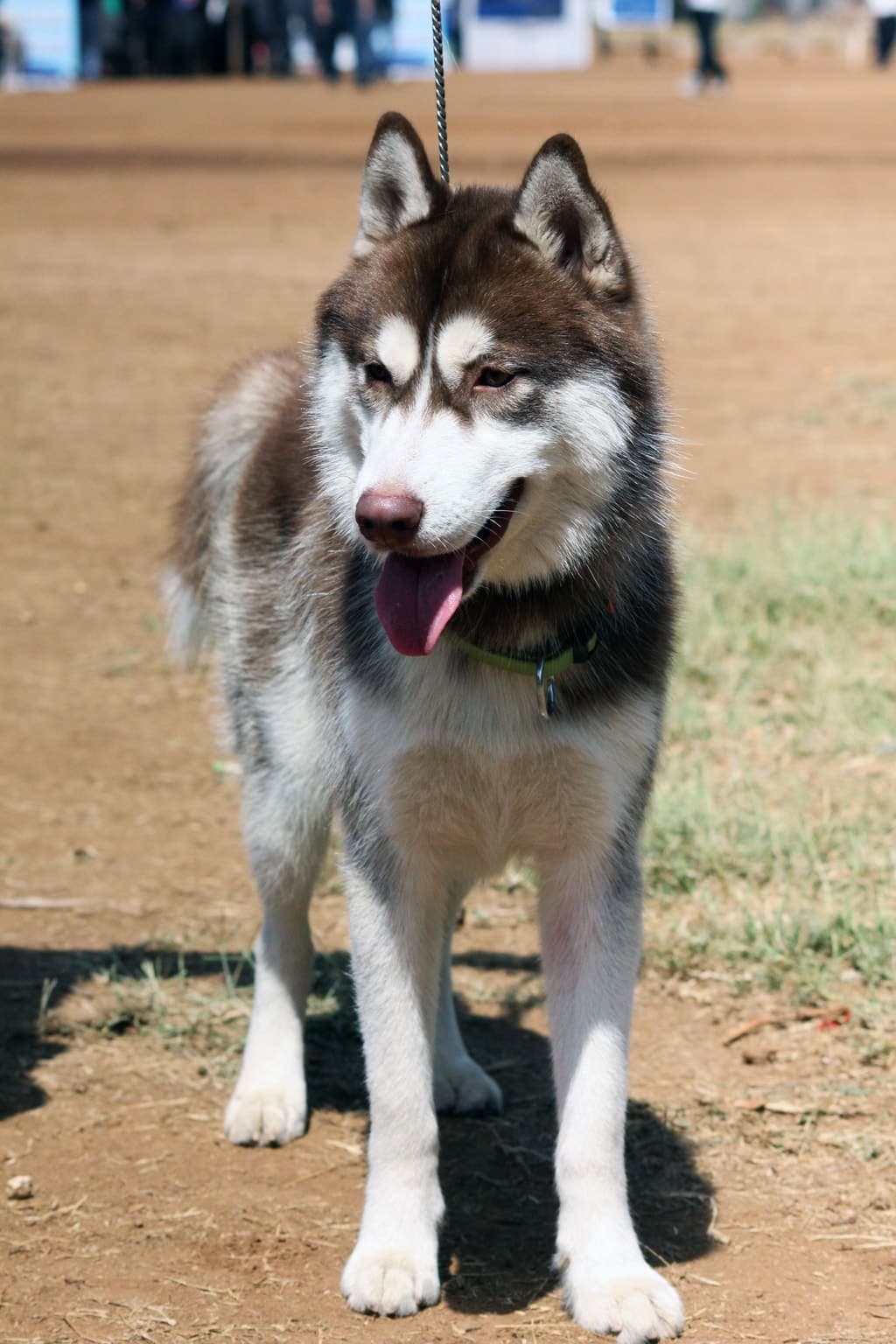
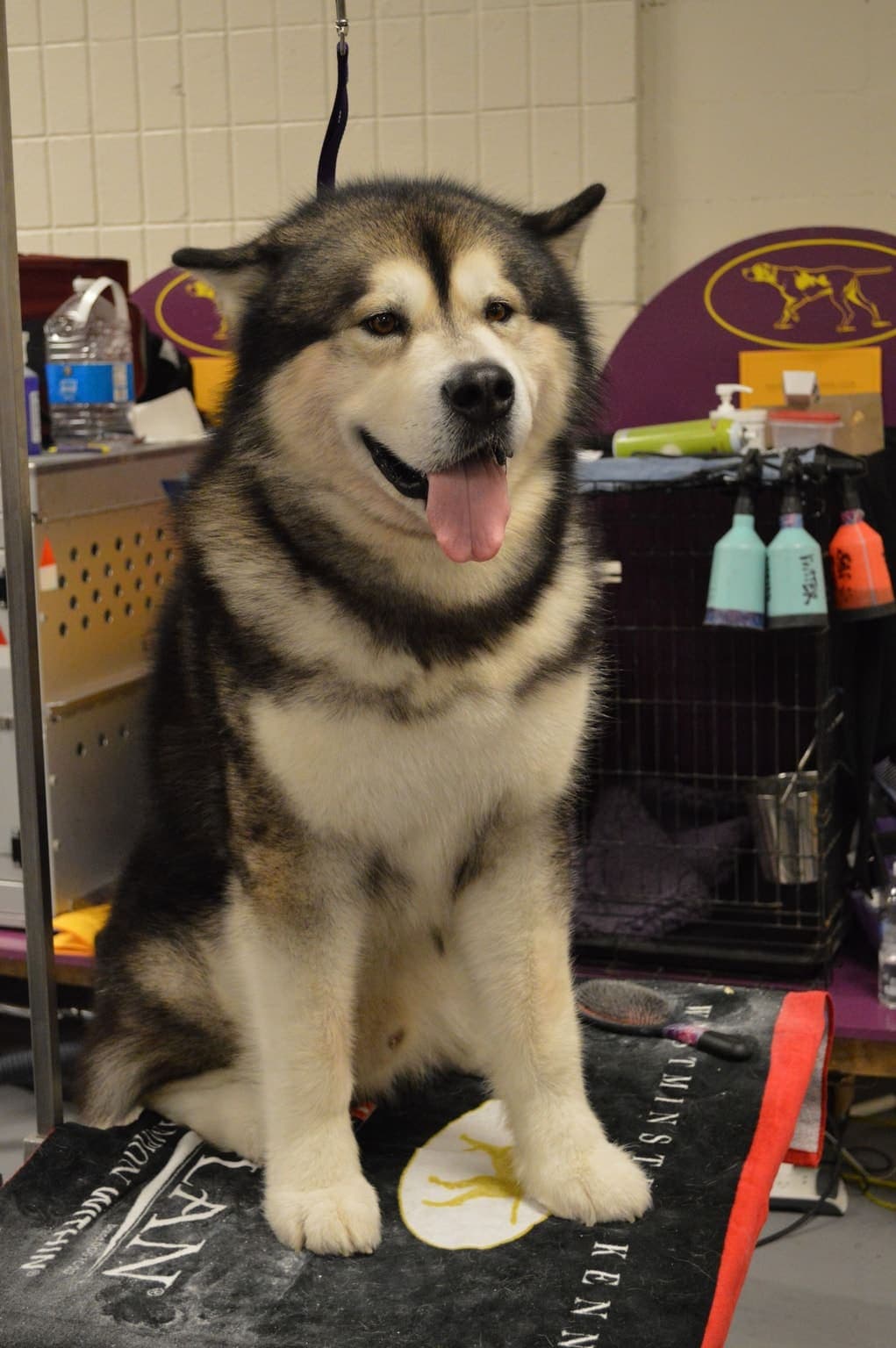
Photo by Pets Adviser from Brooklyn, USA · CC BY 2.0
Quick facts
| Fact | Siberian Husky | Alaskan Malamute |
|---|---|---|
| Group | Working | Working |
| Size | large | large |
| Height | 20-23.5 in | 23-25 in |
| Weight | 35-60 lbs | 75-85 lbs |
| Lifespan | 12-14 years | 10-14 years |
| Temperament | Energetic, Independent, Friendly, Athletic | Strong, Friendly, Independent, Enduring |
How to tell them apart
Read the rows top to bottom. The first two or three traits usually settle it; the rest confirm.
| Trait | Siberian Husky | Alaskan Malamute |
|---|---|---|
| Head and muzzle | Medium, fox-like head with a moderately rounded skull and a muzzle of medium width that tapers to the nose. | Broad, deep, bulky head with a wide skull and a heavy muzzle that barely narrows from stop to nose. |
| Ears | Medium-sized, thick, strongly erect and set high and close together, with slightly rounded tips. | Set wide apart at the rear of the skull in line with the eyes, appearing small against the broad head, and often folded back when working. |
| Eyes and expression | Almond-shaped, set slightly obliquely, in brown, blue, one of each or parti-coloured, giving a keen, mischievous look. | Almond-shaped and always brown, set obliquely, with a softer, more affectionate expression; blue eyes disqualify. |
| Body and topline | Compact, moderately long body with a level topline and a light, athletic frame built for speed over distance. | Heavy-boned, compactly built and powerful, with a deep chest and a topline that slopes very slightly from shoulders to hips. |
| Coat | Medium-length double coat that lies fairly smooth and never hides the outline of the body. | Thick, coarse guard coat over a dense, oily, woolly undercoat, longest at the neck, shoulders, rump, breeches and tail plume. |
| Colour and markings | Any colour from black to pure white, often with striking cap and mask patterns on the face. | Light grey through black, sable and red, always with white underbody, legs and face markings; solid white is the only self colour allowed. |
| Size | 20 to 23.5 in at the shoulder and about 35 to 60 lbs, a medium dog with a leggy, light outline. | 23 to 25 in and roughly 75 to 85 lbs, with heavy bone and large snowshoe feet built for hauling freight. |
| Tail and gait | Fox-brush tail carried in a sickle curve over the back when alert, often trailing when relaxed; gait is quick, light and effortless. | Well-furred plume carried waving over the back, not tightly curled; gait is steady, balanced and powerful rather than fast. |
What the photo detector sees
The detector reads this pair mostly from head shape and ear placement. A Husky's narrower muzzle, higher and closer ear set and cleaner facial outline separate it from the broad-skulled Malamute with wide-set ears. Coat volume is a strong second signal: the Malamute's longer, coarser coat and heavy plume of a tail fill out the silhouette, and the plush ruff and breeches make the whole dog look rounder. Bone and foot size help when the legs are visible. Eye colour is a useful one-way clue: blue eyes push the result toward Husky, but brown eyes are common in both.
Where it hesitates is scale and stage. With no reference object, a large, thick-coated Husky and a small Malamute overlap, and a tight face crop removes the body bulk that would normally decide it. Puppies of both breeds have soft, rounded heads and short fluffy coats and are among the hardest cases in the pack. A Husky in full seasonal blow-out looks bulkier than usual, and a clipped or thin-coated Malamute looks lighter. Husky and Malamute crosses, and Northern-type mixes generally, will return both breeds in the ranked results. The detector reports visual similarity, not ancestry.
Living with them
Both breeds are friendly with people, independent, and shed heavily, so the choice comes down to size, strength and the kind of energy you can manage. The Husky is a runner. It wants to cover ground every day, is a talented escape artist, and can carry strong prey drive, so secure fencing and good leash habits are non-negotiable. It is generally more sociable with other dogs and lighter to handle on lead. The Malamute is a hauler. It is slower but far more powerful, enjoys digging and pulling sports, and can be more selective about other dogs, especially of the same sex. Its weight means that leash manners and consistent, patient training matter from puppyhood.
Grooming is heavy for both, with twice-yearly coat blows that fill bins with fur, and the Malamute's denser undercoat takes longer to brush out. The Malamute also struggles more in heat and needs exercise in the cooler parts of the day. Neither breed is a natural off-leash dog, and neither is a good fit for a sedentary household. Lifespans in the profiles run 12 to 14 years for the Husky and 10 to 14 for the Malamute.
Not sure which one you have?
Upload a clear photo and the detector returns a ranked shortlist, so you can check the top matches against the tells above instead of guessing from one label.
Upload a photo and get a ranked shortlistFAQ
Can a photo tell a Siberian Husky from an Alaskan Malamute?
Often, yes. The detector keys on the Husky's narrower head and high, close-set ears against the Malamute's broad skull and wide-set ears, plus the heavier coat and bulkier outline of the Malamute. A single dog with no scale reference or a close face crop can still be ambiguous, and puppies are the hardest case.
Do Alaskan Malamutes have blue eyes?
No. Malamute eyes are brown, and blue eyes are a disqualification in the breed standard. Blue, parti-coloured or odd-coloured eyes are normal in Siberian Huskies, so a blue-eyed dog is a Husky or a Husky mix.
Which is bigger, a Husky or a Malamute?
The Malamute, by a wide margin. A Malamute stands 23 to 25 in and weighs roughly 75 to 85 lbs, while a Husky is 20 to 23.5 in and 35 to 60 lbs. Side by side the Malamute looks like a much heavier, broader dog even though the height gap is small.
What does a Husky Malamute mix look like?
Usually a dog somewhere between the two in size, often with a Malamute-style broad head and a Husky's lighter build or blue eyes. These crosses, sometimes called Alusky, are a classic case where the detector lists both breeds with similar confidence. Only a DNA test can confirm the parentage.
Are Huskies or Malamutes better with other dogs?
Huskies were bred to run in large teams and tend to be more easygoing with other dogs. Malamutes can be more dominant and same-sex aggression is a known trait, so early socialisation and careful introductions matter more with them.
Full profiles
Browse every pair in the breed comparison index.