English Pointer
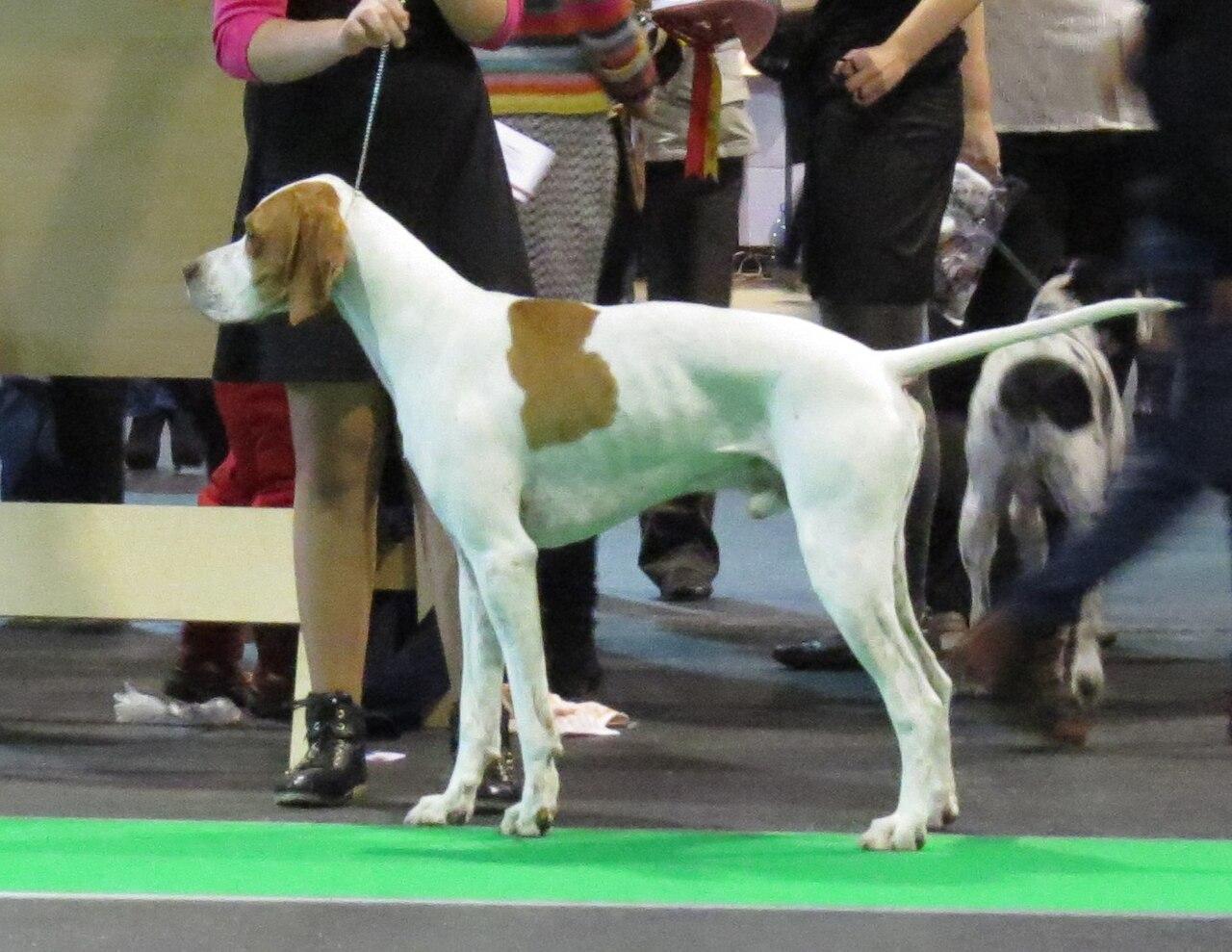
English Pointers are athletic sporting dogs bred for speed, endurance, and the classic pointing stance. They typically thrive in active homes with daily running, hiking, and training that lets them use their hunting instincts appropriately. Pointers are often even-tempered and affectionate with family, but they can become restless without enough exercise. Their short, dense coat comes in several colors, solid or patterned, and is easy to maintain, making lifestyle and activity level the bigger consideration. With consistent training and outlets, English Pointers can be energetic companions and impressive sporting partners.
How to recognize a English Pointer
- The head has a pronounced step between forehead and muzzle, and the nose may sit slightly higher at its tip than the muzzle does at that step.
- The tail is heavy at the root and tapers to a fine point, reaches no lower than the hock, and is carried without curl near the line of the back.
- Thin, soft ears are set at eye level, somewhat pointed at the tip, and hang close to the head to just below the lower jaw.
- The outline is muscular and compact, with a long, slightly arched neck, a chest that is deep rather than wide and a visible tuck-up.
- In motion the head is carried high and the tail swings from side to side in rhythm with the pace.
Quick facts
- Group: Sporting
- Size: large (large dog breeds)
- Height: 23-28 in
- Weight: 45-75 lbs
- Males, per the AKC standard: 25-28 in, 55-75 lbs
- Females, per the AKC standard: 23-26 in, 44-65 lbs
- Lifespan: 12-15 years
- Temperament: Athletic, Even-tempered, Energetic, Focused
- AKC recognized: 1878
The standard says balance and overall symmetry matter more than size, and calls great variations in size undesirable.
Coat and colors
Short, dense and smooth with a sheen.
Liver, lemon, black or orange, either solid or combined with white. The standard says "a good Pointer cannot be a bad color."
History and original work
Registered by the American Kennel Club simply as the Pointer, the breed appeared in England around 1650. Early Pointers worked alongside coursing hounds, finding and indicating hares for the hounds to chase. With the rise of wing-shooting in the 1700s they became gun dogs that locate game birds and “point” to show where they are.
The standard says the Pointer is bred primarily for sport afield and should look and act the part: a hard-driving hunting dog with stamina and courage. Its smooth gait with powerful rear drive should suggest top speed combined with great stamina.
Breeds mistaken for the English Pointer
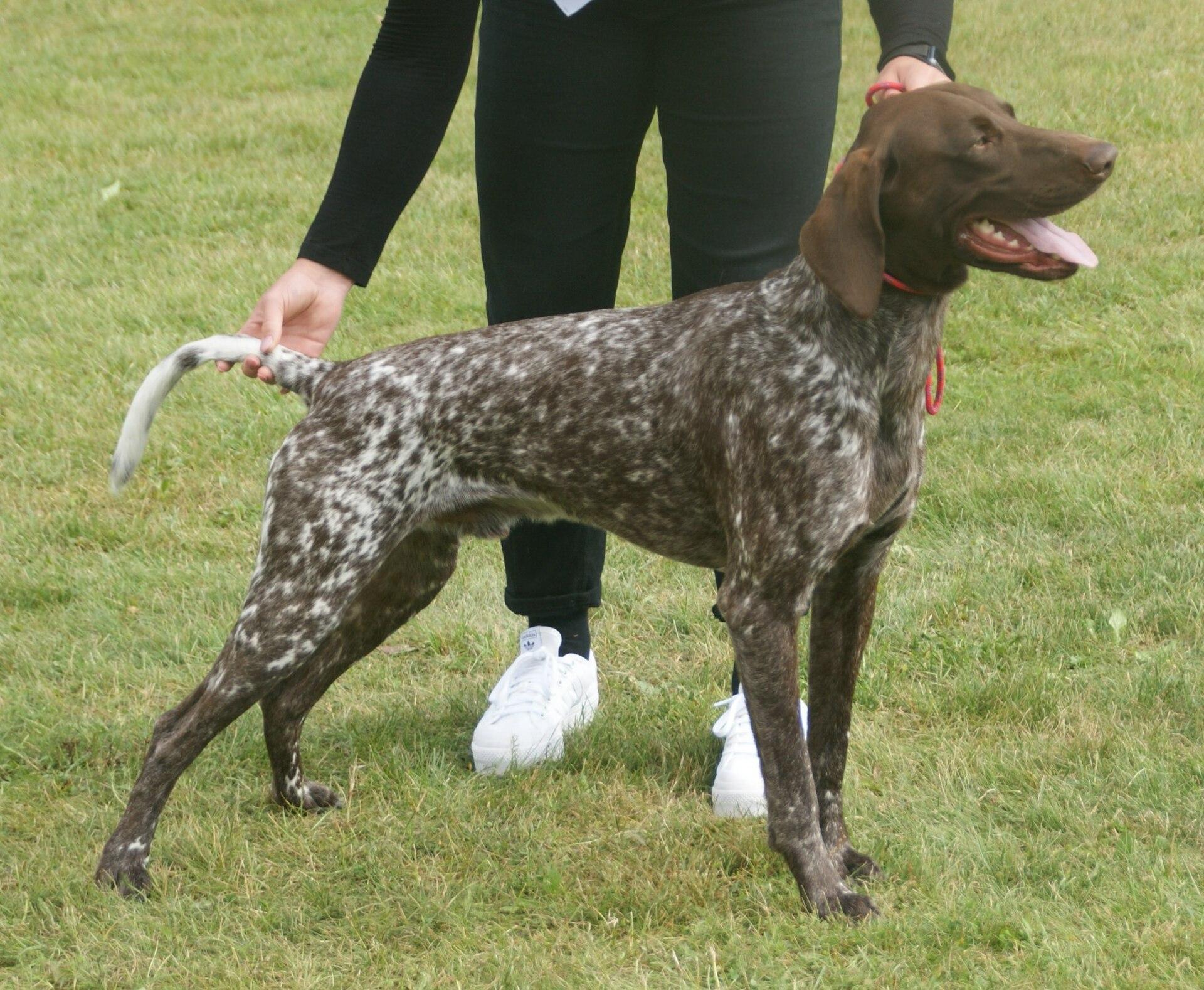
- German Shorthaired Pointer: A German Shorthaired Pointer has a docked tail and no definite step between forehead and muzzle, while the English Pointer has a long tail tapering to a fine point and a pronounced step.
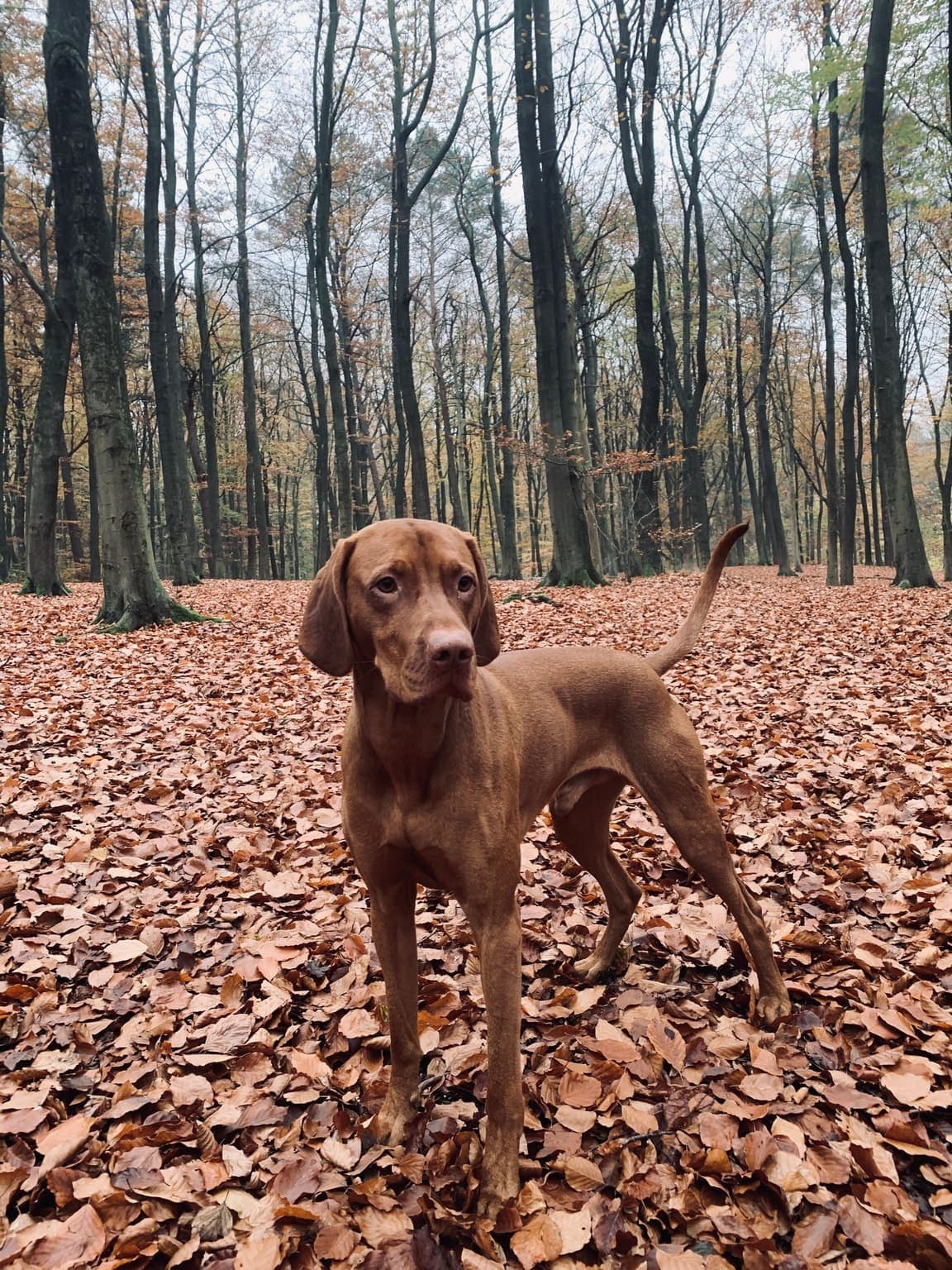
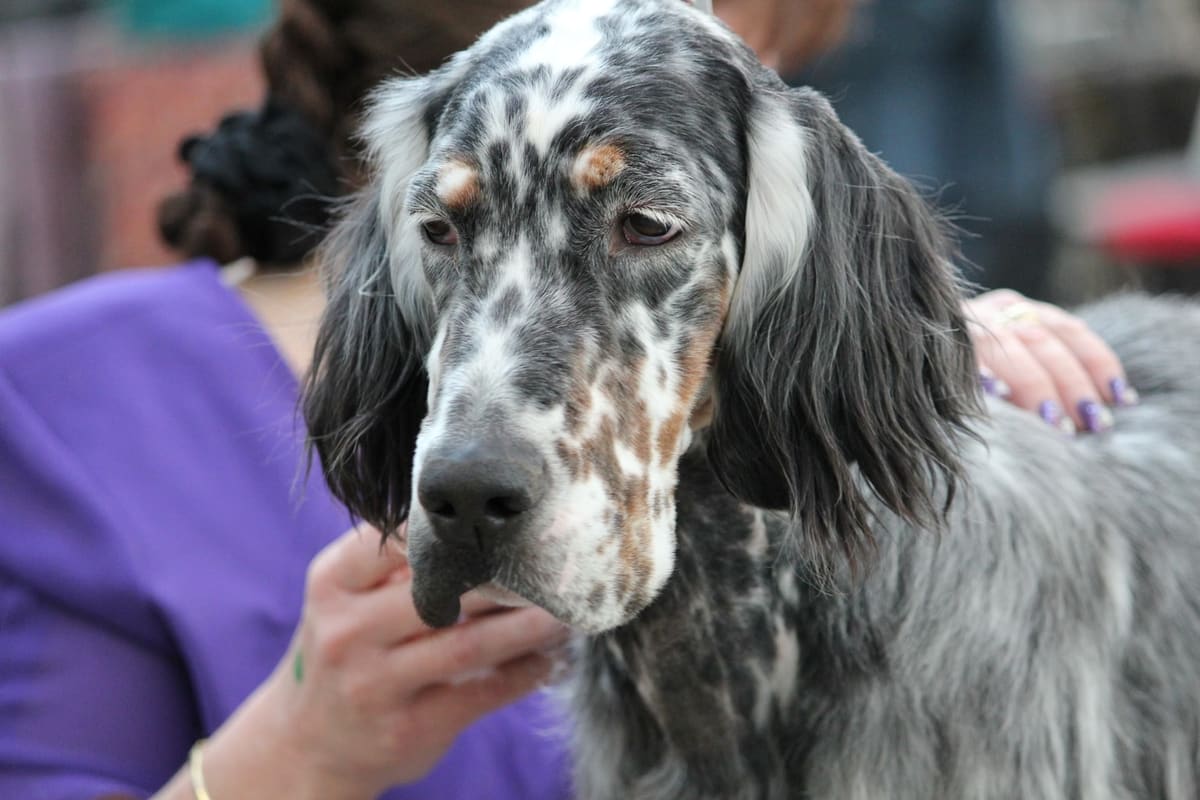
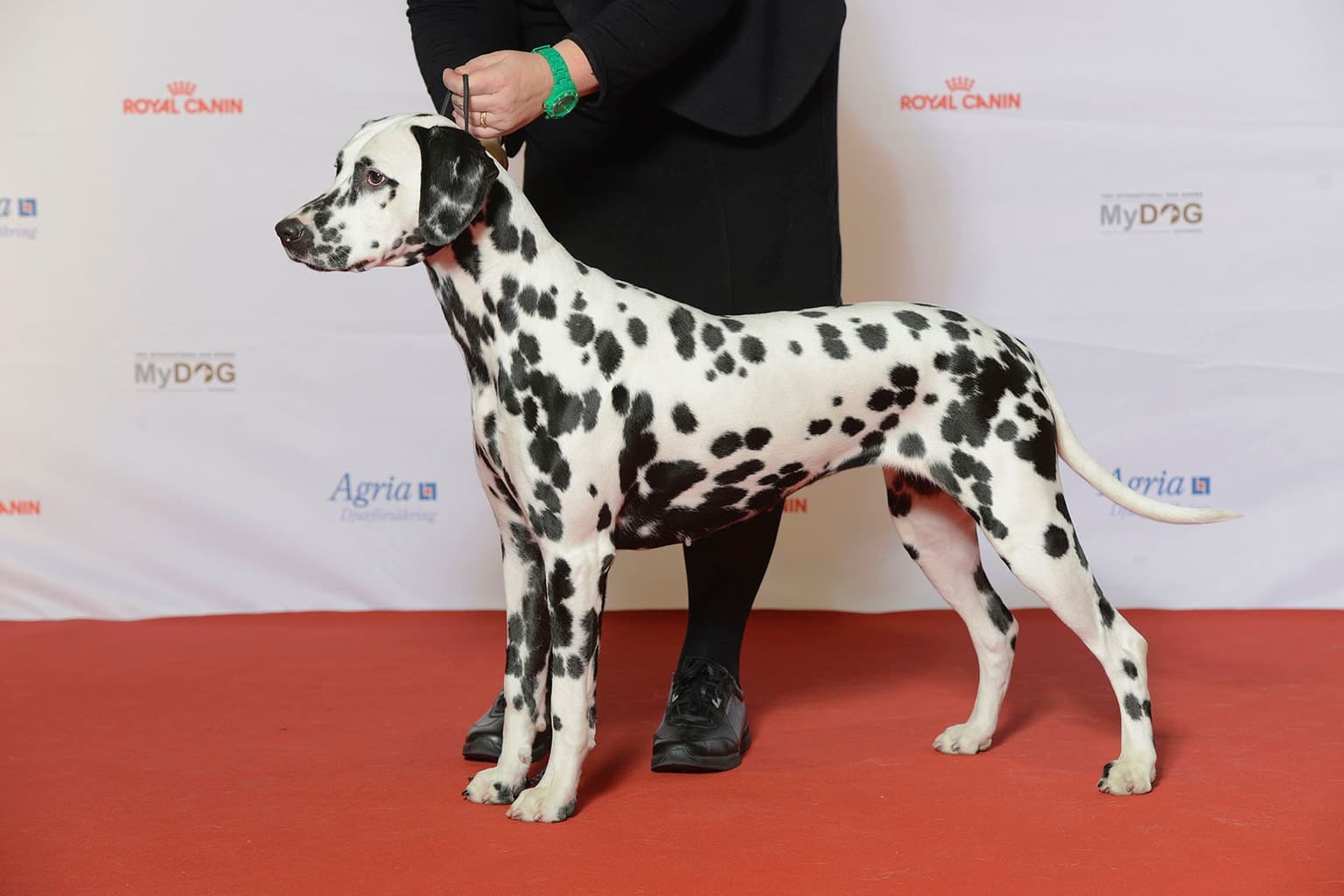
Side by side: German Shorthaired Pointer vs English Pointer and Dalmatian vs English Pointer.
Care tips
- Provide daily vigorous exercise; Pointers are endurance athletes.
- Use training and scent games to channel hunting instincts safely.
- Practice recall carefully; prey drive can lead to chasing.
- Offer shade and water in hot weather; active dogs can overheat.
- Brush weekly; short coats still shed and need grooming.
Sources
- American Kennel Club: English Pointer: Primary registry overview for breed history, group, structure, and typical traits.
- AKC official standard: English Pointer: Source for the identifying features, coat, colors, and size by sex on this page.