Shih Tzu
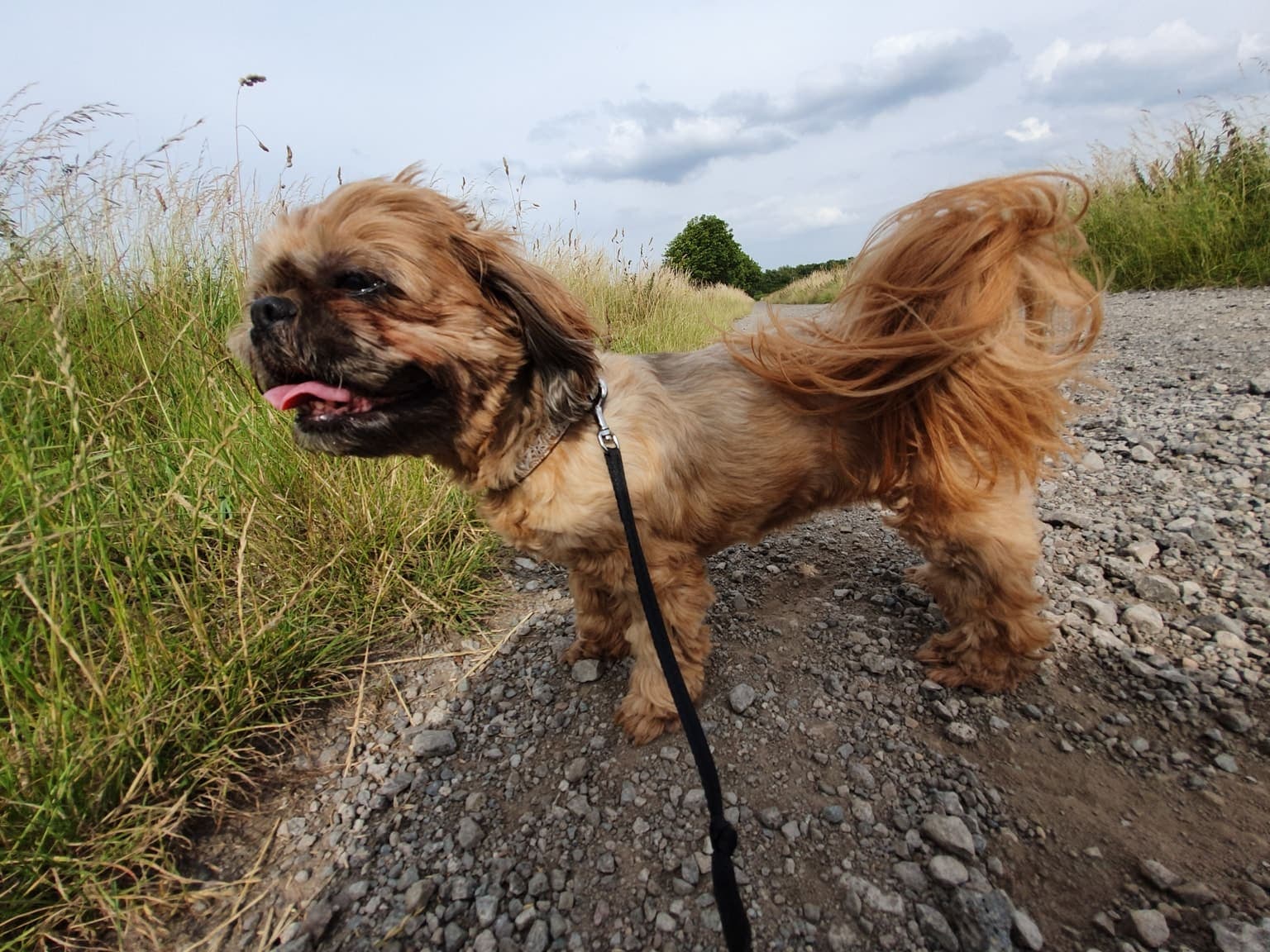
Shih Tzus are affectionate toy dogs bred for companionship, known for a friendly demeanor and a luxurious coat. They usually enjoy being close to their people and can adapt well to apartment life when given daily walks and play. Their long coat can be kept in a traditional style or trimmed for easier maintenance, but grooming remains an important part of care. With gentle training and social time, Shih Tzus can be cheerful, confident companions that fit comfortably into many lifestyles.
How to recognize a Shih Tzu
- The head is round and broad with a domed skull and large, round, very dark eyes placed well apart.
- The muzzle is square, short and unwrinkled, ideally no more than 1 in long and set no lower than the bottom of the eye rim, with an undershot bite.
- A long, flowing double coat covers the whole dog, and the hair on top of the head is tied up.
- The heavily plumed tail is set high and carried in a curve well over the back.
- The carriage is proud, with the head held well up, on a compact, solid body that is slightly longer than tall.
Quick facts
- Group: Toy
- Size: small (small dog breeds)
- Height: 9-10.5 in
- Weight: 9-16 lbs
- Lifespan: 10-18 years
- Temperament: Affectionate, Outgoing, Sweet-natured, Adaptable
- AKC recognized: 1969
Both sexes are ideally 9-10.5 in tall and 9-16 lbs; the standard accepts heights from 8 in to 11 in.
Coat and colors
A luxurious, dense, long and flowing double coat, with a slight wave allowed. The hair on top of the head is tied up, and the standard allows trimming of the feet and the bottom of the coat for neatness but faults excessive trimming.
The standard permits all colors and markings and considers them equally. Nose, lips and eye rims are black, except liver on liver-pigmented dogs and blue on blue-pigmented dogs.
History and original work
Shih Tzus were developed centuries ago by breeders in the Chinese imperial palace from Tibetan stock, most likely by crossing the Lhasa Apso and the Pekingese. The name means lion dog. They lived as lap dogs of the imperial court and were almost unknown outside the palace until the 1930s, when breed clubs formed in Peking and England.
The standard says the Shih Tzu's sole purpose is that of a companion and house pet, so its temperament must be outgoing, happy, affectionate, friendly and trusting. It links the breed's proud bearing to its past as a prized palace pet.
Breeds mistaken for the Shih Tzu
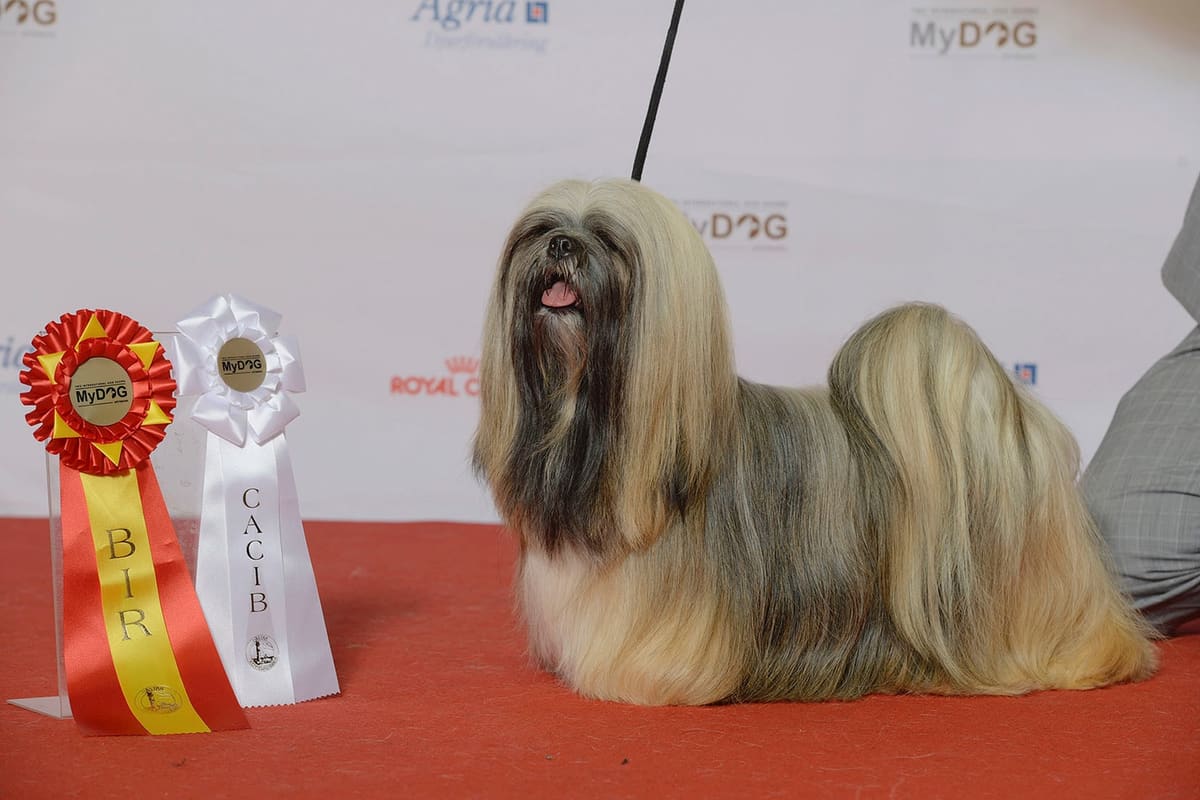
- Lhasa Apso: A Lhasa Apso has a narrower skull and a longer muzzle, about one-third of the head's length, with a straight, hard coat parted down the back, while the Shih Tzu has a round head and a short, square muzzle.
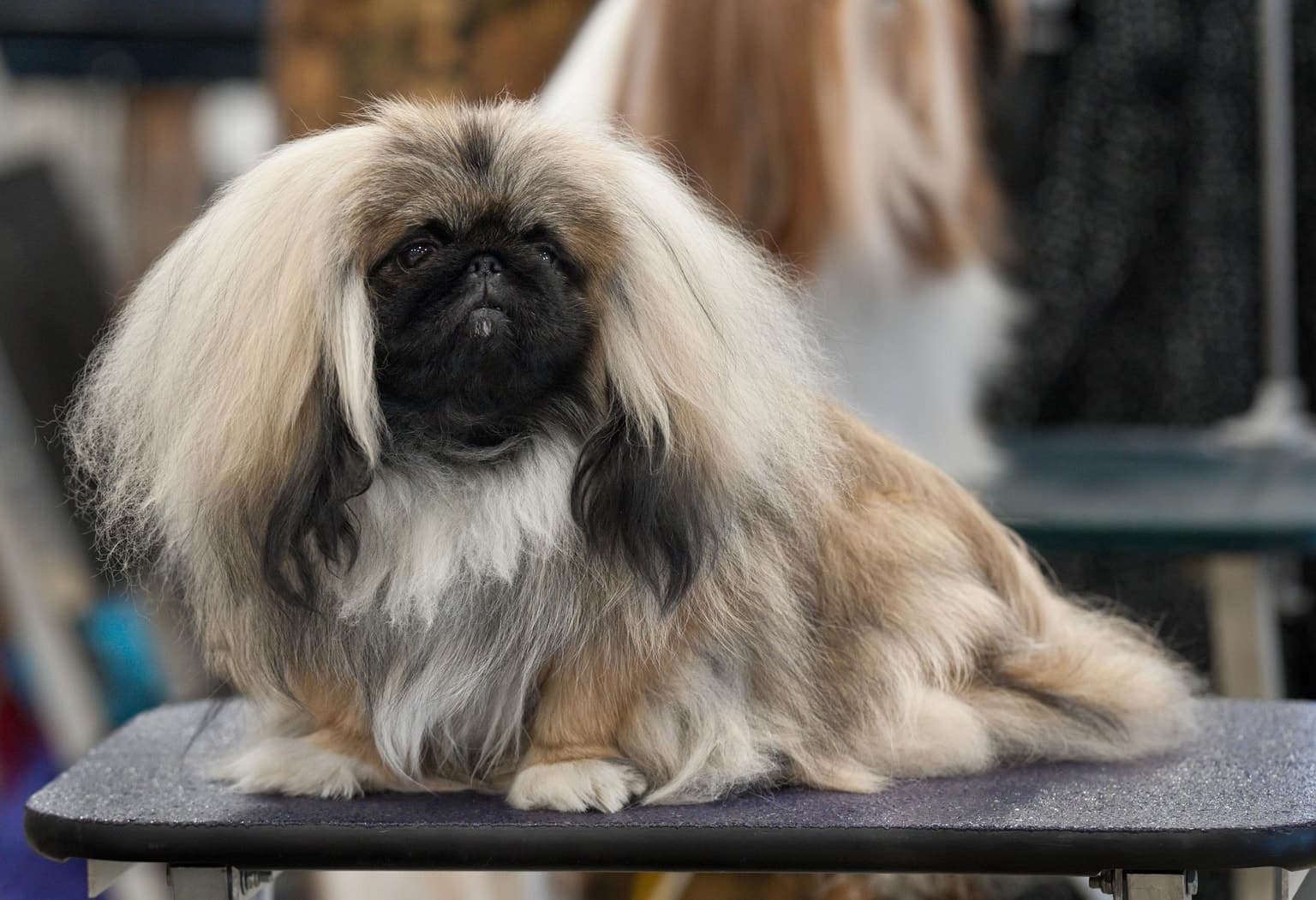
- Pekingese: A Pekingese has a face that is flat in profile, a wide "envelope-shaped" head and a mane on the neck and shoulders, while the Shih Tzu has a domed skull, a short square muzzle and hair tied up on top of the head.
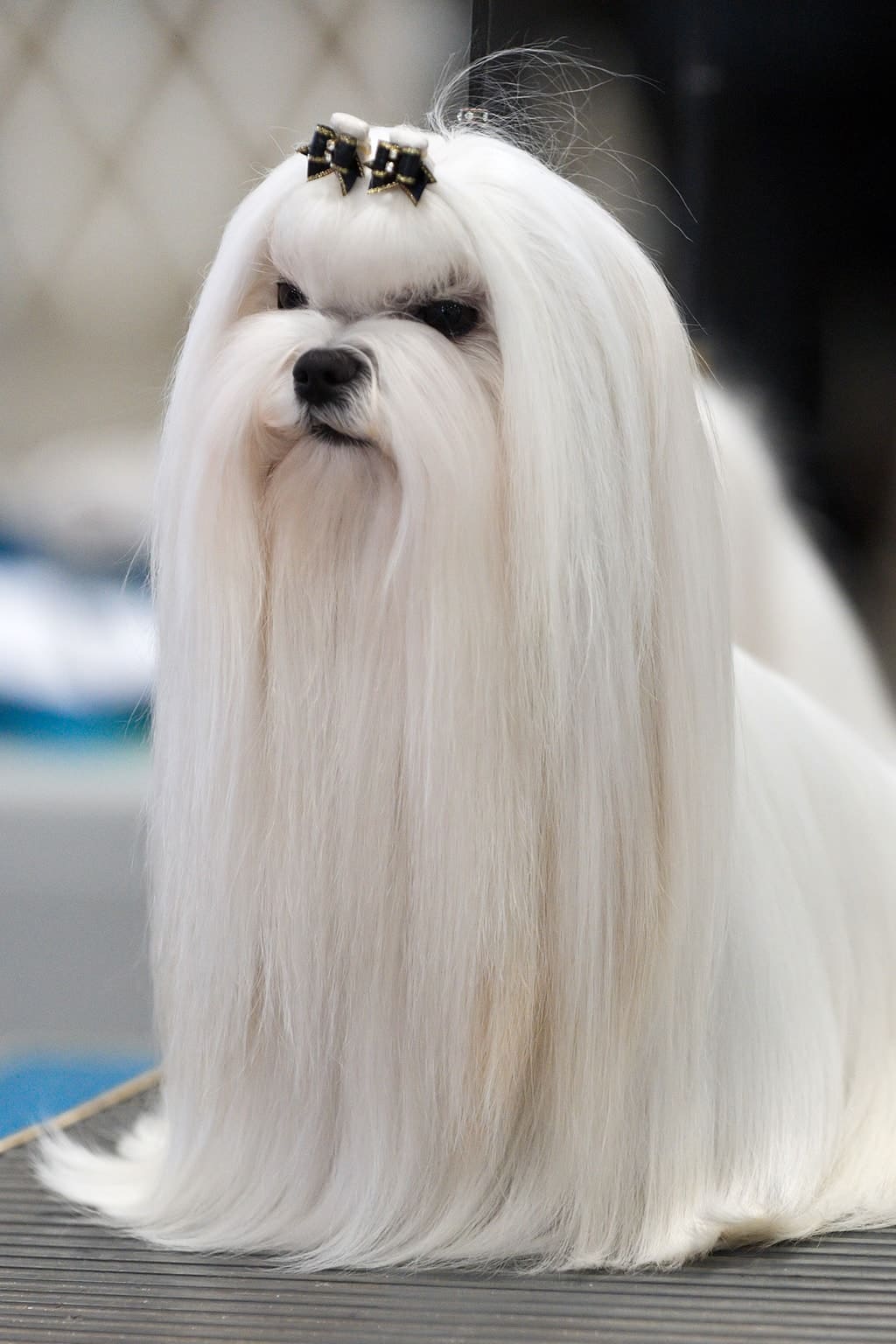
- Maltese: A Maltese is pure white, under 7 lbs, and has a single coat that hangs flat and silky, while the Shih Tzu weighs 9-16 lbs, comes in any color and has a dense double coat.
Side by side: Lhasa Apso vs Shih Tzu and Pekingese vs Shih Tzu.
What AI models confuse it with: in Dog Breed Bench, 10 model setups gave 15 answers on one reviewed Shih Tzu photo. 3 named the Tibetan Spaniel first and 2 named the Pekingese first.
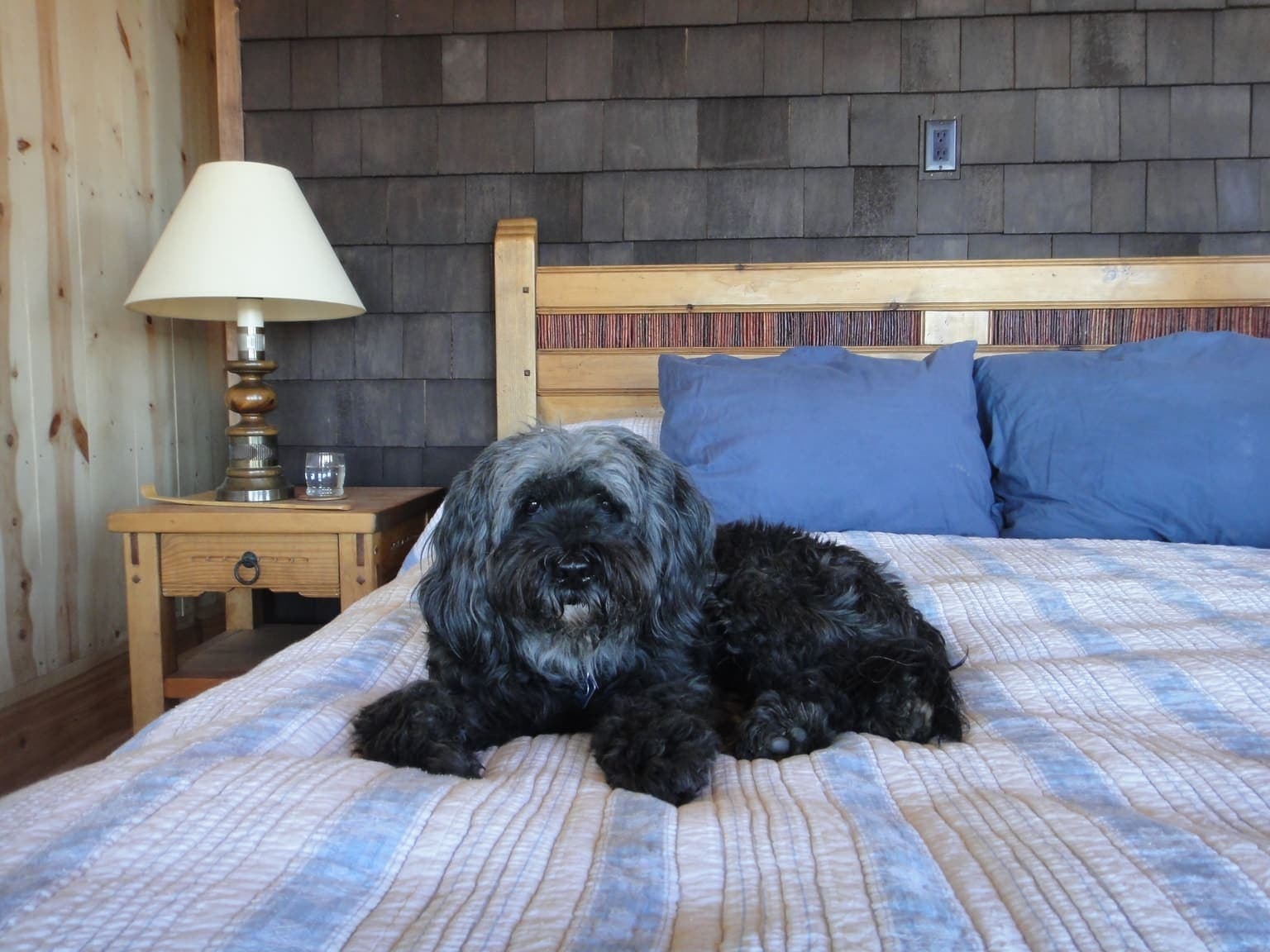
Mixed-breed dog? Shih Tzu mix identification guide.
Care tips
- Brush a long coat daily, or ask a groomer for a short puppy trim to cut down the work.
- Keep eyes and facial hair clean to reduce irritation.
- Support dental health with regular brushing and chews.
- Give them daily gentle exercise and interactive play.
- Use reward-based training; keep sessions short and fun.
Sources
- American Kennel Club: Shih Tzu: Primary registry overview for breed history, group, structure, and typical traits.
- AKC official standard: Shih Tzu: Source for the identifying features, coat, colors, and size by sex on this page.