How to Identify a Shih Tzu Mix: Face, Coat, Common Crosses, and Look-Alikes
Breed Identification • By Dog Breed Detector Editorial Team • 2026-11-18
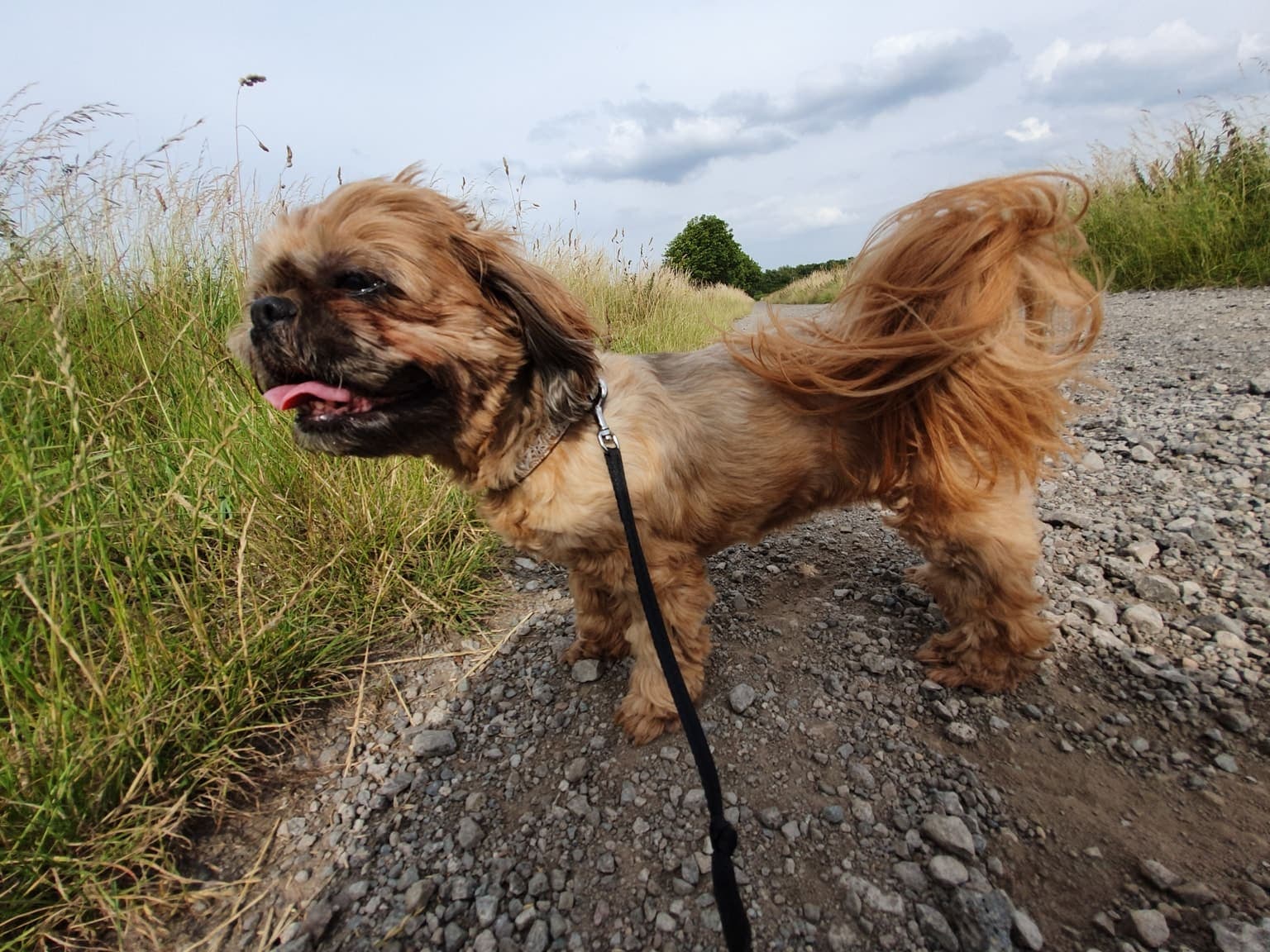
"Shih Tzu mix" is a common label for a small dog with a long or fluffy coat, a short muzzle, and a tail that curls over its back. Small companion breeds share many of those features, and most of these dogs are clipped, which hides the coat that would help tell them apart. A label given at a glance is a guess.
This guide covers which Shih Tzu traits tend to show in crosses, which breeds are mistaken for a Shih Tzu mix, how the common pairings usually look, and when a DNA test is the right tool. Two limits apply throughout. A photo shows which breeds a dog resembles, not which breeds are in its ancestry. And mixed-breed appearance varies widely, even among littermates, so identifying a mix by eye is unreliable.
How reliable is a visual guess?
Not very, according to a study of shelter dogs that compared breed labels with DNA. Published in PLOS ONE in 2018, it tested 919 dogs at two US shelters and found 4.9 percent were purebred. At the shelter where staff labels were checked against DNA, staff named at least one correct breed for 67.7 percent of dogs and both the primary and secondary breed for 10.4 percent. Treat "Shih Tzu mix" as a description of appearance until a DNA test supports it.
Shih Tzu traits that tend to show in mixes
The purebred descriptions here follow the American Kennel Club (AKC) breed standard. In a mix, each trait may appear fully, partly, or not at all.
Muzzle and bite
The muzzle is square, short, and unwrinkled, ideally no longer than one inch from the tip of the nose to the stop, with a flat front. The bite is undershot, and the jaw is broad and wide. In crosses the muzzle usually lengthens, but a short, square muzzle with a slight underbite on a small long-coated dog is the feature most often credited to the Shih Tzu side.
Head and eyes
The head is round and broad with a domed skull and a definite stop. The eyes are large, round, very dark, and placed well apart, looking straight ahead. The standard warns judges to look beyond the hair, because grooming can create the look of a head shape that is not there. The same caution applies to photos.
Coat
The coat is a long, dense, flowing double coat, and a slight wave is allowed. All colors and markings are permitted, so color tells you nothing. Most pet Shih Tzu and their crosses are clipped short, in what the AKC calls a "puppy trim." A short coat in a photo is usually a haircut, not a trait.
Body and size
The Shih Tzu is compact and solid, slightly longer than tall, with no waist or tuck-up. Ideal height is 9 to 10.5 inches and ideal weight is 9 to 16 pounds. The standard asks for a dog that carries good weight and substance for its size.
Tail and ears
The tail is set high, heavily plumed, and carried in a curve well over the back. The ears are large, heavily coated, and set slightly below the crown of the skull.
Breeds often mistaken for a Shih Tzu mix
- Lhasa Apso: Similar in size, at 10 to 11 inches, with a tail carried over the back. The muzzle is longer, about one-third of the head's length, and the coat is heavy, straight, and hard. See our Lhasa Apso vs Shih Tzu comparison.
- Havanese: A long, soft, wavy coat and a plumed tail arched over the back, with a muzzle only slightly shorter than the skull and a scissors bite.
- Maltese: Pure white with a single, silky coat, a muzzle of medium length, and a weight under 7 pounds. See Maltese vs Bichon Frise vs Havanese.
- Pekingese: A very flat face with a wrinkle across it, a coarse stand-off coat with a mane, and a weight limit of 14 pounds.
- Tibetan Spaniel: About 10 inches tall and 9 to 15 pounds, with a blunt muzzle and a plumed tail carried over the back.
Common Shih Tzu crosses and how they usually look
The names in quotation marks are informal labels. None of these crosses is an AKC-recognized breed or has a written standard, and the descriptions are tendencies reasoned from the parent breeds, not predictions for any one dog.
Shih Tzu and Poodle
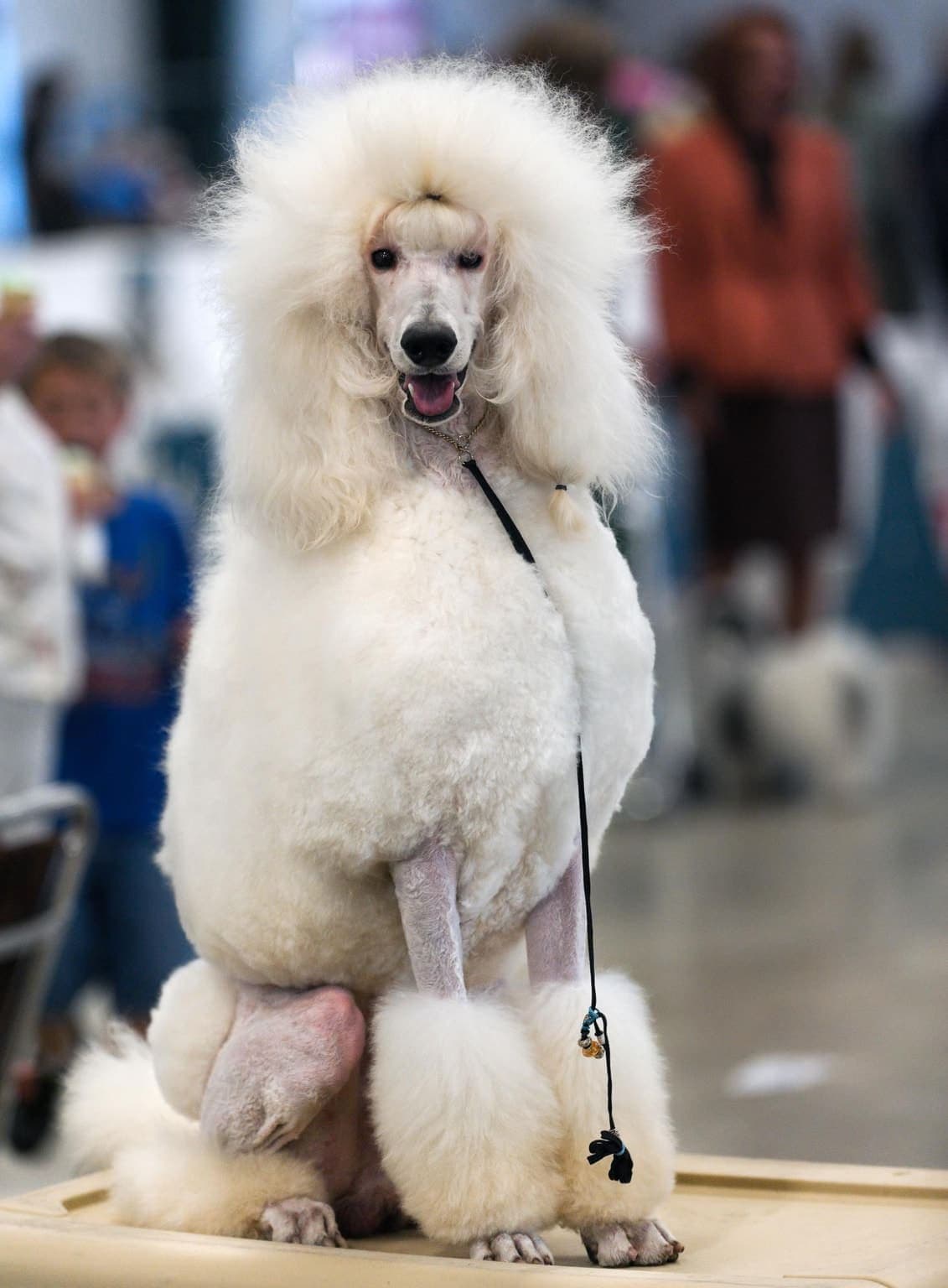
Often sold as a "Shih-Poo." The Poodle has a curly, dense coat and a long, fine muzzle. Crosses usually have a wavy to curly coat and a longer muzzle than a Shih Tzu's. Once the coat is clipped, they are hard to tell from other small Poodle crosses. See our Poodle mix guide.
Shih Tzu and Bichon Frise
Sold as a "Zuchon" or "Shichon." The Bichon Frise is white, sometimes with buff, cream, or apricot shadings, with a curly outer coat and a scissors bite. Crosses tend to have a soft, wavy coat, often white with patches of color.
Shih Tzu and Maltese
Sometimes called a "Malshi." The Maltese is white with a single, silky coat, so these crosses are often mostly white with a longer muzzle than a Shih Tzu's and a lighter build.
Shih Tzu and Yorkshire Terrier
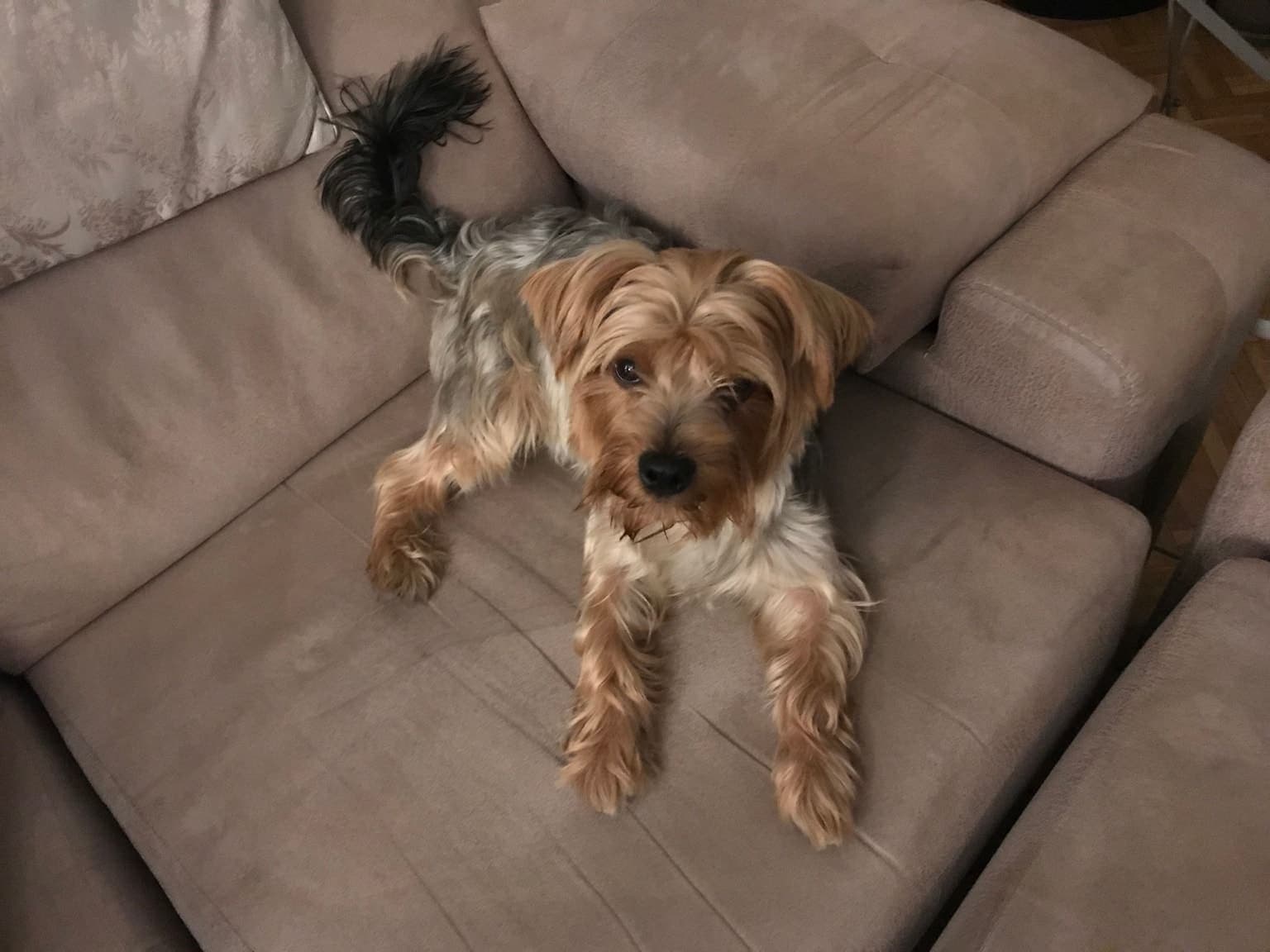
Sometimes called a "Shorkie." The Yorkshire Terrier has small, erect, V-shaped ears, a fine, silky coat, and a weight limit of seven pounds. Crosses are usually small, with a silky coat and ears that stand, tip, or hang. See our Yorkshire Terrier mix guide.
Shih Tzu and Chihuahua
Sometimes called a "ShiChi." The Chihuahua weighs no more than 6 pounds and has large erect ears and either a smooth or a long coat. Crosses vary a great deal in coat and ear carriage. See our Chihuahua mix guide.
Shih Tzu and Pomeranian
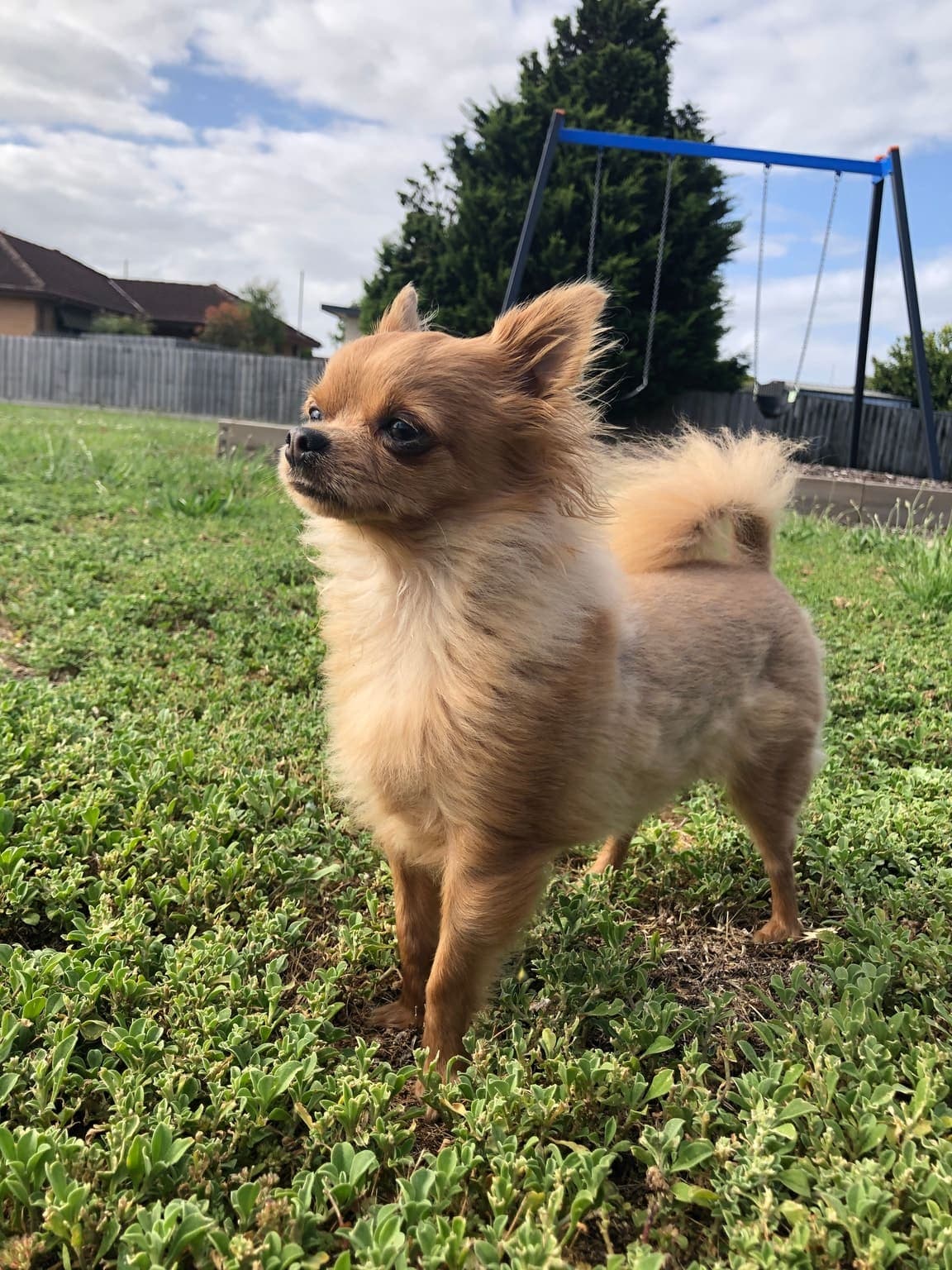
Sometimes called a "Shiranian." The Pomeranian has small erect ears, a wedge-shaped head, and a stand-off double coat. Both parents carry the tail over the back, so that trait is likely to stay. See our Pomeranian mix guide.
What a photo can and cannot tell you
A photo can show muzzle length, bite, ear carriage, tail carriage, and coat texture if the coat has some length. A photo identifier compares those with reference images and returns a ranked list of breeds the dog resembles. For a small, clipped, long-coated dog, expect Shih Tzu alongside breeds such as Lhasa Apso, Havanese, and Maltese. With the coat cut short, there is less to compare, and results are less certain.
A photo cannot show ancestry or percentages, and it cannot show size without a scale reference. Our mixed breed dog identifier page explains these limits.
The most useful photos are a side view of the head with the hair held or tied back from the face, which shows muzzle length and the line of the jaw, and a standing side profile. Photos taken soon after a groom show the dog's shape best. See how to identify a dog breed from a photo.
When a DNA test is the right tool
Use a dog DNA test when you need to know ancestry, not resemblance. Small long-coated crosses are among the hardest dogs to separate by eye, so if the breeds matter to you, for health screening or simple curiosity, testing is the direct route. Read dog DNA test accuracy for the limits of testing.
Care points that follow from the Shih Tzu side
A dog that looks like a Shih Tzu may not behave like one. These are things to be ready for and then adjust to the dog you have.
- Heat. The AKC states that because of their heavy coats and short faces, Shih Tzu do not tolerate heat well and are not good swimmers. Take the same care with any short-faced mix.
- Coat. A long coat needs daily brushing, according to the AKC. A short clip from a professional groomer is the common alternative.
- Eyes. The AKC advises cleaning the corners of the eyes gently and keeping the hair on top of the head trimmed short or tied up so it does not irritate them.
- Exercise. The breed was developed as a house companion. The AKC says short daily walks and indoor play meet its needs.
- Health screening. The AKC says responsible Shih Tzu breeders screen for hip dysplasia, patellar luxation, and eye conditions. A mixed-breed dog's risk is not known from its looks, so mention the possible Shih Tzu background to your veterinarian.
Frequently asked questions
My small dog has an underbite. Is it a Shih Tzu mix?
It is one possibility. An undershot bite is part of the Shih Tzu standard, but the Lhasa Apso standard also accepts a slightly undershot bite, and other short-muzzled breeds are undershot too.
Can a photo tell a Shih Tzu mix from a Lhasa Apso or Havanese?
Not reliably, especially when the dog is clipped. The differences are in muzzle length, bite, and coat texture, which a haircut and a casual photo tend to hide.
What color is a Shih Tzu mix?
Any color. The Shih Tzu standard permits all colors and markings, so color cannot confirm or rule out the breed.
How big will a Shih Tzu mix get?
Adult size usually falls between the parents but is not predictable for an individual dog, and the second parent is often unknown. Purebred Shih Tzu ideally weigh 9 to 16 pounds.
Sources
- American Kennel Club, Official Standard of the Shih Tzu: https://images.akc.org/pdf/breeds/standards/ShihTzu.pdf
- American Kennel Club, Shih Tzu: https://www.akc.org/dog-breeds/shih-tzu/
- American Kennel Club official standards of the Lhasa Apso, Havanese, Maltese, Pekingese, Tibetan Spaniel, Poodle, Bichon Frise, Yorkshire Terrier, Chihuahua, and Pomeranian, linked from each breed's page at https://www.akc.org/dog-breeds/
- Gunter, Barber, and Wynne, "A canine identity crisis: Genetic breed heritage testing of shelter dogs," PLOS ONE, 2018: https://journals.plos.org/plosone/article?id=10.1371/journal.pone.0202633