Is My Dog a Lab Mix? How to Tell From Looks (and What a Photo Can't Tell You)
Breed Identification • By Dog Breed Detector Editorial Team • 2026-09-02
"Lab mix" may be the most familiar two words on a shelter kennel card. If you have adopted a black, yellow, or chocolate dog with a friendly face and a tail that never stops, there is a good chance someone has already guessed Labrador. This guide walks through what a Labrador actually looks like when it shows up in a mixed breed dog, which features are worth trusting, which ones fool people, and what a photo can and cannot tell you.
One thing to keep straight from the start: a photo tool, including ours, ranks the breeds your dog most closely resembles. It compares visible features against reference images and returns a shortlist. It does not read genes. When you upload a picture and Labrador comes back first, that means your dog looks more like a Lab than like the other breeds on the list, not that a Lab is definitely in the family tree. Keeping that distinction in mind makes the results far more useful.
Why "Lab mix" is such a common shelter label
Shelters and rescues usually label dogs by appearance, often in a few seconds during intake, and Labrador is the natural default for a lot of dogs. There are a few reasons it comes up so often.
- Labs are everywhere. The Labrador Retriever has been one of the most popular breeds in North America and the UK for decades, so Lab-like dogs are common in the general population.
- The Lab outline is generic. A medium-to-large dog with a short coat, drop ears, a medium muzzle, and a solid build describes a Lab, but it also describes a huge number of mixed breed dogs with no particular Labrador connection.
- Solid black and solid yellow coats are common in mixes. Those colors read as "Lab" instantly, even when the dog's structure says something else.
- It is a friendly label. A card that says "Lab mix" tends to get more attention than one that says "mixed breed, unknown," so staff lean toward it when the dog roughly fits.
None of this means the label is wrong. It just means it was a quick visual call, the same kind of call a photo tool makes, and it deserves the same healthy skepticism.
Labrador traits that tend to show through in mixes
When a Lab is somewhere in the picture, a few features tend to come through even when the other side of the mix is pulling in a different direction. Look for these in your own dog, ideally as an adult, because puppies are much harder to read.
The otter tail
This is the single most useful Labrador feature. A Lab tail is thick at the base, tapers gradually, is covered in short dense hair with no feathering, and is carried level with the back or slightly up, but not curled over it. A dog with a thin whippy tail, a plumed feathery tail, or a tail that curls tightly over the back is showing you something other than Labrador in that department.
The broad head and defined stop
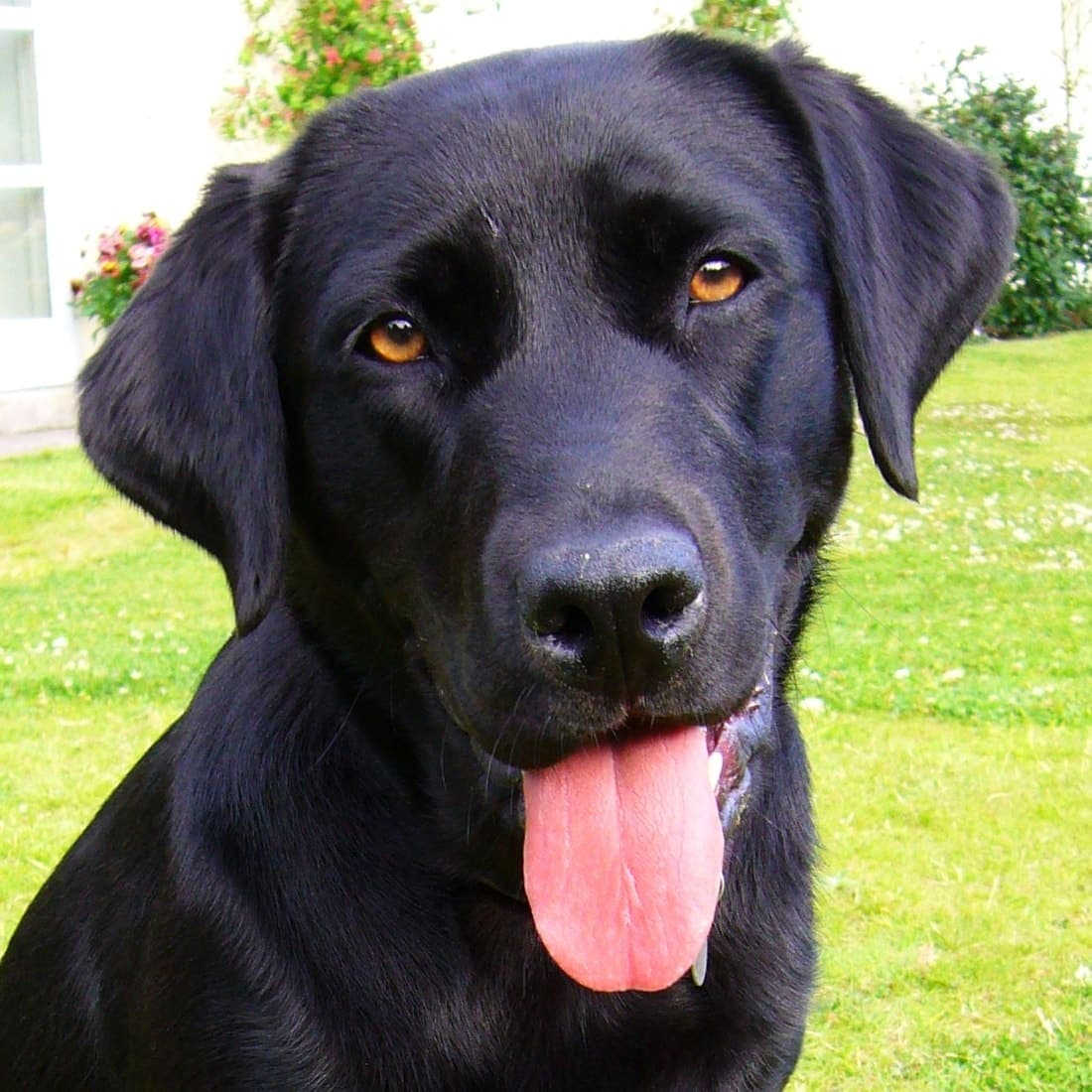
Labs have a fairly wide skull, a clear step down from forehead to muzzle (the stop), and a muzzle that is medium in length and fairly deep rather than pointed. The ears are set a little back on the head and hang close to it. In mixes you often see the width of the skull and the depth of the muzzle survive even when the ear set changes.
The dense short double coat
A Lab coat is short, straight, and noticeably dense, with a soft undercoat that makes the dog feel plush rather than sleek. In photos it often looks slightly thick on the neck and rump. A very fine single coat, a wiry coat, or a long silky coat is a sign that another breed is contributing more to the outside of the dog.
The build
Labs are strongly built without being bulky. Look for a deep chest, a level back, a fairly short and thick neck, and legs that look sturdy in proportion to the body. A dog that is very leggy, very narrow, or very heavy in the front end is drifting toward another breed's outline.
The expression
This is the softest clue, but it is real. Labs tend to have a kind, open expression with medium-sized eyes and a relaxed mouth. It is not proof of anything on its own, but combined with the tail and head it adds to the overall picture.
The least reliable clue: coat color
Coat color is the feature people trust most and the one that means least. Black, yellow, and chocolate are the Labrador colors, but they are also among the most common coat colors in the whole dog population. A solid black dog with a white chest patch is as likely to be a hound mix, a shepherd mix, or a bully-type mix as anything to do with a Labrador. The reverse is also true: a brindle, merle, or heavily spotted dog can still carry plenty of Lab in its structure, because those patterns come from the other side.
If you take one thing from this article, let it be this: judge the tail, the head, and the coat texture before you look at the color.
Common Lab crosses and how they usually look
These are the pairings people encounter most often. Real dogs vary enormously, and a mix can favor one parent almost entirely, but each pairing has a typical look worth knowing.
Lab and Golden Retriever
The Golden Retriever cross is often the hardest to spot because the two breeds already share so much. The giveaway is usually the coat: slightly longer than a Lab, with light feathering on the tail, backs of the legs, and chest, but nowhere near a full Golden coat. Color tends to be some shade of yellow or gold. The head often sits between the two, a little narrower than a Lab, a little broader than a Golden.
Lab and German Shepherd
A German Shepherd cross usually keeps the Lab body and borrows the Shepherd head. You commonly see ears that stand up, tip over, or sit somewhere in between, a longer muzzle, and a black and tan saddle or a solid black coat. Many of these dogs have a slightly sloping back and a longer, bushier tail than a pure Lab.
Lab and Pit-type
Crosses with the American Staffordshire Terrier and related bully-type dogs are extremely common in shelters. The typical look is a Lab-sized body with a wider chest, a shorter and broader head, a tighter and shinier coat, and a thinner tail. Brindle, white patches, and blue or fawn coats point toward the terrier side. These dogs are frequently labeled "Lab mix" simply because the Lab label is gentler.
Lab and Border Collie
A Border Collie cross tends to be lighter and more athletic than a Lab, often with a longer or wavier coat, white markings on the chest, feet, muzzle, and tail tip, and a narrower, more pointed muzzle. Ears often sit half-pricked. The tail is usually longer and carried lower, with some feathering.
Lab and Poodle (Labradoodle)
The Poodle cross is the one most people can name. Coats range from loose waves to tight curls, and even in the same litter one puppy can look like a shaggy Lab while another looks like a scruffy Poodle. Look for a longer, leaner muzzle than a Lab, a more refined build, and a tail carried higher. Labradoodles are not a breed in their own right, and their appearance is famously inconsistent.
Lab and Siberian Husky
A Siberian Husky cross often shows itself in the eyes and tail first: blue or mismatched eyes, a plumed tail that curves up over the back, and a thick coat with a lighter mask or facial markings. Ears may stand up. The body is usually leaner and leggier than a Lab, and the coat can carry the Husky's gray, red, or agouti tones.
Lab and hound types
Hound crosses are easy to miss. A Beagle or other scent hound cross often keeps the Lab color and coat but adds longer, lower-set ears, a leaner muzzle, a slightly domed skull, and a tail carried high with a white tip. Larger hound crosses, such as those with a Bloodhound or Basset Hound, bring loose facial skin, deeper flews, and either heavier bone or shorter legs. The voice usually gives it away too.
A photo checklist for a suspected Lab mix
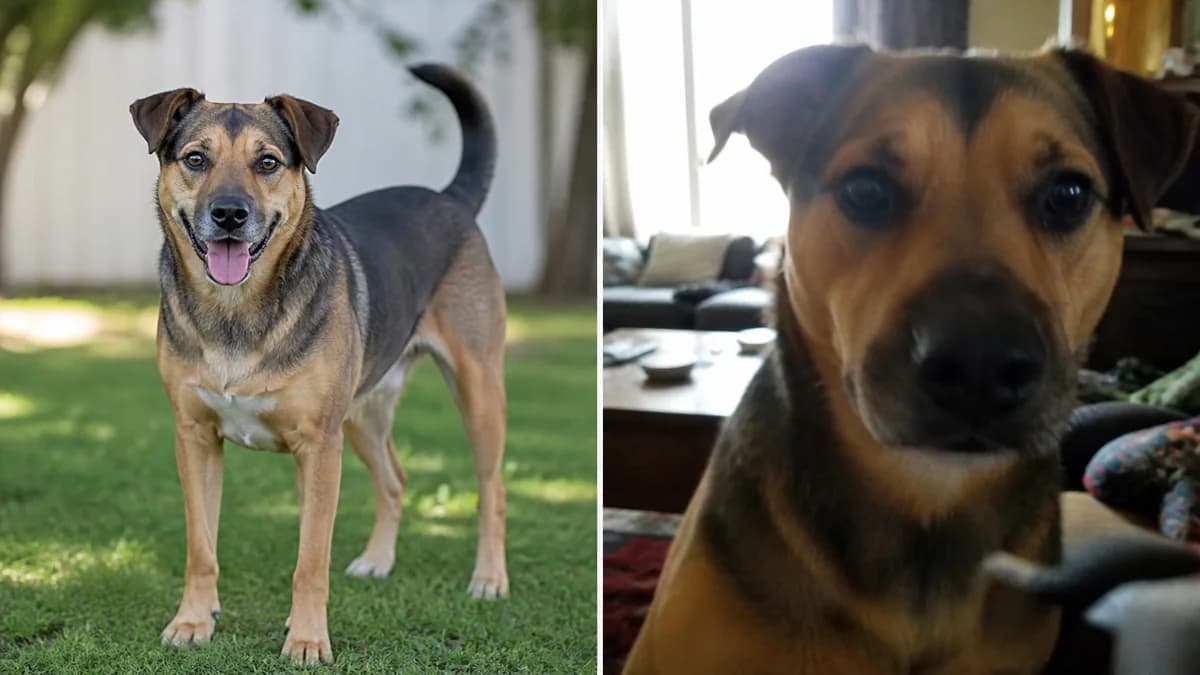
Because the most useful Labrador clues are structural, the photos you upload matter a lot. A cropped face shot on a sofa hides almost everything. Aim for this set.
- Full body, standing, on level ground. This shows overall proportion, leg length, chest depth, and how the back sits. Take it from the dog's eye level, not from above.
- Side profile. Stand square to the dog's shoulder. This is the shot that shows the outline of the head, the stop, the muzzle depth, and the topline.
- Tail carriage. Photograph the dog relaxed and standing so the tail hangs naturally. A tail held up in excitement or tucked in worry tells you nothing about its normal carriage.
- Head from the front. Get down to the dog's level and take the shot straight on, which shows skull width, ear set, and eye shape without the distortion a phone lens adds when you shoot from above.
Natural daylight, a plain background, and a dry dog all help. Wet coats flatten and read as thinner than they are. For more detail, our guide to taking a better photo for breed detection covers lighting and angles step by step.
Reading a ranked shortlist when Labrador is second or third
People often upload a photo, see Labrador in second or third place, and feel disappointed or confused. That result is actually quite informative. A shortlist is a set of visual neighbors, and a dog that lands between, say, an American Staffordshire Terrier and a Labrador is telling you it has features of both outlines.
- Look at the whole list, not just the top entry. If three of the five results are retrievers, your dog has a retriever outline even if the top match is a Chesapeake Bay Retriever or a Golden.
- Notice what kind of breeds cluster together. A list mixing Lab, Beagle, and Bloodhound says "hound-ish with a solid body." A list mixing Lab, Shepherd, and Malinois says "Lab body, herding head."
- Upload more than one photo. If Labrador appears consistently across a side profile, a front view, and a full-body shot, that consistency is worth more than a single first-place result.
- Do not read rank as a share. Second place does not mean "half Lab." It means the second-closest visual match.
If you are still unsure what to make of the list, our what breed is my dog page explains how to compare the shortlist against the breed pages and what to do when nothing fits neatly. For a deeper look at why mixes are so hard to read from appearance, see our mixed breed dog identifier guide.
When a DNA test is worth it
A photo tool answers "what does my dog look like." A DNA test answers a different question: which breeds are actually present in the genes. Those two answers do not always match, and sometimes they disagree quite a lot, because a dog can inherit its outline mostly from one parent and its genes from many.
DNA testing is worth considering if:
- You want to know about breed-related health risks that a vet might want to screen for.
- You are dealing with housing, insurance, or travel rules that hinge on specific breeds.
- You simply want the question settled and the visual clues are pulling in several directions at once.
Our overview of dog DNA tests explains what the kits do and what they cannot do, and our comparison of the best dog DNA tests helps you pick one. If your only goal is a fun guess or a starting point, a photo is plenty.
Temperament and care expectations for a Lab mix
This is where careful language matters. Looks are a hint about behavior, not a promise. Two dogs that both resemble Labs can have very different personalities, and the breed that contributed the ears or the tail may have contributed nothing to the temperament, or everything.
That said, if your dog resembles a Lab, the following are reasonable starting expectations to adjust as you get to know them:
- Energy. Lab-like dogs usually need a proper daily walk plus play, and many love water and fetching. A Shepherd, Collie, or Husky influence tends to raise the bar further.
- Food motivation. Many Lab-like dogs are very food driven, which makes training easier and weight control harder. Measure meals.
- Shedding. A dense double coat sheds steadily and heavily in season. A Poodle cross may shed less, but not always, and needs regular grooming instead.
- Sociability. Labs are typically outgoing with people and dogs. A mix may be more reserved, more watchful, or more independent depending on the other side, and early, gentle socialization helps whichever way it goes.
- Health. Large retriever-type dogs often benefit from joint-friendly exercise and a lean body condition. Ear checks matter for any dog with drop ears that swims.
Treat these as a first draft, not a diagnosis. Watch your own dog, and let what you see override anything a breed label suggests.
Frequently asked questions
Can a photo tool tell me my dog is definitely a Lab mix?
No. A photo tool ranks the breeds your dog most closely resembles from the visible features in the picture. It can tell you that your dog looks a lot like a Labrador, and which other breeds it resembles, but it cannot confirm what is actually in the genes. Only a DNA test can do that.
My dog is black with a white chest. Is that a Lab mix?
Maybe, but color alone is the weakest clue you have. A solid black coat with a white chest patch is common across hounds, shepherds, bully-types, and many mixes. Check the tail, the head shape, and the coat texture before deciding.
Why does the tool rank a different breed above Labrador for my dog?
Because from the angle and features in that photo, the other breed was the closer visual match. Try uploading a side profile and a full-body standing shot, and look at whether Labrador keeps appearing in the list. Consistency across several photos matters more than any single ranking.
Do Lab mixes behave like Labradors?
Often partly, sometimes not at all. Appearance is a rough hint about temperament, and the other breeds involved can pull behavior in any direction. Plan for a friendly, active, food-motivated dog, then adjust as you learn who your dog actually is.