Top 10 Most Misidentified Dog Breeds (And Why It Happens)
Breed Identification • By Dog Breed Detector Editorial Team • 2025-12-01 (Updated 2026-09-02)
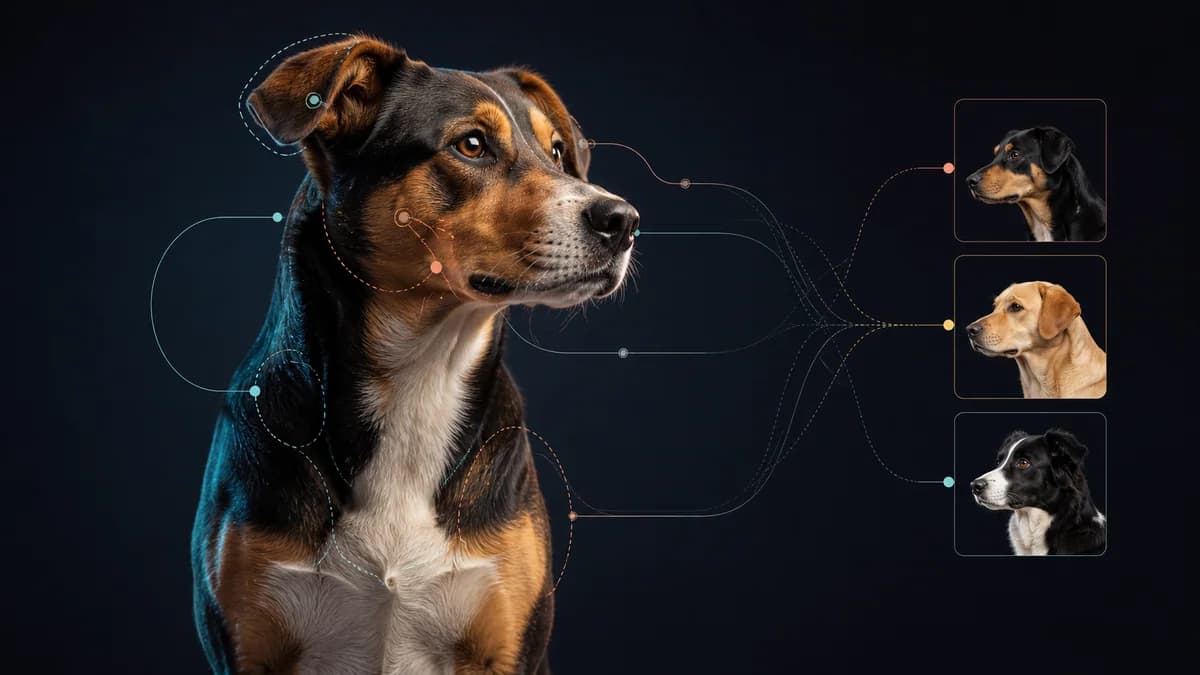
Many breeds share similar silhouettes, coats, and facial expressions, so it is normal to wonder What breed is my dog?. Even professionals can disagree based on appearance alone. If you want a fast starting point, try our AI dog breed detector and compare the results with the traits below.
For each of the ten breeds here you get the quick visual clues, the breeds it is most often mistaken for, and the look-alike group it belongs to in our reviewed benchmark, with a link to a side-by-side comparison where we have one. At the end there is a short checklist for when a shortlist comes back with two breeds almost level.
Why dog breeds get misidentified
- Mixed heritage: A mix can look like a “purebred” at first glance.
- Age: Puppies and seniors can look very different from adult reference photos.
- Coat changes: Grooming, shedding, and seasonal coats can change the silhouette.
- Similar head/ear shapes: Many breeds share ear sets and muzzle lengths.
- Popularity bias: People tend to guess the breeds they see most often (or hear about the most).
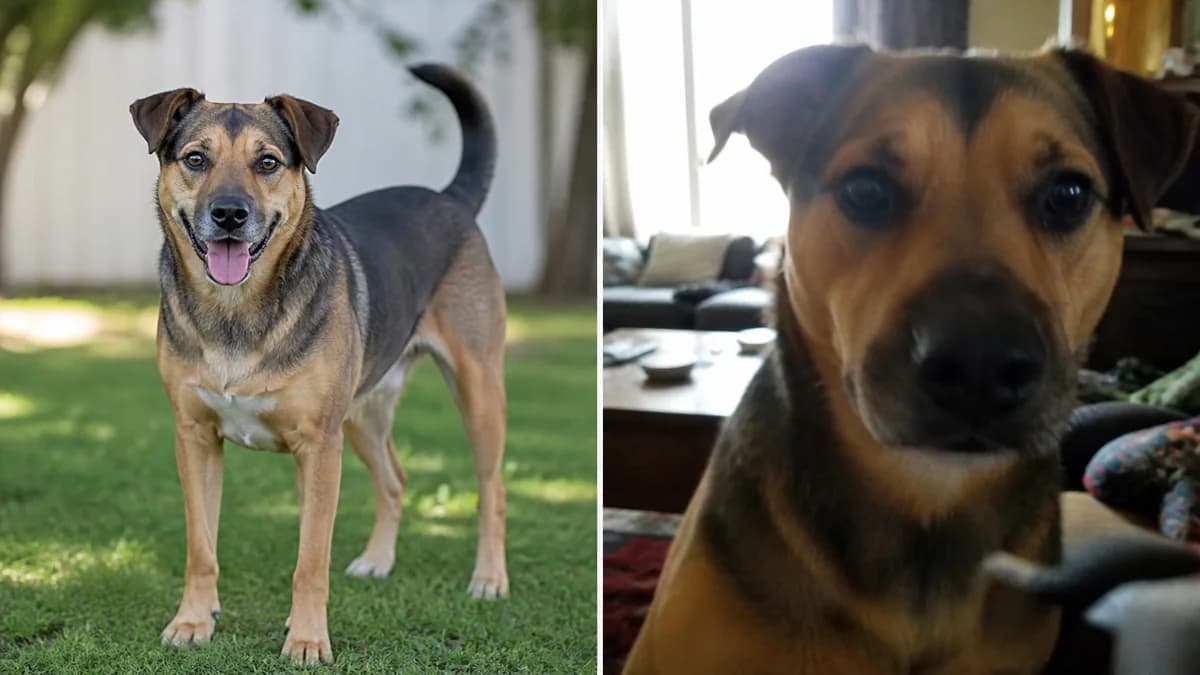
- Camera tricks: Wide-angle phone lenses can distort proportions—especially close-up face shots.
A simple 3-step method to narrow down a dog’s breed from photos
- Start with structure, not color. Ear set, muzzle length, chest depth, and leg length are more reliable than coat color.
- Use 2–3 photos from different angles. A side profile and a standing full-body photo reveal proportions that face shots hide.
- Compare “look-alikes” on purpose. Don’t stop at the first guess—open two similar breed pages and look for differences.
If you want a quick guide to getting the best image, read How to Take the Perfect Photo for Dog Breed Detection.
10 commonly misidentified breeds (with quick telltales)
About the “look-alike group” lines: our testing benchmark sorts one hundred breeds into fifteen confusion packs, small groups that share a silhouette, a coat, or a head type. Some of the ten breeds below sit inside a pack and some sit just outside one. Either way, the pack tells you which breed pages to open next to each other.
Labrador Retriever
Labs are a “default guess” for many friendly, medium-to-large dogs with a short coat. That’s because the Labrador silhouette is common in mixes, and a lot of dogs share the same broad, athletic outline.
- Clue: A sturdy, balanced build with a medium-length muzzle (not flat, not needle-thin).
- Clue: Soft, “otter” tail and a dense coat that looks practical rather than fancy.
- Clue: Overall expression tends to be open and friendly, especially in relaxed photos.
Often confused with: other retrievers (like a Chesapeake Bay Retriever) or short-coated mixes that share the same build.
Look-alike group: Black retrievers, paired with the Flat-Coated Retriever. Both are black, drop-eared retrievers of about the same height, and a wet or backlit Lab looks longer-coated than it is. The Flat-Coat has a longer, one-piece head and a feathered tail carried level with the back; the Lab has a broad skull with a clear stop and a thick otter tail. There is no comparison page for this pair yet.
Golden Retriever
Any dog with feathering on the legs, a fluffy tail, and a warm golden coat gets called a Golden—especially in puppy photos. But many long-coated mixes can “read” Golden at first glance.
- Clue: Feathering (legs, tail, chest) that looks silky rather than wiry.
- Clue: A broad head with a gentle expression and a medium-length muzzle.
- Clue: Goldens are typically well-balanced—not too narrow in the chest or hips.
Often confused with: long-coated mixes and other sporting breeds. When in doubt, compare against the Labrador Retriever for coat and outline differences.
Look-alike group: Not in a benchmark pack. Goldens are usually mistaken for long-coated mixes rather than for one specific breed, so the Labrador remains the most useful comparison: the same retriever outline with a different coat. If a Nova Scotia Duck Tolling Retriever appears on the shortlist, look at size and the depth of red in the coat.
German Shepherd Dog
Upright ears and a dark “saddle” pattern can show up across many herding mixes, which is why “Shepherd mix” is such a common guess.
- Clue: Athletic build with a strong chest and a confident, alert posture.
- Clue: Ears that are upright and triangular (especially in adult dogs).
- Clue: A long, flowing gait and an overall “working dog” outline.
Often confused with: the Belgian Malinois, which is usually leaner with a more consistent fawn coat and black mask.
Look-alike group: Upright-ear working shepherds, with the Belgian Malinois, the Belgian Sheepdog, the Belgian Tervuren, the Dutch Shepherd, and the Australian Kelpie. The quickest tell is the back line: a German Shepherd slopes from shoulder to tail with deeply angled hindquarters, while the Belgian breeds stand square and level. Read German Shepherd vs Belgian Malinois for the full side-by-side.
Belgian Malinois
Malinois and German Shepherds share the same “serious, athletic” vibe, and many photos don’t show the subtle differences in proportions.
- Clue: A leaner, more angular outline—often described as “athlete” compared to a Shepherd’s “power.”
- Clue: Typically fawn/tan coat with a strong black mask.
- Clue: Upright ears and an intense, focused expression in many working-line photos.
Often confused with: the German Shepherd Dog, especially when the photo is cropped tightly to the face.
Look-alike group: The same upright-ear working shepherds pack as the German Shepherd. The other members that turn up in a Malinois shortlist are the Dutch Shepherd, which is always brindle where a Malinois is clear fawn, and the Belgian Tervuren, which wears a long coat over the same frame. See German Shepherd vs Belgian Malinois.
Boxer
Boxers get misidentified because “square head + short coat + expressive face” describes a lot of breeds and mixes. People also use “Boxer mix” as shorthand for many medium-to-large, athletic dogs.
- Clue: A deep chest and strong forequarters with a playful, springy stance.
- Clue: A shorter muzzle (but not always extremely flat), with distinct facial expression.
- Clue: Smooth coat and overall “muscle without bulk.”
Often confused with: the Bulldog (typically stockier and lower) or bully-type mixes.
Look-alike group: Not in a benchmark pack, but it borders two. A fawn Boxer with a black mask is often called a young Bullmastiff, which puts it beside the mastiff types, and a brindle Boxer gets lumped in with the bull-and-terrier breeds. The Boxer’s longer leg, tucked waist, and upturned muzzle separate it from both of those heavier outlines.
American Staffordshire Terrier
“Pit bull” is often used as a catch-all label for muscular, short-coated dogs. In reality, many dogs fall into a broader “bully-type” look that can overlap across multiple breeds and mixes.
- Clue: Compact strength—broad chest, defined shoulders, and a confident stance.
- Clue: Head shape tends to be broad with a strong jawline, though mixes vary widely.
- Clue: Short coat with many possible color patterns (solid, brindle, patches).
Often confused with: dogs labeled “Boxer mix,” or other stocky, short-coated breeds when the photo doesn’t show overall proportions.
Look-alike group: Bull-and-terrier breeds, with the Staffordshire Bull Terrier and the Bull Terrier. The Staffy causes the real trouble, since it is close to the same shape at a smaller scale, with a shorter foreface and a head that looks wide for its body. Read American Staffordshire Terrier vs Staffordshire Bull Terrier.
Boston Terrier
That classic black-and-white “tuxedo” pattern makes Boston Terriers easy to guess—and easy to misguess. Many small dogs with a compact build and bold markings get labeled “Boston,” even when the face shape differs.
- Clue: Compact body with a short muzzle and bright, expressive eyes.
- Clue: Tuxedo-style markings are common, but focus on the body proportions and face.
- Clue: Ears often stand upright and look “pointy” rather than rounded.
Often confused with: the French Bulldog or the Pug in quick snapshots.
Look-alike group: Flat-faced companions, with the French Bulldog and the Pug. The Boston is the squarest and leggiest of the three, with a tucked-up waist and small pointed ears where a Frenchie’s are broad and rounded. See Boston Terrier vs French Bulldog.
French Bulldog
Frenchies are extremely recognizable—but also frequently guessed for any small, bat-eared dog with a short muzzle. In mixed breeds, those “Frenchie features” can appear even when only part of the ancestry.
- Clue: Bat ears + compact, sturdy build.
- Clue: Very short muzzle and a “front-heavy” chest relative to the hips.
- Clue: Smooth coat; wrinkling is present but usually less dramatic than some bulldog types.
Often confused with: the Boston Terrier (typically lighter and leggier) and other small brachycephalic mixes.
Look-alike group: The same flat-faced companions pack as the Boston Terrier. A pied Frenchie is the classic Boston mix-up, so if your photo shows a black-and-white dog, go straight to Boston Terrier vs French Bulldog and compare the ear tips, the wrinkling over the nose, and the width of the chest.
Shiba Inu
Shibas have a spitz look—upright ears, alert face, and a curled tail—that appears across many small-to-medium dogs. That makes them easy to guess… and easy to misguess.
- Clue: Fox-like face, small upright ears, and a curled tail carried over the back.
- Clue: Dense double coat with crisp markings; often a tidy, compact outline.
- Clue: Posture tends to look confident and self-contained in photos.
Often confused with: the Siberian Husky (larger and more “wolfy”) or the Alaskan Malamute (heavier and broader).
Look-alike group: Not in a benchmark pack, but it borders the Northern spitz group of Siberian Husky, Alaskan Malamute, Akita, and Samoyed. Size settles most of it: a Shiba is a small dog, and the others are medium to large. If the two sled breeds sit together on your shortlist, Siberian Husky vs Alaskan Malamute explains how to split them.
Whippet
Lean, leggy dogs often get labeled “Whippet,” especially if the photo shows a narrow waist and a tucked-up belly. But many sighthounds—and even some lean mixes—share that outline.
- Clue: Deep chest with a strong tuck-up and long, elegant legs.
- Clue: Fine coat and a narrow head with a gentle expression.
- Clue: Relaxed indoor photos can be misleading; look for a full-body standing shot.
Often confused with: the Greyhound (usually larger) or the Italian Greyhound (usually smaller and more delicate).
Look-alike group: Sighthounds, with the Greyhound, the Italian Greyhound, and the Borzoi. The three smooth-coated members are close to the same dog at three sizes, so a photo with nothing in it for scale can land on any of them. Whippet vs Greyhound vs Italian Greyhound lays out the height bands and the differences in bone and topline.
Tip: Focus on structure (muzzle length, ear set, tail carriage) more than coat color. Then use AI results as a clue—not a final verdict.
Why photo AI confuses the same breeds people do
It is tempting to assume a model sees something people cannot. In practice, a photo classifier works from the same visible evidence you do, and it stumbles in the same places. The cues that carry most of the weight are silhouette, ear set, coat texture, and colour pattern.
- Silhouette: chest depth, leg length, back line, and tail carriage. This is the strongest cue, and it is exactly what a tight face crop removes.
- Ear set: whether ears stand, fold, or hang, and where they sit on the skull. Upright triangular ears push a dog toward the shepherd and spitz groups whether or not the rest of the dog agrees.
- Coat texture: smooth, wiry, silky, or double-coated. Texture separates a Flat-Coat from a Lab and a Tervuren from a Malinois, and it is one of the first things a blurry photo loses.
- Colour pattern: mask, saddle, brindle, pied, solid. Pattern is easy to see and easy to over-trust, for a model as much as for a person, because the same pattern turns up across unrelated breeds.
Put those together and the failure cases line up with the packs above. The model narrows to the right group quickly and then hesitates between members, which is why a shortlist so often shows two breeds from the same pack in first and second place.
That is also why we report results by confusion pack rather than as one headline number. The most confused dog breeds research page lists all fifteen packs and how the detector handles each, and the methodology page describes the reviewed benchmark behind it, including the release gate result of 94.4% top-1 and 100% top-3 accuracy on repeated clear-breed calls. Those figures come from curated benchmark photos, not everyday phone uploads, so treat them as a description of the test rather than a promise about your photo.
Other packs with a comparison page: Cardigan vs Pembroke Welsh Corgi, Cane Corso vs Mastiff vs Bullmastiff, Maltese vs Bichon Frise vs Havanese, Miniature vs Standard vs Giant Schnauzer, and Great Pyrenees vs Newfoundland vs Saint Bernard.
What to do when two breeds tie
A shortlist with two breeds almost level is not a failed result. It usually means the photo has settled the group but not the member, and one more photo will often settle the rest.
- Take a second photo from the side. Stand level with the dog and shoot the profile. It shows muzzle length, the angle of the back, and tail carriage, which are the traits that separate pack members.
- Get the full body in frame. Step back until all four feet and the tail tip are visible, ideally with the dog standing. Leg length and chest depth are invisible in a sitting or cropped shot.
- Use natural light. Daylight outdoors or beside a window shows coat texture honestly. Flash flattens texture and can turn a brindle coat into a dark blur.
- Compare structure, not colour. Ignore the coat and ask which dog has the longer leg, the deeper chest, the narrower skull, the higher ear set. Colour is shared across packs; structure is what differs within them.
- Read both breed profiles. Open the two pages from the shortlist side by side and go through the physical descriptions line by line. If a comparison page exists for the pair, it does that work for you.
- Run the new photo and compare shortlists. If the same breed leads both times and the gap widens, you have a reasonable visual answer. If the order flips, treat the dog as a likely mix that resembles both.
When a DNA test makes sense
Photo-based identification is a great starting point, but it’s still an estimate based on appearance. If you need ancestry information for medical planning, breed restrictions, or just deeper certainty, consider a dog DNA test. Think of photo ID as “visual clues,” and DNA as “genetic evidence.”
Bottom line
Misidentification is common—and totally normal. Use multiple photos, compare look-alike breeds intentionally, and validate the top guesses with the breed directory. Then, if you want a fun, fast clue, start with the Dog Breed Detector.
Frequently asked questions
Which dog breed is misidentified the most?
From photos, the Labrador Retriever is the usual wrong answer, simply because so many mixed dogs share its outline and short coat. Among purebred pairs, the German Shepherd and Belgian Malinois are the classic swap.
Can a photo tell me whether my dog is a mix?
Not on its own. A photo can show that a dog resembles one or more breeds, and a shortlist with two breeds close together is a hint. It cannot show ancestry, and neither can any tool that works only from an image. A DNA test is the only way to confirm what a dog is made of.
Why does the detector give a different answer for a different photo of the same dog?
Because the two photos show different evidence. A face crop and a full-body profile carry different cues, and lighting changes how coat texture and colour read. When results disagree, trust the full-body, natural-light, side-on photo, and use the checklist above to decide what to shoot next.
Are puppies harder to identify than adult dogs?
Yes. Puppy proportions, ear carriage, and coat all change with age, and most reference photos show adults. Ears that will stand may still be folded, and a coat that will grow long may still be short. If you can, wait for the adult coat and ear set before relying on a photo result.