How to Identify a Husky Mix: Traits, Common Crosses, and Look-Alikes
Breed Identification • By Dog Breed Detector Editorial Team • 2026-11-15
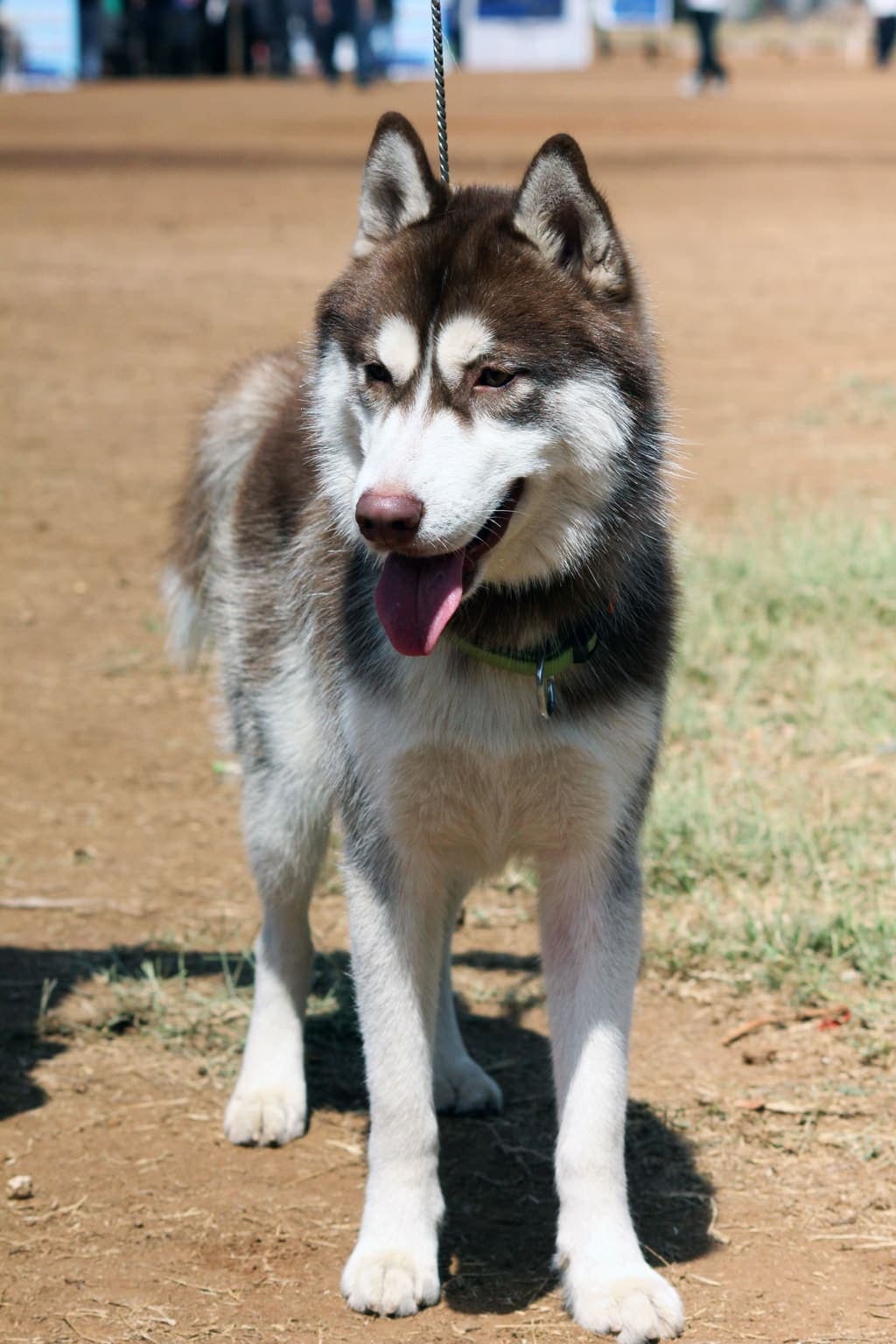
A dog with pale blue eyes, upright ears, and a mask on its face is called a Husky mix almost automatically. Sometimes that is a fair description of what the dog looks like. It is rarely more than that, because each of those features turns up in other breeds and in mixes with no Husky parent at all.
This guide covers which Siberian Husky traits tend to show in crosses, which breeds are mistaken for a Husky mix, how the common pairings usually look, and when a DNA test is the right tool. Two limits apply throughout. A photo shows which breeds a dog resembles, not which breeds are in its ancestry. And appearance in mixed-breed dogs is variable: littermates from the same two parents can look like different breeds.
How reliable is a visual guess?
Less reliable than most people expect. A 2018 study that DNA-tested 919 dogs at two US shelters found that fewer than 5 percent were purebred and that most carried several breeds, so a two-breed label such as "Husky and Shepherd" often describes only the most visible part of the dog. Use the traits below to decide what your dog looks like, and treat any statement about parentage as unconfirmed until a DNA test supports it.
Siberian Husky traits that tend to show in mixes
The descriptions of the purebred Husky here follow the American Kennel Club (AKC) breed standard. In a mix, each trait may appear fully, partly, or not at all.
Eyes
The standard accepts brown eyes, blue eyes, one of each, and eyes that are part brown and part blue. Blue eyes are the feature people notice first, and they are weak evidence. Many Huskies have brown eyes, and blue or odd-colored eyes also occur in Australian Shepherds, merle Border Collies, and dogs with a lot of white on the head. A brown-eyed dog can be a Husky mix, and a blue-eyed dog may not be.
Ears
Husky ears are medium-sized triangles, set high and fairly close together, thickly furred, and strongly erect with slightly rounded tips. In crosses with drop-eared breeds the ears often end up tipped, folded, or mismatched. Ears that are small, furry, and set high are a better clue than ears that are simply upright.
Coat and markings
The coat is a medium-length double coat: a soft, dense undercoat under straight guard hairs. It should not be long or shaggy. The standard lists black, gray, agouti, sable, red, and white, with or without white markings, and notes that a variety of markings on the head is common. The familiar look is a pale face with a darker cap and bar down the muzzle, but many purebred Huskies do not have it, and a sharply marked face also appears in the Alaskan Malamute. A plush double coat that sheds heavily is the more persistent trait in mixes.
Tail
The tail is a well-furred brush shaped like a fox's tail. An alert Husky usually carries it over the back in a loose sickle curve, and it trails when the dog is relaxed. It should not curl tightly or lie flat against the back. A tail that curls into a tight ring points toward other spitz breeds.
Build and size
The Husky is a medium dog, lighter than many people assume. The standard gives 21 to 23.5 inches and 45 to 60 pounds for males and 20 to 22 inches and 35 to 50 pounds for females, with a level back and a body slightly longer than it is tall. The muzzle is of medium length, about as long as the skull, and tapers without being pointed. A wolf-like dog well over 70 pounds is showing something other than, or in addition to, Husky.
Breeds often mistaken for a Husky mix
- Alaskan Malamute: Larger and heavier-boned, with brown eyes and a plumed tail carried over the back. Our Siberian Husky vs Alaskan Malamute comparison goes through the differences.
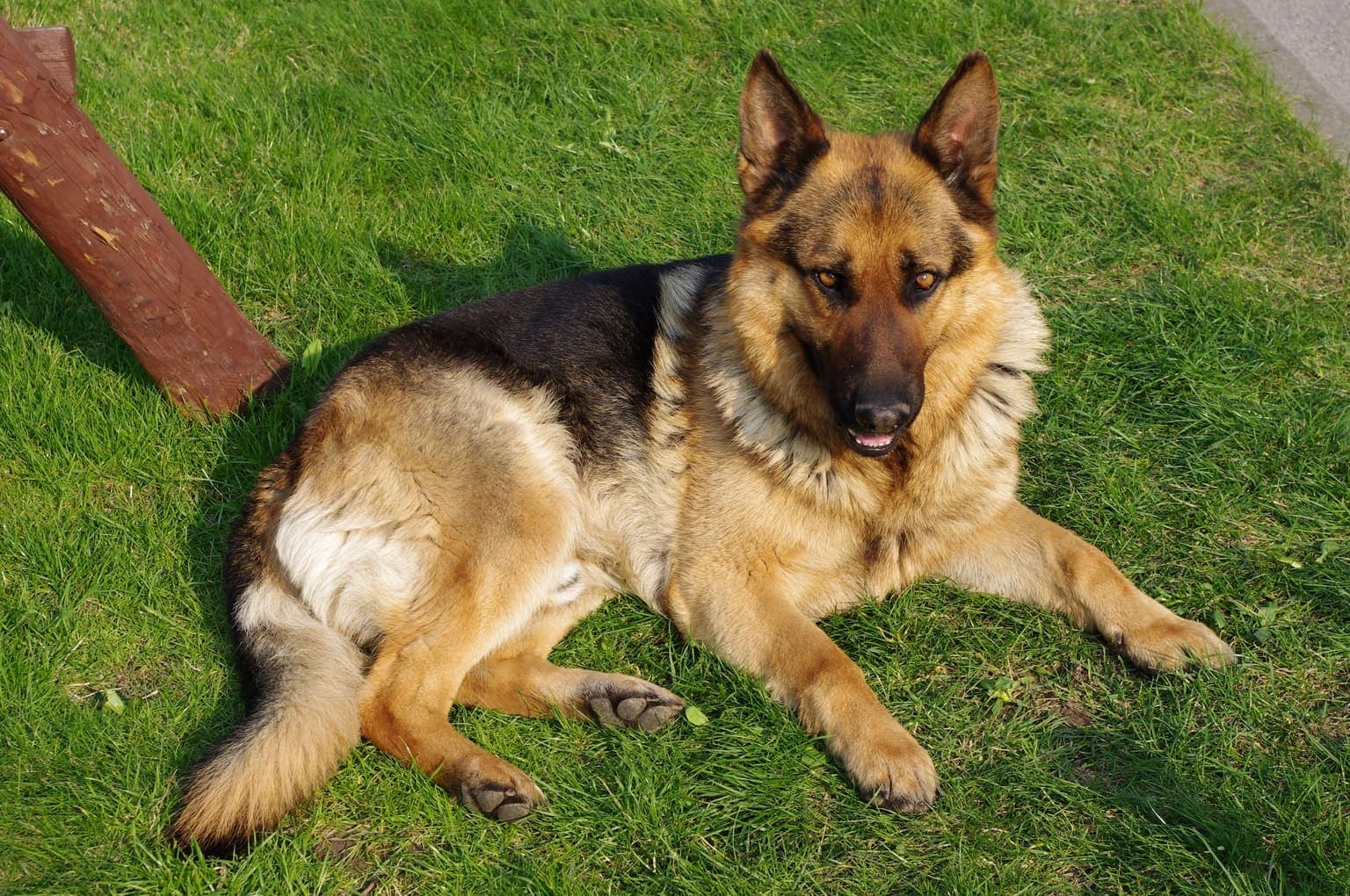
- German Shepherd Dog: A sable Shepherd has a grizzled, wolf-colored coat. The longer muzzle, larger ears, sloping back, and low-hanging tail separate it from a Husky.
- Samoyed and American Eskimo Dog: White spitz breeds with longer, stand-off coats and tails carried over the back.
- Akita and Shiba Inu: Upright ears and a curled tail, but a broader head and a tail that curls tightly.
- Herding dogs with blue eyes: An Australian Shepherd or Border Collie cross with one blue eye is regularly labeled a Husky mix on the strength of the eye alone.
Sled-type breeds are one of the look-alike groups covered in our research on commonly confused dog breeds.
Common Husky crosses and how they usually look
The names in quotation marks below are informal labels. None of these crosses is an AKC-recognized breed, none has a written standard, and the descriptions are tendencies reasoned from the parent breeds, not predictions for an individual dog.
Husky and German Shepherd
Sometimes called a "Shepsky." Both parents have erect ears and a double coat, so those usually carry through. Many of these dogs are larger than a Husky, with a longer muzzle and a sable or black-and-tan coat. A facial mask or pale eyes may or may not appear. Our German Shepherd mix guide covers the Shepherd side.
Husky and Labrador
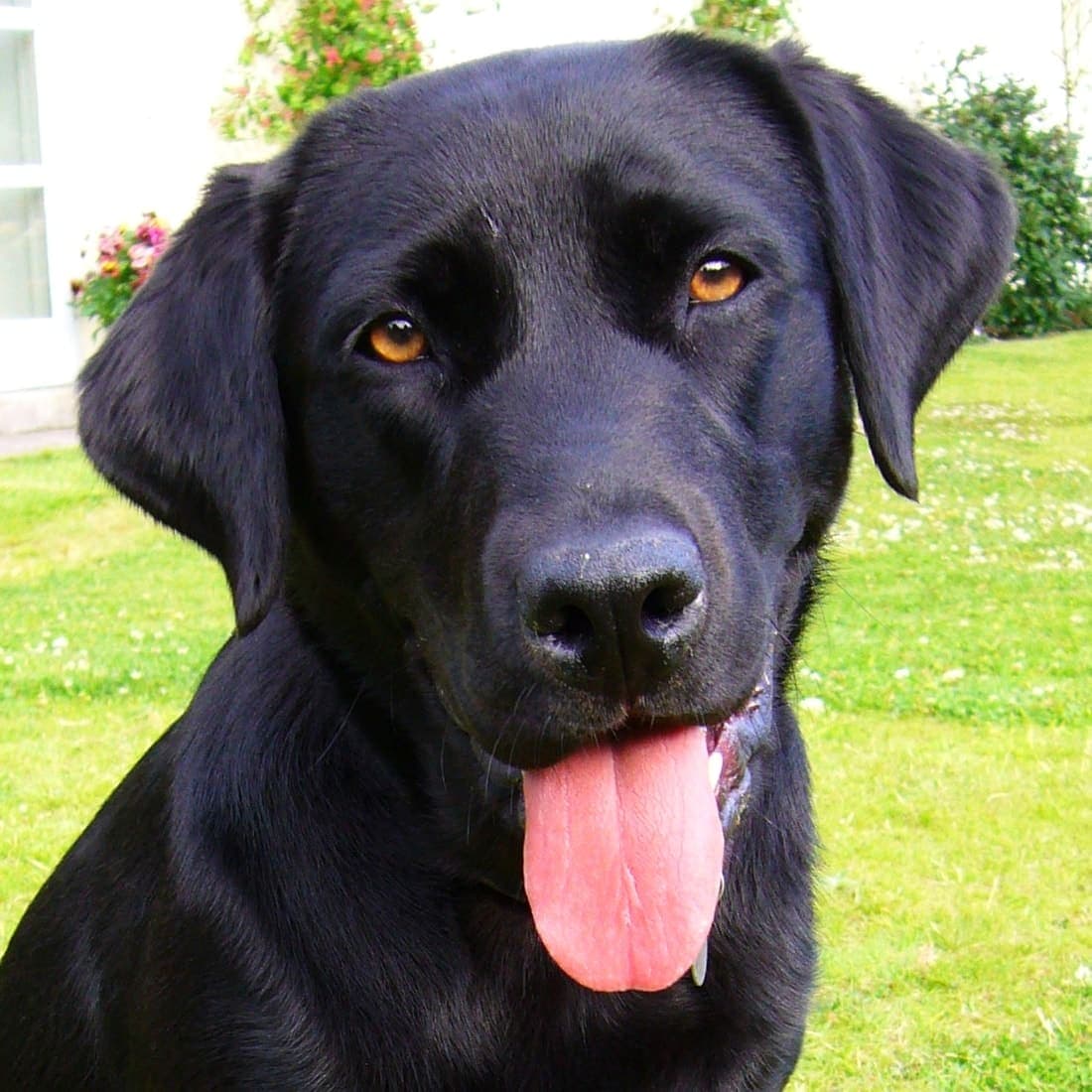
The Labrador Retriever brings drop ears, a broader head, and a short, dense coat. The result is often a solid-colored dog with ears that fold or tip, a thicker coat than a Lab's, and a tail carried higher than a Lab's level tail. Many are read as a Lab mix with unusual eyes.
Husky and Alaskan Malamute
Because the parents look alike, this cross is very hard to separate from either breed by eye. Size and bone in between the two are the most that a photo can suggest.
Husky and Pomeranian
Called a "Pomsky." The Pomeranian is a toy spitz of 3 to 7 pounds, so size varies widely from one dog to the next. Many have a fuller, longer coat and a tail carried flat over the back, with Husky-like face markings. Breeders cannot guarantee adult size or appearance.
Husky and Australian Shepherd or Border Collie
Herding crosses tend to be lighter-built, with a longer coat, feathering on the legs, and often white on the collar, chest, and feet. Merle patterning comes from the herding side: the Husky standard does not allow merle.
Husky and Golden Retriever
The Golden Retriever usually contributes drop ears, a longer feathered coat, and a gold to red color. A reddish dog with a thick coat, tipped ears, and light eyes is the commonly reported look.
What a photo can and cannot tell you
A photo can show ear set, coat type, markings, tail carriage, and rough proportions. A photo identifier compares those with reference images and returns a ranked list of breeds the dog resembles. If Siberian Husky appears alongside a second breed across several photos, that is a reasonable description of your dog's look.
A photo cannot show ancestry, the number of breeds involved, or any percentage. It also cannot show true size without something for scale, which matters here because size is one of the main differences between a Husky and a Malamute. Our mixed breed dog identifier page explains these limits in more detail.
For the best result, photograph the dog standing side-on in daylight, add a front-on head shot with the ears up, and make sure one photo shows how the tail is carried. See how to identify a dog breed from a photo for the full checklist.
When a DNA test is the right tool
Use a dog DNA test when the answer has to be about ancestry: a housing or insurance form that asks for breed, a veterinarian who wants breed background, or your own wish to know rather than guess. DNA tests have limits of their own, which we cover in dog DNA test accuracy. If "looks like a Husky cross" is all you need, a photo is enough.
Care points that follow from the Husky side
A dog that looks like a Husky will not necessarily behave like one. These are things to be ready for and then adjust to the dog you have.
- Exercise and running. The breed was developed to pull light loads over long distances. The AKC advises keeping Huskies on a leash or in a securely fenced area because of their urge to run.
- Containment. Check fences for gaps and for places a dog could dig under or climb over.
- Coat. Expect heavy seasonal shedding from a double coat and plan on regular brushing. Ask your veterinarian or groomer before clipping a double-coated dog.
- Heat. A thick double coat was built for cold. Exercise in the cooler parts of the day in warm weather and provide shade and water.
- Company. Huskies were bred to work in teams, and the AKC describes them as dogs that enjoy the company of people and other dogs.
Frequently asked questions
Do blue eyes mean my dog is a Husky mix?
No. Blue eyes occur in several breeds and in mixes with no Husky ancestry, and many Huskies have brown eyes. Look at the ears, coat, and tail as well, and treat the eyes as one clue among several.
How big will a Husky mix get?
Adult size usually falls somewhere between the two parents, but it is not predictable for an individual dog, and often the second parent is not known. A purebred Siberian Husky weighs 35 to 60 pounds. Your veterinarian can give a better estimate from your puppy's growth.
Can a photo tool tell a Husky mix from a Malamute mix?
Not reliably. The two breeds share most visible features, and the clearest difference is size, which a photo without a scale reference does not show. Expect both breeds to appear in the shortlist.
Is a Pomsky a breed?
No. It is a cross between a Siberian Husky and a Pomeranian. It is not recognized by the AKC, and size, coat, and color vary from dog to dog.
Sources
- American Kennel Club, Official Standard of the Siberian Husky: https://images.akc.org/pdf/breeds/standards/SiberianHusky.pdf
- American Kennel Club, Siberian Husky: https://www.akc.org/dog-breeds/siberian-husky/
- American Kennel Club, Alaskan Malamute: https://www.akc.org/dog-breeds/alaskan-malamute/
- Gunter, Barber, and Wynne, "A canine identity crisis: Genetic breed heritage testing of shelter dogs," PLOS ONE, 2018: https://journals.plos.org/plosone/article?id=10.1371/journal.pone.0202633