How to Identify a Beagle Mix: Traits, Common Crosses, and Look-Alikes
Breed Identification • By Dog Breed Detector Editorial Team • 2026-11-15
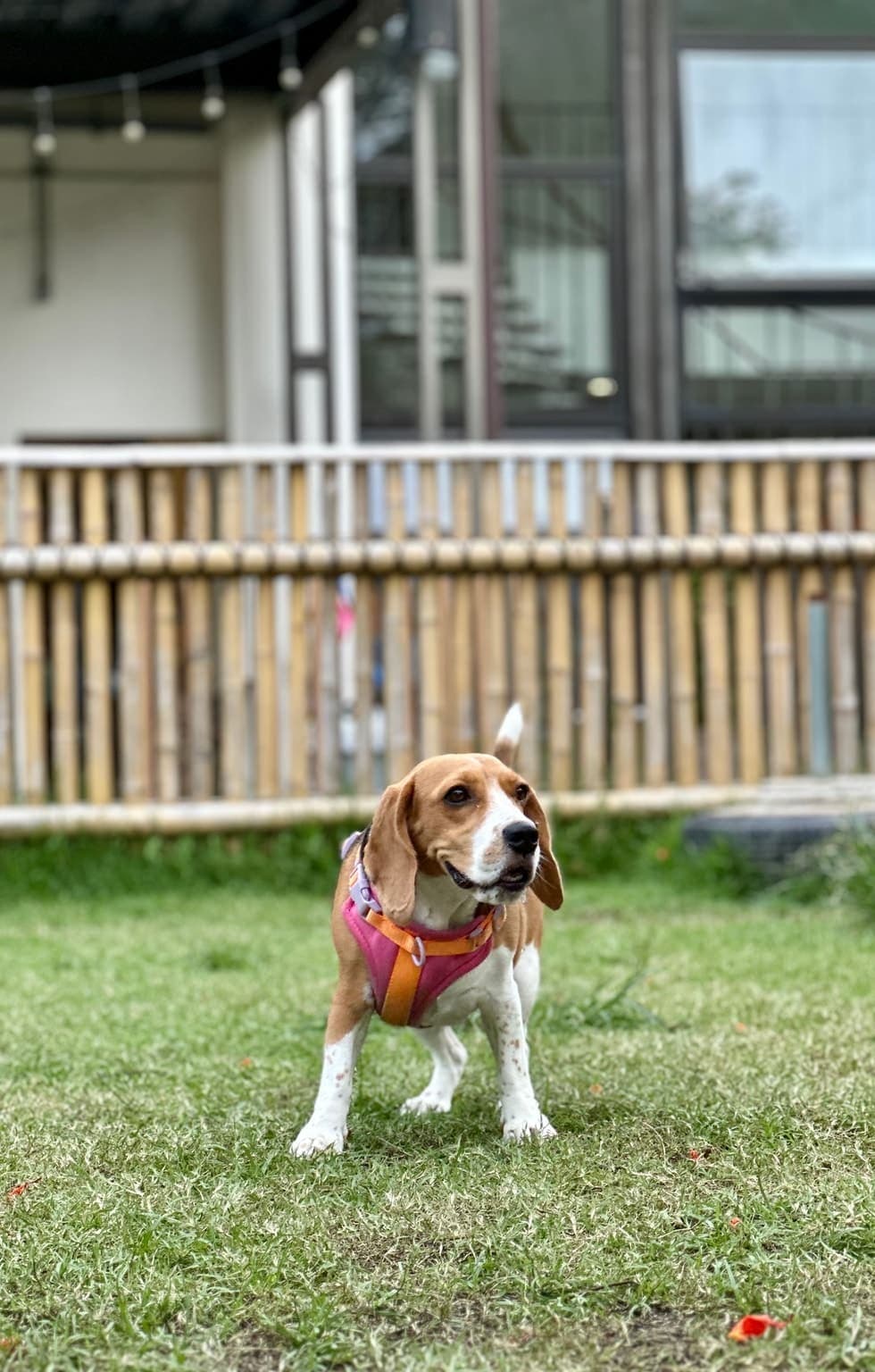
"Beagle mix" is a common label for a small or medium dog with drop ears and a black, tan, and white coat. Sometimes the label fits how the dog looks. Often it rests on color alone, and that color pattern belongs to a whole family of hounds and to several breeds that are not hounds.
This guide covers which Beagle traits tend to show in crosses, which breeds are mistaken for a Beagle mix, how the common pairings usually look, and when a DNA test is the right tool. Two limits apply throughout. A photo shows which breeds a dog resembles, not which breeds are in its ancestry. And appearance in mixes is variable, even between littermates.
How reliable is a visual guess?
Visual breed labels for mixed-breed dogs are often incomplete. A 2018 study that DNA-tested 919 dogs at two US shelters found that fewer than 5 percent were purebred and that most carried several breeds. With hound-type dogs there is an added problem: several scent hounds look like larger or smaller versions of one another, so "Beagle" may stand in for hound ancestry of another kind. Treat the label as a description of appearance until a DNA test supports it.
Beagle traits that tend to show in mixes
The purebred descriptions here follow the American Kennel Club (AKC) breed standard, which describes the Beagle as a miniature Foxhound. In a mix, each trait may appear fully, partly, or not at all.
Ears
Beagle ears are set moderately low, long enough to reach nearly to the tip of the nose when drawn forward, fairly broad, fine in texture, and rounded at the tip. They hang close to the head with the front edge turned in toward the cheek. Long, low-set, rounded ears are the most persistent Beagle feature in crosses. In a cross with a prick-eared breed the ears usually shorten and may lift at the base.
Head and expression
The skull is fairly long and slightly domed, with a moderately defined stop and a straight, square-cut muzzle of medium length. The eyes are large, set well apart, and brown or hazel, with the gentle expression the standard describes as soft and houndlike. A square muzzle and large, wide-set eyes often carry through.
Tail
The tail is set moderately high and carried up with a slight curve, but not curled forward over the back. It is short for the size of the dog and has a brush of longer hair. A white tail tip is common in hounds with white markings, Beagles included, so it supports a hound guess more than a Beagle guess.
Coat and color
The coat is close, hard, and of medium length. The standard accepts any hound color and does not accept merle or brindle. Black, tan, and white is the best-known pattern, but red and white and lemon and white Beagles are common, so a dog without a black saddle can still look like a Beagle. Equally, tricolor is not proof: it is the usual coat of Foxhounds, the Harrier, the Basset Hound, and the Treeing Walker Coonhound, and it occurs in some terriers and herding breeds. Merle or brindle on a Beagle-like dog points to another breed in the mix.
Size and build
The AKC recognizes two varieties: hounds 13 inches and under at the shoulder, and hounds over 13 and up to 15 inches. The AKC lists weights of under 20 pounds for the smaller variety and 20 to 30 pounds for the larger. The body is compact and solid with a short back and straight front legs. A tricolor hound that stands well over 15 inches resembles one of the larger hounds more than a Beagle.
Breeds often mistaken for a Beagle mix
- American Foxhound, English Foxhound, and Harrier: The same outline and colors on a taller, longer-legged dog. These are the hardest to separate from a Beagle in a photo without a scale reference.
- Treeing Walker Coonhound: A tall, lean tricolor hound. A young one can pass for a Beagle mix until it grows.
- Basset Hound: Similar colors, but much heavier in bone, with very short legs, longer ears, and loose skin.
- Russell Terrier: Mostly white with tan or black patches, smaller, with shorter folded ears and a narrower head.
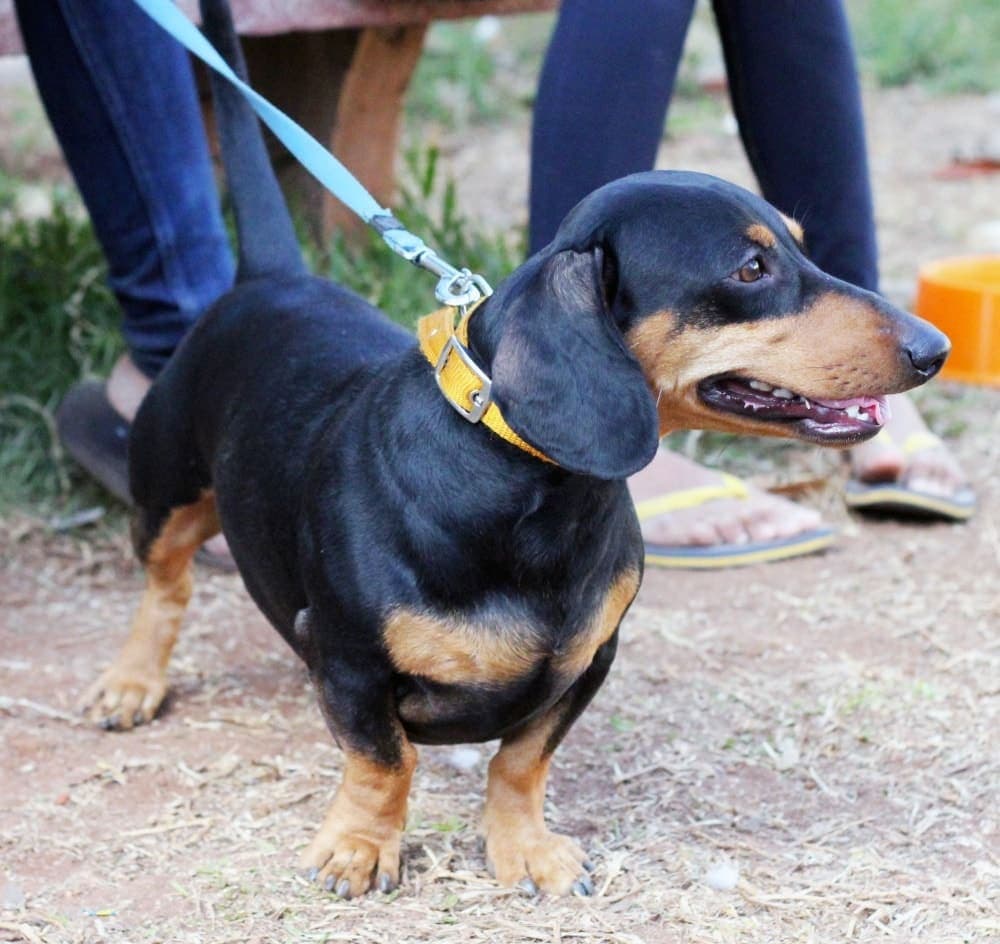
- Dachshund: Long drop ears and hound colors on a much longer, lower body.
Our hound breeds page covers the wider group.
Common Beagle crosses and how they usually look
The names in quotation marks are informal labels. None of these crosses is an AKC-recognized breed or has a written standard, and the descriptions are tendencies reasoned from the parent breeds, not predictions for any one dog.
Beagle and Pug
Called a "Puggle." The Pug contributes a shorter, broader muzzle, a stockier body, and a curled tail. Many of these dogs are fawn with a dark mask and have a wrinkled forehead, with a muzzle longer than a Pug's and ears longer than a Pug's.
Beagle and Labrador
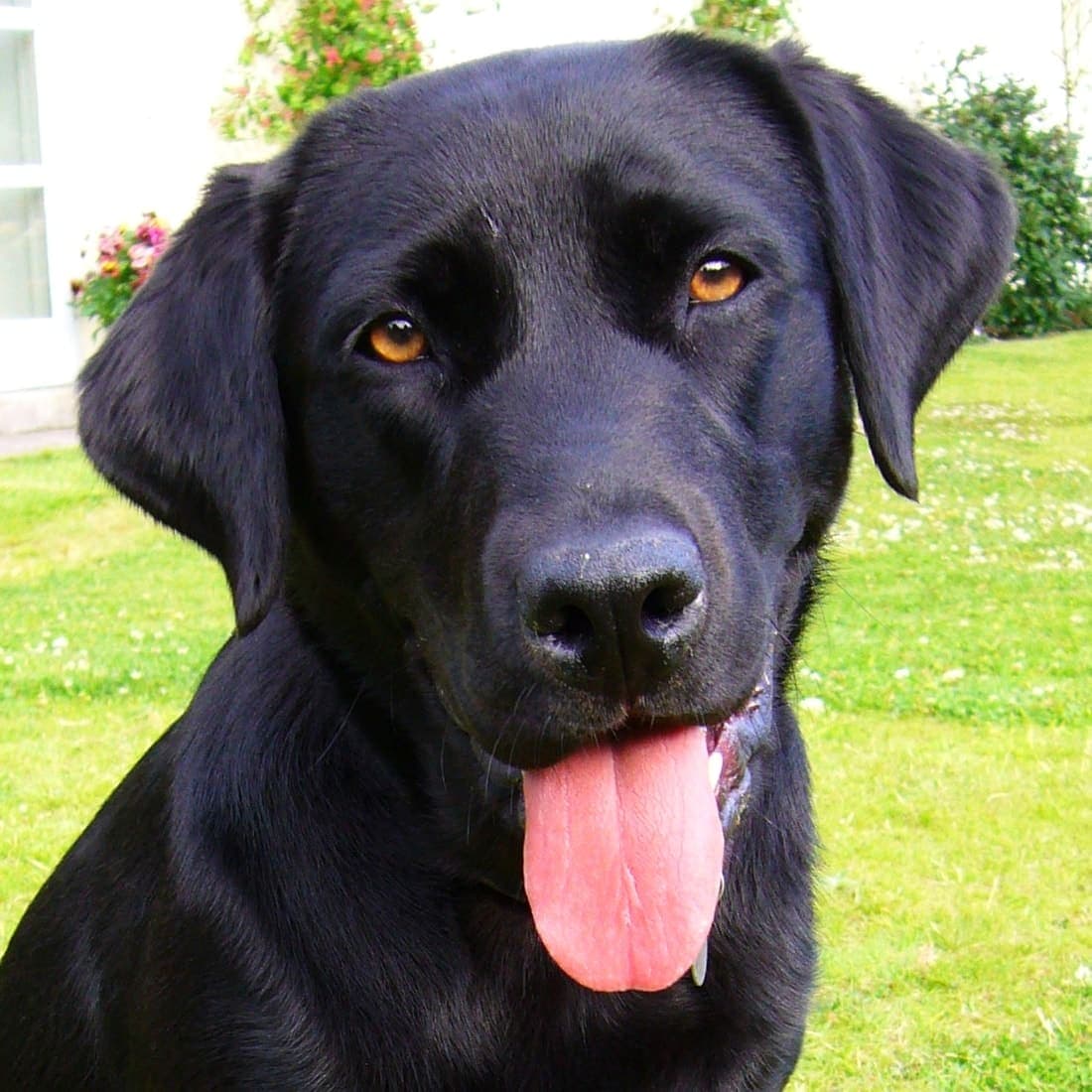
The Labrador Retriever adds size and a broader head. The result is often a medium dog with a solid or mostly solid coat, ears longer and lower than a Lab's, and sometimes white on the chest and feet. Our Labrador mix guide covers the Lab side.
Beagle and Dachshund
Usually longer in the body and shorter in the leg than a Beagle, with long ears from both parents. Coat may be smooth, wiry, or long depending on the Dachshund parent. See our Dachshund mix guide.
Beagle and Chihuahua
Small, often with a rounder skull, a shorter and finer muzzle, and ears that may fold, tip, or stand. See our Chihuahua mix guide.
Beagle and Cocker Spaniel
The Cocker Spaniel brings a longer, silkier coat with feathering on the ears, legs, and belly, and a rounder skull. A Beagle-colored dog with feathered ears is the usual look.
Beagle and Basset Hound
Two tricolor scent hounds produce a dog that is hard to distinguish from either by color. Heavier bone, shorter legs, and longer ears than a Beagle suggest the Basset side.
Beagle and bull-and-terrier types
Often a short-coated, muscular medium dog with a broader head and shorter ears, in hound colors or with large white areas. Our pit bull mix guide explains why this group is especially hard to label by eye.
What a photo can and cannot tell you
A photo can show ear length and set, head shape, tail carriage, coat, and color pattern. A photo identifier compares those with reference images and returns a ranked list of breeds the dog resembles. If Beagle appears with a second breed across several photos, that is a fair description of your dog's look.
A photo cannot show ancestry or percentages. It also cannot show height, and height is the main difference between a Beagle and the larger hounds that share its colors. Include something of known size in one photo, or measure your dog at the shoulder. Our mixed breed dog identifier page explains these limits, and how to identify a dog breed from a photo covers which shots to take.
When a DNA test is the right tool
Use a dog DNA test when you need an answer about ancestry and not appearance, for example for a form that asks for breed or for a veterinarian who wants breed background. Hound mixes are a case where DNA may name a breed that a photo could not separate from a Beagle. Read dog DNA test accuracy for the limits.
Care points that follow from the Beagle side
A dog that looks like a Beagle may not act like one. These are things to be ready for and then adjust to the dog in front of you.
- Scent drive. The AKC advises walking Beagles on a leash, because a scent hound may follow a trail and ignore a recall.
- Fencing. The AKC describes Beagles as escape artists and recommends secure fencing that also prevents digging under.
- Exercise and company. The AKC recommends at least an hour of exercise a day and notes that Beagles were bred to work in packs and do poorly when left alone for long periods.
- Food. Beagles are known for their appetite. Measure meals and keep food out of reach.
- Ears and coat. Check drop ears weekly. The short double coat sheds, most heavily in spring, and benefits from weekly brushing.
- Voice. Baying and howling are normal hound behavior. Consider your neighbors and your patience.
Frequently asked questions
My dog is black, tan, and white. Is it a Beagle mix?
Color alone cannot tell you. Tricolor is shared by several hound breeds and appears outside the hound group too. Check the ear length and set, the head shape, the tail, and the dog's height.
How big will a Beagle mix get?
Adult size usually falls between the parents but is not predictable for an individual dog, and the second parent is often unknown. A purebred Beagle stands 15 inches or under and weighs up to about 30 pounds.
Is a Puggle a breed?
No. It is a cross between a Beagle and a Pug. It is not recognized by the AKC, and muzzle length, coat color, and size vary from dog to dog.
Can a photo tool tell a Beagle mix from a Foxhound or Coonhound mix?
Not reliably. These hounds share shape and color and differ mainly in size, which a photo without a scale reference does not show. Expect more than one hound in the shortlist.
Sources
- American Kennel Club, Official Standard for the Beagle: https://images.akc.org/pdf/breeds/standards/Beagle.pdf
- American Kennel Club, Beagle: https://www.akc.org/dog-breeds/beagle/
- Gunter, Barber, and Wynne, "A canine identity crisis: Genetic breed heritage testing of shelter dogs," PLOS ONE, 2018: https://journals.plos.org/plosone/article?id=10.1371/journal.pone.0202633