Is My Dog a Pit Bull Mix? What the Label Means and How to Read the Photo
Breed Identification • By Dog Breed Detector Editorial Team • 2026-09-02
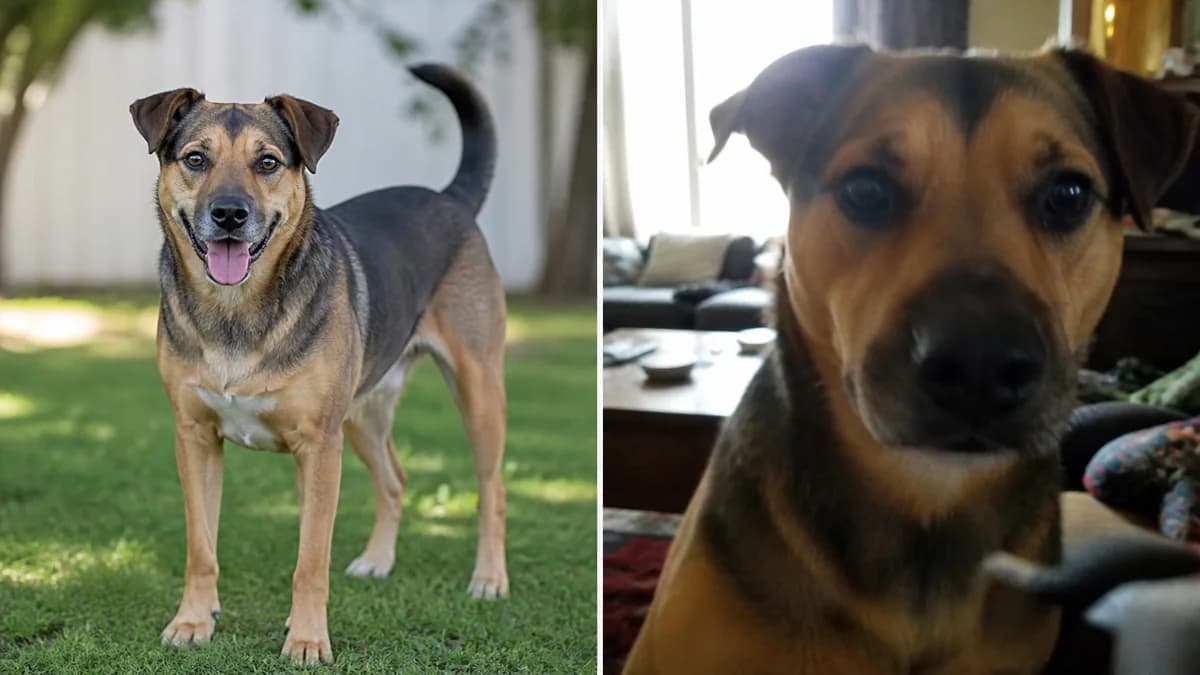
"Pit bull mix" is one of the most common labels a dog can carry, and one of the least precise. If you have adopted a short-coated, muscular dog with a wide head and a big smile, someone has probably already used it. This guide explains what the label actually covers, which visual features people key on, how many other breeds share those features, and how to read a photo result sensibly.
Two things to keep in mind from the start. A photo tool, including ours, ranks the breeds your dog most closely resembles. It compares what is visible in the picture with reference images and returns a shortlist of visual neighbors. It does not read genes, and it cannot tell you what is in your dog's family tree. And this is a group where looks are known to be an unreliable guide, even for experienced people.
What "pit bull" actually covers
Pit bull is not a registered breed. It is an everyday term for a cluster of related bull-and-terrier breeds and for the many dogs that resemble them. Depending on who is talking, it can mean any of the following.
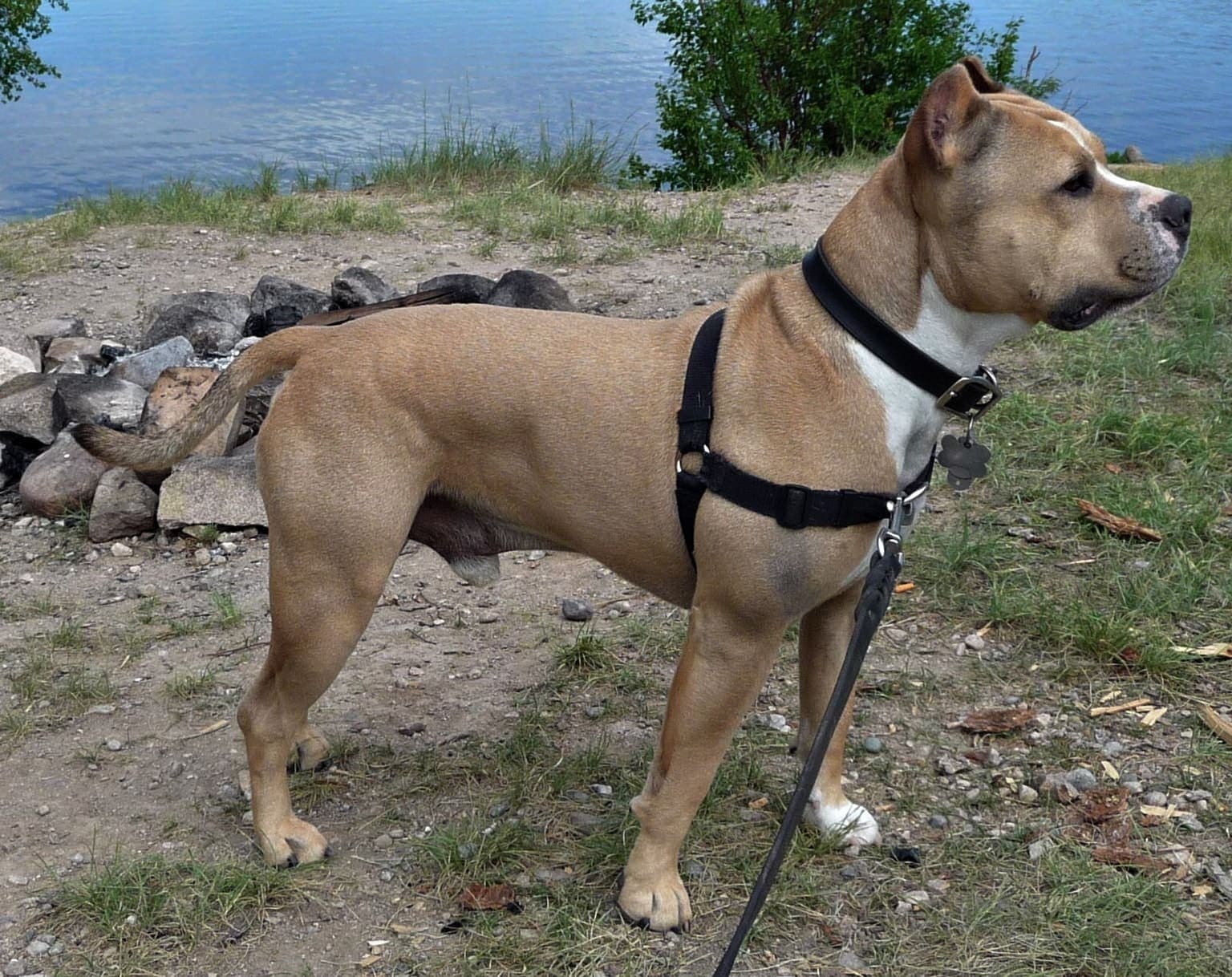
- American Staffordshire Terrier. The American Staffordshire Terrier is a medium-sized, athletic dog, usually 17 to 19 inches at the shoulder and 40 to 70 pounds, with a broad skull, a medium-length muzzle, and a flat-sided, muscular frame. It is the breed most people picture when they hear the label.
- Staffordshire Bull Terrier. The Staffordshire Bull Terrier is noticeably smaller, 14 to 16 inches and 24 to 38 pounds, with a head that looks wide for the body, a very short foreface, and pronounced cheek muscles. Our American Staffordshire Terrier vs Staffordshire Bull Terrier comparison goes through the differences feature by feature.
- American Pit Bull Terrier. The breed the label is named after. It is recognized by some registries and not others, and our site does not currently have a profile for it. Visually it overlaps heavily with the American Staffordshire Terrier, so a photo tool will usually place a dog of this type near the AmStaff on its shortlist.
- Bull Terrier. The Bull Terrier is sometimes lumped in, but its egg-shaped head and naturally erect ears make it the easiest member of the group to pick out in profile.
- Mixes. By far the largest category: dogs with a bull-and-terrier outline and something else in the mix, and dogs with no such ancestry at all that simply happen to look the part.
Because the label covers so much, "pit bull mix" on a kennel card tells you that someone thought the dog looked like this group. It does not tell you which breed, or whether the resemblance goes any deeper than the outside of the dog.
A note on rules and paperwork
Some cities, landlords, insurers, and airlines have rules that mention specific breeds or "pit bull type" dogs. How those rules are written and applied varies from place to place, and we cannot give legal advice. What we can say clearly is that a photo tool result is a visual ranking and nothing more. It is not a breed certification and not a legal or housing determination. If a rule affects you, ask the organization involved what evidence it accepts, and speak with a veterinarian or a lawyer.
The visual traits people key on
When someone glances at a dog and says "pit," they are usually reacting to a handful of features. Knowing what they are makes it easier to see how many other breeds share them.
- A broad skull. Wide between the ears and blocky from the front.
- Defined cheeks. The muscles below the eyes bulge outward, giving the face a chiseled look.
- A short, smooth coat. Tight, glossy, and single-layered, so the muscles show through.
- A muscular build. A deep chest, a strong neck, and a compact, well-muscled body.
- Rose or half-prick ears. Ears that fold back so the inside shows, or that stand partway up and tip over. Cropped ears are common in some regions and change the look completely.
Now look at who else has these. A Boxer has all five, and a Boxer mix with a slightly longer muzzle is one of the most common dogs to be called a pit mix. A Labrador Retriever has the wide head and solid build, and a black Lab mix with a shorter coat reads as bull-and-terrier to many people. A Bulldog or an American Bulldog type brings the wide head and heavy front end. A Cane Corso and other Mastiff crosses bring the big square head, the muscle, and the brindle or fawn coat. Hound mixes, especially those with a Beagle or a larger scent hound in the picture, often have the short coat, deep chest, and white chest and feet that people associate with the group.
None of these features is unique. Together they describe a body type, not a breed, which is why the bull-and-terrier group and the mastiff group both appear in our research on commonly confused dog breeds.
Common crosses and how they usually look
These are the pairings people run into most often. Real dogs vary enormously, and a mix can favor one side almost entirely, but each combination has a look worth knowing.
Bull-and-terrier and Labrador
Probably the most common shelter dog in North America. The typical look is a Lab-sized body with a wider chest, a shorter and broader head, a tighter and shinier coat, and a thinner tail than a Lab's otter tail. Brindle, white patches, and blue or fawn coats point toward the terrier side; a thicker double coat and a heavier tail point toward the Lab.
Bull-and-terrier and Boxer
Often hard to separate from either parent. Look for a slightly longer, squarer muzzle than an AmStaff, a more upturned nose, a leggier and taller frame, and the Boxer's flashy white markings on the chest, feet, and face. The ears usually sit higher and fold forward rather than back.
Bull-and-terrier and Mastiff types
A Bullmastiff or Cane Corso cross is usually larger and heavier-boned than any of the terriers, often well over 70 pounds, with a bigger, squarer head, looser lips, a dark mask, and a longer body. These dogs are frequently labeled "pit mix" simply because that label is more familiar than "mastiff mix."
Bull-and-terrier and hound
Hound crosses are easy to miss. The coat and chest look right, but the ears are longer and set lower, the muzzle is leaner, the skull is slightly domed, and the tail is carried high, often with a white tip. Many wear the tricolor or red-and-white coat of a scent hound. The voice usually settles it.
A photo checklist for a suspected pit bull mix
Because the useful clues are structural, the angle matters more than usual. A close-up of a smiling face exaggerates the head and hides everything else. Aim for this set.
- Side profile, standing, on level ground. Stand square to the dog's shoulder and shoot from the dog's eye level. This shows chest depth, leg length, muzzle length, and whether the body is flat-sided and athletic or round and heavy. It is the single most useful photo for this group.
- Head from the front. Get down low and shoot straight on. This shows skull width, cheek definition, eye shape, and ear set. Shooting from above makes any head look wider than it is.
- Natural ears, if your dog has them. Photograph the dog relaxed rather than alert, so the ears sit as they normally do. Cropped ears remove this clue entirely.
Daylight, a plain background, and a dry coat all help. For more on lighting and angles, see our guide to taking a better photo for breed detection.
Reading a shortlist when several bull-and-terrier breeds appear
A common result for this kind of dog is a shortlist with American Staffordshire Terrier, Staffordshire Bull Terrier, and perhaps Boxer or Bullmastiff all in the top five. That is not confusion. It is a clear message.
- Read the cluster, not the winner. If three of the five results are bull-and-terrier breeds, your dog has a bull-and-terrier outline.
- Notice what else is in the list. AmStaff plus Boxer plus Great Dane says "bully head on a taller, leggier frame." AmStaff plus Labrador plus Beagle says "bully head, retriever or hound body." That non-terrier breed is often the most informative entry.
- Use size as a filter. The tool cannot see scale, but you can. A 30-pound dog is not a Cane Corso mix, and a 75-pound dog is unlikely to be closest to a Staffordshire Bull Terrier, however much the head resembles one.
- Do not read rank as a share. Second place means the second-closest visual match. It does not mean "half" of anything, and the tool cannot tell you what proportion of your dog comes from any breed.
If the list still leaves you unsure, our what breed is my dog page explains how to compare a shortlist against the breed pages and what to do when nothing fits cleanly. For more on why mixes are so hard to read from appearance, see our mixed breed dog identifier guide.
When DNA testing is the right tool
A photo answers "what does my dog look like." A DNA test answers "which breeds are present in the genes." For this group the two answers disagree more often than people expect, because a bull-and-terrier body type can come from many different combinations, and from breeds that are not bull-and-terrier at all.
DNA testing is worth serious consideration if:
- A housing, insurance, travel, or local rule mentions specific breeds and you need more than a visual opinion.
- You want to talk with your vet about breed-related health screening, such as skin sensitivities or joint issues.
- The visual clues are pulling in several directions and you simply want the question settled.
Our overview of dog DNA tests explains what the kits do and how to read a report, and our article on dog DNA test accuracy explains why even a DNA result carries some uncertainty, particularly for closely related breeds within a group like this one.
Temperament and care for the dog in front of you
A body type does not come with a personality. Two dogs with the same broad head and glossy coat can be as different in temperament as any two dogs picked at random. Plan around the individual dog you have, not the word on the card.
That said, if your dog resembles this group, these are sensible starting points to adjust as you get to know them:
- Exercise. Most dogs built like this are athletic and enjoy a proper daily walk plus play. Tug with rules, fetch, and scent games give a strong dog a good outlet.
- Training. Many are eager to engage and respond well to reward-based training. Impulse control and polite leash manners matter because even a medium-sized dog of this build is strong for its weight.
- Socialization. Calm, positive exposure to people, dogs, and everyday situations helps any dog, and it helps this one just as much. Take it at the dog's pace.
- Coat and skin. A short, single coat is easy to keep clean but offers little protection. Watch for sunburn on light-coated dogs, check for skin sensitivities, and give a warm layer in cold weather.
- Health. Keep the dog lean to protect the joints, and ask your vet about screening that fits the breeds on your shortlist rather than the label.
Let what you observe in your own dog override anything a label suggests.
Frequently asked questions
Can a photo tool tell me my dog is a pit bull?
No. A photo tool ranks the breeds your dog most closely resembles from what is visible in the picture. It can tell you that your dog looks like an American Staffordshire Terrier and which other breeds it resembles, but it cannot confirm what is in the genes. Only a DNA test can do that.
Is "pit bull" a breed?
Not in the sense of a single registered breed. It is a general label for several related bull-and-terrier breeds, including the American Pit Bull Terrier, the American Staffordshire Terrier, and the Staffordshire Bull Terrier, and for the many mixed breed dogs that resemble them.
My landlord asked what breed my dog is. Can I use a photo result?
A photo result is a visual ranking, not a breed determination, and it is not designed to settle a housing, insurance, or legal question. We cannot advise on specific rules. Ask the organization involved what evidence it accepts, and speak with your veterinarian or a lawyer. A DNA test is usually a more useful document than a photo match.
Why does the tool show three bull-and-terrier breeds for my dog?
Because those breeds share a head and body type, and your dog has it. Read the group as a whole, use your dog's actual size to narrow the list, and look at whichever non-terrier breed appears alongside them.