How to Identify a Dachshund Mix: Traits, Common Crosses, and Look-Alikes
Breed Identification • By Dog Breed Detector Editorial Team • 2026-11-15
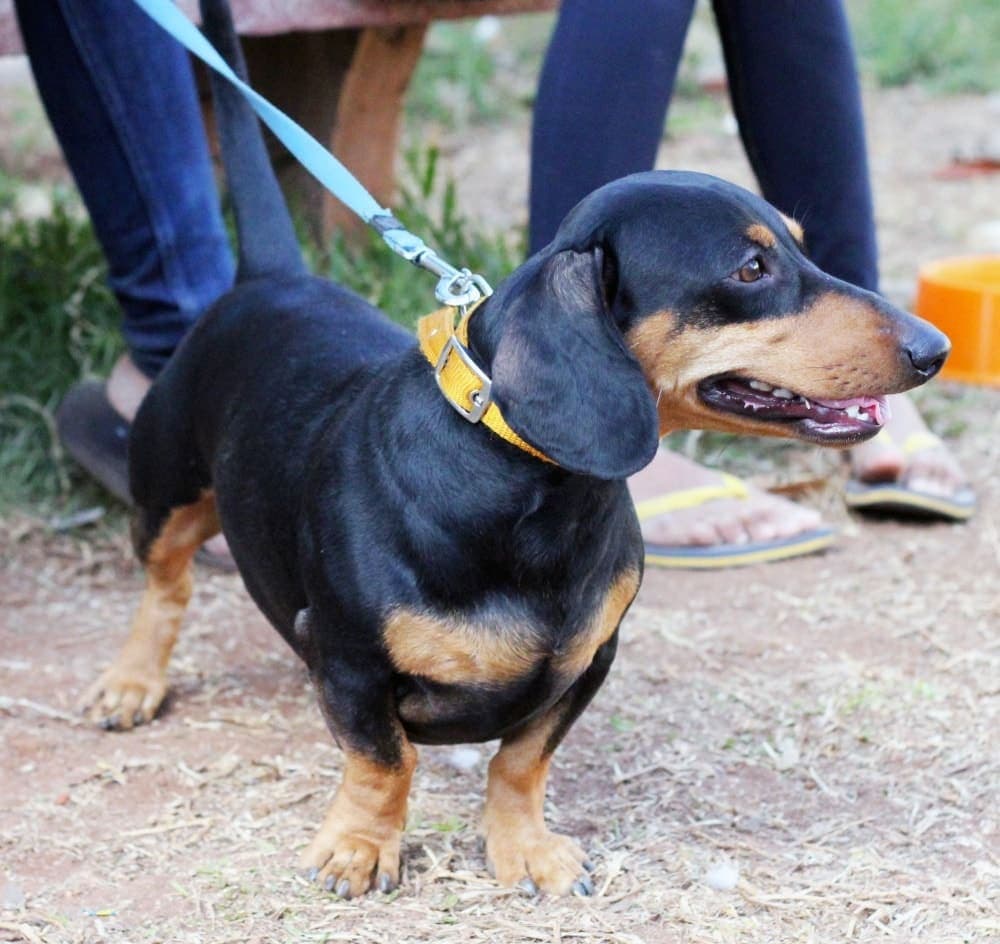
A long back and short legs make the Dachshund easy to recognize, and "Dachshund mix" is the usual label for any small dog that is longer than it is tall. Often the label describes the dog's look well. But short legs are not exclusive to the Dachshund, and a low, long outline can come from several other breeds.
This guide covers which Dachshund traits tend to show in crosses, which breeds are mistaken for a Dachshund mix, how the common pairings usually look, and when a DNA test is the right tool. Two limits apply throughout. A photo shows which breeds a dog resembles, not which breeds are in its ancestry. And mixed-breed appearance is variable: leg length, coat, and ear carriage can all differ within one litter.
How reliable is a visual guess?
Visual labels for mixed-breed dogs are often incomplete. A 2018 study that DNA-tested 919 dogs at two US shelters found that fewer than 5 percent were purebred and that most carried several breeds. A distinctive outline makes the Dachshund guess feel safer than most, but the outline is shared with other short-legged breeds, so treat the label as a description of appearance until a DNA test supports it.
Dachshund traits that tend to show in mixes
The purebred descriptions here follow the American Kennel Club (AKC) breed standard. In a mix, each trait may appear fully, partly, or not at all.
Body and legs
The standard opens with "low to ground, long in body and short of leg." The trunk is long and muscular with a straight back, the chest is deep with a prominent breastbone, and the forearms are short and curve slightly inward, so the front does not look perfectly straight. The front feet may turn out a little. Short legs under a long body are the trait most likely to be noticed in a cross, although many crosses are taller and shorter-backed than a Dachshund.
Head
The head tapers evenly to the nose, with very little stop and a fine, slightly arched muzzle. The eyes are almond-shaped and dark. A long, narrow, tapering head on a short-legged dog is a better clue than short legs alone.
Ears
The ears are set near the top of the head, of moderate length, and rounded, hanging with the front edge against the cheek. In crosses with prick-eared breeds they may lift, tip, or stand.
Tail
The tail continues the line of the spine without a pronounced curve and is not carried high. A tail that curls over the back suggests another breed in the mix.
Coat
There are three coat varieties. The smooth coat is short and shining. The wirehaired coat is a short, thick, rough outer coat with a beard and eyebrows. The longhaired coat is sleek and longer on the ears, chest, underside, legs, and tail. A wiry or feathered coat therefore does not rule out a Dachshund parent, and it does not prove a terrier or spaniel one.
Color and pattern
Red and black and tan are the most familiar, and the standard also lists cream, chocolate and tan, and several other colors, plus the dapple, brindle, piebald, and sable patterns. Dapple is the Dachshund term for merle. Black and tan on a small smooth-coated dog is shared with the Miniature Pinscher and several terriers, so color is a weak clue.
Size
The breed comes in two sizes. The standard gives a usual weight of 16 to 32 pounds for standard Dachshunds, and miniatures are 11 pounds and under at a year old or more. The AKC lists heights of 8 to 9 inches for standards and 5 to 6 inches for miniatures. Either size can be the parent in a cross.
Breeds often mistaken for a Dachshund mix
- Basset Hound: Also long and low, but much heavier, with loose skin, very long ears, and usually a tricolor or red-and-white coat.
- Pembroke and Cardigan Welsh Corgi: Short-legged herding dogs with erect ears, a foxier head, and a thick double coat. Our Cardigan vs Pembroke comparison covers the two.
- Miniature Pinscher: Black and tan or red and smooth-coated like many Dachshunds, but square in outline with longer legs and high-set ears.
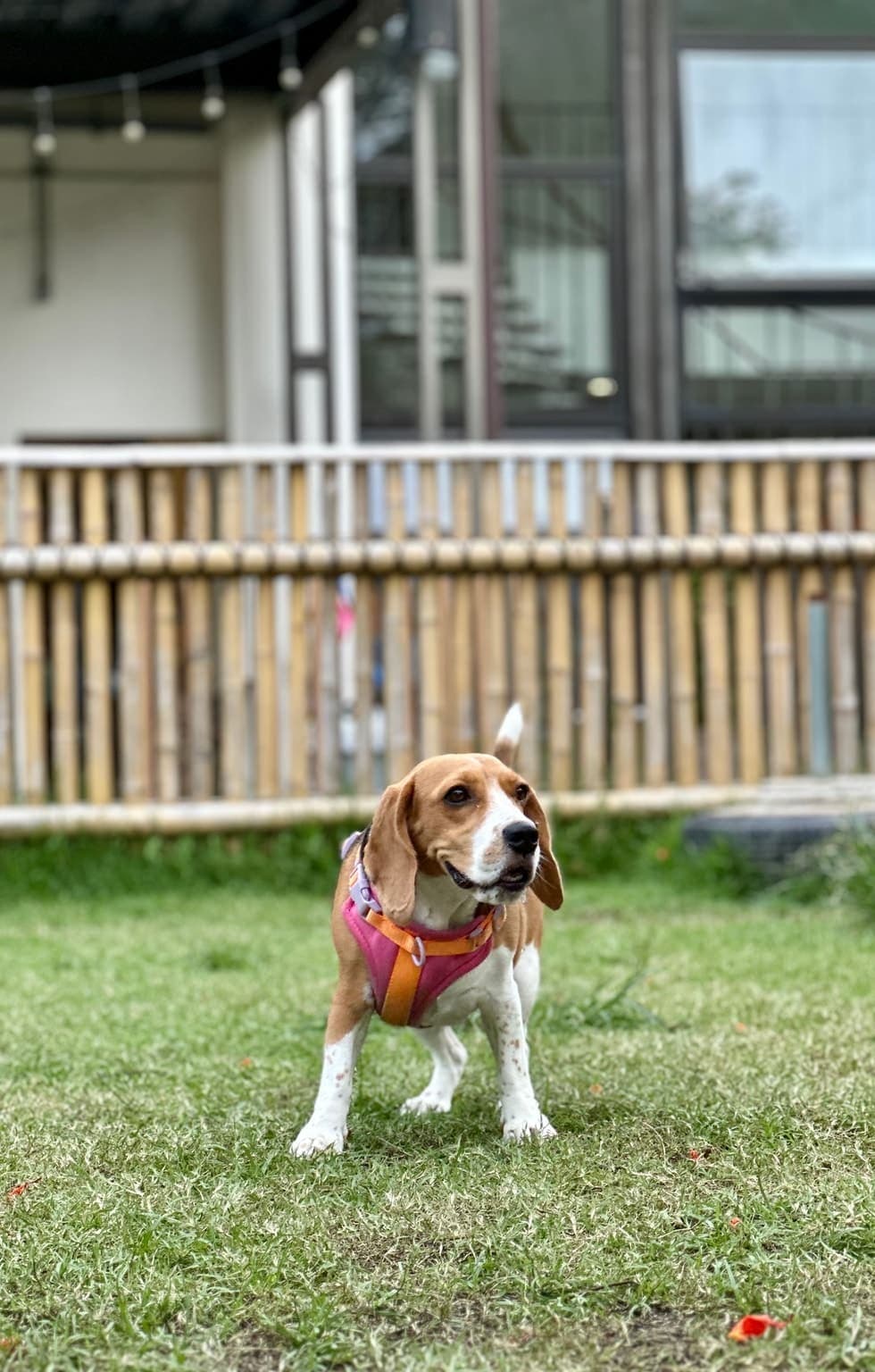
- Beagle: Hound ears and colors on a taller, shorter-backed dog with straight front legs.
- Short-legged terriers: Breeds such as the Scottish Terrier and Cairn Terrier are low to the ground with wiry coats and can resemble a wirehaired Dachshund cross.
Common Dachshund crosses and how they usually look
The names in quotation marks are informal labels. None of these crosses is an AKC-recognized breed or has a written standard, and the descriptions are tendencies reasoned from the parent breeds, not predictions for any one dog.
Dachshund and Chihuahua
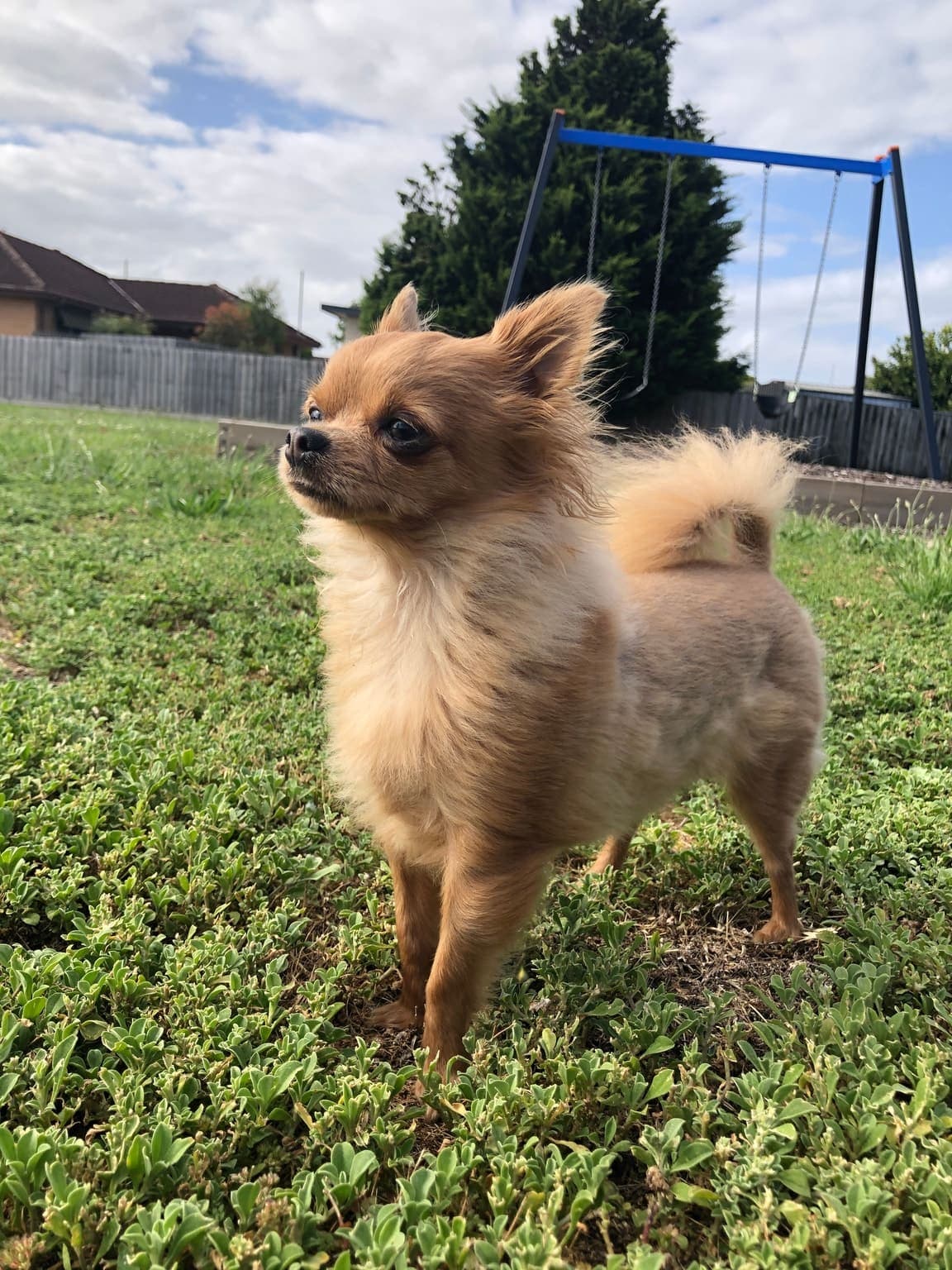
Called a "Chiweenie." Usually small, long in the body, and short in the leg, with a rounder skull and a shorter muzzle than a Dachshund. Ears may hang, tip, or stand. See our Chihuahua mix guide.
Dachshund and Beagle
Sometimes called a "Doxle." Long ears from both sides, hound colors, and a body that is longer and lower than a Beagle's. See our Beagle mix guide.
Dachshund and Poodle
Sometimes called a "Doxiepoo." Coat ranges from wavy to curly and may be wiry. Many are long-bodied with a longer leg than a Dachshund. See our Poodle mix guide.
Dachshund and Russell-type terrier
Often mostly white with tan or black patches, short-legged, with ears that fold forward and a stronger muzzle. The Russell Terrier is itself a short-legged breed, so leg length does not separate the two sides.
Dachshund and Corgi
Sometimes called a "Dorgi." Both parents are long and low, so the outline is unchanged. Erect or half-erect ears, a thicker coat, and white markings point toward the Corgi side.
Dachshund and Miniature Pinscher or Yorkshire Terrier
Small black-and-tan dogs that are hard to place by eye. A cross with a Miniature Pinscher tends to be smooth-coated with a higher ear set. A cross with a Yorkshire Terrier tends to have longer, silkier or wiry hair on the face.
Dachshund and larger breeds
Crosses with Labradors, spaniels, and other medium or large breeds occur. Many have a body of roughly the larger breed's type on noticeably shortened legs. That look can also come from a Basset Hound or Corgi parent, and a photo cannot tell you which.
What a photo can and cannot tell you
A photo can show body length relative to leg length, head shape, ear set, coat type, and color pattern. A photo identifier compares those with reference images and returns a ranked list of breeds the dog resembles. If Dachshund appears with a second breed across several photos, that is a fair description of your dog's look.
A photo cannot show ancestry or percentages, and it cannot show size without a scale reference, so it cannot tell a standard from a miniature. Our mixed breed dog identifier page explains these limits.
Proportions matter more for this breed than for most, and they are easy to distort. Photograph the dog standing, side-on, from its own height. A photo taken from above shortens the legs of any dog. See how to identify a dog breed from a photo.
When a DNA test is the right tool
Use a dog DNA test when you need an answer about ancestry: a form that asks for breed, a veterinarian who wants breed background, or simply wanting to know. Read dog DNA test accuracy for what the tests can and cannot show.
Care points that follow from the Dachshund side
These points apply to a dog with a long back and short legs whatever its ancestry turns out to be.
- Back care. The AKC advises keeping a Dachshund from becoming overweight to help prevent disc damage to its long back, and not letting it run up and down stairs or jump on and off furniture. Ramps or steps and a lean body weight are sensible for any long-backed dog. Ask your veterinarian what applies to yours, and seek veterinary help promptly if your dog shows back pain or weakness in the hind legs.
- Exercise. The AKC recommends regular moderate exercise, such as two walks a day, to keep the muscles that support the back strong.
- Ears. Drop ears need to be kept clean.
- Scent and prey drive. The Dachshund was developed to hunt badgers underground and to trail by scent. Expect digging and an interest in small animals, and use a leash in unfenced areas.
- Training. The AKC describes Dachshunds as intelligent but independent and recommends patient, reward-based training.
- Coat. Grooming depends on coat type: little for a smooth coat, regular brushing for a long or wiry one.
Frequently asked questions
My dog has short legs. Is it a Dachshund mix?
Not necessarily. Short legs also occur in Corgis, Basset Hounds, several terriers, and other breeds. Look at the head, which in a Dachshund is long and tapering with almost no stop, and at the ears and tail.
How big will a Dachshund mix get?
Adult size usually falls between the parents but is not predictable for an individual dog, and the second parent is often unknown. The Dachshund parent may also be either size: standards usually weigh 16 to 32 pounds and miniatures 11 pounds or less.
Is a Chiweenie a breed?
No. It is a cross between a Chihuahua and a Dachshund. It is not recognized by the AKC, and size, coat, and ear carriage vary from dog to dog.
Does a wiry coat mean my dog is part terrier?
No. Wirehaired Dachshunds have a rough coat with a beard and eyebrows, so a wiry coat on a long, low dog is consistent with a Dachshund parent as well as with a terrier one.
Sources
- American Kennel Club, Official Standard of the Dachshund: https://images.akc.org/pdf/breeds/standards/Official_Standard_Dachshund.pdf
- American Kennel Club, Dachshund: https://www.akc.org/dog-breeds/dachshund/
- Gunter, Barber, and Wynne, "A canine identity crisis: Genetic breed heritage testing of shelter dogs," PLOS ONE, 2018: https://journals.plos.org/plosone/article?id=10.1371/journal.pone.0202633