How to Identify a Poodle Mix: Doodle Traits, Common Crosses, and Look-Alikes
Breed Identification • By Dog Breed Detector Editorial Team • 2026-11-15
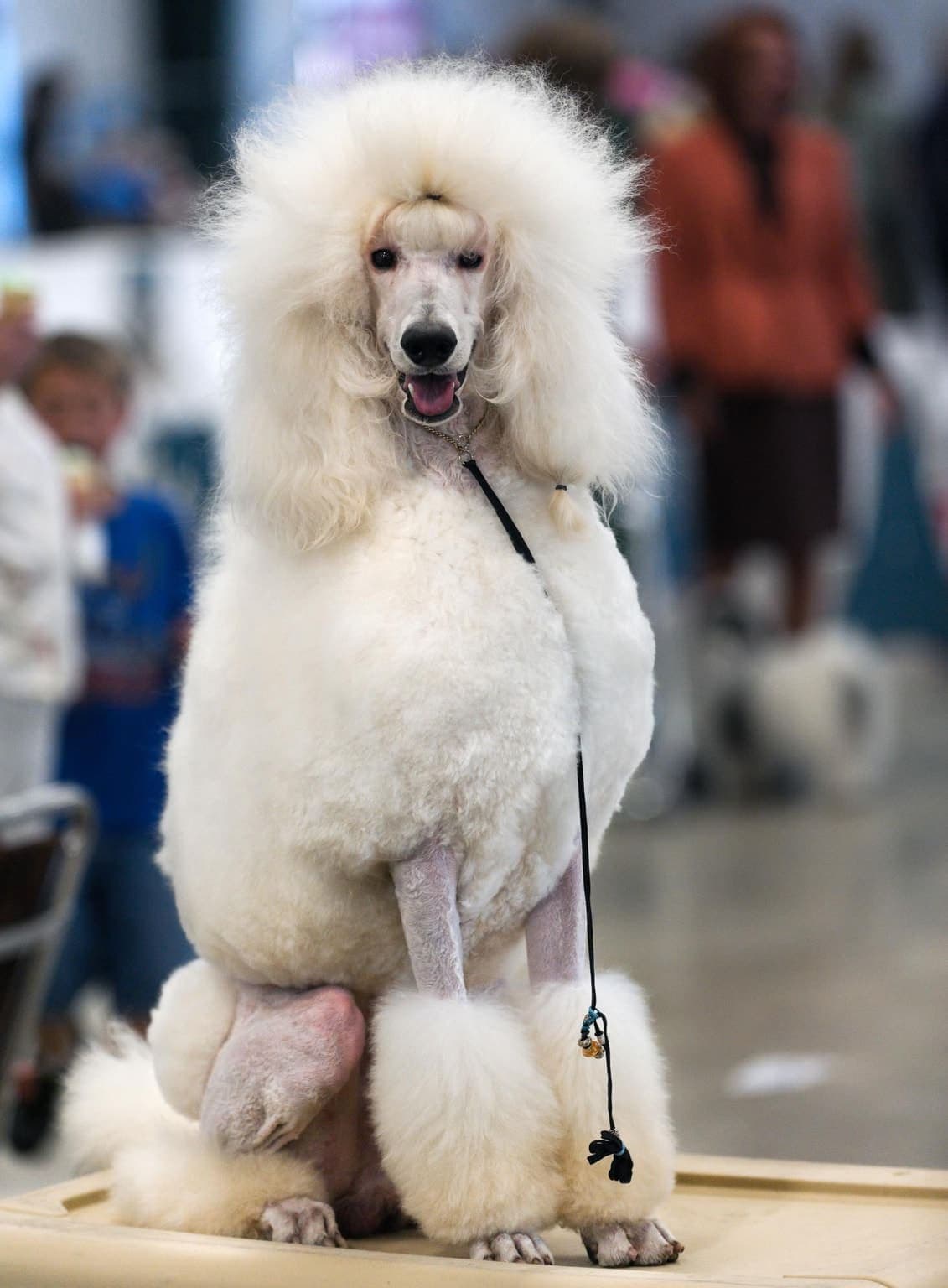
Poodle crosses are a widely known group of deliberately bred mixes. Goldendoodle, Labradoodle, Cockapoo, and many other names describe a Poodle crossed with another breed. If you have a curly or shaggy dog of unknown background, "some kind of doodle" is the guess you will hear most.
This guide covers which Poodle traits tend to show in crosses, which breeds are mistaken for a Poodle mix, how the common pairings usually look, and when a DNA test is the right tool. Two limits apply throughout. A photo shows which breeds a dog resembles, not which breeds are in its ancestry. And appearance in Poodle crosses is especially variable: coat type alone can differ widely between littermates.
How reliable is a visual guess?
For this group, a visual guess usually gets the Poodle part right and the other half wrong. A curly coat is a strong signal, but once the coat is long it covers the head shape, ear set, and body outline that would point to the second breed. More generally, a 2018 study that DNA-tested 919 dogs at two US shelters found that fewer than 5 percent were purebred and that most carried several breeds, so a dog of unknown background may not be a two-breed cross at all.
First, what "doodle" names mean
Goldendoodle, Labradoodle, Bernedoodle, Cockapoo, and similar names are labels for crosses. They are not breeds recognized by the American Kennel Club (AKC), and they have no AKC breed standard. A name also says nothing about the generation of the cross. A first cross between a Poodle and a Golden Retriever and a dog that is three-quarters Poodle are both sold as Goldendoodles, and they can look quite different.
Poodle traits that tend to show in mixes
The purebred descriptions here follow the AKC Poodle standard. In a mix, each trait may appear fully, partly, or not at all.
Coat
The Poodle coat is curly, dense, and naturally harsh in texture, and it keeps growing until it is clipped. In crosses the coat ranges from tight curls through loose waves to nearly straight, and it may be soft where the Poodle's is harsh. A coat that keeps growing and needs clipping is the most persistent Poodle trait, though not every cross has it.
Head
Under the hair, a Poodle has a moderately rounded skull, a slight but definite stop, and a long, straight, fine muzzle about as long as the skull. Eyes are oval and very dark. A longer, narrower muzzle than the other parent breed would normally have is a useful clue, but only when the face is clipped short enough to see it.
Ears
Long, wide ears that hang close to the head, set at or slightly below eye level, with thick hair. Most common partner breeds also have drop ears, so ears rarely separate one doodle from another.
Build and size
The Poodle is squarely built, about as long as it is tall, with a level back. Many crosses are leggier and lighter-framed than the other parent breed. The three Poodle varieties differ only in height: over 15 inches at the shoulder for the Standard, over 10 and up to 15 inches for the Miniature, and 10 inches or under for the Toy. Because any variety can be the Poodle parent, Poodle crosses range from a few pounds to large-dog size. "Mini" in a seller's description is not an AKC size class.
Color
The AKC standard calls for a solid coat color and disqualifies parti-colored Poodles from the show ring. Solid apricot, cream, black, brown, and white are all familiar. White patches or tan points on a doodle more often come from the other parent, although Poodles with those patterns exist outside the show ring. Color is a weak clue in either direction.
The haircut problem
Most of what people recognize as "doodle" is grooming: a rounded head, a full muzzle, and fluffy legs. Clip the same dog short and it may look like a wavy-coated retriever or spaniel. A dog in full coat gives a photo, and a photo tool, very little structure to work with. If you want a useful visual read, take photos soon after a short clip.
Breeds often mistaken for a Poodle mix
- Portuguese Water Dog: A purebred with a curly or wavy single coat, often black or black and white, and a sturdier build than a Poodle.
- Bichon Frise: Small and white with a curly double coat. Our Maltese vs Bichon Frise vs Havanese comparison covers the small white breeds.
- Soft Coated Wheaten Terrier: A wheaten-colored terrier with a soft, wavy coat, often taken for a small Goldendoodle.
- Old English Sheepdog: A large, shaggy gray-and-white herding breed that resembles a Sheepadoodle in full coat.
- Wirehaired Pointing Griffon and other rough-coated dogs: A wiry coat with a beard can read as a wavy doodle coat in a photo.
Common Poodle crosses and how they usually look
These descriptions are tendencies reasoned from the parent breeds. Individual dogs vary, and later-generation crosses vary more.
Golden Retriever and Poodle (Goldendoodle)
Often cream, apricot, or red with a wavy to curly coat and a broader head than a Poodle's. Size depends on the Poodle parent. See our Golden Retriever mix guide.
Labrador Retriever and Poodle (Labradoodle)
Commonly black, chocolate, or yellow to cream. Coats range from wiry and loose to tight curls, and some are close to a Lab's short coat. See our Labrador mix guide.
Bernese Mountain Dog and Poodle (Bernedoodle)
The Bernese Mountain Dog is black with rust and white markings, and many of these crosses keep some version of that tricolor pattern on a wavy coat with a heavier frame.
Cocker Spaniel and Poodle (Cockapoo)
Usually small, with long, low-set ears, a rounder skull, and a shorter muzzle from the Cocker Spaniel.
Cavalier King Charles Spaniel and Poodle (Cavapoo)
Small, with a shorter muzzle and large round eyes from the Cavalier, often in red and white or solid red shades.
Maltese and Poodle (Maltipoo)
A toy-sized cross, usually white or cream, with a soft coat that may be wavy or curly. Hard to tell from other small white dogs in a photo.
Australian Shepherd or Old English Sheepdog and Poodle
Sold as Aussiedoodles and Sheepadoodles. Merle patterning or pale eyes suggest the Australian Shepherd side. Gray and white on a large, heavy-coated dog suggests the Sheepdog side.
What a photo can and cannot tell you
A photo can show coat type, color pattern, ear shape, and rough proportions. A photo identifier compares those with reference images and returns a ranked list of breeds the dog resembles. Our tool ranks recognized breeds, so a doodle will usually come back as Poodle plus one or two other breeds with similar coats, not as "Goldendoodle."
A photo cannot show ancestry, generation, percentages, or size without a scale reference. As the AKC standard makes clear, the Poodle varieties differ by height, so a photo also cannot tell you which variety was involved. Our mixed breed dog identifier page explains these limits, and how to identify a dog breed from a photo covers how to take useful pictures.
When a DNA test is the right tool
A dog DNA test is the right choice when you need to know what a dog is, not what it looks like. That includes checking a seller's description, answering a form that asks for breed, or giving a veterinarian breed background. See dog DNA test accuracy for what the tests can and cannot show.
Care points that follow from the Poodle side
- Grooming. A coat that keeps growing mats if it is not brushed to the skin and clipped regularly. Plan for frequent brushing and routine professional grooming or thorough home grooming.
- Shedding and allergies. Do not assume a Poodle cross will not shed. Coat type varies between individual dogs, and the AKC states that no dog breed is completely hypoallergenic. If allergies are a concern, spend time with the individual dog first and talk to your doctor.
- Ears. Hairy drop ears hold moisture. Check and dry them after swimming or bathing.
- Exercise and training. The AKC describes Poodles as active and very intelligent, and the usual partner breeds are active too. Expect a dog that needs daily exercise and something to learn.
Frequently asked questions
Is a Goldendoodle or Labradoodle a breed?
No. They are crosses between a Poodle and another breed. The AKC does not recognize them as breeds, and there is no AKC standard describing how they should look.
Can a photo tell me what kind of doodle my dog is?
It can suggest which breeds the dog resembles besides the Poodle, and color pattern sometimes helps. It cannot confirm the second breed. A long coat hides most of the structure a photo tool relies on.
My dog has a curly coat. Is it a Poodle mix?
Not necessarily. Several purebred dogs have curly or wavy coats, including the Portuguese Water Dog and the Bichon Frise, and wavy coats appear in many mixes with no Poodle ancestry.
Will a Poodle mix be low-shedding?
Some are and some are not. Coat type in a cross is not guaranteed, even within one litter.
Sources
- American Kennel Club, Official Standard of the Poodle: https://images.akc.org/pdf/breeds/standards/Poodle.pdf
- American Kennel Club, Poodle (Standard): https://www.akc.org/dog-breeds/poodle-standard/
- American Kennel Club, "Hypoallergenic Dogs": https://www.akc.org/dog-breeds/hypoallergenic-dogs/
- Gunter, Barber, and Wynne, "A canine identity crisis: Genetic breed heritage testing of shelter dogs," PLOS ONE, 2018: https://journals.plos.org/plosone/article?id=10.1371/journal.pone.0202633