How to Identify a Golden Retriever Mix: Traits, Common Crosses, and Look-Alikes
Breed Identification • By Dog Breed Detector Editorial Team • 2026-11-15

"Golden Retriever mix" is the usual guess for a friendly-looking, medium to large dog with a gold or red coat and feathering on the legs and tail. Often that is a fair description of the dog's look. But a long gold coat is not unique to the Golden, and a Golden cross does not have to be gold.
This guide covers which Golden Retriever traits tend to show in crosses, which breeds are mistaken for a Golden mix, how the common pairings usually look, and when a DNA test is the right tool. Two limits apply throughout. A photo shows which breeds a dog resembles, not which breeds are in its ancestry. And mixed-breed appearance is variable, even among littermates.
How reliable is a visual guess?
Visual labels for mixed-breed dogs are often incomplete. A 2018 study that DNA-tested 919 dogs at two US shelters found that fewer than 5 percent were purebred and that most carried several breeds. A familiar, well-liked breed name is an easy one to reach for, so treat "Golden mix" as a description of appearance until a DNA test supports it.
Golden Retriever traits that tend to show in mixes
The purebred descriptions here follow the American Kennel Club (AKC) breed standard. In a mix, each trait may appear fully, partly, or not at all.
Coat and feathering
The Golden has a dense, water-repellent double coat. The outer coat lies close to the body and may be straight or wavy. There is moderate feathering on the back of the forelegs and the underbody, and heavier feathering on the front of the neck, the back of the thighs, and the underside of the tail. The hair on the head, paws, and front of the legs is short. That distribution, short on the face and long behind the legs and under the tail, is the most persistent Golden trait in crosses, including crosses that are not gold.
Color
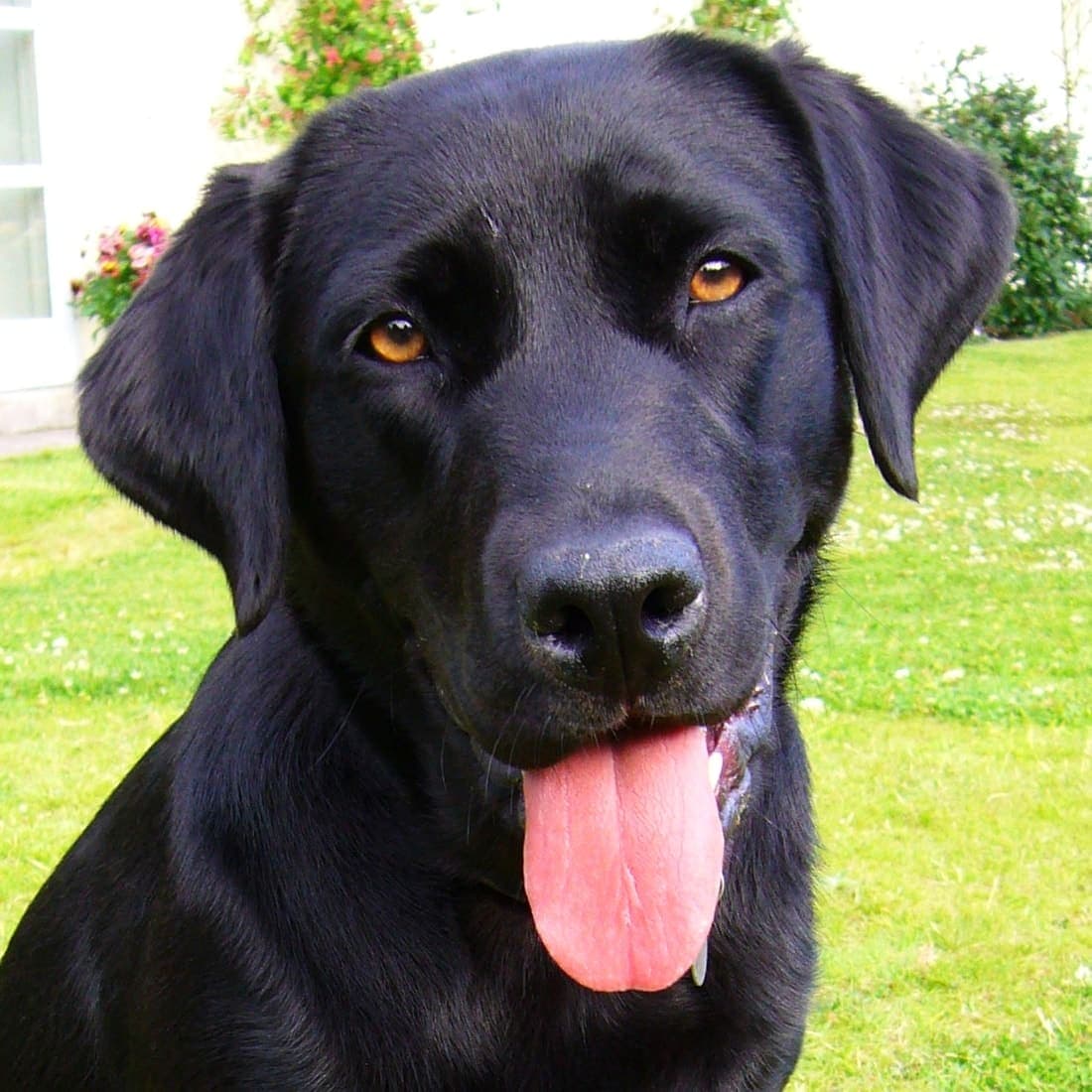
The standard describes a rich, lustrous golden of various shades, from light to dark, with feathering that may be lighter than the rest of the coat. Purebred Goldens are not black, and the standard penalizes white markings beyond a few hairs on the chest. Cream and deep red dogs are both within the range people call golden. In a mix, color is unreliable: crosses with black breeds are frequently black, and a gold coat can come from many other breeds.
Head and expression
The skull is broad, the stop is well defined but not abrupt, and the muzzle is straight, deep, and wide, nearly as long as the skull. Eyes are medium-large, set well apart, and brown. A broad, soft-looking head with a full muzzle often carries through.
Ears
The ears are rather short, attached well behind and just above the eye, and fall close to the cheek. The standard faults a low, hound-like ear set. In crosses with prick-eared breeds the ears often tip or stand halfway.
Tail
The tail is thick at the base, follows the line of the back, and is carried level or with a moderate upward curve, never curled over the back. With its feathering it forms a plume underneath. A feathered tail that curls tightly over the back suggests a spitz-type parent.
Size and build
Males stand 23 to 24 inches and weigh 65 to 75 pounds. Females stand 21.5 to 22.5 inches and weigh 55 to 65 pounds. The body is slightly longer than tall, deep through the chest, with a level back.
Breeds often mistaken for a Golden Retriever mix
- Labrador Retriever: A yellow Lab has a short, dense coat with no feathering and a thick, tapering "otter" tail.
- Nova Scotia Duck Tolling Retriever: Red or orange with a feathered coat, but smaller, and usually with white on the chest, feet, face, or tail tip.
- Irish Setter: Deep red with long feathering, on a taller, narrower frame with a longer head and long, low-set ears.
- Flat-Coated Retriever: A similar outline and feathering in solid black or liver. A black dog that looks like a Golden may resemble this breed more than a Golden cross.
- Great Pyrenees: White or cream with a thick coat, but larger and heavier.
- Brittany and spaniels: Feathered coats in orange, red, or gold shades on a smaller dog.
Common Golden Retriever crosses and how they usually look
The names in quotation marks are informal labels. None of these crosses is an AKC-recognized breed or has a written standard, and the descriptions are tendencies reasoned from the parent breeds, not predictions for any one dog.
Golden Retriever and Labrador
Sometimes called a "Goldador." The two breeds are close in size and shape, so the coat is the main clue: often medium in length, with light feathering on the tail and the backs of the legs. Color may be yellow, gold, or black. See our Labrador mix guide.
Golden Retriever and Poodle (Goldendoodle)
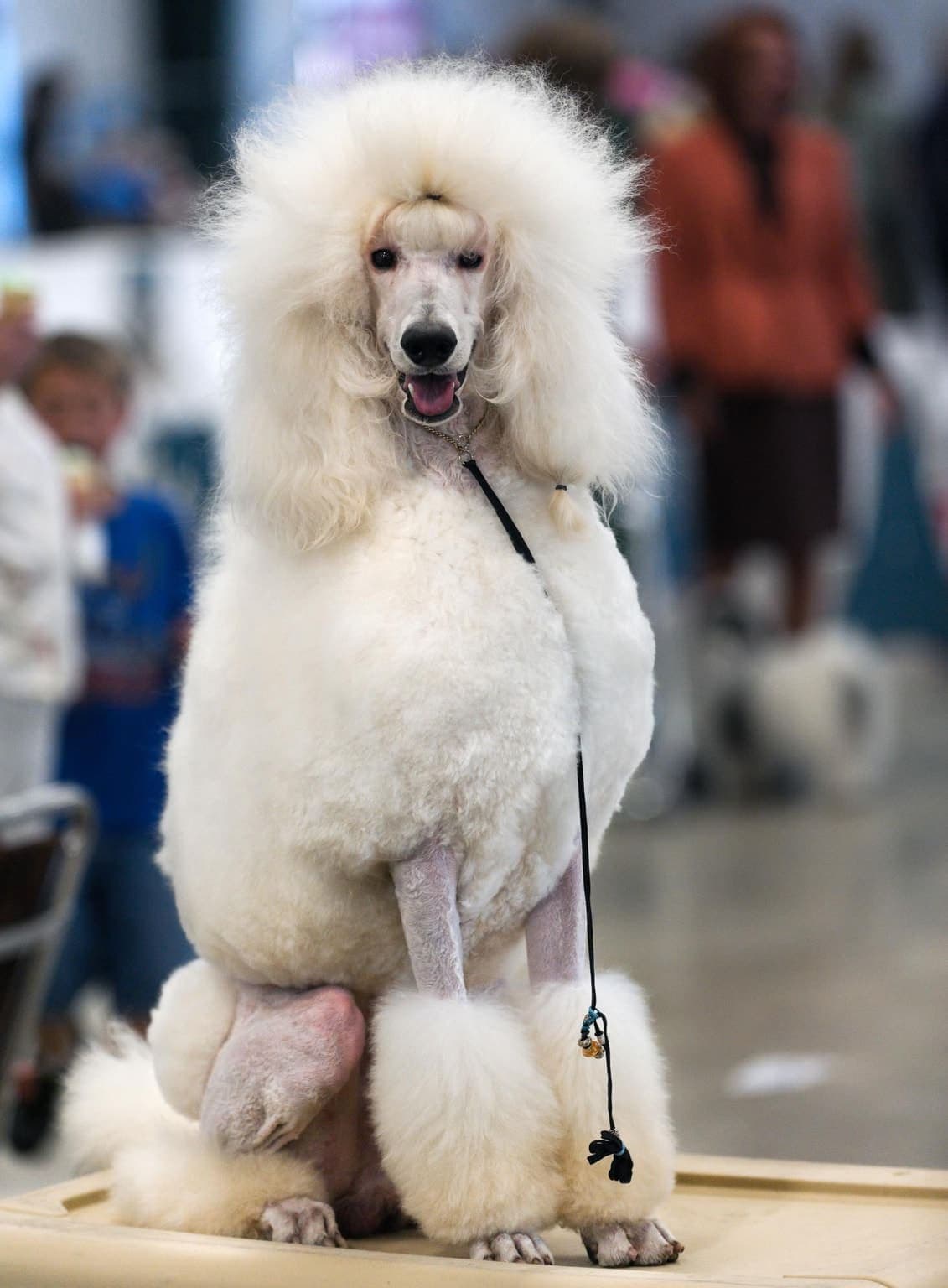
A wavy to curly coat, often cream, apricot, or red. Size depends on the Poodle parent, and a long coat hides much of the head. See our Poodle mix guide.
Golden Retriever and German Shepherd
Often a longer muzzle, ears that tip or stand halfway, and a feathered coat in gold, sable, or black and tan. See our German Shepherd mix guide.
Golden Retriever and Siberian Husky
A thick double coat in gold to red shades, ears that may stand or tip, a tail carried higher, and sometimes light eyes. See our Husky mix guide.
Golden Retriever and Border Collie
Feathered coats on both sides. Many are black or gold with white on the chest, feet, or face, on a lighter frame than a Golden's. See our Border Collie mix guide.
Golden Retriever and Cocker Spaniel
A smaller dog that can look like a Golden that never grew up, with longer, lower-set ears and a rounder skull from the Cocker Spaniel.
Golden Retriever and Great Pyrenees or Bernese Mountain Dog
Large, heavy-coated dogs. Pale cream to white coloring suggests the Great Pyrenees side. Black with rust and white markings suggests the Bernese Mountain Dog side.
What a photo can and cannot tell you
A photo can show coat length and feathering, color, head shape, ear set, and tail carriage. A photo identifier compares those with reference images and returns a ranked list of breeds the dog resembles. If Golden Retriever appears with a second breed across several photos, that is a fair description of your dog's look.
A photo cannot show ancestry or percentages, and it cannot show size without a scale reference. Our mixed breed dog identifier page explains these limits.
Feathering and tail carriage show best in a standing side profile in daylight. A wet or freshly clipped coat hides both. See how to identify a dog breed from a photo for the full checklist.
When a DNA test is the right tool
Use a dog DNA test when you need an answer about ancestry and not appearance: a form that asks for breed, a veterinarian who wants breed background, or simply wanting to know. Read dog DNA test accuracy for what the tests can and cannot show.
Care points that follow from the Golden Retriever side
A dog that looks like a Golden may not act like one. These are things to be ready for and then adjust to the dog you have.
- Coat. The AKC notes that Goldens shed heavily once or twice a year and moderately the rest of the time. Brush once or twice a week, and daily during heavy shedding. Feathering behind the ears and legs tangles first.
- Exercise. The AKC says Goldens, like most sporting breeds, need plenty of daily exercise, and recommends asking a veterinarian before starting strenuous or high-impact activity.
- Ears. The AKC recommends checking a Golden's ears weekly. Dry drop ears after swimming.
- Weight and joints. Keep a large, active dog lean. The AKC lists hip and elbow dysplasia among the conditions responsible Golden breeders screen for. A mixed-breed dog's own risk cannot be read from its looks, so raise it with your veterinarian.
- Training. The AKC describes Goldens as eager to please and easy to train. Early socialization and puppy classes are recommended for any dog.
Frequently asked questions
Can a Golden Retriever mix be black?
Yes. Purebred Goldens are not black, but a cross with a black breed often is. A black dog with Golden-style feathering may be a Golden cross, or may resemble a Flat-Coated Retriever or another feathered breed.
My dog is gold with a long coat. Is it a Golden mix?
Color and coat length alone cannot tell you. Look at where the feathering is, the breadth of the head, the ear set, and how the tail is carried.
Is a Goldendoodle a breed?
No. It is a cross between a Golden Retriever and a Poodle. It is not recognized by the AKC, and coat, color, and size vary from dog to dog.
How big will a Golden Retriever mix get?
Adult size usually falls between the parents but is not predictable for an individual dog, and the second parent is often unknown. Purebred Goldens weigh 55 to 75 pounds.
Sources
- American Kennel Club, Official Standard for the Golden Retriever: https://images.akc.org/pdf/breeds/standards/GoldenRetriever.pdf
- American Kennel Club, Golden Retriever: https://www.akc.org/dog-breeds/golden-retriever/
- Gunter, Barber, and Wynne, "A canine identity crisis: Genetic breed heritage testing of shelter dogs," PLOS ONE, 2018: https://journals.plos.org/plosone/article?id=10.1371/journal.pone.0202633