How to Identify an Australian Shepherd Mix: Merle, Eyes, Common Crosses, and Look-Alikes
Breed Identification • By Dog Breed Detector Editorial Team • 2026-11-18
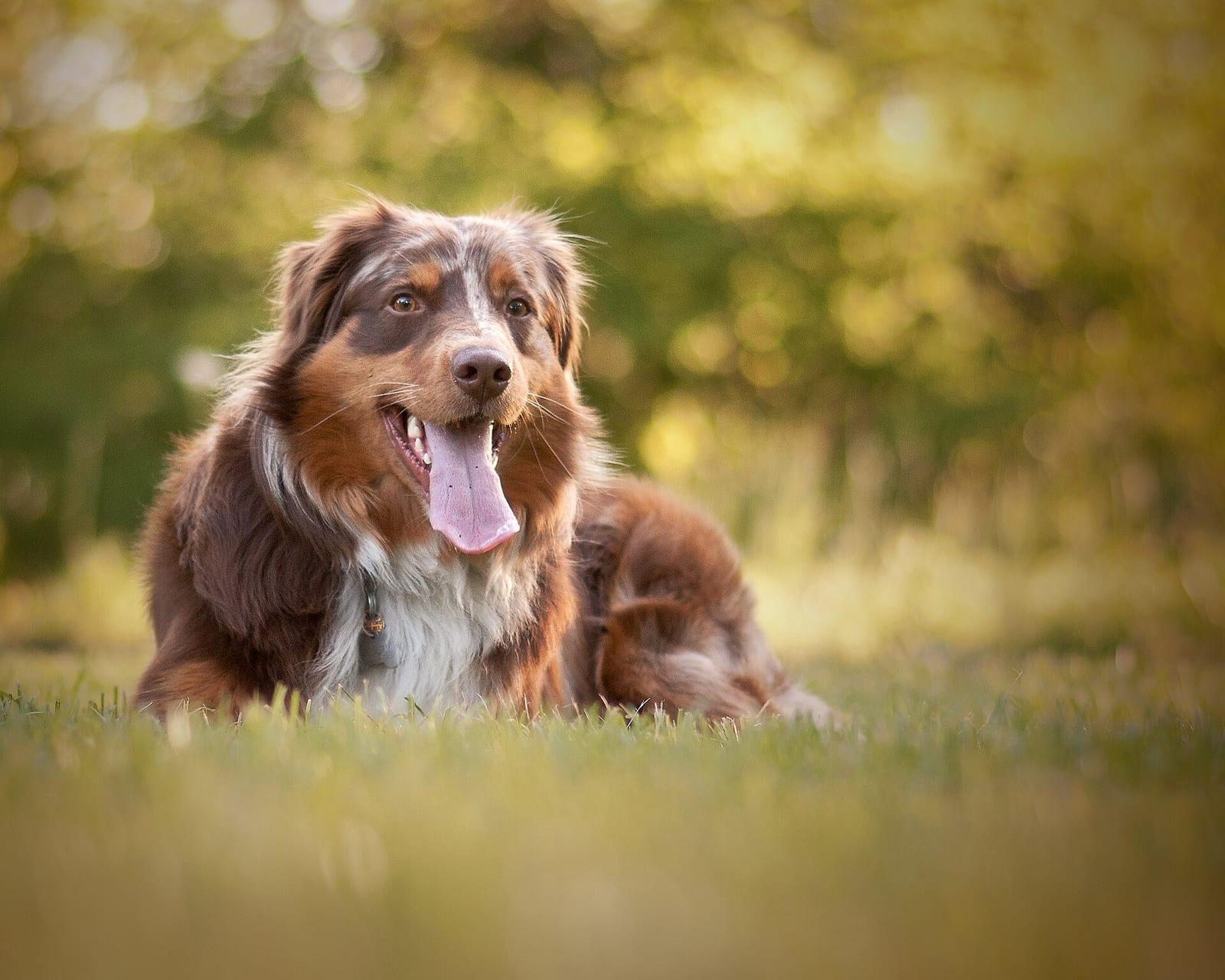
"Aussie mix" is the usual guess for a medium-sized dog with a mottled merle coat, one or two blue eyes, or both. Sometimes the guess is right. Merle and blue eyes also occur in several other breeds, and plenty of Australian Shepherd crosses are solid black or red with brown eyes and get labeled as something else.
This guide covers which Australian Shepherd traits tend to show in crosses, which breeds share them, how the common pairings usually look, and when a DNA test is the right tool. Two limits apply throughout. A photo shows which breeds a dog resembles, not which breeds are in its ancestry. And mixed-breed appearance varies widely, even among littermates, so identifying a mix by eye is unreliable.
How reliable is a visual guess?
Less reliable than most people expect. A 2018 study in PLOS ONE compared shelter staff's breed labels with DNA results at a San Diego shelter. Staff named at least one breed that the DNA test also found in 67.7 percent of dogs, but matched both the primary and secondary breed in only 10.4 percent. Across the 919 dogs tested at two shelters, 4.9 percent were purebred. Treat "Aussie mix" as a description of how a dog looks until a DNA test supports it.
Australian Shepherd traits that tend to show in mixes
The purebred descriptions here follow the American Kennel Club (AKC) breed standard. In a mix, each trait may appear fully, partly, or not at all.
Merle coat
The standard lists four colors: blue merle, black, red merle, and red, each with or without white markings and tan (copper) points. Merle is a marbled pattern of darker patches on a lighter background of the same color. It is the trait people notice first, and it is also the least specific. Merle appears in the AKC standards of the Collie, Shetland Sheepdog, Cardigan Welsh Corgi, Great Dane, and Miniature American Shepherd, the Border Collie standard accepts all colors and patterns, and the Dachshund standard calls the same pattern dapple. A merle coat narrows the possibilities to a group of breeds. It does not point to one.
Eye color
The standard accepts brown, blue, amber, or any combination, including flecks and marbling, so one blue eye and one brown eye, or two colors within one eye, are all normal for the breed. Blue eyes are also accepted in the Siberian Husky and the Dalmatian, and in blue merle Collies, Shetland Sheepdogs, and Cardigans.
Ears
Aussie ears are triangular, of moderate size, and set high. At attention they break forward and over, or to the side as a rose ear. The standard treats fully pricked ears and fully hanging ears as severe faults, so a folded, lifted ear is typical. In a cross, ears that stand erect or hang flat usually reflect the other parent.
Coat texture
The coat is of medium length and texture, straight to wavy, with an undercoat. It is short and smooth on the head, ears, and fronts of the legs, with moderate feathering on the backs of the forelegs and the britches and a moderate mane around the neck.
Build and size
The Australian Shepherd is slightly longer than tall, solidly built with moderate bone. The preferred height is 20 to 23 inches for males and 18 to 21 inches for females.
Tail
The standard describes a tail that is docked or naturally bobbed, not longer than four inches. A short natural tail on a mixed-breed dog can be a clue, but many Aussies are docked, and a cross may well have a full-length tail. A long tail does not rule the breed out.
Breeds often mistaken for an Australian Shepherd mix
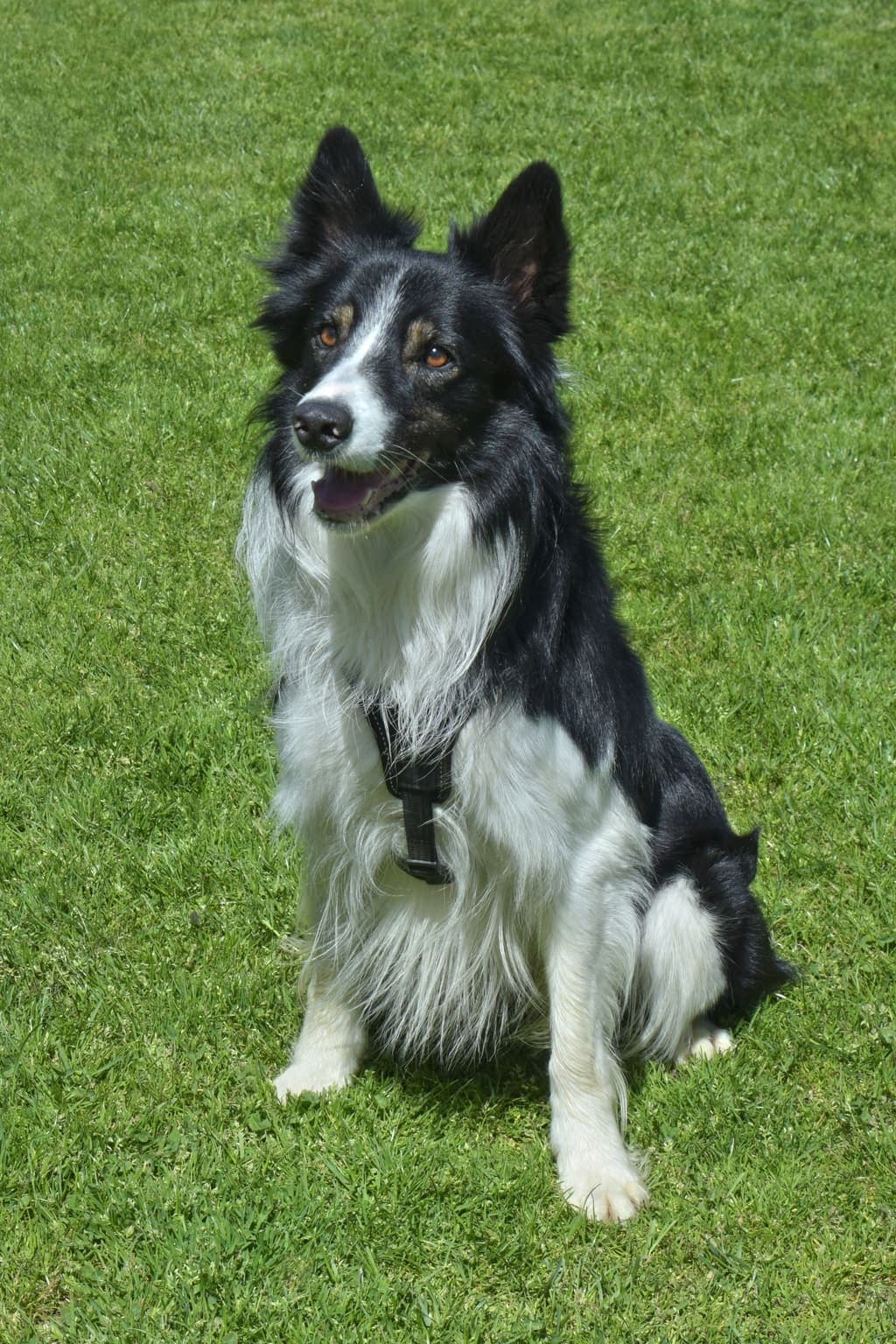
- Border Collie: Similar in size and coat and found in all colors, including merle. The tail is long, reaching at least to the hock, and the ears are carried erect or semi-erect. See our Border Collie vs Australian Shepherd comparison and Border Collie mix guide.
- Miniature American Shepherd: The same colors and eye colors on a smaller frame: 14 to 18 inches for males and 13 to 17 inches for females. A small "Aussie mix" may simply be this breed or a cross of it. See Australian Shepherd vs Miniature American Shepherd.
- Collie and Shetland Sheepdog: Blue merle is one of their recognized colors. Both have a long tail and ears carried about three-quarters erect with the tips breaking forward.
- Cardigan Welsh Corgi: Comes in blue merle and may have blue eyes in that color, but is long and low with large erect ears and a long tail.
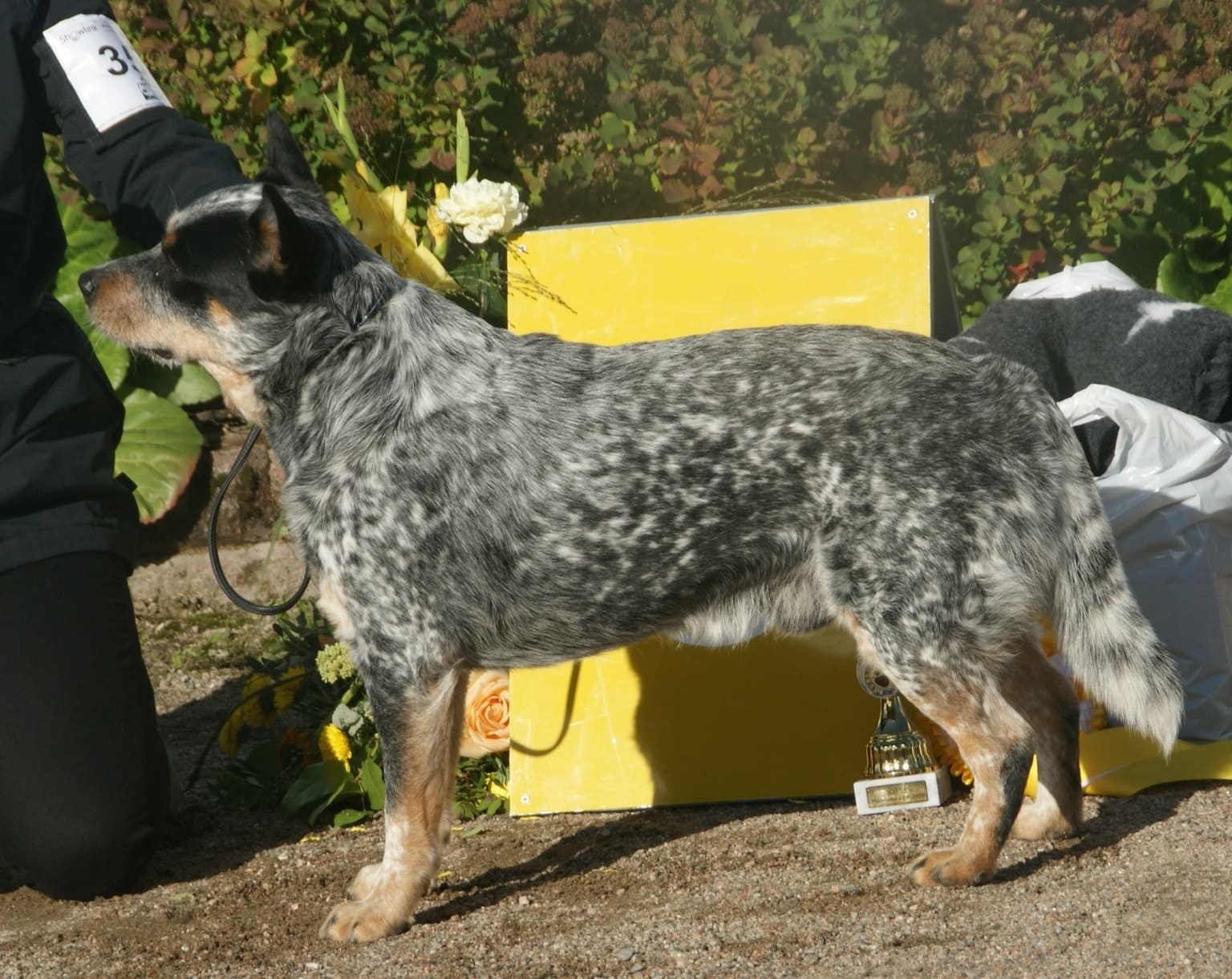
- Australian Cattle Dog: The blue coat is speckled or mottled through the whole coat, not marbled in patches, and the ears are pricked. See our Australian Cattle Dog mix guide.
Common Australian Shepherd crosses and how they usually look
The names in quotation marks are informal labels. None of these crosses is an AKC-recognized breed or has a written standard, and the descriptions are tendencies reasoned from the parent breeds, not predictions for any one dog.
Australian Shepherd and Poodle
Often sold as an "Aussiedoodle." The Poodle has a curly, dense coat, a long, fine muzzle, and ears that hang close to the head, so these crosses usually have a wavy to curly coat that hides the outline of the head and body, with drop ears. Merle and blue eyes may appear. Size depends on which Poodle variety was used. See our Poodle mix guide.
Australian Shepherd and Border Collie
The two parents are close in size, coat, and color, so this cross is very hard to tell from either parent by eye. A long tail and more upright ears lean toward the Border Collie side.
Australian Shepherd and Labrador
The Labrador Retriever has a short, dense coat, hanging ears, and a thick tail without feathering. Crosses are often solid black or brown with a little white, a coat somewhat longer than a Lab's, and drop ears. Because Labradors come only in black, yellow, and chocolate, merle on a Lab-shaped dog comes from the other parent. See our Labrador mix guide.
Australian Shepherd and Siberian Husky
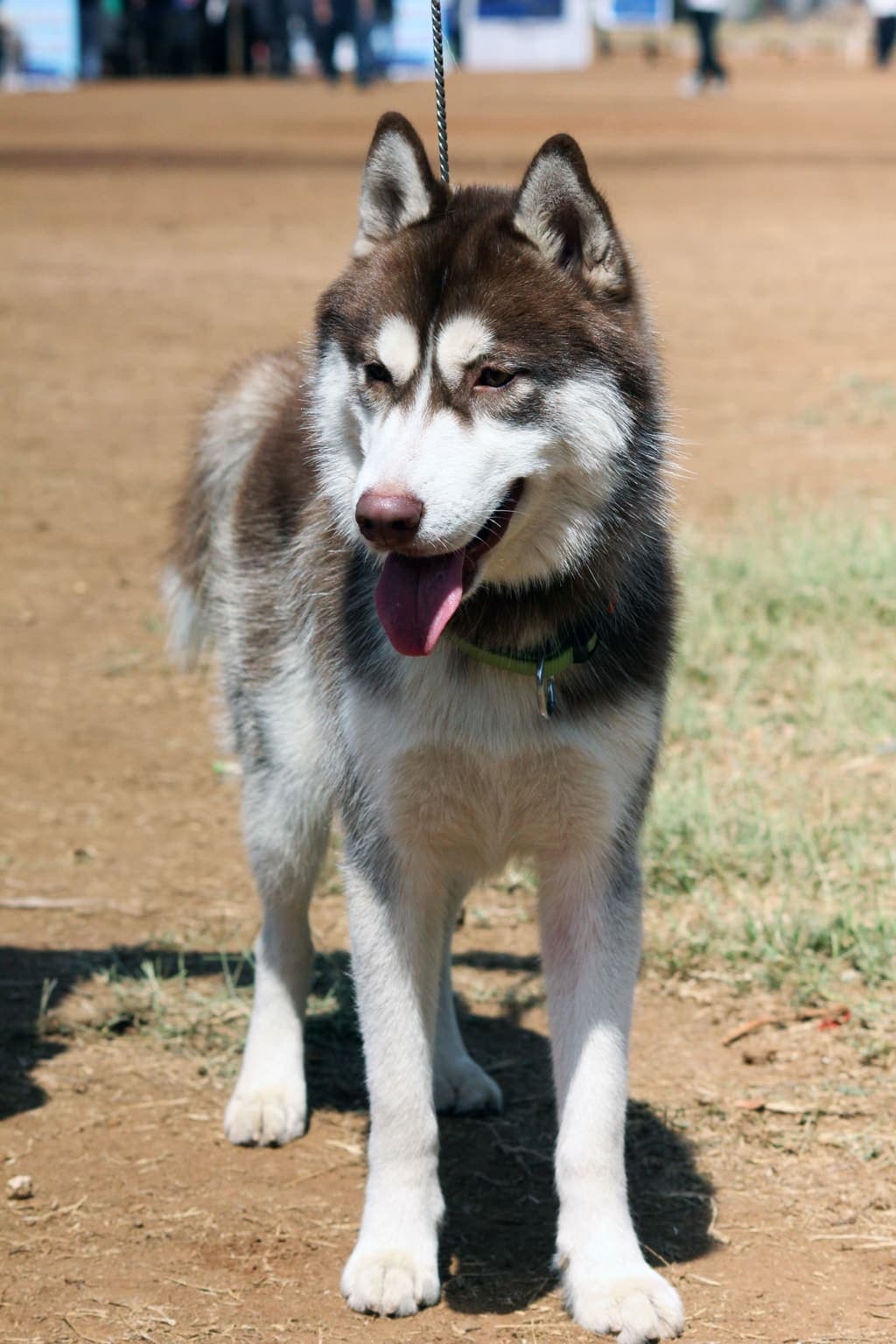
Both parents can have blue eyes, so eye color tells you nothing about which side it came from. The Husky contributes strongly erect ears and a well-furred brush tail. The Siberian Husky standard does not allow merle, so a merle coat on a husky-looking dog points to another breed in the mix. See our Husky mix guide.
Australian Shepherd and German Shepherd
The German Shepherd Dog is taller, at 22 to 26 inches, with erect, moderately pointed ears. Crosses tend to be larger than an Aussie with a longer muzzle and ears that stand, tip, or fold. See our German Shepherd mix guide.
Australian Shepherd and Australian Cattle Dog
Sometimes called a "Texas Heeler." The Cattle Dog has a short, flat double coat and pricked ears, so these crosses are usually shorter-coated than an Aussie, with merle or speckled coloring and ears that stand or half-stand.
What a photo can and cannot tell you
A photo can show coat pattern, eye color, ear carriage, coat length, and proportions. A photo identifier compares those with reference images and returns a ranked list of breeds the dog resembles. For a merle herding-type dog, expect Australian Shepherd alongside Border Collie and other herding breeds. That overlap is real, and a shortlist is a more honest answer than a single name.
A photo cannot show ancestry or percentages, and it cannot show size without a scale reference, which matters when the question is Australian Shepherd or Miniature American Shepherd. Our mixed breed dog identifier page explains these limits.
The most useful photos are a standing side profile, which shows proportions, coat length, and the tail, and a front view of the head at the dog's eye level, which shows ear carriage and eye color. See how to identify a dog breed from a photo.
When a DNA test is the right tool
Use a dog DNA test when you need to know ancestry, not resemblance: for a conversation with your veterinarian about breed-related health screening, or when the visual clues point in several directions. Read dog DNA test accuracy for the limits of testing.
Care points that follow from the Australian Shepherd side
A dog that looks like an Aussie may not behave like one. These are things to be ready for and then adjust to the dog you have.
- Exercise. The AKC describes the Australian Shepherd as a high-energy, athletic dog that needs a great deal of exercise every day and does best with a job, such as herding, obedience, or agility.
- Herding behavior. The AKC notes a strong impulse to herd, including children and other pets. Circling or nipping at heels is a behavior to redirect with training.
- Training. The AKC calls early socialization and obedience training musts for the breed.
- Coat. A double coat needs weekly brushing, and more during shedding season.
- Health screening. The AKC says responsible Aussie breeders test for hip dysplasia, epilepsy, cataracts, and certain forms of cancer. A mixed-breed dog's risk is not known from its looks, so mention the possible Aussie background to your veterinarian.
Frequently asked questions
My dog has a merle coat. Is it an Australian Shepherd mix?
Not necessarily. Merle is recognized in several herding breeds and in the Great Dane, and the Dachshund's dapple is the same pattern. Look at ears, coat length, tail, and proportions as well.
Does one blue eye mean my dog is part Aussie?
No. The Australian Shepherd standard accepts blue eyes, but so do the standards of the Siberian Husky and the Dalmatian, and blue eyes occur in other merle dogs.
My dog has a short tail. Is that an Aussie trait?
It can be. Australian Shepherds may be born with a natural bobtail. Other breeds also have short tails, and many dogs are docked, so a short tail alone is weak evidence.
How big will an Australian Shepherd mix get?
Adult size usually falls between the parents but is not predictable for an individual dog, and the second parent is often unknown. Purebred Australian Shepherds stand 18 to 23 inches at the shoulder.
Sources
- American Kennel Club, Official Standard of the Australian Shepherd: https://images.akc.org/pdf/breeds/standards/AustralianShepherd.pdf
- American Kennel Club, Australian Shepherd: https://www.akc.org/dog-breeds/australian-shepherd/
- American Kennel Club official standards of the Border Collie, Miniature American Shepherd, Collie, Shetland Sheepdog, Cardigan Welsh Corgi, Great Dane, Dachshund, Dalmatian, Siberian Husky, Labrador Retriever, Poodle, German Shepherd Dog, and Australian Cattle Dog, linked from each breed's page at https://www.akc.org/dog-breeds/
- Gunter, Barber, and Wynne, "A canine identity crisis: Genetic breed heritage testing of shelter dogs," PLOS ONE, 2018: https://journals.plos.org/plosone/article?id=10.1371/journal.pone.0202633