How to Identify a Corgi Mix: Short Legs, Ears, Common Crosses, and Look-Alikes
Breed Identification • By Dog Breed Detector Editorial Team • 2026-11-18
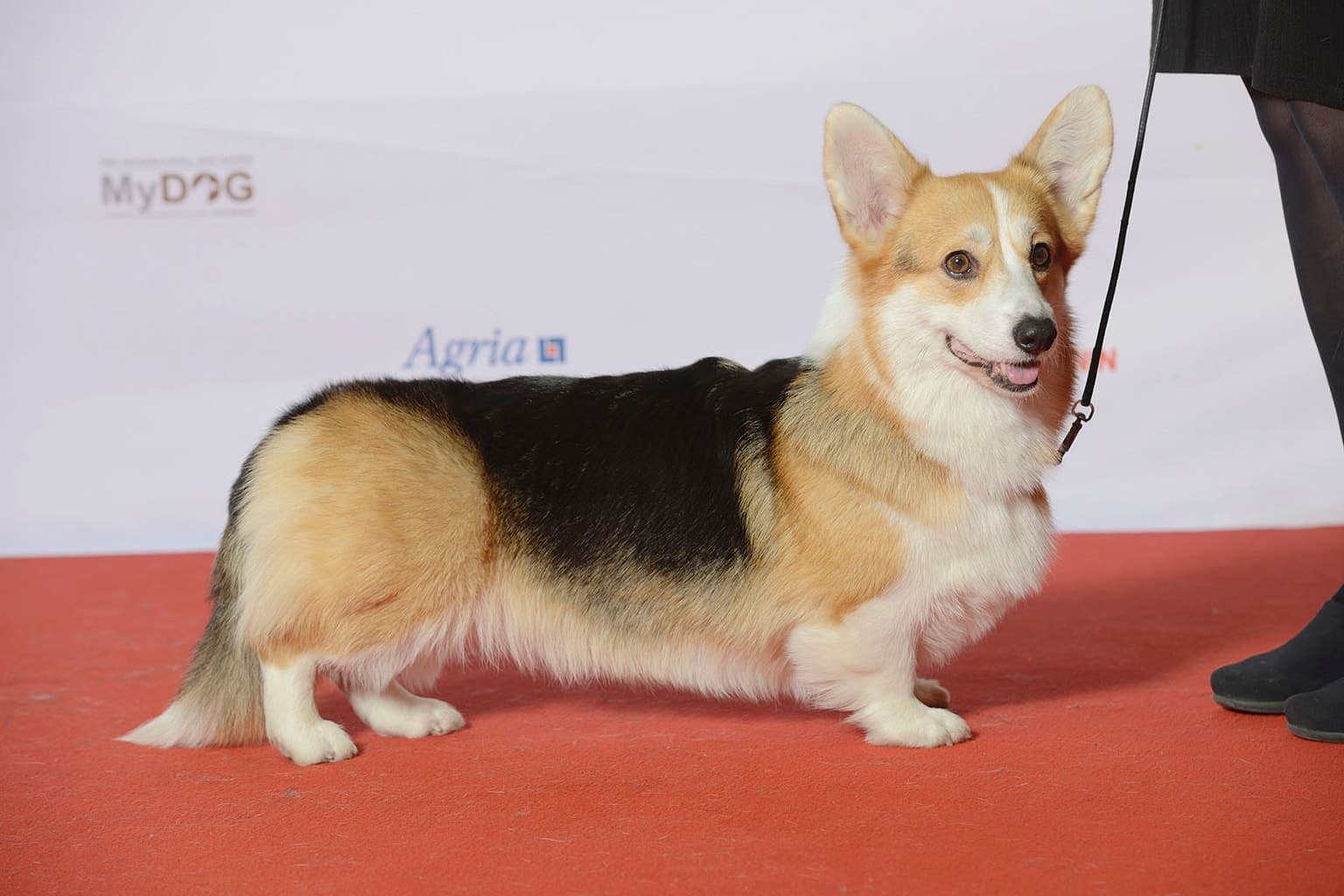
"Corgi mix" is the usual guess for a dog that looks like a larger breed standing on short legs, especially one with big upright ears and a foxy face. It is often a fair description. It is not proof of a Corgi parent, because other breeds are also built long and low, and a Corgi cross can come out with ordinary leg length.
"Corgi" covers two separate AKC breeds, the Pembroke Welsh Corgi and the Cardigan Welsh Corgi. This guide covers which of their traits tend to show in crosses, which breeds are mistaken for a Corgi mix, how the common pairings usually look, and when a DNA test is the right tool. Two limits apply throughout. A photo shows which breeds a dog resembles, not which breeds are in its ancestry. And mixed-breed appearance varies widely, even among littermates, so identifying a mix by eye is unreliable.
How reliable is a visual guess?
It is a starting point, not an answer. A 2018 study in PLOS ONE had 919 dogs at two US shelters DNA tested and found that 4.9 percent were purebred. Where staff labels were compared with the DNA results, staff named at least one of a dog's breeds in 67.7 percent of cases and matched both the primary and secondary breed in 10.4 percent. Treat "Corgi mix" as a description of appearance until a DNA test supports it.
Corgi traits that tend to show in mixes
The purebred descriptions here follow the American Kennel Club (AKC) breed standards. In a mix, each trait may appear fully, partly, or not at all.
Long, low outline
Both breeds are low-set with a deep chest. The Pembroke stands 10 to 12 inches at the shoulder, and its body from withers to tail is about 40 percent longer than its height. The Cardigan stands 10.5 to 12.5 inches with an ideal length-to-height ratio of 1.8 to 1. Short legs are the trait people look for in a cross, and they often do appear, on a body sized between the two parents. They do not always appear, and they are not unique to Corgis.
Ears
Both breeds have erect ears. The Pembroke's are firm, medium-sized, and taper to a slightly rounded point. The Cardigan's are large and prominent in proportion to the dog, moderately wide at the base, and slightly rounded at the tip. Both standards penalize drop ears, so hanging ears on a suspected Corgi mix usually reflect the other parent.
Head
The Pembroke standard calls the head "foxy in shape and appearance": fairly wide and flat between the ears, with a moderate stop and a tapered muzzle that is shorter than the skull, in a ratio of three parts to five. The Cardigan has the same three-to-five proportion with a muzzle that is rounded, not pointed.
Coat and color
Both have a medium-length, weather-resistant double coat that sheds, with a thicker ruff around the neck and longer hair on the backs of the thighs. Pembroke colors are red, sable, fawn, and black and tan, with or without white on the legs, chest, neck, muzzle, and underparts. The Cardigan comes in all shades of red, sable, and brindle, in black with or without tan or brindle points, and in blue merle, usually with white flashings. Brindle or merle on a Corgi-shaped dog is consistent with the Cardigan side but could also come from an unrelated breed.
Tail
The Cardigan has a long tail, set low, reaching well below the hock, which the standard describes as a fox-like brush. The Pembroke standard describes a tail docked as short as possible and notes that some puppies are born with a naturally short tail. A mixed-breed dog with a Pembroke parent may have a long tail, so tail length does not separate the two.
Breeds often mistaken for a Corgi mix
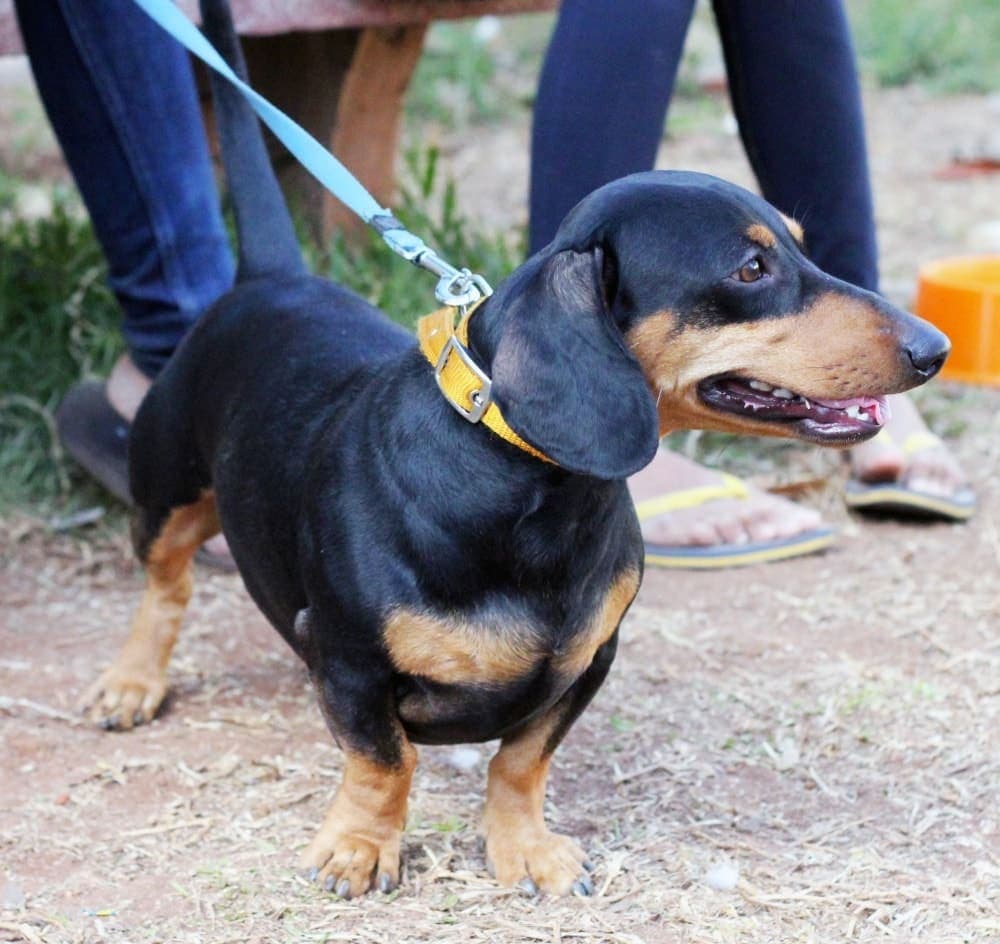
- Dachshund: Also low to the ground, long in body, and short of leg, but with rounded ears that hang beside the face. See our Dachshund mix guide.
- Swedish Vallhund: A separate AKC herding breed with prick ears, a wedge-shaped head, and a height of 11.5 to 13.5 inches. It is sable in shades of grey through red with lighter "harness" markings, and its tail may be long, stub, bob, or docked.
- Pembroke and Cardigan, confused with each other: The ears, tail, and colors above separate them. See our Cardigan vs Pembroke Welsh Corgi comparison.
- Other short-legged mixes: A cross between a Dachshund and a herding or spitz-type dog can look much like a Corgi mix. Short legs tell you that a short-legged breed is likely somewhere in the ancestry, not which one.
Common Corgi crosses and how they usually look
The names in quotation marks are informal labels. None of these crosses is an AKC-recognized breed or has a written standard, and the descriptions are tendencies reasoned from the parent breeds, not predictions for any one dog.
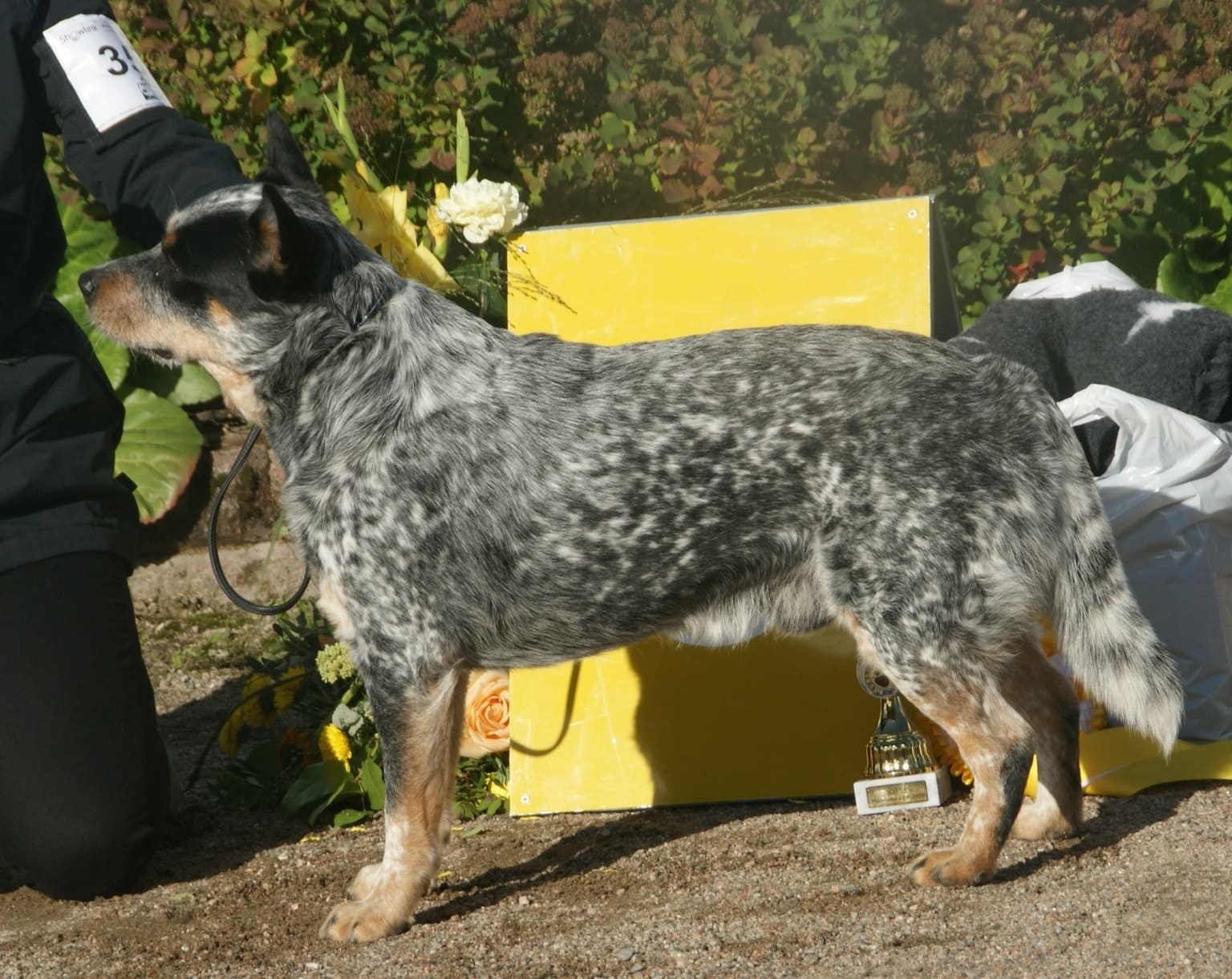
Corgi and Australian Cattle Dog
Sometimes called a "Cowboy Corgi." The Australian Cattle Dog also has pricked ears and a short double coat, in blue or red speckle. Crosses often show speckled or mottled coloring on a low, sturdy body with upright ears. See our Australian Cattle Dog mix guide.
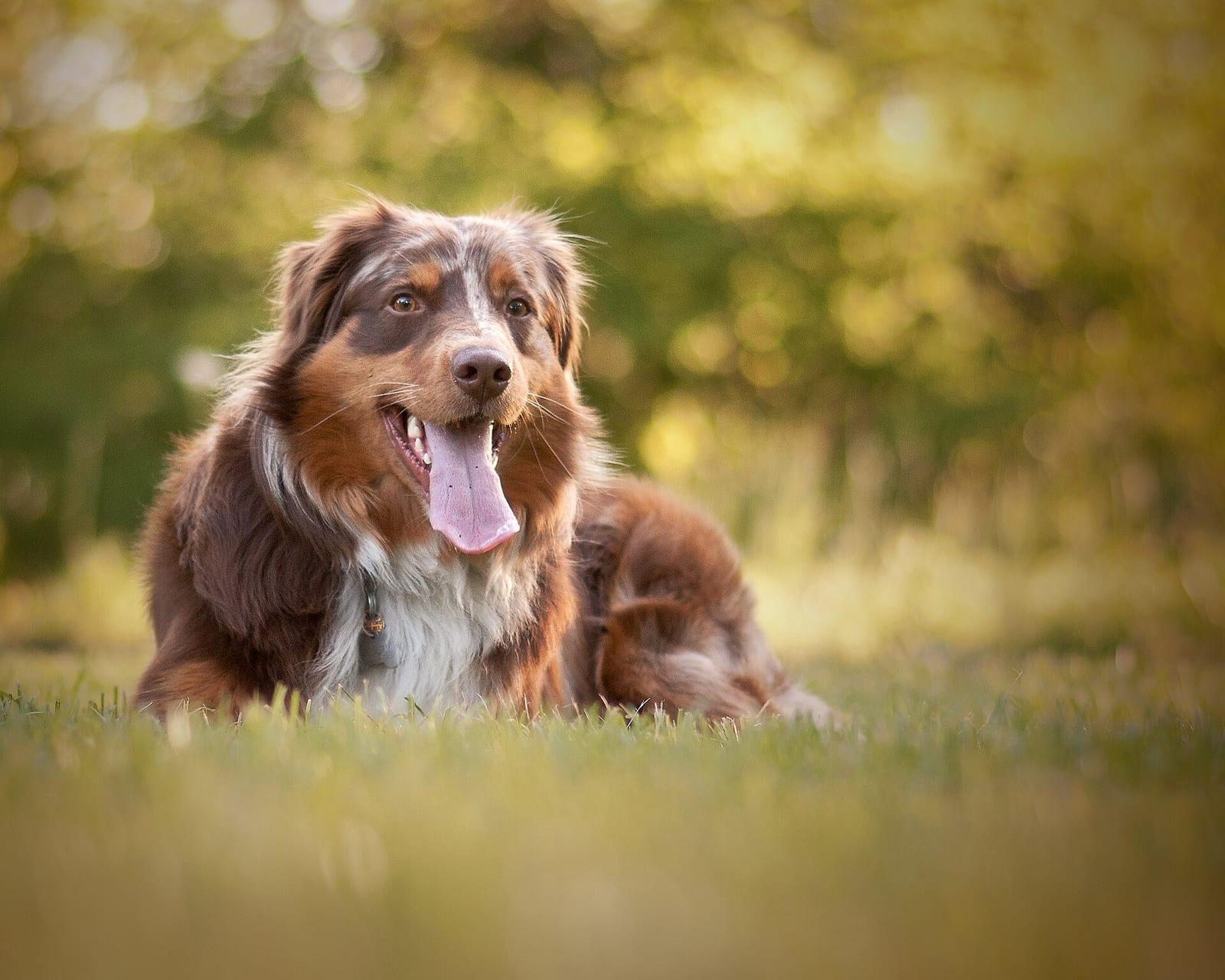
Corgi and Australian Shepherd
Sometimes called an "Auggie." The Australian Shepherd adds a longer coat, ears that fold over, and possibly merle coloring or blue eyes. See our Australian Shepherd mix guide.
Corgi and Siberian Husky
Sometimes called a "Horgi." Both parents have erect ears and a double coat. The Siberian Husky may add blue eyes, facial markings, and a well-furred brush tail. See our Husky mix guide.
Corgi and German Shepherd
The German Shepherd Dog stands 22 to 26 inches and also has erect ears, so these crosses often look like a small shepherd with shortened legs. See our German Shepherd mix guide.
Corgi and Dachshund
Sometimes called a "Dorgi." Both parents are long and low, so leg length does not help. The ears are the clue: upright, hanging, or one of each.
Corgi and Chihuahua
A small dog, since the Chihuahua weighs no more than 6 pounds. Both parents have erect ears. The Chihuahua's rounded "apple dome" skull and shorter, slightly pointed muzzle may show. See our Chihuahua mix guide.
What a photo can and cannot tell you
A photo can show leg length in proportion to the body, ear carriage, head shape, coat, and tail. A photo identifier compares those with reference images and returns a ranked list of breeds the dog resembles. For a short-legged dog with upright ears, expect one or both Corgi breeds in the shortlist, often next to the breed the rest of the dog resembles.
A photo cannot show ancestry or percentages, and it cannot show size without a scale reference. Our mixed breed dog identifier page explains these limits.
The most useful photo is a standing side profile taken from the dog's own height. Photos taken from above shorten the legs of every dog and make the proportions impossible to judge. Add a front view of the head that shows the ears. See how to identify a dog breed from a photo.
When a DNA test is the right tool
Use a dog DNA test when you need to know ancestry, not resemblance: for example, to learn which short-legged breed is actually present, or to give your veterinarian breed information for health screening. Read dog DNA test accuracy for the limits of testing.
Care points that follow from the Corgi side
A dog that looks like a Corgi may not behave like one. These are things to be ready for and then adjust to the dog you have.
- The back. The AKC advises owners of the Cardigan, as with any "long and low" dog, to be aware of potential back issues, to avoid letting the dog jump down from beds and couches, and to treat stairs as a hazard. That advice is sensible for any long-backed, short-legged mix.
- Shedding. The AKC says the Pembroke sheds a fair amount daily and more in late spring and early summer. Regular brushing keeps it manageable.
- Exercise. Both are herding breeds. The AKC describes the Pembroke as an athletic dog that benefits from moderate daily exercise and is happiest with a job to do.
- Training. The AKC recommends early socialization and reward-based training for both breeds.
- Health screening. The AKC says responsible breeders screen Pembrokes for conditions including hip and elbow dysplasia, eye disorders, and degenerative myelopathy, and Cardigans for hip dysplasia, progressive retinal atrophy, and degenerative myelopathy. A mixed-breed dog's risk is not known from its looks, so mention the possible Corgi background to your veterinarian.
Frequently asked questions
My dog has short legs. Is it a Corgi mix?
Possibly, but short legs alone cannot tell you. Dachshunds and several other breeds are built the same way. Look at the ears, the head, and the coat too.
Do all Corgi mixes have short legs?
No. Many do, which is why the cross is recognizable, but leg length in a mixed-breed dog is not predictable from one parent.
Can a photo tell a Pembroke mix from a Cardigan mix?
Rarely. In purebreds the tail, ear size, and color separate them, but a cross blurs all three. A DNA test is the tool for that question.
How big will a Corgi mix get?
Adult size usually falls between the parents but is not predictable for an individual dog, and the second parent is often unknown. Purebred Pembrokes weigh up to 30 pounds and the Cardigan standard gives an ideal of 25 to 38 pounds.
Sources
- American Kennel Club, Official Standard of the Pembroke Welsh Corgi: https://images.akc.org/pdf/breeds/standards/PembrokeWelshCorgi.pdf
- American Kennel Club, Official Standard of the Cardigan Welsh Corgi: https://images.akc.org/pdf/breeds/standards/CardiganWelshCorgi.pdf
- American Kennel Club, Pembroke Welsh Corgi: https://www.akc.org/dog-breeds/pembroke-welsh-corgi/
- American Kennel Club, Cardigan Welsh Corgi: https://www.akc.org/dog-breeds/cardigan-welsh-corgi/
- American Kennel Club official standards of the Dachshund, Swedish Vallhund, Australian Cattle Dog, Australian Shepherd, Siberian Husky, German Shepherd Dog, and Chihuahua, linked from each breed's page at https://www.akc.org/dog-breeds/
- Gunter, Barber, and Wynne, "A canine identity crisis: Genetic breed heritage testing of shelter dogs," PLOS ONE, 2018: https://journals.plos.org/plosone/article?id=10.1371/journal.pone.0202633