How to Identify a Great Dane Mix: Size, Head, Common Crosses, and Look-Alikes
Breed Identification • By Dog Breed Detector Editorial Team • 2026-11-18
"Great Dane mix" is what people reach for when a short-coated dog is much taller than expected. Height is a fair reason to suspect a giant breed. It does not say which one, and a Great Dane cross with a medium-sized parent may be no taller than a Labrador.
This guide covers which Great Dane traits tend to show in crosses, which breeds are mistaken for a Dane mix, how the common pairings usually look, and when a DNA test is the right tool. Two limits apply throughout. A photo shows which breeds a dog resembles, not which breeds are in its ancestry. And mixed-breed appearance varies widely, even among littermates, so identifying a mix by eye is unreliable.
How reliable is a visual guess?
Studies of shelter dogs show its limits. A 2018 paper in PLOS ONE reported DNA results for 919 dogs at two US shelters, of which 4.9 percent were purebred. At the shelter where staff labels were compared with DNA, staff matched at least one breed in 67.7 percent of dogs and matched both the primary and secondary breed in 10.4 percent. Treat "Great Dane mix" as a description of appearance until a DNA test supports it.
Great Dane traits that tend to show in mixes
The purebred descriptions here follow the American Kennel Club (AKC) breed standard. In a mix, each trait may appear fully, partly, or not at all.
Height and proportions
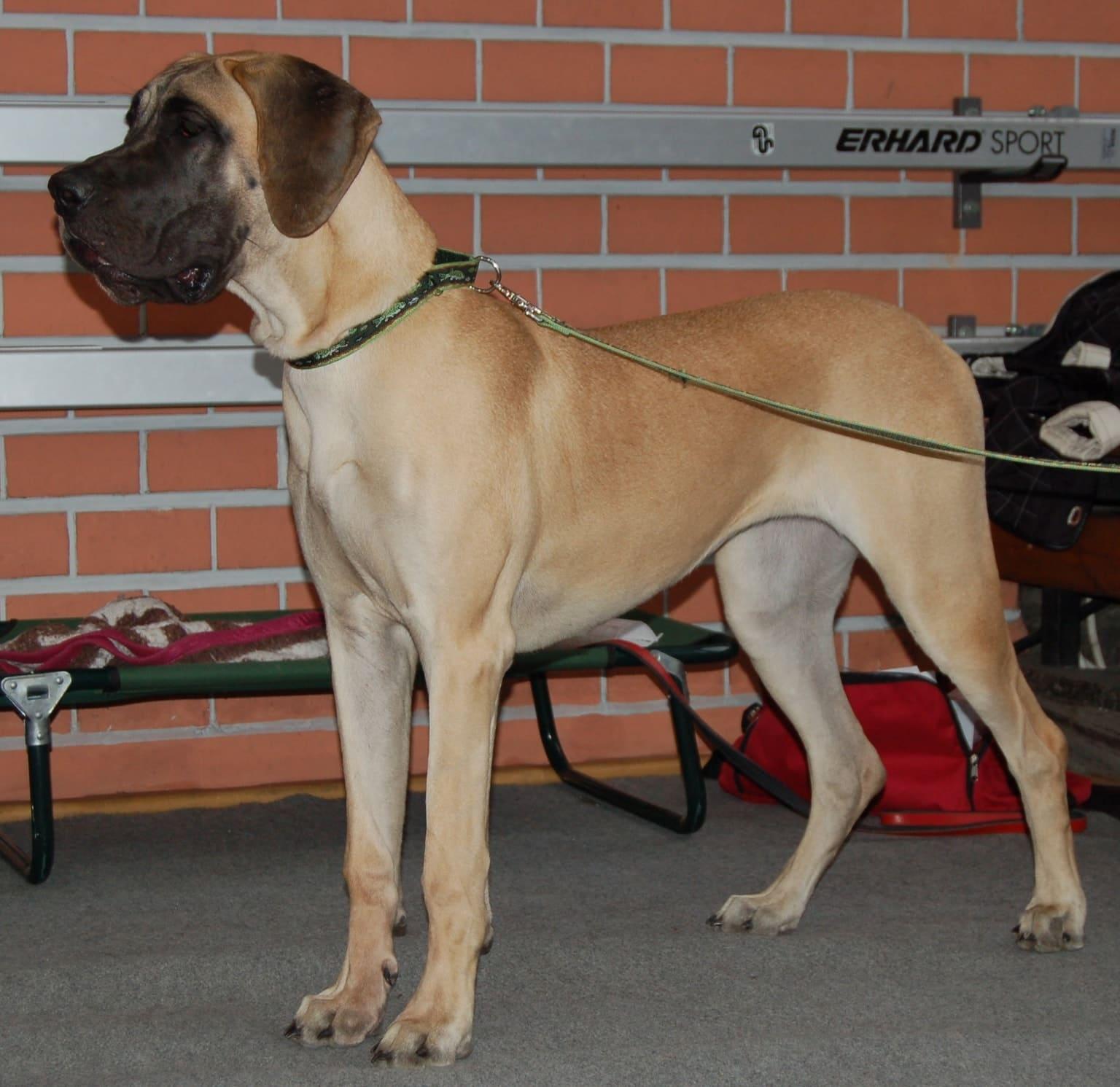
The standard sets minimum heights of 30 inches for males and 28 inches for females, and prefers 32 inches or more for males and 30 or more for females. The Dane is square: about as long as it is tall, with long legs, a deep chest reaching the elbow, and a well-defined tuck-up. That leggy, square outline is more useful than height alone, because it separates a Dane-like dog from the longer, lower outline of the mastiff breeds.
Head
The head is long and rectangular with a strongly pronounced stop, cheek muscles that are not prominent, and a deep muzzle ending in a full, square jaw. The muzzle is as long as the skull, and their top lines are parallel. In a cross, a long head with a deep, square-ended muzzle is the feature most often credited to the Dane side.
Ears
Natural ears are set high, medium in size, and folded forward close to the cheek. Cropped ears stand erect, but cropping is surgery and tells you nothing about breed.
Coat and color
The coat is short, thick, and glossy. The standard recognizes seven colors: fawn and brindle, both with a black mask; blue; black; harlequin, which is white with torn black patches; mantle, which is black and white with a black blanket over the body; and merle. In harlequins and merles, blue eyes or eyes of different colors are permitted. Harlequin and mantle are distinctive when they appear. Fawn, brindle, and black are shared with many other breeds and are weak evidence.
Tail
The tail is broad at the base, tapers to the hock, and hangs straight at rest. The standard disqualifies a docked tail, so a long natural tail is expected.
Breeds often mistaken for a Great Dane mix
- Mastiff: As tall at the minimum (30 inches for males, 27.5 for females) but rectangular, with its height coming from depth of body more than length of leg, and a muzzle half the length of the skull. Fawn, apricot, or brindle with a dark mask. See our Cane Corso vs Mastiff vs Bullmastiff comparison.
- Irish Wolfhound: Minimum heights of 32 and 30 inches, with a rough, hard coat that is wiry over the eyes and under the jaw.
- Greyhound: Tall and short-coated in any color, but far lighter (60 to 70 pounds) with a long, narrow head and a barely perceptible stop.
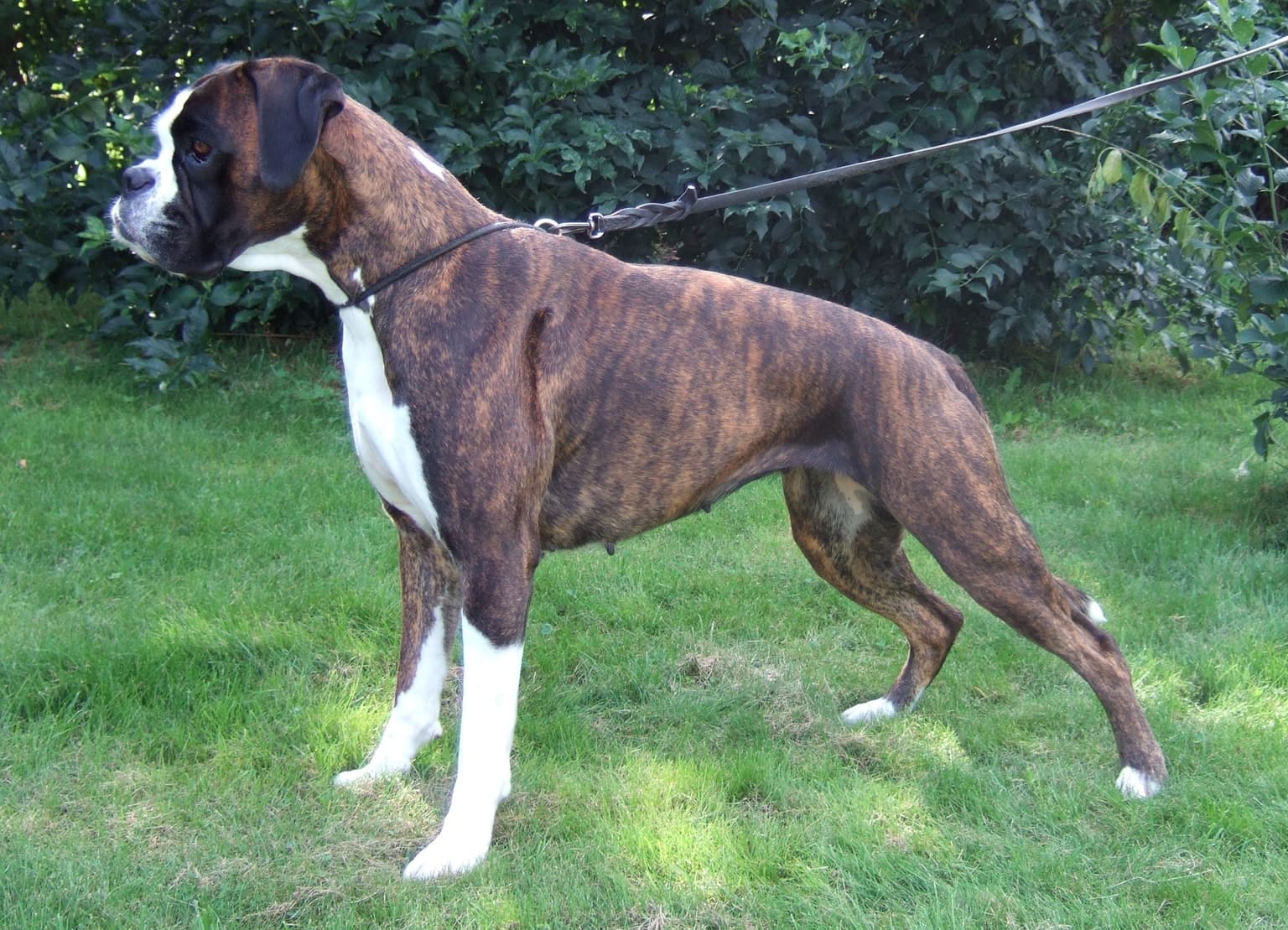
- Boxer: Fawn or brindle with a black mask and a square outline, but 21.5 to 25 inches tall with a short, blunt muzzle. See our Boxer mix guide.
- Weimaraner: A solid grey, short-coated dog of 23 to 27 inches that can be mistaken for a small blue Dane cross.
- Dalmatian: White with black or liver spots, at 19 to 23 inches. A harlequin Dane's markings are irregular torn patches, not round spots.
Common Great Dane crosses and how they usually look
The names in quotation marks are informal labels. None of these crosses is an AKC-recognized breed or has a written standard, and the descriptions are tendencies reasoned from the parent breeds, not predictions for any one dog.
Great Dane and Mastiff
Sometimes called a "Daniff." Both parents are giant, short-coated, and can be fawn or brindle with a dark mask, so this cross is very hard to separate from either parent by eye. Expect a very large dog with a broader head and heavier body than a Dane.
Great Dane and Labrador
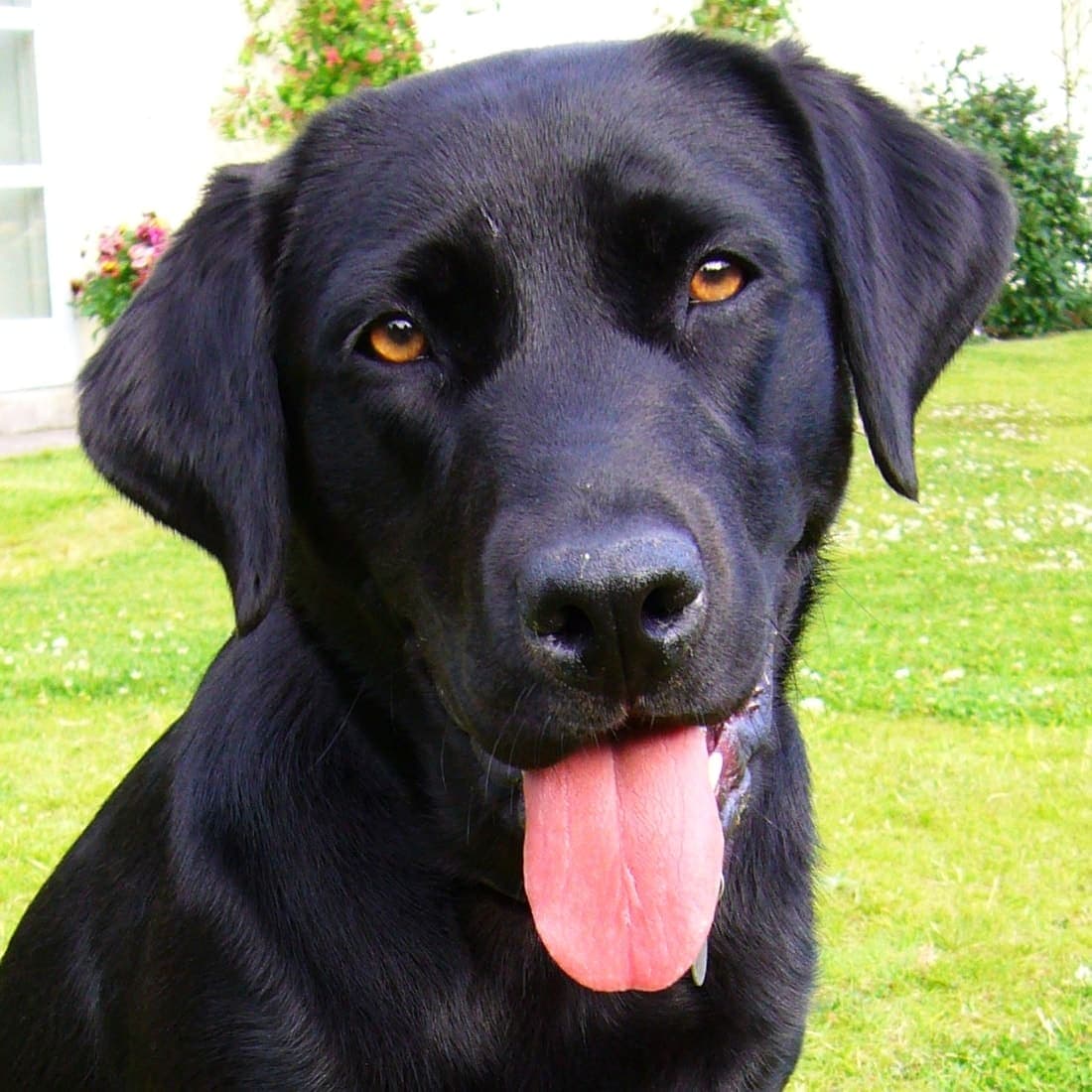
Sometimes called a "Labradane." The Labrador Retriever stands 21.5 to 24.5 inches, so crosses are usually tall but not giant, often solid black, with hanging ears, a long tail, and longer legs than a Lab. See our Labrador mix guide.
Great Dane and German Shepherd
The German Shepherd Dog contributes a denser coat and ears that may stand, tip, or fold. See our German Shepherd mix guide.
Great Dane and pit bull-type breeds
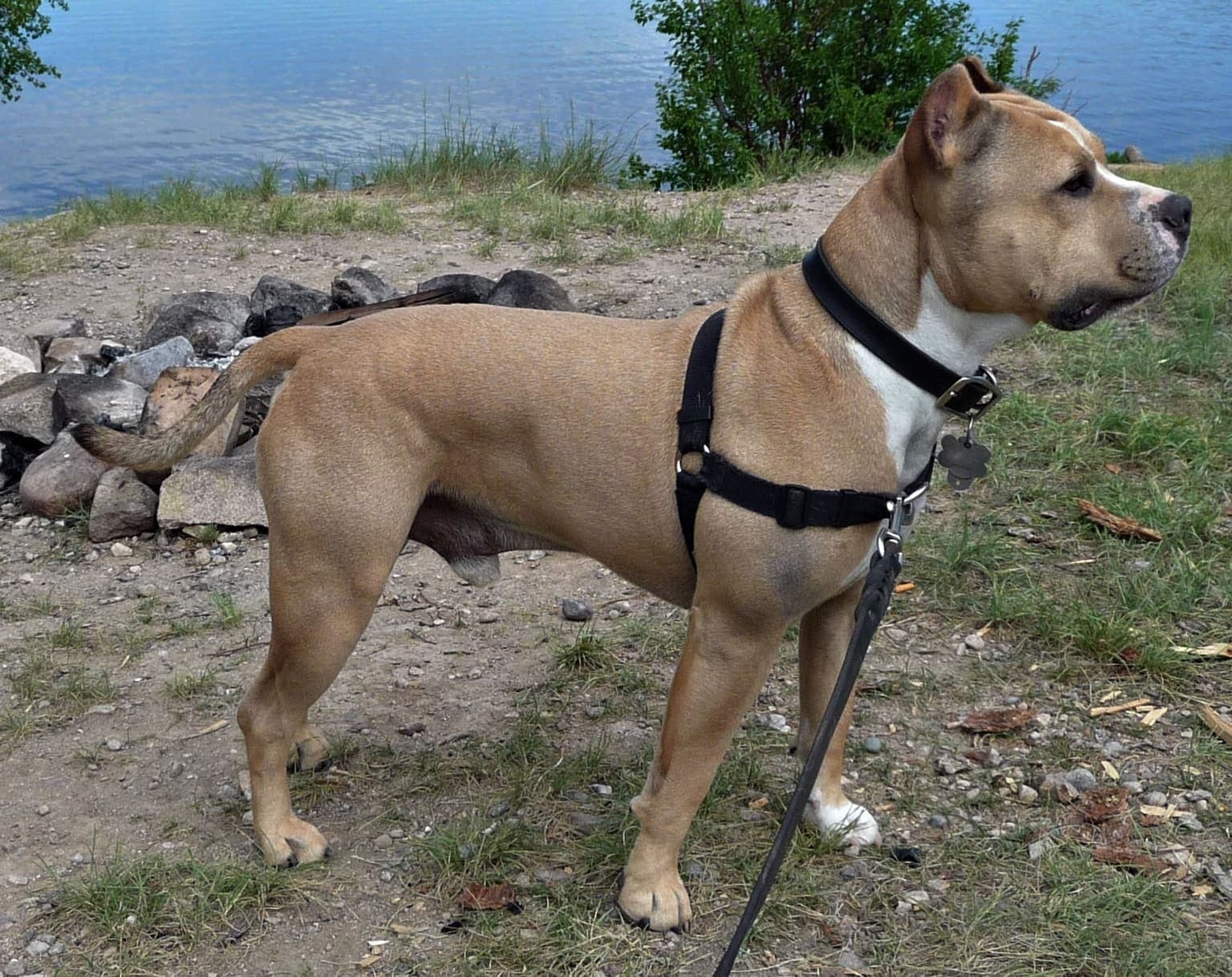
The American Staffordshire Terrier stands about 17 to 19 inches with a short, glossy coat in almost any color. Crosses tend to be large, short-coated, and muscular, with a head broader than a Dane's. See our pit bull mix guide.
Great Dane and Boxer
Both parents are square, short-coated, and fawn or brindle with a black mask. A cross is typically taller than a Boxer with a longer muzzle, and it is easily mistaken for a tall Boxer or a small Dane.
Great Dane and Poodle
Sometimes sold as a "Great Danoodle." The Standard Poodle is over 15 inches with a curly, dense coat, so crosses are tall dogs with a wavy, wiry, or curly coat that hides the outline of the head. See our Poodle mix guide.
What a photo can and cannot tell you
A photo can show head shape, ear set, coat pattern, and proportions. A photo identifier compares those with reference images and returns a ranked list of breeds the dog resembles. For a tall, short-coated dog, expect Great Dane alongside mastiff-type breeds, sighthounds, or whatever the rest of the dog resembles.
A photo cannot show ancestry or percentages. It also cannot show size without a scale reference, and size is the main reason anyone suspects this breed. A tall dog photographed alone looks like any other dog of the same shape. Include a person or a doorway in the frame, or measure your dog at the shoulder. Our mixed breed dog identifier page explains these limits.
The most useful photos are a standing side profile, which shows leg length and chest depth, and a side view of the head, which shows muzzle length and the stop. See how to identify a dog breed from a photo.
When a DNA test is the right tool
Use a dog DNA test when you need to know ancestry, not resemblance. For a large-breed puppy, knowing whether a giant breed is present helps you and your veterinarian plan for adult size. Our puppy size estimator can give a rough range in the meantime. Read dog DNA test accuracy for the limits of testing.
Care points that follow from the Great Dane side
A dog that looks like a Great Dane may not behave like one. These are things to be ready for and then adjust to the dog you have.
- Bloat. The AKC identifies bloat, or gastric dilatation-volvulus, as the leading killer of Great Danes, and advises owners to learn its signs and what to do. It recommends avoiding rigorous exercise around mealtimes. Ask your veterinarian about bloat if your dog is large and deep-chested.
- Growing joints. The AKC says to wait until a Dane is two years old before jogging or hiking with it, to avoid damage to growing joints.
- Exercise. Daily exercise appropriate to the dog's age. The AKC says a brisk walk two or three times a day can be enough.
- Training. For a dog this large and powerful, the AKC calls obedience training a must and recommends early socialization.
- Lifespan and health screening. The AKC lists a life expectancy of 7 to 10 years and says responsible breeders screen for eye and heart disease, thyroid conditions, and hip dysplasia. A mixed-breed dog's risk is not known from its looks, so mention the possible Dane background to your veterinarian.
Frequently asked questions
My dog is very tall. Is it a Great Dane mix?
Height alone cannot tell you. Mastiffs and Irish Wolfhounds are as tall. Look at the head, the proportions, and the coat.
Are all Great Dane mixes huge?
No. Adult size usually falls between the parents, so a cross with a medium-sized breed may be large without being giant. Size is not predictable for an individual dog.
My dog has black patches on white. Is that harlequin?
Possibly, but black-and-white patching occurs in many breeds and mixes. The harlequin pattern described in the Great Dane standard is a white base with torn black patches spread over the body. Pattern alone does not establish the breed.
Can a photo tool tell a Great Dane mix from a Mastiff mix?
Not reliably. A purebred Dane is square and a Mastiff is rectangular, with more of its height in depth of body, but crosses fall in between, and fawn and brindle occur in both. Expect both in the shortlist.
Sources
- American Kennel Club, Official Standard of the Great Dane: https://images.akc.org/pdf/breeds/standards/GreatDane.pdf
- American Kennel Club, Great Dane: https://www.akc.org/dog-breeds/great-dane/
- American Kennel Club official standards of the Mastiff, Irish Wolfhound, Greyhound, Boxer, Weimaraner, Dalmatian, Labrador Retriever, German Shepherd Dog, American Staffordshire Terrier, and Poodle, linked from each breed's page at https://www.akc.org/dog-breeds/
- Gunter, Barber, and Wynne, "A canine identity crisis: Genetic breed heritage testing of shelter dogs," PLOS ONE, 2018: https://journals.plos.org/plosone/article?id=10.1371/journal.pone.0202633