How to Identify a Pug Mix: Face, Tail, Common Crosses, and Look-Alikes
Breed Identification • By Dog Breed Detector Editorial Team • 2026-11-18
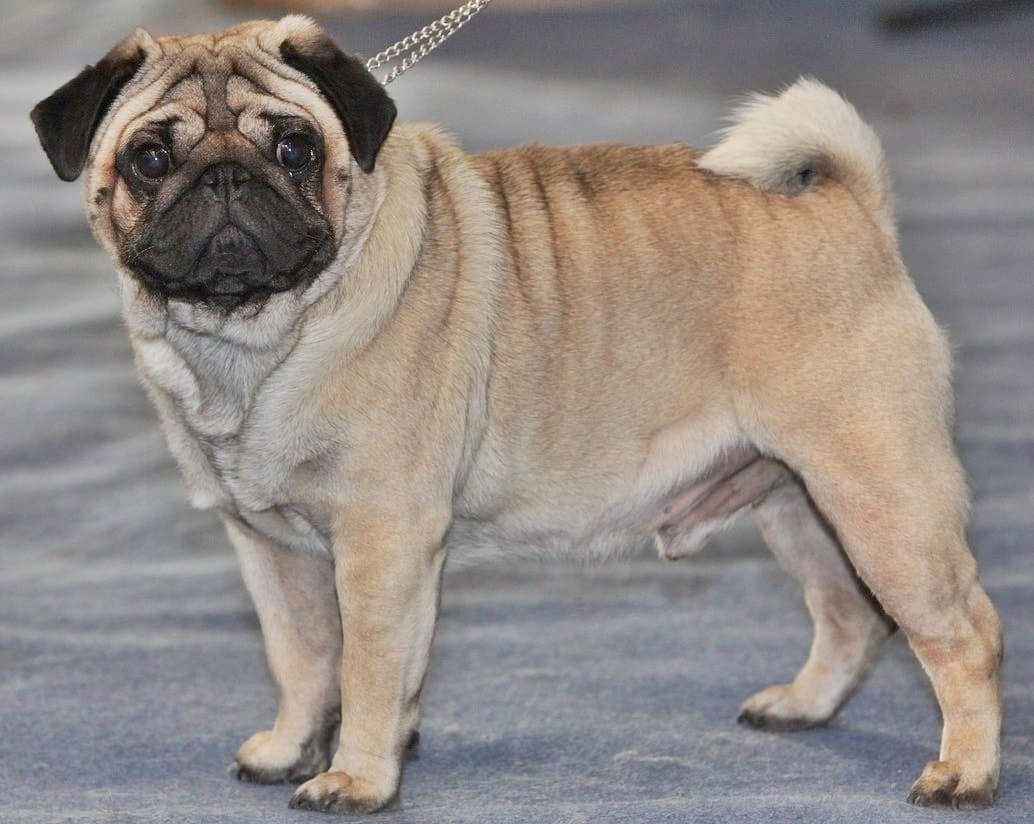
"Pug mix" is a common label for a small, short-coated, fawn dog with a dark face, some forehead wrinkles, and a tail that curls over its hip. Those features do often come from a Pug. They also appear in other short-faced breeds, and a Pug cross can lose most of them in one generation.
This guide covers which Pug traits tend to show in crosses, which breeds are mistaken for a Pug mix, how the common pairings usually look, and when a DNA test is the right tool. Two limits apply throughout. A photo shows which breeds a dog resembles, not which breeds are in its ancestry. And mixed-breed appearance varies widely, even among littermates, so identifying a mix by eye is unreliable.
How reliable is a visual guess?
Even people who handle dogs every day get it only partly right. In a 2018 study in PLOS ONE, staff at a San Diego shelter named at least one breed that DNA testing also found in 67.7 percent of dogs, and matched both the primary and secondary breed in 10.4 percent. Of the 919 dogs tested at two shelters, 4.9 percent were purebred. Treat "Pug mix" as a description of appearance until a DNA test supports it.
Pug traits that tend to show in mixes
The purebred descriptions here follow the American Kennel Club (AKC) breed standard. In a mix, each trait may appear fully, partly, or not at all.
Muzzle and wrinkles
The Pug's head is large and round, with a short, blunt, square muzzle, large, deep wrinkles, and a bite that is very slightly undershot. In crosses the muzzle almost always lengthens and the wrinkles soften. What tends to remain is a muzzle that is shorter and broader than the other parent's, with creases on the forehead when the dog is alert.
Eyes
The eyes are dark, very large, prominent, and globular in shape. Large, round, dark eyes set in a broad face often carry through.
Mask and color
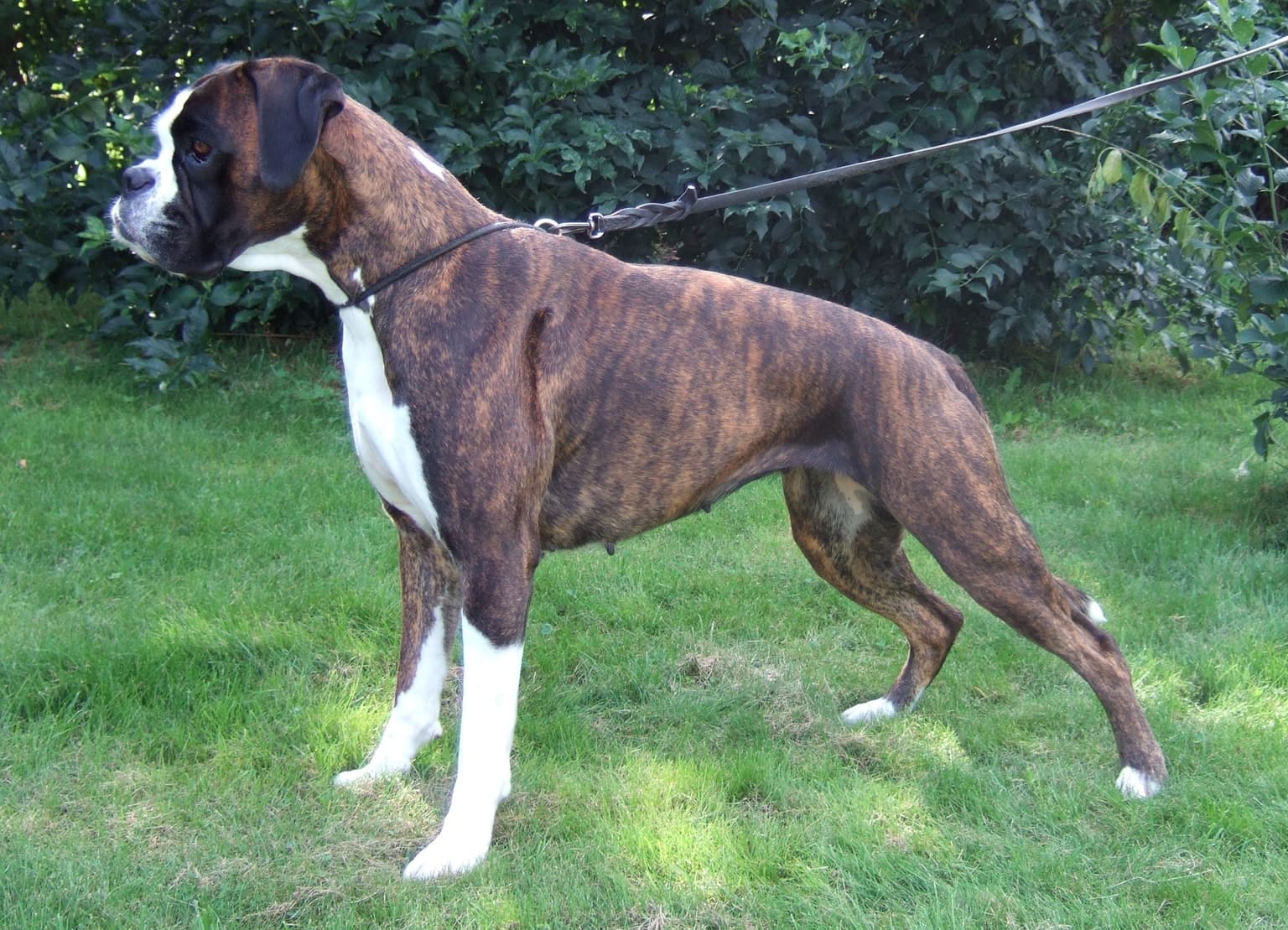
The standard allows two colors, fawn and black. Fawn Pugs have a black mask and black ears, and a dark line, called the trace, running down the back. A fawn coat with a dark muzzle and dark ears is the color pattern people associate with Pug crosses, but fawn with a black mask is also the pattern of the Boxer, Mastiff, and Great Dane, so on its own it is weak evidence.
Tail
The tail is curled as tightly as possible over the hip, and the standard calls a double curl perfection. A tightly curled tail on a small, short-coated dog is a helpful clue. In crosses it often loosens into a single curl or a sickle shape.
Ears, coat, and build
The ears are thin, small, and soft, in one of two folded shapes the standard calls "rose" and "button." The coat is fine, smooth, short, and glossy. The body is square and cobby, wide in the chest, and the desirable weight is 14 to 18 pounds.
Breeds often mistaken for a Pug mix
- French Bulldog: Short-faced and compact, but with large, erect "bat" ears, a weight of up to 28 pounds, and a short tail that is straight or screwed, not curled. See our French Bulldog vs Pug comparison.
- Boston Terrier: A short, square muzzle and large round eyes, with small erect ears, a short tail, and a brindle, seal, or black coat evenly marked with white. See Boston Terrier vs French Bulldog.
- Brussels Griffon: The smooth-coated variety has a short, glossy coat and an extremely short nose under a domed forehead. It is smaller, usually 8 to 10 pounds, and its tail is held high without curling onto the back.
- Bulldog: Short-faced with rose ears, but much heavier, at about 40 to 50 pounds, and low and wide.
- Pekingese: A flat, wrinkled face on a small dog, but with a long, coarse coat and a mane.
Common Pug crosses and how they usually look
The names in quotation marks are informal labels. None of these crosses is an AKC-recognized breed or has a written standard, and the descriptions are tendencies reasoned from the parent breeds, not predictions for any one dog.
Pug and Beagle
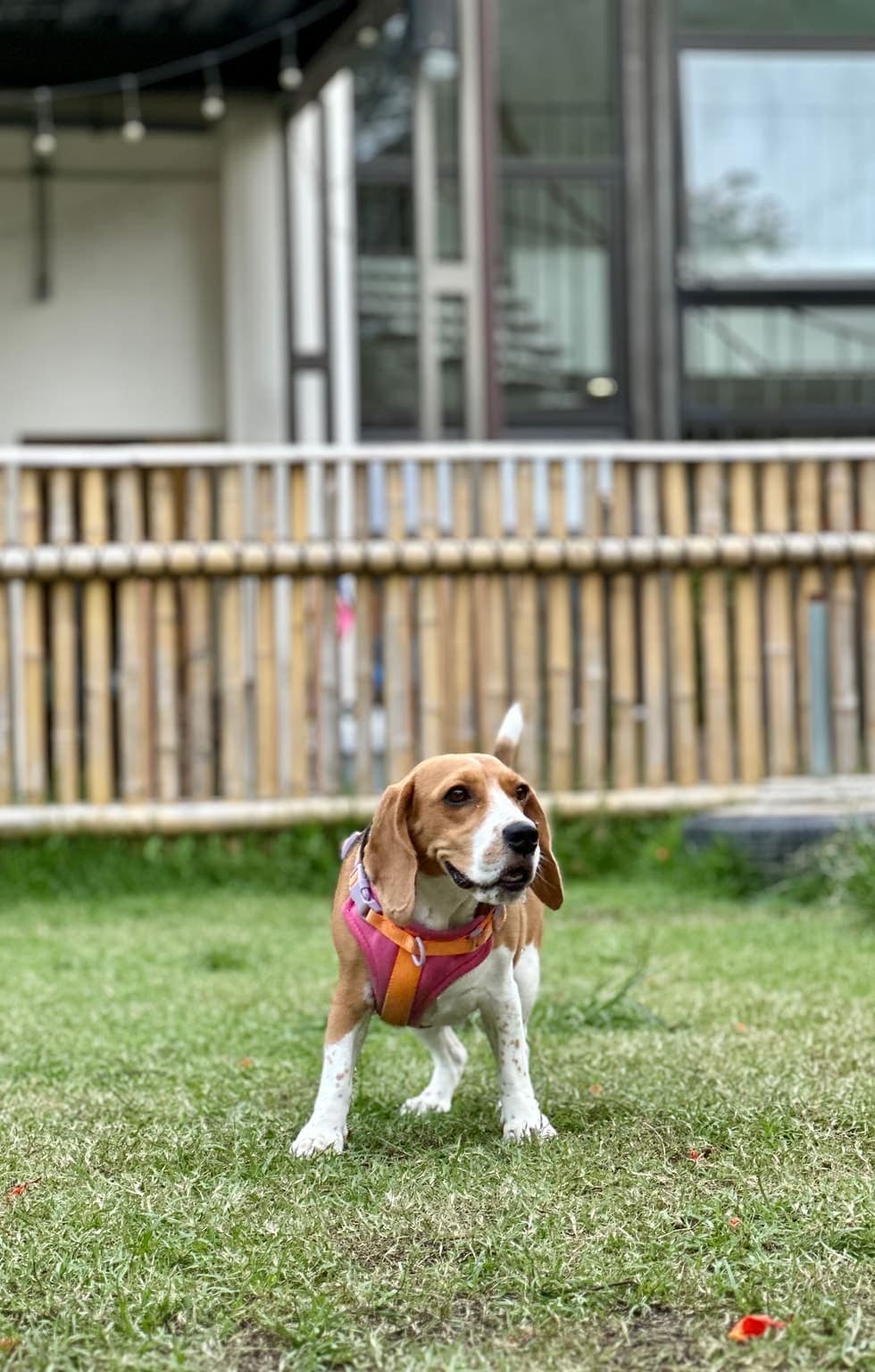
Known as a "Puggle." The Beagle stands up to 15 inches, with long, low-set ears and a close hound coat. These crosses usually have a longer muzzle than a Pug, some forehead wrinkling, longer drop ears, and a fawn coat with a dark muzzle, or hound colors. The tail may curl or be carried up like a Beagle's. See our Beagle mix guide.
Pug and Chihuahua
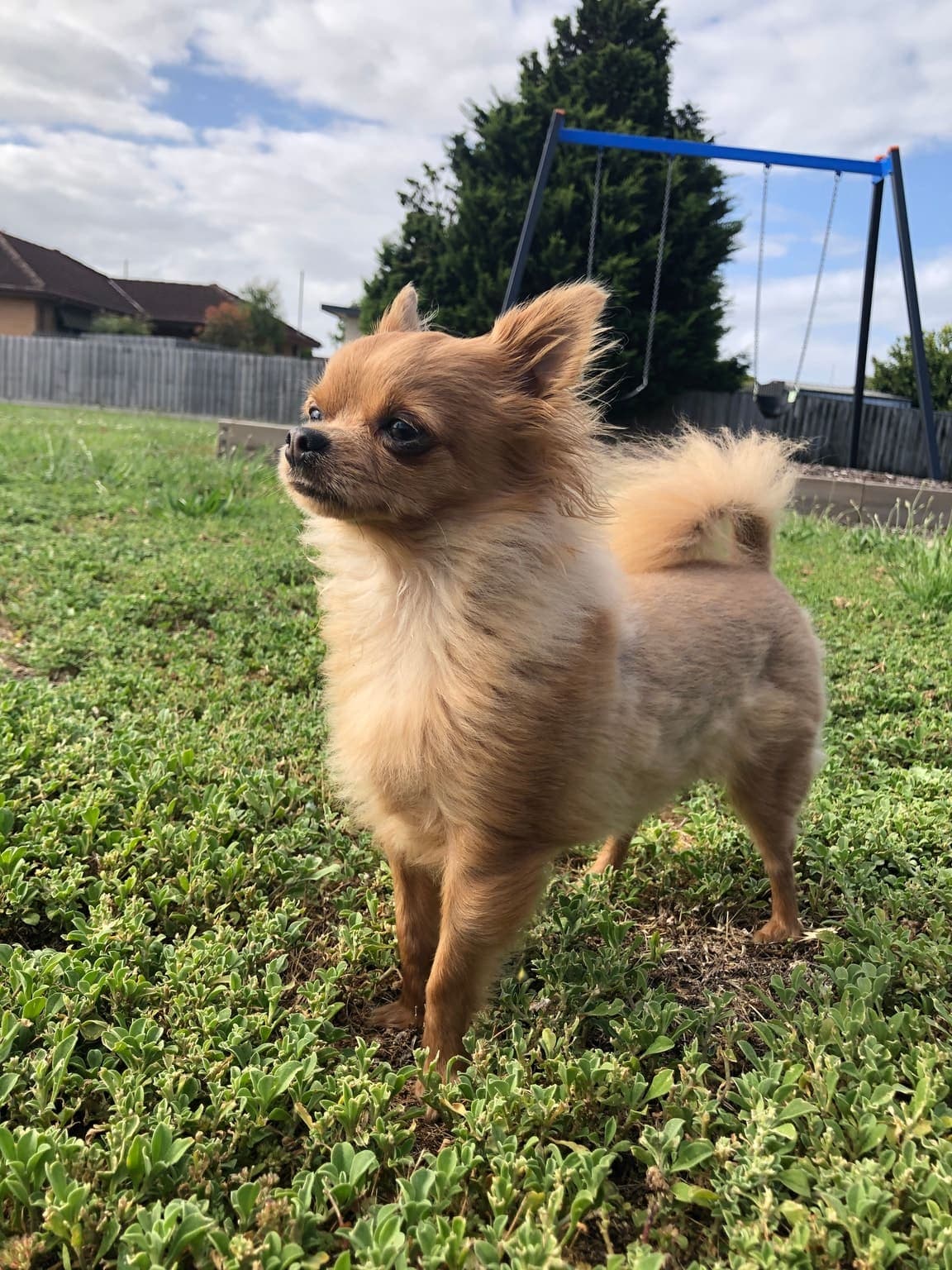
Sometimes called a "Chug." The Chihuahua weighs no more than 6 pounds and has large erect ears and a moderately short, slightly pointed muzzle. Crosses are small, often fawn with a dark muzzle, with ears that stand, fold, or do one of each. See our Chihuahua mix guide.
Pug and French Bulldog
Both parents are compact, short-coated, and short-faced, so the face does not separate them. The ears and tail are the clues: larger, more upright ears and a short, uncurled tail lean toward the French Bulldog side.
Pug and Boston Terrier
Another pairing of two short-faced breeds. White markings on the face and chest and small upright ears lean toward the Boston Terrier side.
Pug and Shih Tzu
The Shih Tzu also has a short, square muzzle and an undershot bite, with a long double coat and a plumed tail carried over the back. Crosses usually have a short face and a coat of medium length that may be wavy or scruffy. See our Shih Tzu mix guide.
Pug and Dachshund
The Dachshund is long in body and short of leg with rounded hanging ears. Crosses tend to have a longer back and muzzle than a Pug and drop ears. See our Dachshund mix guide.
What a photo can and cannot tell you
A photo can show muzzle length, wrinkling, ear carriage, mask, and tail carriage. A photo identifier compares those with reference images and returns a ranked list of breeds the dog resembles. For a small short-faced dog, expect Pug alongside French Bulldog, Boston Terrier, or the breed the rest of the dog resembles.
A photo cannot show ancestry or percentages, and it cannot show size without a scale reference. Our mixed breed dog identifier page explains these limits.
The most useful photos are a side view of the head at the dog's eye level, which shows true muzzle length, and a standing side profile with the dog relaxed, which shows how the tail is normally carried. Photos taken from above make every muzzle look shorter. See how to identify a dog breed from a photo.
When a DNA test is the right tool
Use a dog DNA test when you need to know ancestry, not resemblance, for example to give your veterinarian breed information. Read dog DNA test accuracy for the limits of testing.
Care points that follow from the Pug side
A dog that looks like a Pug may not behave like one. These are things to be ready for and then adjust to the dog you have.
- Heat and breathing. The AKC states that, like all flat-faced breeds, Pugs sometimes have breathing problems and do poorly in sunny, hot, or humid weather, and should not do strenuous exercise when it is warm or humid. A cross with a longer muzzle may cope better, but watch any short-faced dog closely in heat and ask your veterinarian if you notice noisy or labored breathing.
- Eyes. The AKC notes that the Pug's prominent eyes are a vulnerable spot, with corneal ulcers and dry eye known to occur.
- Weight. The AKC warns that the breed's fondness for eating makes obesity a real possibility. Measure meals and keep up daily moderate exercise.
- Coat. The short coat sheds. Weekly brushing helps.
- Training. The AKC describes Pugs as eager to please and easily hurt by harsh methods.
Frequently asked questions
My dog has a curled tail. Is it a Pug mix?
Not on that alone. Other breeds carry the tail curled over the back too, including the Shih Tzu and the Keeshond. A curled tail together with a short, broad muzzle and a short coat makes Pug a more reasonable guess.
Do Pug mixes have breathing problems?
It depends on the individual dog's anatomy, which a breed label cannot tell you. The AKC notes that flat-faced breeds sometimes experience breathing problems. If your dog has a short muzzle, raise it with your veterinarian.
What does a Puggle look like?
There is no standard, and littermates differ. Many have a muzzle between a Pug's and a Beagle's, drop ears, some forehead wrinkling, and a fawn coat with a dark muzzle.
How big will a Pug mix get?
Adult size usually falls between the parents but is not predictable for an individual dog, and the second parent is often unknown. Purebred Pugs weigh 14 to 18 pounds.
Sources
- American Kennel Club, Official Standard of the Pug: https://images.akc.org/pdf/breeds/standards/Pug.pdf
- American Kennel Club, Pug: https://www.akc.org/dog-breeds/pug/
- American Kennel Club official standards of the French Bulldog, Boston Terrier, Brussels Griffon, Bulldog, Pekingese, Beagle, Chihuahua, Shih Tzu, Dachshund, Keeshond, Boxer, Mastiff, and Great Dane, linked from each breed's page at https://www.akc.org/dog-breeds/
- Gunter, Barber, and Wynne, "A canine identity crisis: Genetic breed heritage testing of shelter dogs," PLOS ONE, 2018: https://journals.plos.org/plosone/article?id=10.1371/journal.pone.0202633