How to Identify a Rottweiler Mix: Markings, Build, Common Crosses, and Look-Alikes
Breed Identification • By Dog Breed Detector Editorial Team • 2026-11-18
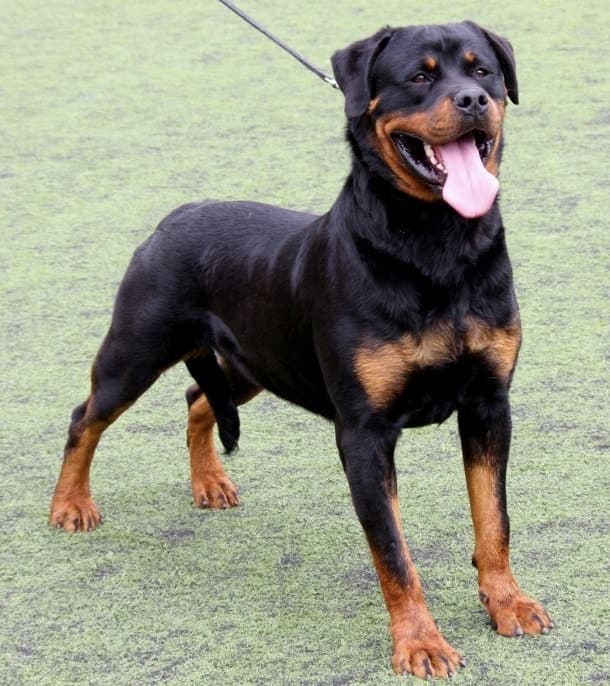
"Rottweiler mix" is the common label for a large, sturdy dog that is black with tan markings over the eyes, on the muzzle, and on the legs. The label fits some of those dogs. The same pattern is the standard color of several other breeds, large and small, so the markings alone say very little.
This guide covers which Rottweiler traits tend to show in crosses, which breeds are mistaken for a Rottweiler mix, how the common pairings usually look, and when a DNA test is the right tool. Two limits apply throughout. A photo shows which breeds a dog resembles, not which breeds are in its ancestry. And mixed-breed appearance varies widely, even among littermates, so identifying a mix by eye is unreliable.
How reliable is a visual guess?
Research on shelter dogs suggests it is often wrong in the details. In a 2018 study published in PLOS ONE, DNA testing of 919 dogs at two US shelters found that 4.9 percent were purebred. At the shelter where staff labels were compared with the DNA results, staff named at least one breed correctly for 67.7 percent of dogs but matched both the primary and secondary breed for only 10.4 percent. Treat "Rottweiler mix" as a description of appearance until a DNA test supports it.
Rottweiler traits that tend to show in mixes
The purebred descriptions here follow the American Kennel Club (AKC) breed standard. In a mix, each trait may appear fully, partly, or not at all.
Color and markings
The standard allows one color: black with clearly defined rust to mahogany markings. The markings sit in fixed places: a spot over each eye, on the cheeks, as a strip on each side of the muzzle, on the throat, as two triangles on the chest, on the lower forelegs, on the inside of the rear legs, and under the tail. They should not cover more than ten percent of the body. In a cross, the pattern often carries through but may be wider, fainter, or joined by white on the chest and feet, which the Rottweiler standard does not allow.
Head
The head is of medium length and broad between the ears, with a well-developed stop and strong, broad jaws. The desired ratio of backskull to muzzle is 3 to 2, so the muzzle is clearly shorter than the skull but not short in the way a Boxer's or Bulldog's is. The nose and lips are black.
Ears
The ears are medium-sized, triangular, and pendant. They are set well apart, hang forward with the inner edge against the head, and end at about mid-cheek. When the dog is alert, they sit level with the top of the skull and make it look broader. Erect or half-erect ears on a black-and-tan dog point to a different parent.
Build
The Rottweiler is compact and substantial, slightly longer than tall, with heavy bone, a broad, deep chest that is about half the dog's height, and a level back. Males stand 24 to 27 inches and females 22 to 25 inches. The AKC lists 95 to 135 pounds for males.
Coat
The outer coat is straight, coarse, dense, of medium length, and lies flat, with undercoat on the neck and thighs. It is shortest on the head, ears, and legs. A long or wavy coat comes from the other parent.
Tail
The standard accepts a docked tail or an undocked one, which is carried straight or curved upward and may hang at rest. Most mixed-breed dogs have a natural tail, so tail length is not a useful clue.
Breeds often mistaken for a Rottweiler mix
Black with tan points is a pattern, not a breed. These breeds wear it too.
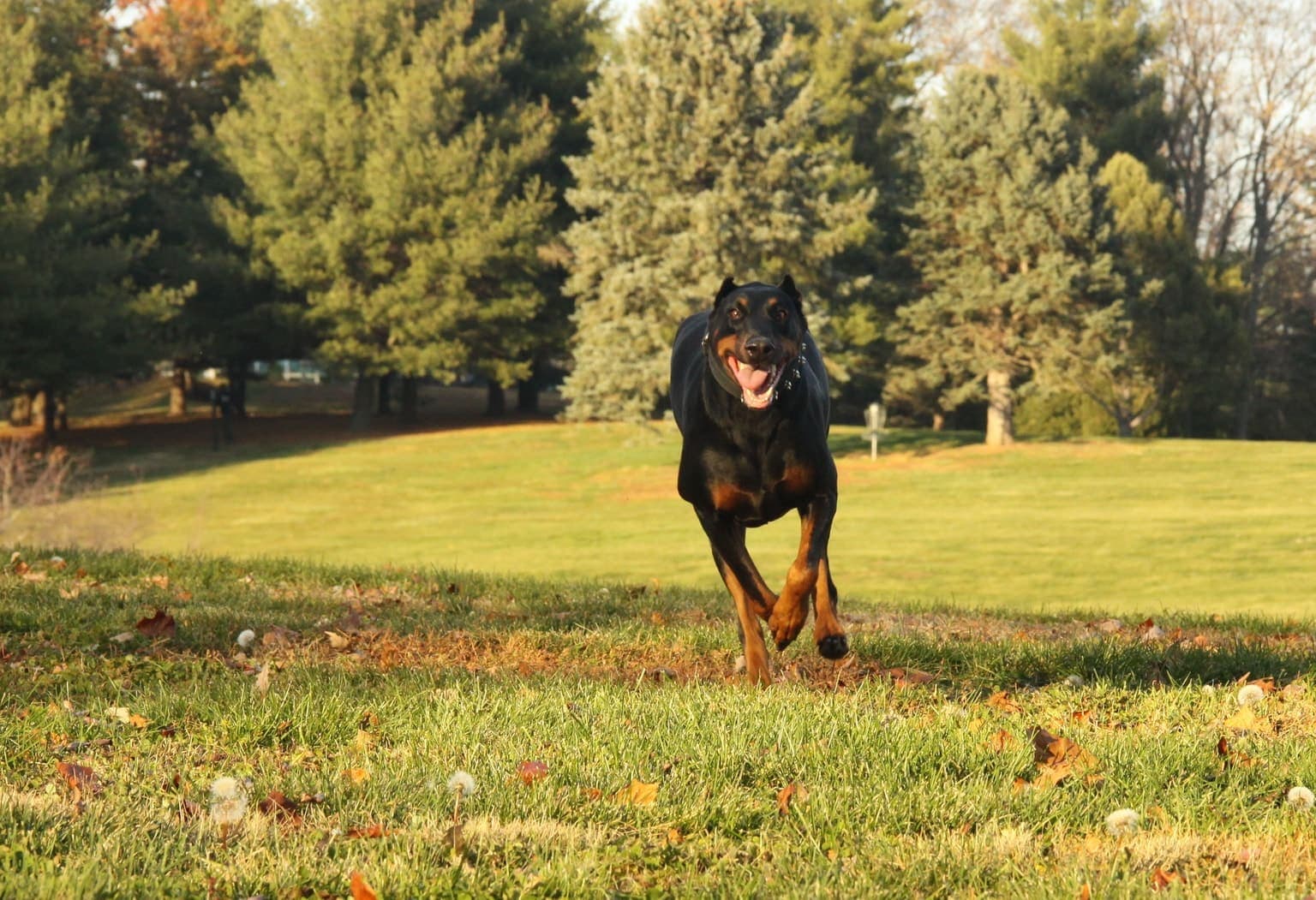
- Doberman Pinscher: Rust markings in the same places, on a taller, square frame (24 to 28 inches) with a long, wedge-shaped head. See our Rottweiler vs Doberman Pinscher comparison and Doberman mix guide.
- Beauceron: A French herding breed of similar height that is black and tan, with a skull and muzzle of equal length and natural ears that are half-pricked or dropped.
- Black and Tan Coonhound: Coal black with tan markings, but the ears are set low and are long enough to reach the tip of the nose.
- Bernese Mountain Dog and Greater Swiss Mountain Dog: Black with rust or red markings plus white on the face and chest. The Bernese has a thick, moderately long coat.
- Miniature Pinscher and Manchester Terrier: The same colors on a small dog. A Miniature Pinscher stands 10 to 12.5 inches and a Manchester Terrier weighs no more than 22 pounds.
- Dachshund: Black and tan is one of its most common colors, on a long, low body.
Common Rottweiler crosses and how they usually look
The names in quotation marks are informal labels. None of these crosses is an AKC-recognized breed or has a written standard, and the descriptions are tendencies reasoned from the parent breeds, not predictions for any one dog.
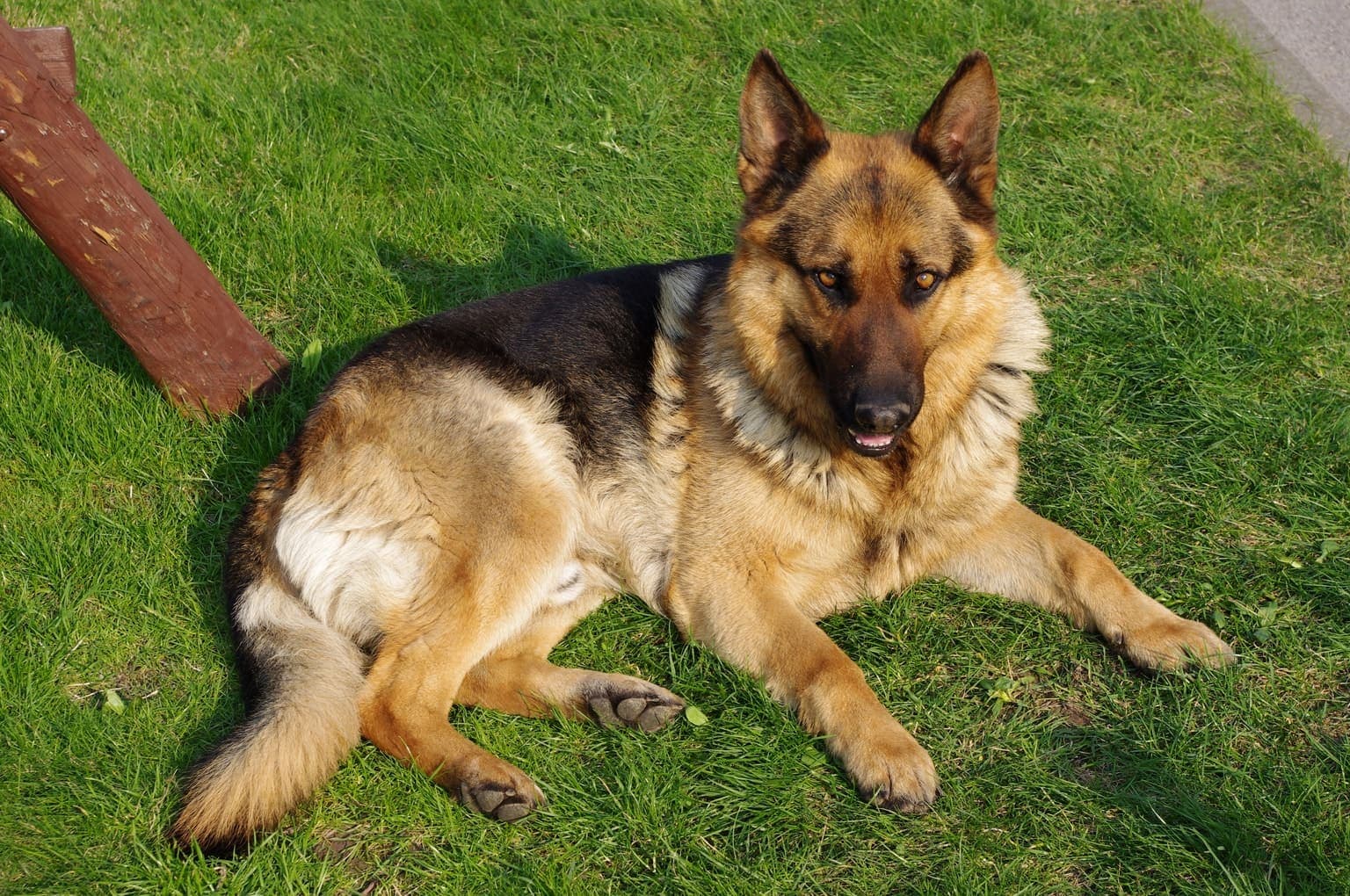
Rottweiler and German Shepherd
The German Shepherd Dog is close in height (22 to 26 inches) with erect, moderately pointed ears and a dense coat. Crosses are usually large, with a longer muzzle than a Rottweiler's, a thicker coat, and ears that stand, tip, or hang. See our German Shepherd mix guide.
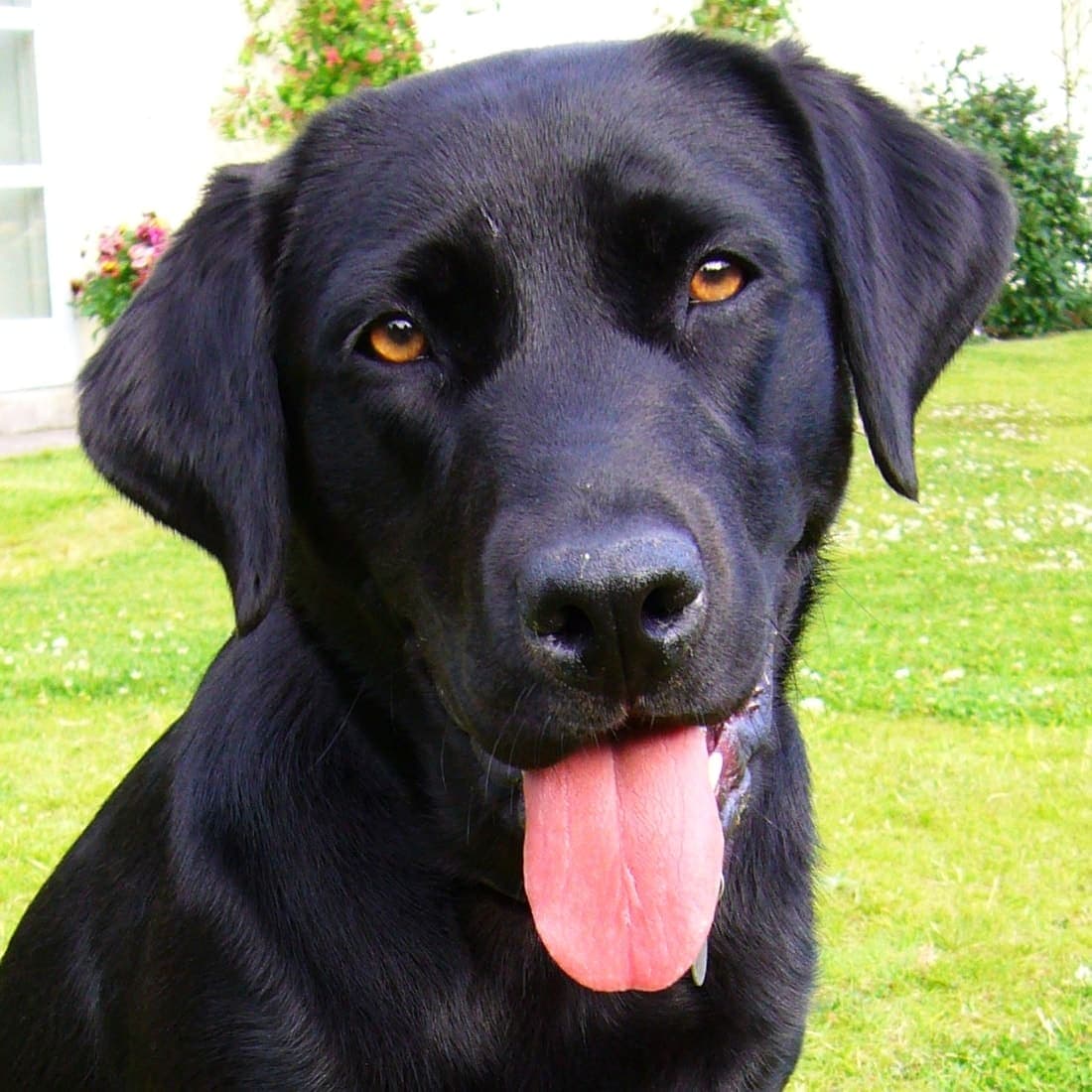
Rottweiler and Labrador
Sometimes called a "Labrottie." The Labrador Retriever has a short, dense coat, hanging ears, and a thick "otter" tail. Many of these crosses are black with reduced or faint tan markings and a broad head, and they are easily labeled as plain Lab mixes. See our Labrador mix guide.
Rottweiler and pit bull-type breeds
The American Staffordshire Terrier is shorter, at about 17 to 19 inches, with a short, glossy coat in almost any color. Crosses tend to be medium to large, short-coated, and muscular, sometimes with white on the chest. See our pit bull mix guide.
Rottweiler and Siberian Husky
The Siberian Husky contributes strongly erect ears, a well-furred brush tail, a denser coat, and sometimes blue eyes. See our Husky mix guide.
Rottweiler and Boxer
Sometimes called a "Boxweiler." The Boxer is fawn or brindle with a short, blunt muzzle, so crosses may be brindle or fawn with a dark mask, or black and tan, with a shorter muzzle than a Rottweiler's. See our Boxer mix guide.
Rottweiler and Doberman
Sometimes called a "Rotterman." Both parents are black with rust markings in the same places, so color does not help. Build is the only visible clue: these crosses usually fall between the broad, deep-chested Rottweiler and the taller, square Doberman.
Rottweiler and Mastiff types
The Mastiff is fawn, apricot, or brindle with a dark muzzle and ears and a minimum height of 27.5 inches for females and 30 inches for males. Crosses are very large, heavy-boned dogs, often with a dark mask.
What a photo can and cannot tell you
A photo can show the marking pattern, head shape, ear set, coat, and proportions. A photo identifier compares those with reference images and returns a ranked list of breeds the dog resembles. For a black-and-tan dog, expect Rottweiler alongside other black-and-tan breeds. That overlap is real, and a shortlist is a more honest answer than a single name.
A photo cannot show ancestry or percentages, and it cannot show size without a scale reference. Size is what separates many of these breeds, so include something of known size in the frame, or measure your dog at the shoulder. Our mixed breed dog identifier page explains these limits.
The most useful photos are a standing side profile, which shows bone, chest depth, and leg length, and a front view of the head at the dog's eye level, which shows skull width, ear set, and the markings. See how to identify a dog breed from a photo.
When a DNA test is the right tool
Use a dog DNA test when the answer has to be about ancestry. Housing and insurance rules sometimes name specific breeds, and a visual label can be wrong in either direction. A photo result is not evidence for that purpose. Read dog DNA test accuracy for the limits of testing.
Care points that follow from the Rottweiler side
A dog that looks like a Rottweiler may not behave like one. These are things to be ready for and then adjust to the dog you have.
- Training and socialization. The AKC says a Rottweiler must be trained starting early in life, with puppy socialization, basic training classes, and consistent, fair handling that is firm without being rough.
- Company. The AKC describes Rottweilers as "people dogs" that do not do well isolated from humans.
- Exercise. The breed is muscular and athletic and should have the opportunity to exercise every day. The AKC notes that excess weight is not good for any dog.
- Coat. Weekly brushing is enough for most of the year. The AKC says the breed sheds more heavily twice a year.
- Health screening. The AKC says responsible Rottweiler breeders test for hip dysplasia, eye diseases, and heart conditions. A mixed-breed dog's risk is not known from its looks, so mention the possible Rottweiler background to your veterinarian.
Frequently asked questions
My dog is black and tan. Is it a Rottweiler mix?
The color alone cannot tell you. Dobermans, Beaucerons, Black and Tan Coonhounds, Miniature Pinschers, Manchester Terriers, and many Dachshunds are black and tan too. Look at the dog's size, bone, head width, and ear set.
Can a Rottweiler mix have white markings?
Yes. The purebred standard treats white markings as a serious fault, but a cross can inherit white on the chest or feet from the other parent.
Do Rottweiler mixes always have the tan markings?
No. A cross can be solid black, brindle, fawn, or another color from the other parent, and those dogs are rarely identified as Rottweiler mixes by eye.
How big will a Rottweiler mix get?
Adult size usually falls between the parents but is not predictable for an individual dog, and the second parent is often unknown. Purebred Rottweilers stand 22 to 27 inches at the shoulder.
Sources
- American Kennel Club, Official Standard of the Rottweiler: https://images.akc.org/pdf/breeds/standards/Rottweiler.pdf
- American Kennel Club, Rottweiler: https://www.akc.org/dog-breeds/rottweiler/
- American Kennel Club official standards of the Doberman Pinscher, Beauceron, Black and Tan Coonhound, Bernese Mountain Dog, Greater Swiss Mountain Dog, Miniature Pinscher, Manchester Terrier, Dachshund, German Shepherd Dog, Labrador Retriever, American Staffordshire Terrier, Siberian Husky, Boxer, and Mastiff, linked from each breed's page at https://www.akc.org/dog-breeds/
- Gunter, Barber, and Wynne, "A canine identity crisis: Genetic breed heritage testing of shelter dogs," PLOS ONE, 2018: https://journals.plos.org/plosone/article?id=10.1371/journal.pone.0202633