How to Identify a Doberman Mix: Markings, Head, Common Crosses, and Look-Alikes
Breed Identification • By Dog Breed Detector Editorial Team • 2026-11-18
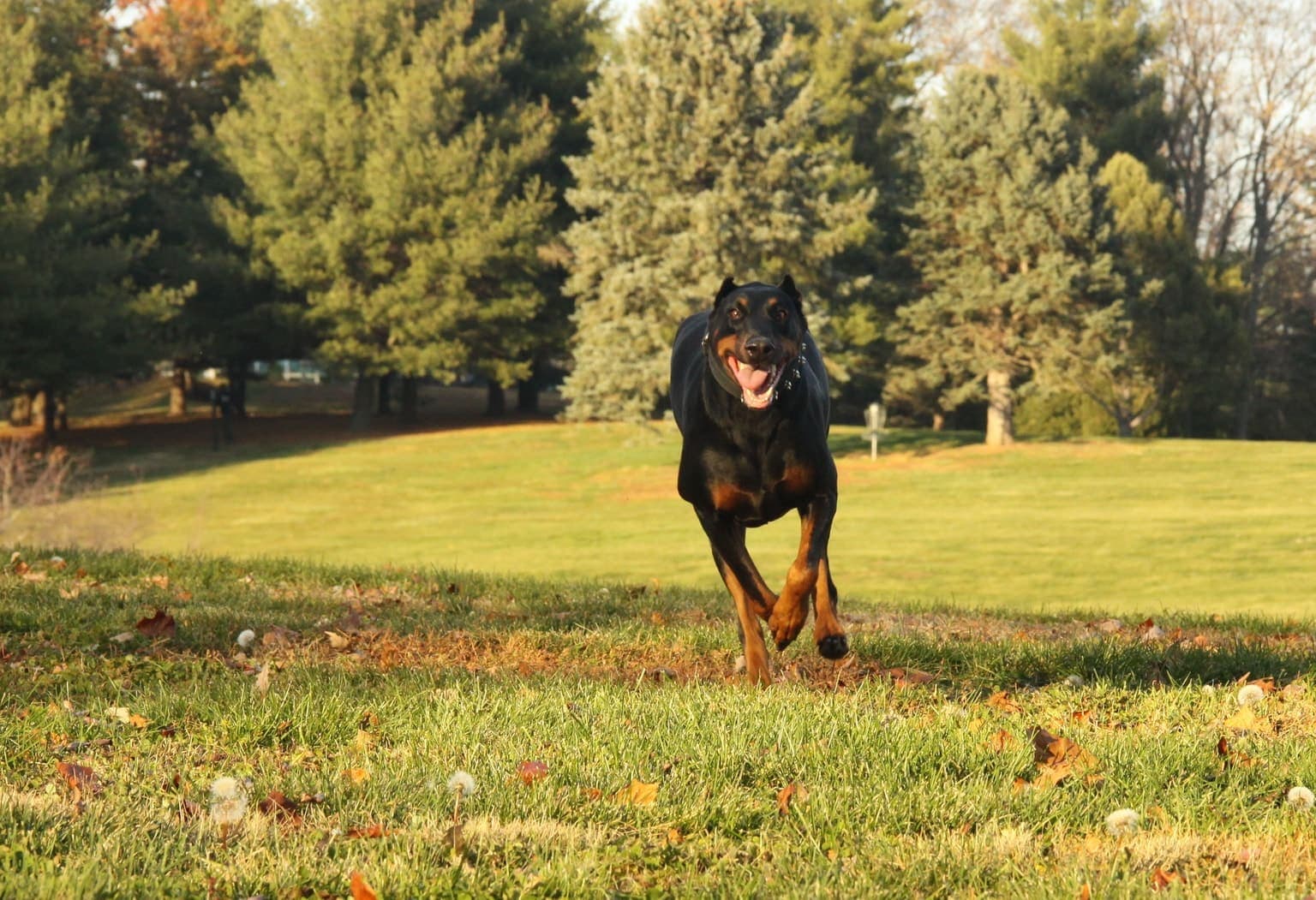
"Doberman mix" is a common label for a tall, short-coated dog that is black or brown with rust markings on the face, chest, and legs. The picture most people hold of a Doberman also includes upright ears and a short tail. Both are the result of surgery, so a mixed-breed dog will almost never have them, and the markings are shared with several other breeds.
This guide covers which Doberman Pinscher traits tend to show in crosses, which breeds are mistaken for a Doberman mix, how the common pairings usually look, and when a DNA test is the right tool. Two limits apply throughout. A photo shows which breeds a dog resembles, not which breeds are in its ancestry. And mixed-breed appearance varies widely, even among littermates, so identifying a mix by eye is unreliable.
How reliable is a visual guess?
Research comparing labels with DNA shows that a guess is often incomplete. A 2018 study in PLOS ONE reported that staff at a San Diego shelter named at least one breed that DNA testing confirmed in 67.7 percent of dogs, but matched both the primary and secondary breed in only 10.4 percent. Across the two shelters in the study, 4.9 percent of 919 dogs were purebred. Treat "Doberman mix" as a description of appearance until a DNA test supports it.
Doberman traits that tend to show in mixes
The purebred descriptions here follow the American Kennel Club (AKC) breed standard. In a mix, each trait may appear fully, partly, or not at all.
Color and markings
The standard allows four colors: black, red, blue, and fawn (also called Isabella). All have sharply defined rust markings above each eye, on the muzzle, throat, and forechest, on all four legs and feet, and below the tail. In a cross the pattern often carries through, sometimes with less defined edges or with white on the chest, which the standard limits to a very small patch.
Head
The head is long and dry and looks like a blunt wedge from the front and from the side. The top of the skull is flat, the stop is slight, the muzzle runs parallel to the top of the skull, and the cheeks are flat. A long, clean, wedge-shaped head with little stop is the feature most often credited to the Doberman side.
Build
The Doberman is square, with its height at the withers equal to its body length. It is compact and muscular with a deep chest and a belly that is well tucked up. Males stand 26 to 28 inches and females 24 to 26 inches. The AKC lists 75 to 100 pounds for males.
Coat
The coat is smooth, short, hard, thick, and close-lying. A longer or thicker coat comes from the other parent.
Ears and tail
The standard describes ears that are normally cropped and carried erect, and a tail docked at about the second joint. Neither is a natural trait. A mixed-breed dog will usually have uncropped ears and a full-length tail, so do not rule out Doberman because the ears hang or the tail is long, and do not treat cropped ears on any dog as evidence of breed.
Breeds often mistaken for a Doberman mix
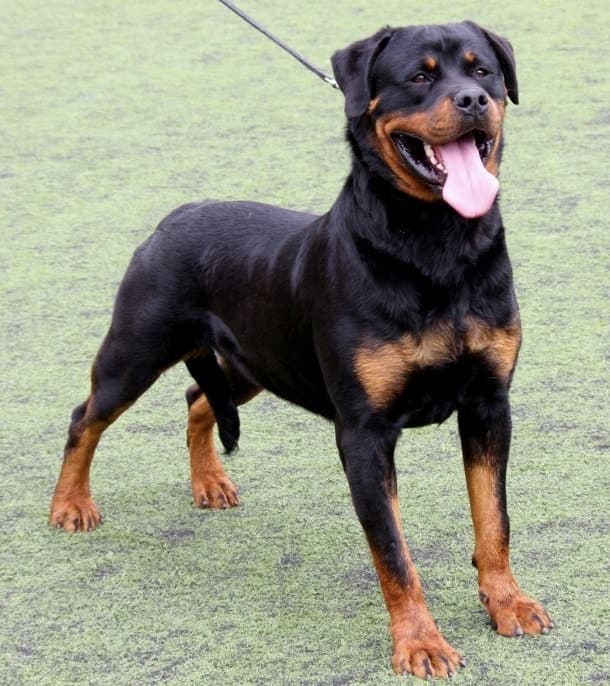
- Rottweiler: Black with rust markings in much the same places, but shorter (22 to 27 inches), slightly longer than tall, with a broader head and a muzzle shorter than the skull. See our Rottweiler vs Doberman Pinscher comparison and Rottweiler mix guide.
- Miniature Pinscher: A separate breed, not a small Doberman, standing 10 to 12.5 inches. Its colors include black or chocolate with rust-red markings. See Doberman Pinscher vs Miniature Pinscher.
- German Pinscher: A squarely built dog of 17 to 20 inches, in fawn to red, or black or blue with red or tan markings. A dog that looks like a half-sized Doberman may be this breed or a cross of it.
- Manchester Terrier: Jet black with mahogany tan, weighing no more than 22 pounds.
- Beauceron: Black and tan and close to a Doberman in height, at 24 to 27.5 inches, with a coarse, dense coat 1.25 to 1.5 inches long.
- Black and Tan Coonhound: Coal black with tan markings, with low-set ears long enough to reach the tip of the nose.
Common Doberman crosses and how they usually look
The names in quotation marks are informal labels. None of these crosses is an AKC-recognized breed or has a written standard, and the descriptions are tendencies reasoned from the parent breeds, not predictions for any one dog.
Doberman and German Shepherd
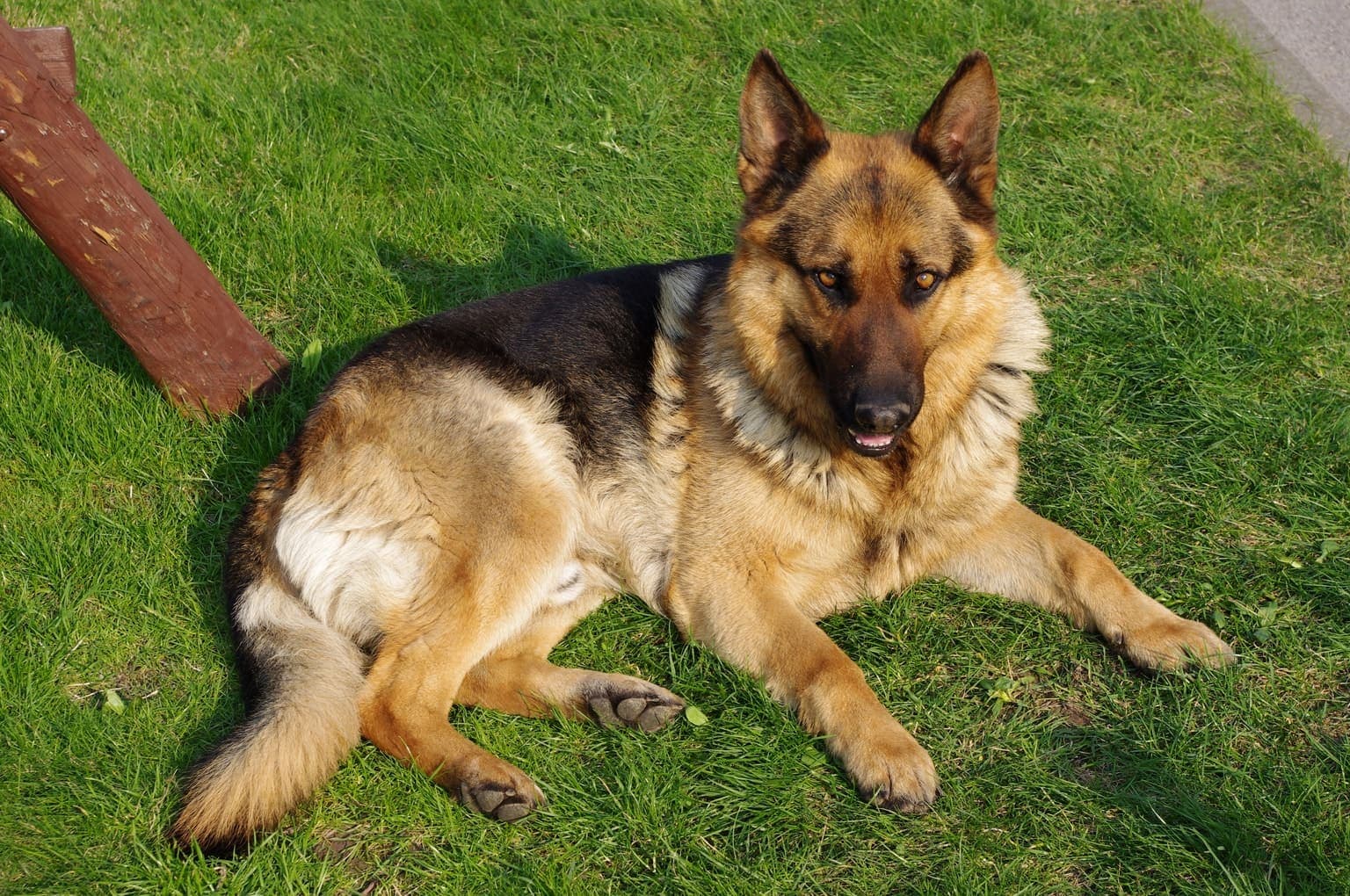
The German Shepherd Dog stands 22 to 26 inches with naturally erect ears and a dense, harsh coat. Crosses tend to be tall, with a thicker coat than a Doberman's and ears that stand, tip, or hang. See our German Shepherd mix guide.
Doberman and Rottweiler
Sometimes called a "Rotterman." Both parents have the same markings, so color does not help. Crosses usually fall between the two in build and head width.
Doberman and Labrador
The Labrador Retriever has a short, dense coat, hanging ears, and a thick tail. Many of these crosses are solid black or brown, sometimes with faint tan points, and are labeled Lab mixes. A longer head and a deeper tuck-up than a Lab's are the most a photo can suggest. See our Labrador mix guide.
Doberman and Siberian Husky
The Siberian Husky contributes erect ears, a thicker coat, a brush tail, and sometimes blue eyes. See our Husky mix guide.
Doberman and pit bull-type breeds
The American Staffordshire Terrier stands about 17 to 19 inches with a short, glossy coat. Crosses are short-coated and muscular, usually with a broader head than a Doberman's. See our pit bull mix guide.
Doberman and Great Dane
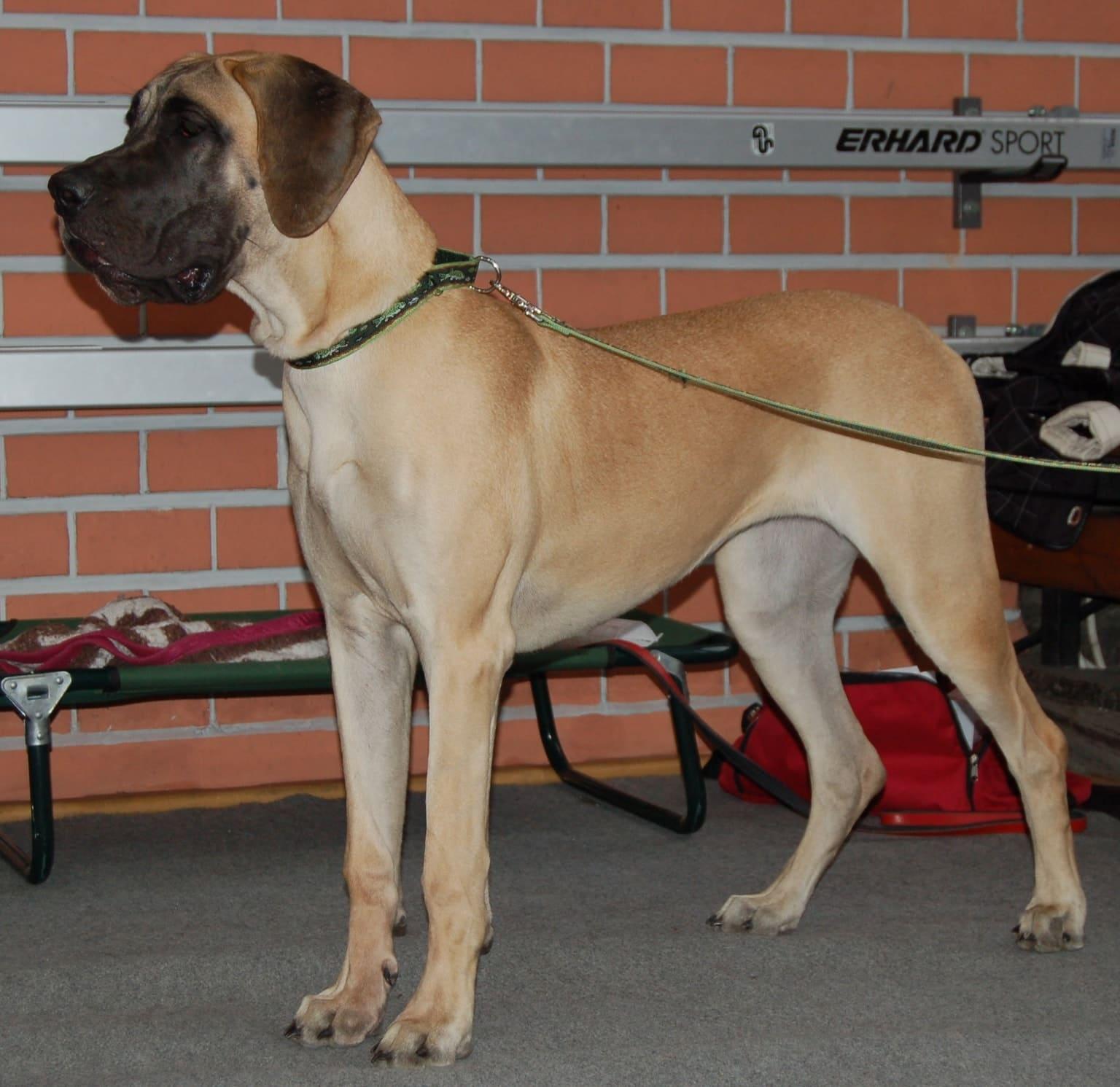
Both parents are square and short-coated. The Great Dane adds height and a deeper, squarer muzzle. See our Great Dane mix guide.
Doberman and Poodle
Sometimes sold as a "Doberdoodle." The Standard Poodle has a curly, dense coat, so crosses are tall dogs with a wavy, wiry, or curly coat. See our Poodle mix guide.
What a photo can and cannot tell you
A photo can show the marking pattern, head shape, coat, and proportions. A photo identifier compares those with reference images and returns a ranked list of breeds the dog resembles. For a black-and-rust dog, expect Doberman Pinscher alongside Rottweiler and other breeds with the same pattern.
A photo cannot show ancestry or percentages, and it cannot show size without a scale reference. Size is what separates a Doberman from a German Pinscher or Miniature Pinscher, so measure your dog at the shoulder. Our mixed breed dog identifier page explains these limits.
The most useful photos are a standing side profile, which shows whether the dog is square and how deep the chest is, and a side view of the head, which shows the length of the muzzle and how slight the stop is. See how to identify a dog breed from a photo.
When a DNA test is the right tool
Use a dog DNA test when the answer has to be about ancestry. Housing and insurance rules sometimes name specific breeds, and a visual label can be wrong in either direction. A photo result is not evidence for that purpose. Read dog DNA test accuracy for the limits of testing.
Care points that follow from the Doberman side
A dog that looks like a Doberman may not behave like one. These are things to be ready for and then adjust to the dog you have.
- Exercise. The AKC describes the Doberman as an energetic athlete that needs a lot of exercise and free play, such as long daily walks or hikes.
- Training and socialization. The AKC calls socialization from puppyhood imperative, along with obedience training, and notes that these strong dogs can become pushy and unmanageable if not raised properly.
- Living with people. The AKC says the Doberman should live inside the home with its people.
- Bloat. The AKC lists bloat, a life-threatening digestive condition, among the things Doberman owners should learn the signs of. Ask your veterinarian about it if your dog is large and deep-chested.
- Health screening. The AKC says responsible breeders screen for conditions including hip dysplasia, dilated cardiomyopathy, von Willebrand's disease, progressive retinal atrophy, and hypothyroidism. A mixed-breed dog's risk is not known from its looks, so mention the possible Doberman background to your veterinarian.
Frequently asked questions
My dog has floppy ears. Can it still be a Doberman mix?
Yes. The erect ears seen on many Dobermans are cropped. Ear carriage in an uncropped mixed-breed dog says little about whether a Doberman is in its background.
My dog is black and tan. Is it a Doberman mix?
The color alone cannot tell you. Rottweilers, Beaucerons, Black and Tan Coonhounds, German Pinschers, Miniature Pinschers, and Manchester Terriers share the pattern. Look at size, head shape, and proportions.
Is a Miniature Pinscher mix a small Doberman mix?
No. The Miniature Pinscher is a separate AKC breed with its own standard. The two look alike in color and outline but differ greatly in size.
How big will a Doberman mix get?
Adult size usually falls between the parents but is not predictable for an individual dog, and the second parent is often unknown. Purebred Dobermans stand 24 to 28 inches at the shoulder.
Sources
- American Kennel Club, Official Standard of the Doberman Pinscher: https://images.akc.org/pdf/breeds/standards/DobermanPinscher.pdf
- American Kennel Club, Doberman Pinscher: https://www.akc.org/dog-breeds/doberman-pinscher/
- American Kennel Club official standards of the Rottweiler, Miniature Pinscher, German Pinscher, Manchester Terrier, Beauceron, Black and Tan Coonhound, German Shepherd Dog, Labrador Retriever, Siberian Husky, American Staffordshire Terrier, Great Dane, and Poodle, linked from each breed's page at https://www.akc.org/dog-breeds/
- Gunter, Barber, and Wynne, "A canine identity crisis: Genetic breed heritage testing of shelter dogs," PLOS ONE, 2018: https://journals.plos.org/plosone/article?id=10.1371/journal.pone.0202633